Westerkerk in Leeuwarden: A Medieval Church and Cultural Venue
Site at a Glance
- Popularity
- Medium
- Country
- Netherlands
- Primary era
- Medieval
- Eras represented
- Medieval, Early Modern, Modern
- Civilizations
- Dutch, Habsburg
- Site type
- Religious
- Remains
- Church
On this page12 sections
History
The Westerkerk in Leeuwarden is a late-medieval church in the Netherlands, built in 1519 for a monastery founded nearby in 1460. Its Gothic origins and later alterations reflect its changing use, from a Beguine religious community to a Dutch Reformed church and, eventually, a cultural venue.
Monastery and early uses
The Sint-Anna Monastery was established on the Fiswerd mound, outside Leeuwarden, by the Grey Beguines. Beguines were women who lived in religious communities without taking the formal vows of a monastic order. The monastery was dedicated to Saint Anne, traditionally regarded in Christian belief as the mother of Mary.
Leeuwarden faced sieges by the Duke of Saxony in 1498 and 1499. During one of them, soldiers under Albrecht of Saxony, a Saxon duke and military commander, were quartered in the women’s monastery. In 1510, seeking greater safety, the community moved inside the city walls to the area of present-day Bagijnestraat. Its church was built there in 1519.
Following the Protestant Reformation, a movement that gave rise to new Christian churches, monasteries were closed and Catholic Mass was prohibited in Leeuwarden. In 1580, the provincial assembly ordered monasteries confiscated. Although city authorities allowed Reformed services, Catholic and Mennonite communities, part of a Protestant tradition, continued to exist.
After the church was abandoned, it had several secular uses. From 1600 to 1614, it served first as a municipal and then as a provincial house of correction, a place of confinement and discipline often involving compulsory work. It was also used for storage, carpentry and brewing. Later, Jan Jansz. Starter, a Dutch poet and playwright, held theatrical performances there with his chamber of rhetoric, an early modern literary society. Some performances were more or less clandestine, and the activities continued until 1619.
Reformed church and major changes
After eighteen years without use, the church was adapted for Reformed worship between 1637 and 1643. Rising attendance had outgrown the capacity of Leeuwarden’s other Protestant churches. The building became the Dutch Reformed Westerkerk, and its present name dates from this period. It was enlarged in 1681–84.
In 1795, authorities ordered the removal of memorial hatchments belonging to the Rhala, Haersma and Lycklama à Nijeholt families. These heraldic boards commemorated the families and were treated as symbols of the former political and social order.
The church’s organ also underwent successive changes. In 1724, organ builder Christiaan Müller was commissioned to build a new instrument for the Grote or Jacobijnerkerk and transfer that church’s old organ to the Westerkerk. The Westerkerk instrument was repaired in 1778 and 1803. An examination in 1823 led to a proposed repair that was not carried out. In 1844, L. van Dam and Sons received a commission for a new organ. After their father, Luitjen Jacob van Dam, died in 1846, his sons Lambertus, Pieter and Jacob completed it in 1847. At its inauguration, minister Leendert Proes delivered an address. The older organ was sold at auction in 1845.
City architect Thomas Romein led a major renovation in 1845–46. The work substantially altered the church’s roof, windows and interior. The Van Dam organ was restored in 1940 by Vaas & Bron, and organist George Stam played a concert for its inauguration on 19 October that year.
Closure and cultural reuse
In 1968, the Dutch Reformed congregation decided that the Westerkerk and the Grote or Jacobijnerkerk both needed restoration, but lacked the necessary funds. Youth services at the Westerkerk were drawing about 500 to 800 people every two weeks, so on 15 November the congregation sold the building to its youth-service committee for 100,000 guilders. It was also rented on weekdays, and a pop festival took place there on 24 September 1968.
The church closed in 1983, and demolition was threatened, but the municipality refused permission. Youth services ended on 1 January 1984 because of declining attendance and safety concerns; the committee continued them at the Waalse Kerk. In 1991, city architect Hans Heijdeman was commissioned to convert the building into a theatre. Theater Romein, named in memory of Thomas Romein, became an alternative performing-arts venue. It closed in 2005, and Poppodium Romein used the building from 2006 to 2015, when the new venue Neushoorn was being developed.
After Leeuwarden-Fryslân’s cultural-capital events in 2018, the church served as a temporary cultural hub until 2021. The building also experienced vacancies and temporary rentals intended to deter squatting. Since April 2024, Podium Explore, run by the organization behind the Explore the North festival, has operated there. The church, pulpit and pipe organ are protected together as a Dutch national monument, a legally recognized heritage site.
Remains
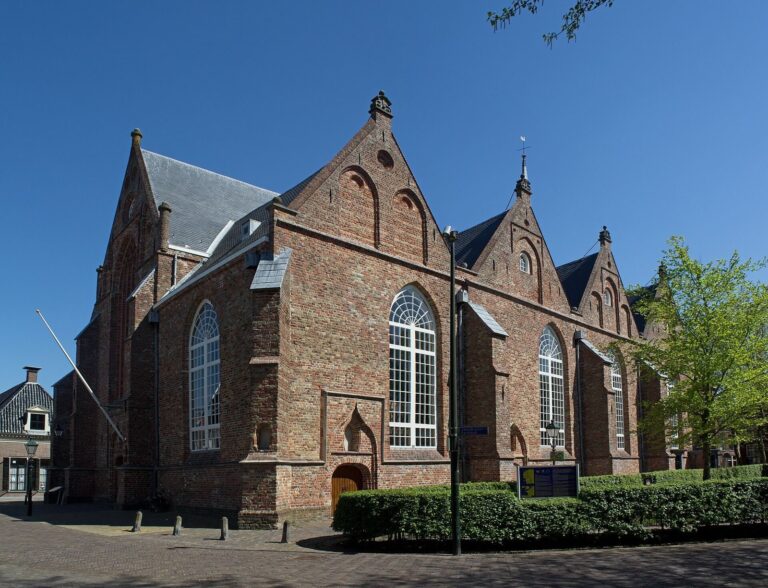
The church retains a late-medieval Gothic layout altered by later construction and interior changes. Its original single aisle was expanded on the north side by a second aisle of equal height, ending in a three-sided choir termination. The former monastery’s Patershuis stands to the west, while the monastery chapel became part of the church.
Church and monastery buildings
Westerkerk
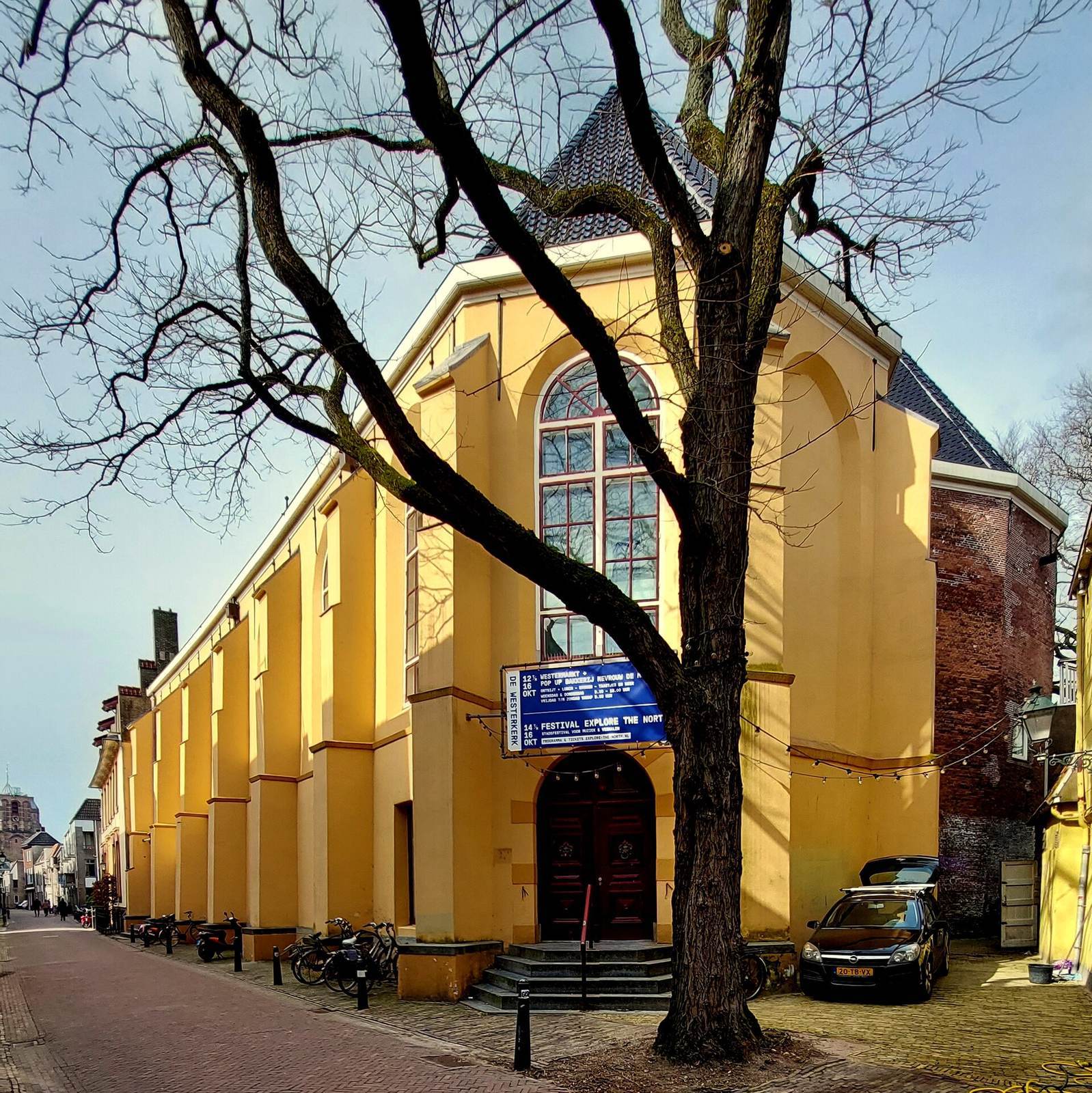
The church exterior is stuccoed. Its interior includes classicist columns with Corinthian capitals, an ornate classical column form decorated with leaf-like carving. Carved friezes and panels in the gallery date to 1690, and the seventeenth-century portals were retained during Romein’s renovation. That work brought a new roof, altered windows and plastered exterior walls; it also removed the roof turret, bell, barrel vaults and pews. Inside, a wider plaster-finished vault and four large Corinthian columns replaced the earlier arrangement. An oak pulpit and carved panels from the old pews formed part of the renewed interior.
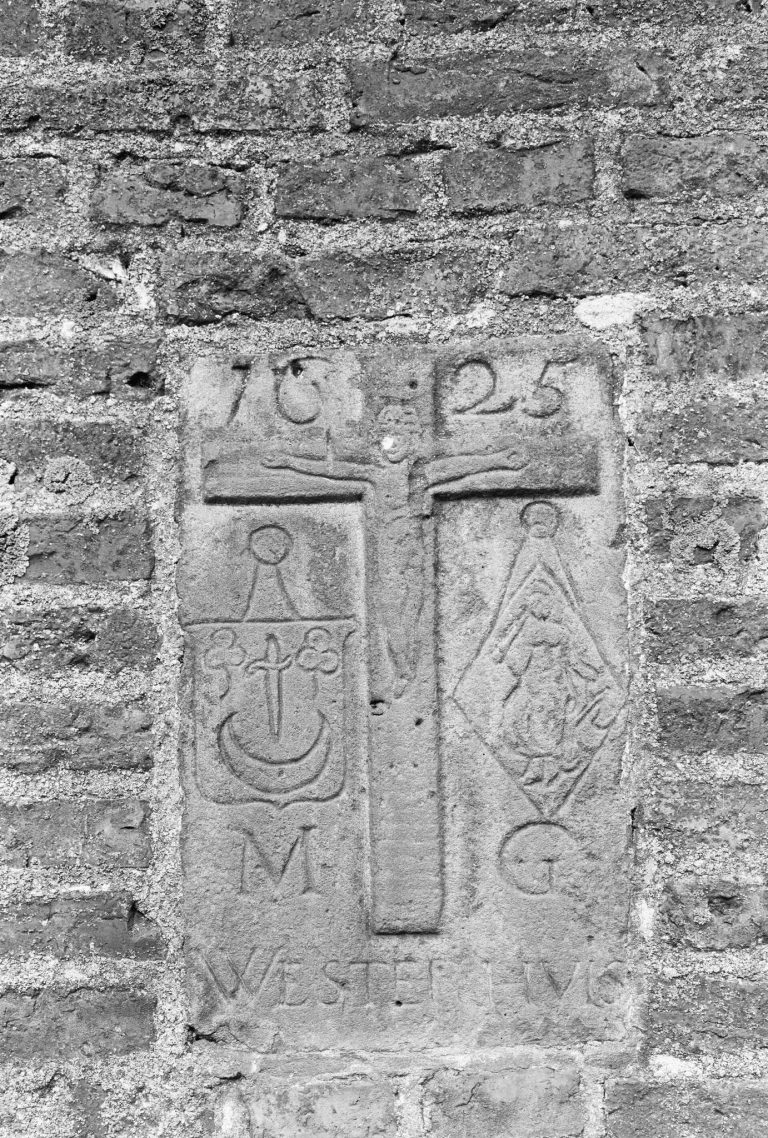
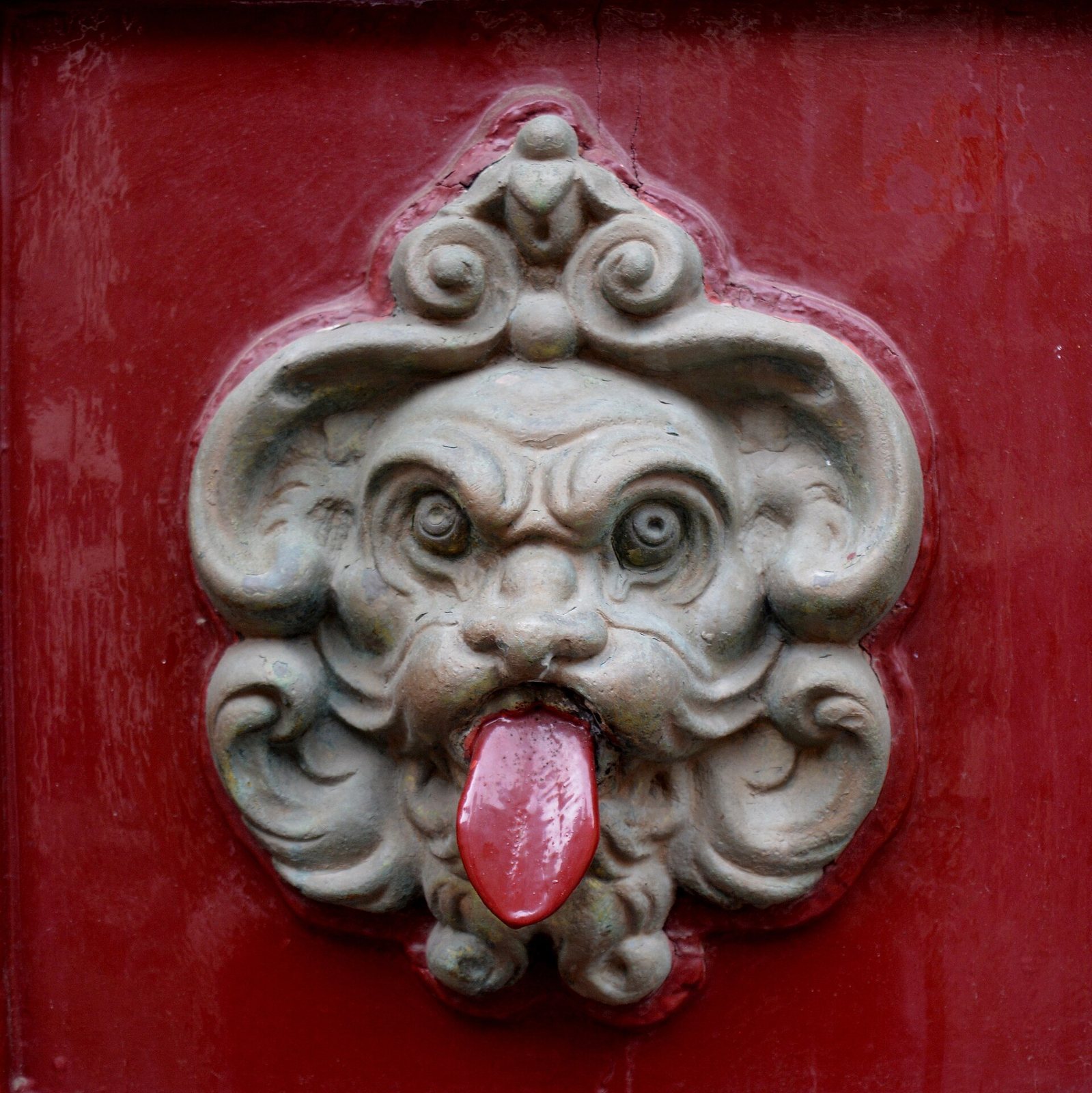
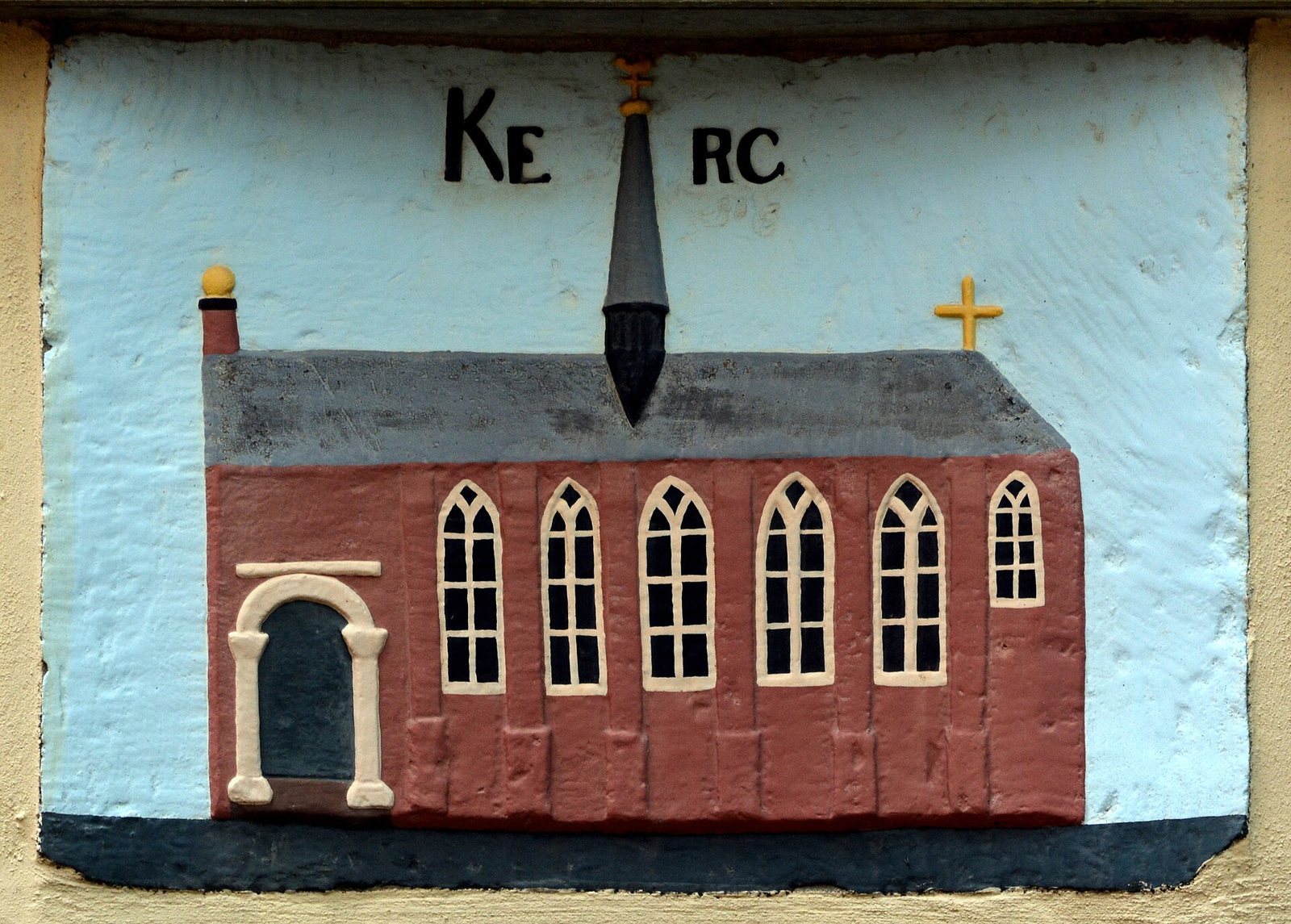
The theatre conversion removed most of the seating and created space for a theatre café, exhibition area and offices. At the rear, a loading area was built with two dressing rooms above it, and another audience tier was added above the church gallery. A three-panel artwork by artists from Oryol was installed at the rear; Oryol and Leeuwarden were sister cities. During the theatre period, the facade plaster changed from white to yellow and the doors from green to red. A historic pulpit was restored and returned to the upper gallery in 1998. Other recorded interior fittings include a railed liturgical area and a stand for a baptismal font. A stone from the Beguine church is identified in the facade.
Patershuis
The Patershuis, west of the church, was the main building of the monastery complex and once housed Cuneris Petri, a late-medieval bishop of Leeuwarden. Its surviving fabric includes walls and floor beams from the Beguine monastery. It is the only other monastery building to survive besides the chapel incorporated into the Westerkerk.
Burials and grave slabs
The Westerkerk was a popular burial place. During preparations for the theatre conversion, lifting the floor revealed about 280 grave slabs. Many were damaged or broken by foot traffic, subsidence and transport. The surviving slabs were stored at Skinkeskâns and later placed in a grave mound in Leeuwarder Bos, where exposure to the elements is causing deterioration. Anthony Coulon’s slab was taken instead to the old Coulonhuis of the Fryske Akademy.
Organs
Organ transferred from the Grote or Jacobijnerkerk
The earlier organ transferred to the Westerkerk had one keyboard, a separate group of pipes behind the player, and a pedalboard operated by the feet. Its principal and rear groups each contained several ranks of pipes, controlled by stops that selected their sounds. After its sale at auction in 1845, it ceased to be part of the Westerkerk’s furnishings.
Van Dam organ
The 1847 Van Dam organ has a case decorated with three figures. At the centre, a man holding a Bible and olive branch represents religion. To his left, a woman carries an open book and palm branch, with one foot resting on a globe; the figure to the right represents piety. The organ fronts provided models for later instruments by the Van Dam family, which produced about 300 organs over roughly 150 years. Organ specialist Jan Jongepier described the Westerkerk instrument as exceptionally valuable and well preserved. During the theatre conversion it was placed in storage at the Grote or Jacobijnerkerk. After the Westerkerk closed, vandalism destroyed about 30 percent of its pipework. The dismantled instrument remains in storage there.