Newbattle Abbey: A Cistercian Monastery and Later Educational College
Site at a Glance
- Popularity
- High
- Country
- United Kingdom
- Primary era
- Medieval
- Eras represented
- Medieval, Early Modern, Modern
- Civilizations
- British, Kingdom of Scotland
- Site type
- Domestic
- Remains
- Elite Residence
On this page11 sections
History
Newbattle Abbey is a former Cistercian monastery beside the River South Esk in the United Kingdom. Monks from Melrose Abbey founded it on 1 November 1140, with King David I of Scotland and his son Henry as patrons. The Cistercians were a monastic order whose houses followed a shared religious rule and were linked through parent and daughter foundations. Newbattle belonged to Melrose’s line, which traced its own origins to Rievaulx, and to the wider Clairvaux lineage. The abbey was associated with the Diocese of St Andrews, a church district governed by a bishop, and dedicated to St Mary, the Virgin Mary.
Foundation and growth
Building continued into the late twelfth century. Newbattle’s first abbot, Ralph, oversaw the provision of suitable monastic buildings and maintained strict observance of the Cistercian rule. The abbey church was dedicated in 1234. The community prospered, and its disciplined reputation accompanied the advancement of several monks to bishoprics. Scottish kings regularly visited and supported the abbey. At its largest, the community included as many as 80 monks and 70 lay brothers.
Land, mining, and harbour works
Before 1153, the monks received the right to pannage, allowing their pigs to feed on woodland food in the royal forests of Lothian. In the late twelfth century, David de Lindsay granted them land at Glengonnar, west of Crawford in the upper River Clyde catchment. His descendants expanded the grants and rights through the mid-thirteenth century. Newbattle managed its Clydesdale holdings as a grange, a monastic farm or estate used for agriculture and livestock grazing, and also mined lead in the Lowther Hills.
Coal mining became a major source of income. Newbattle’s monks were among Scotland’s earliest coal miners and may have been the first. A charter granting the abbey a coal mine is identified as Scotland’s earliest reference to coal. In 1526, King James V approved a petition to build a harbour at Morrison’s Haven. A stonemasons’ lodge was established at Aitchison’s Haven that year. In 1531, Newbattle’s abbot agreed with the Abbot of Dunfermline to work the Prestongrange coal mine so that its drainage would carry water from nearby Dunfermline Abbey mines towards the sea.
Destruction, closure, and secular rule
English royal forces burned the monastery and church in 1385. The monks were captured or driven to seek refuge in other monasteries, and repair of the damage took 40 years. Abbot Nicholas began a restoration in 1390. English forces burned the abbey again in 1544, when destruction under the Earl of Hertford fell chiefly on the church.
The abbey closed and its monks were expelled in 1560, when few remained. Mark Kerr, the commendator, an administrator responsible for a monastery’s affairs and income, provided pensions for the remaining monks, became a Protestant, and kept the abbey lands. In 1587, the property became a secular lordship, an estate held by a lay lord rather than governed as a monastery. The Lothian family later acquired the site and established a manor there. Kerr’s son Mark became Lord Newbattle in 1596 and Earl of Lothian in 1606.
Family home and educational college
Newbattle remained the home of the Marquesses of Lothian, a hereditary rank in the British peerage, until Philip Kerr, the 11th Marquess, gave it to the nation in 1937 for use as an educational institution. The college was established under trustees from Scotland’s four ancient universities: St Andrews, Glasgow, Aberdeen, and Edinburgh. It served adults returning to education, and a new residential building was added in the 1960s. A proposed withdrawal of government funding threatened closure in 1987, but other financial support allowed the college to continue.
Newbattle Abbey is a scheduled monument, a nationally important historic or archaeological site protected by law. It is also included in Scotland’s Inventory of Gardens and Designed Landscapes, a national register, with that designation dating to 2001.
Remains
Abbey plan and buried remains
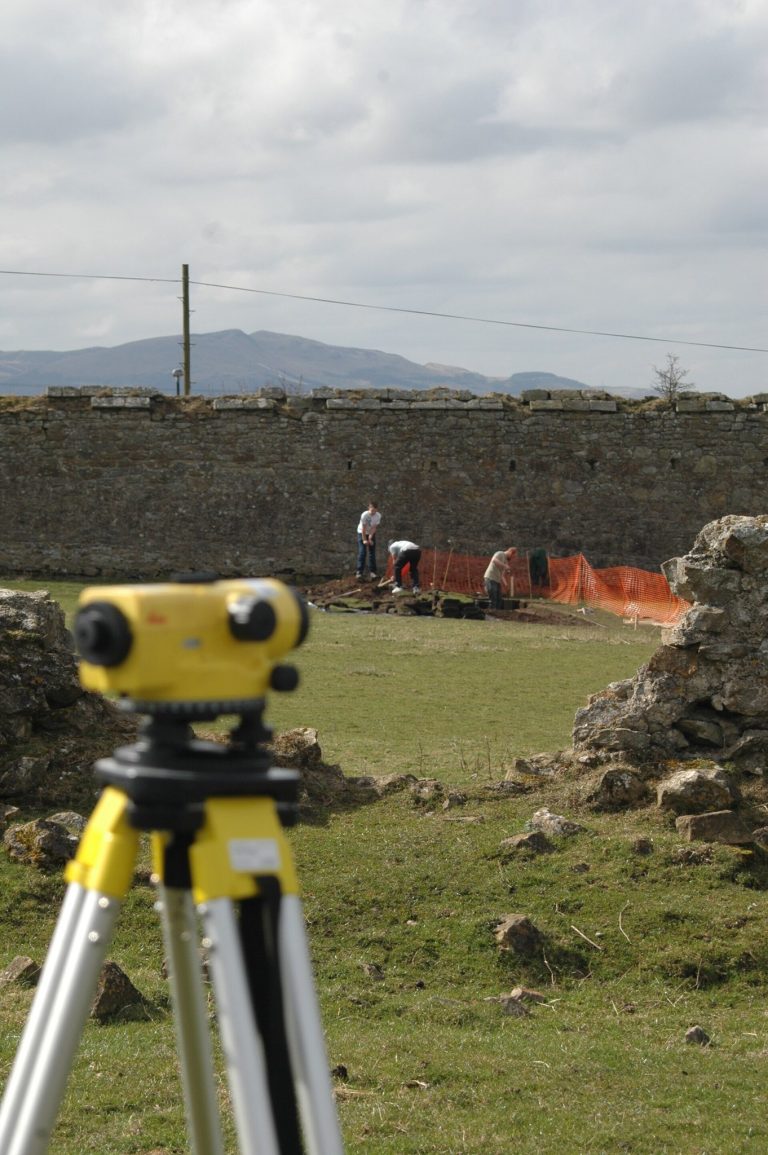
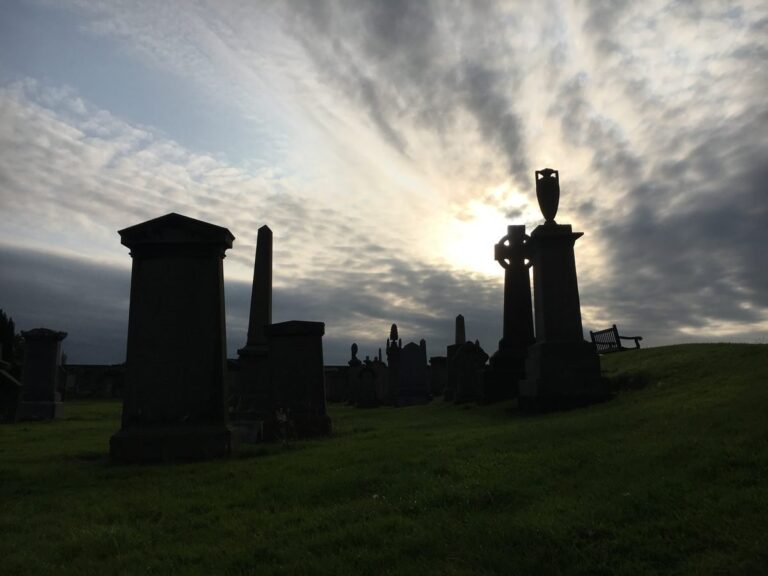
The abbey stood in a valley beside the River South Esk. Its church had a cruciform plan and measured 240 feet, about 73 metres, in length; the other monastic buildings were proportioned to it. The site includes burial grounds, traces of a chapel and cloisters, and remains of associated buildings. The principal remains of the abbey lie buried west and north of the original house.
The converted house and monastic fabric
Monastic range and house
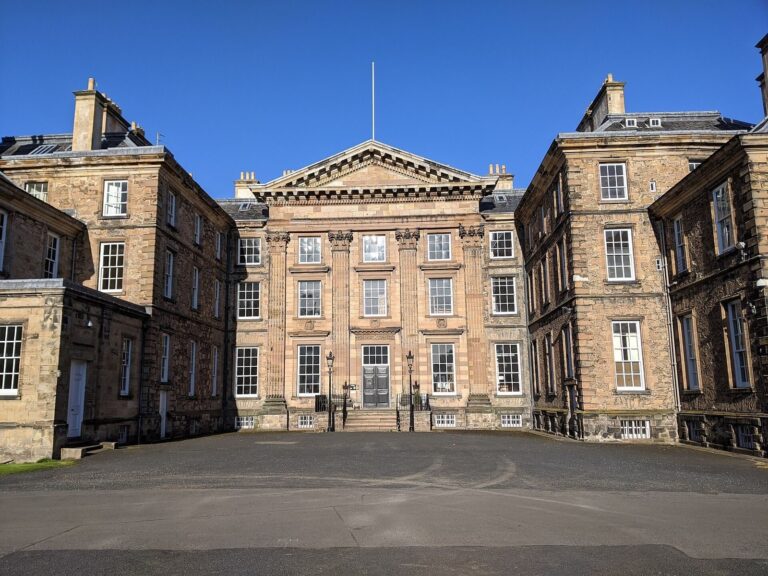
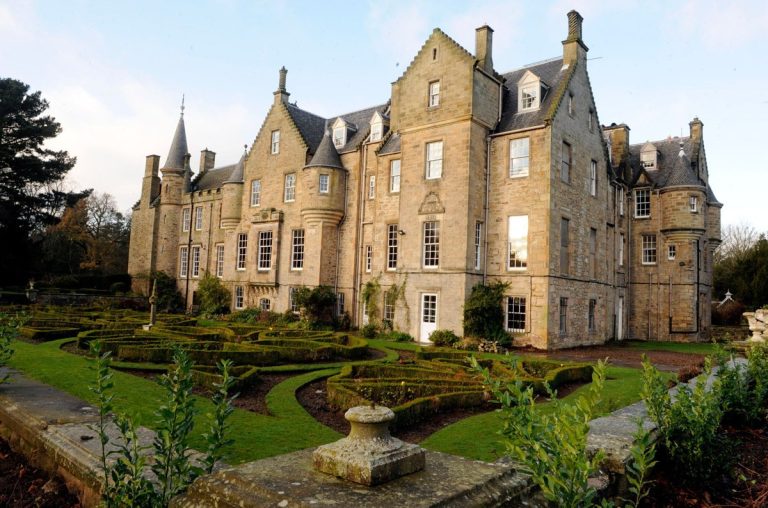
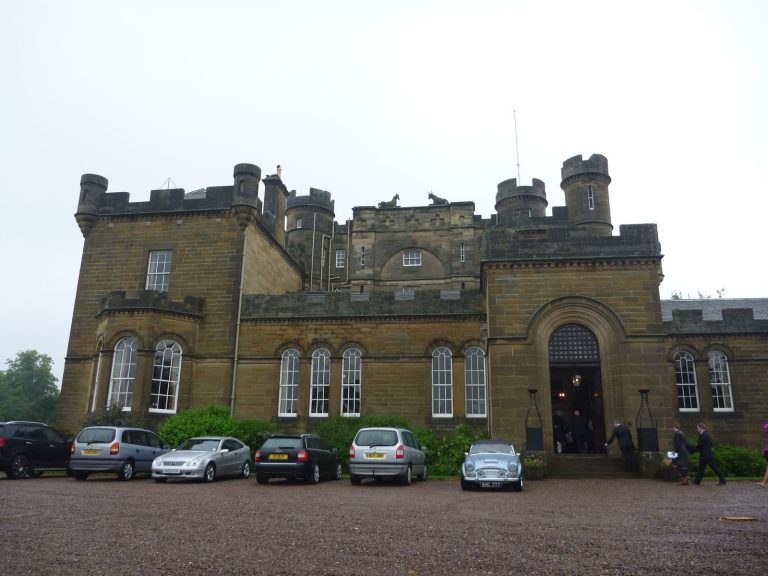
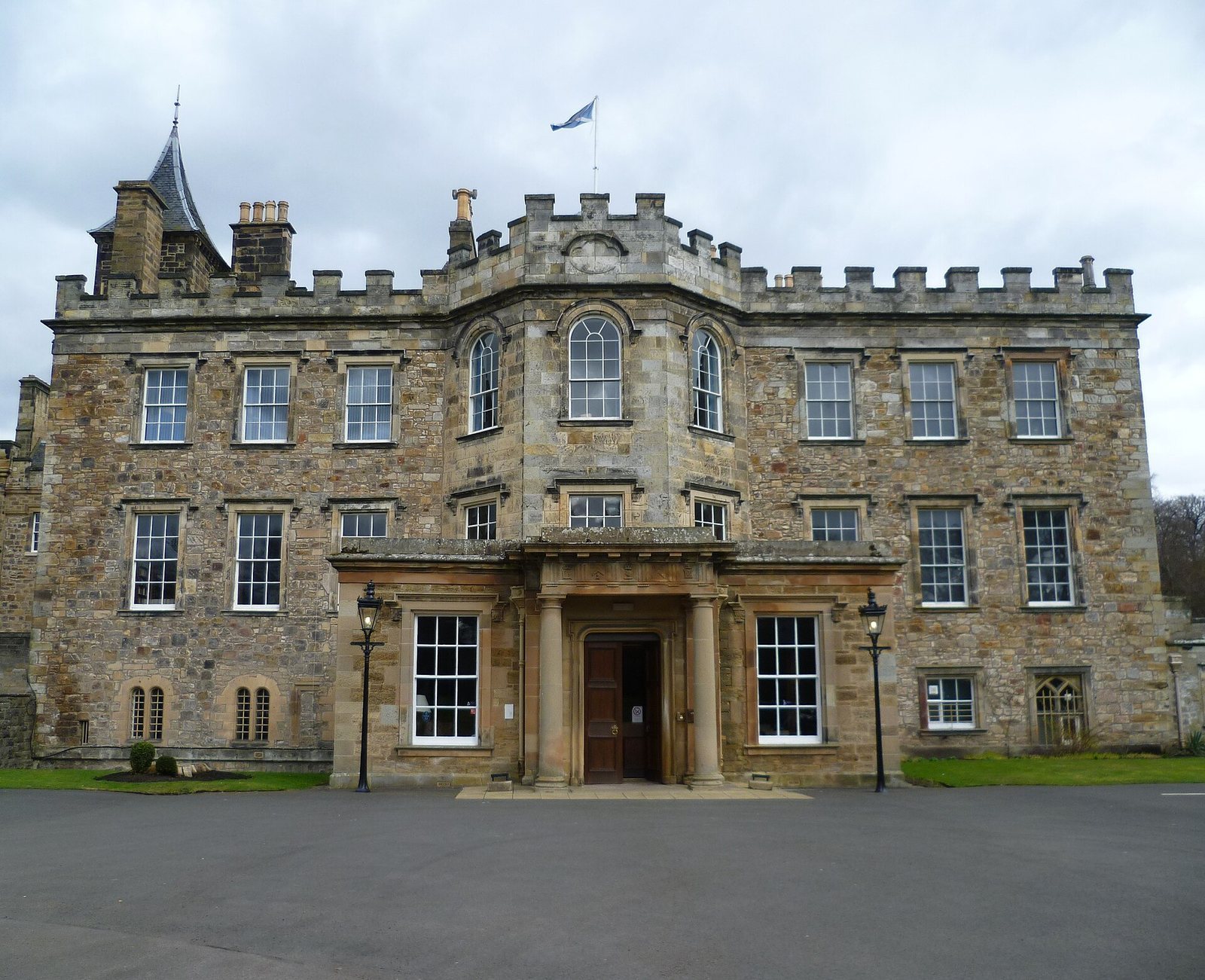
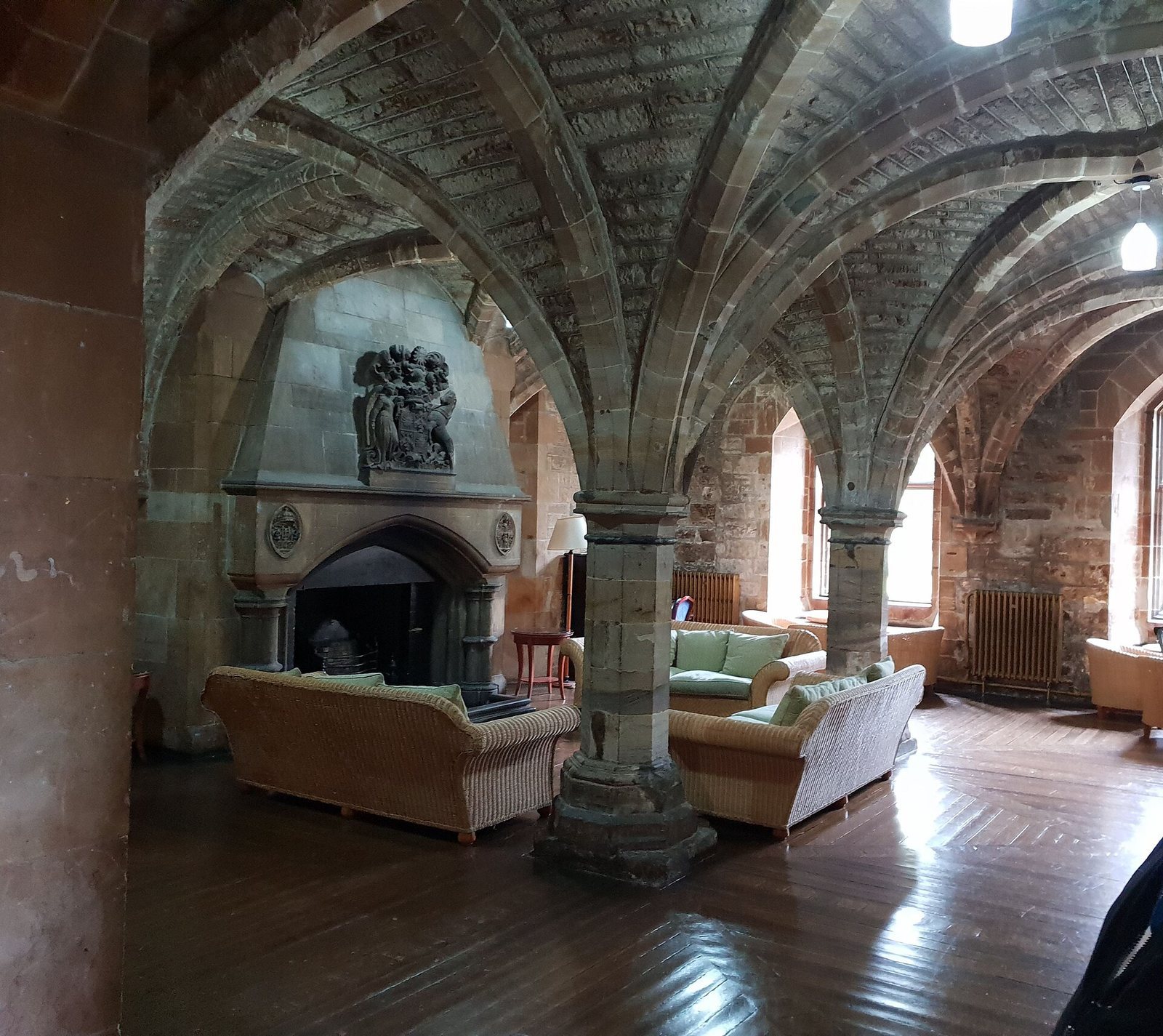
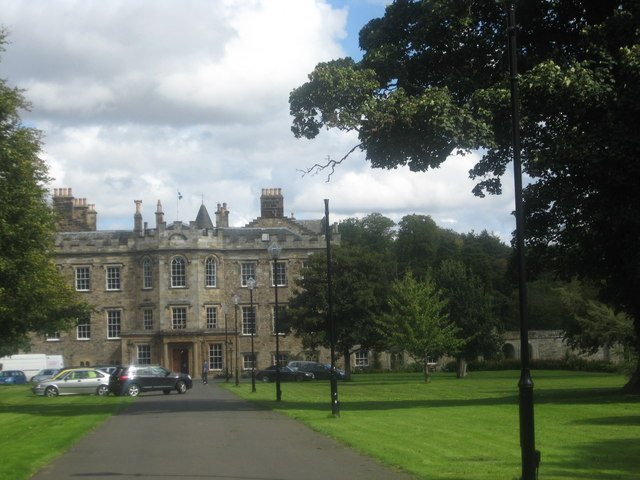
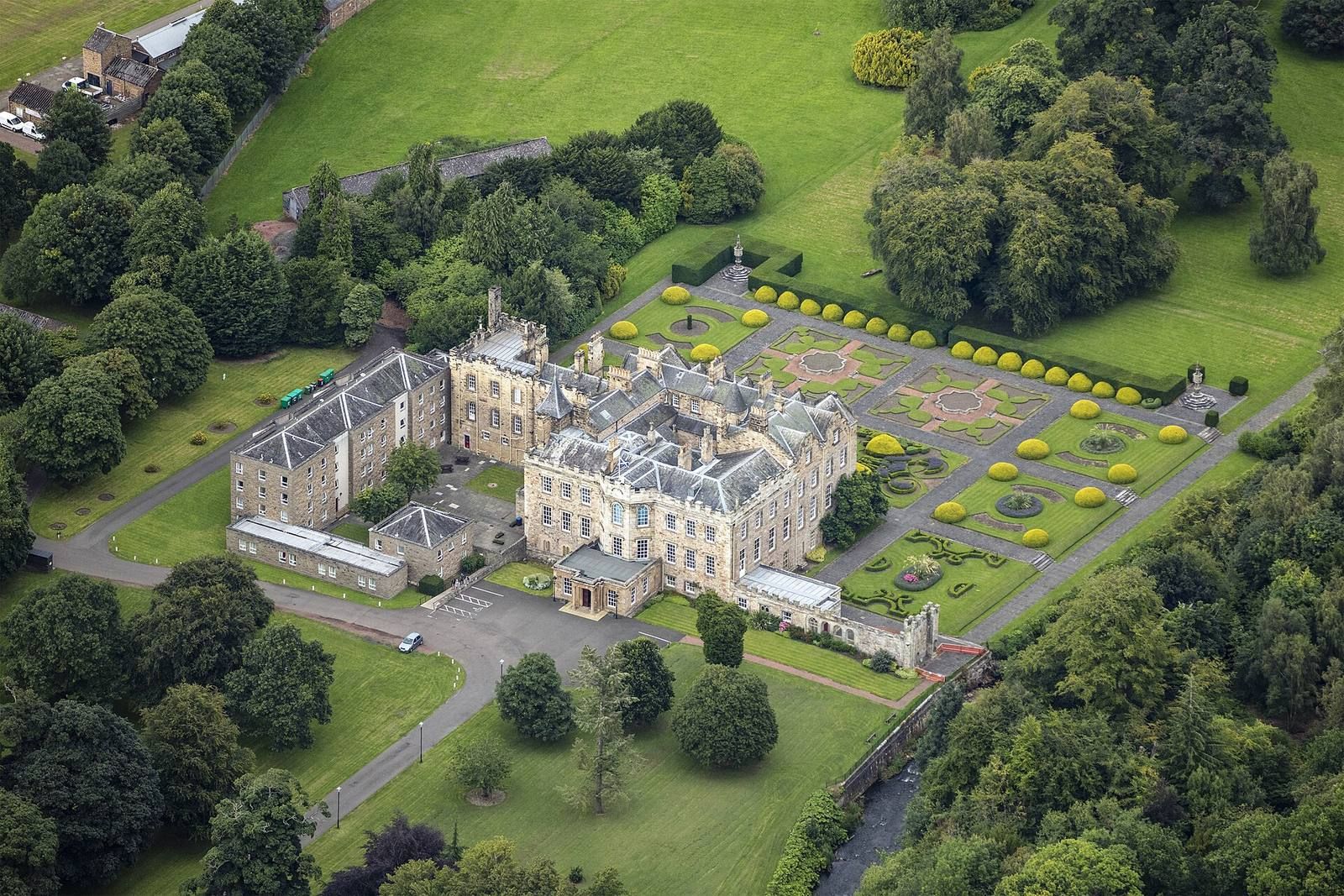
Part of the abbey was converted into a house, which forms the core of the present building. It incorporates part of the southern end of the monastic range, including the intact undercroft, the vaulted lower level beneath the monks’ dormitory. The house was modified and rebuilt by John Mylne in 1650, William Burn in 1836, and David Bryce in 1858.
Chapel and interiors
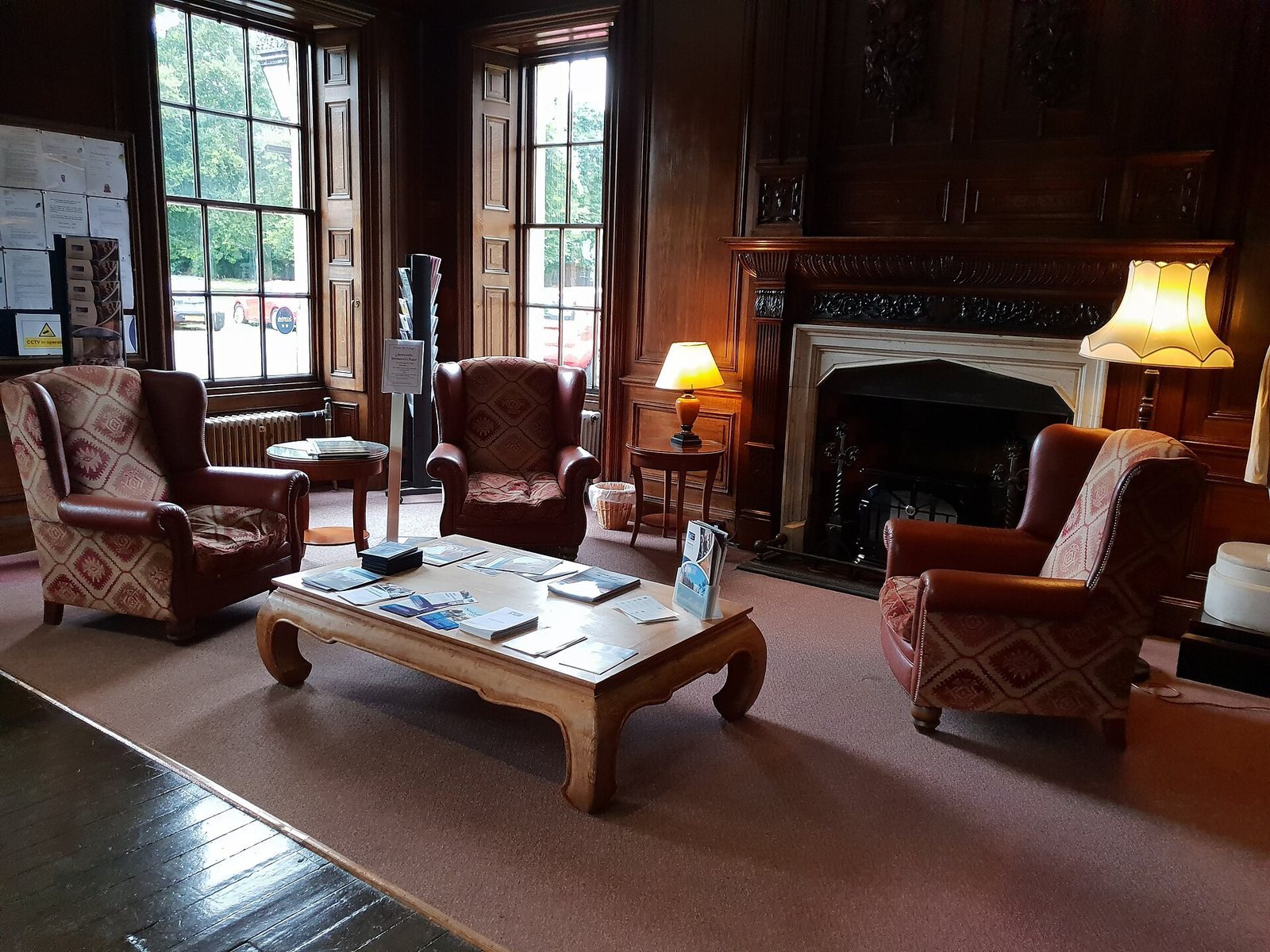
The nineteenth-century chapel occupies a vaulted undercroft that may belong to the original abbey buildings. It contains a sixteenth-century font and a parquet floor made from estate timber, laid in a pattern that imitates the original tilework. Thomas Bonnar decorated the drawing room around 1870. The library has oak lining and a moulded seventeenth-century ceiling.
Garden and entrance
The garden behind the house contains two large, octagonal sundials dating to the seventeenth century. The King’s Gate was built in honour of King George IV after his visit during his Scottish tour of 1822.