Heid Castle: A Historic Estate near Schillingen, Germany
Site at a Glance
- Rating
- 4.6
- Popularity
- Medium
- Country
- Germany
- Primary era
- Modern
- Eras represented
- Early Modern, Modern
- Civilizations
- Electorate of Trier, French, Holy Roman Empire
- Site type
- Domestic
- Remains
- Castle
On this page8 sections
History
Heid Castle is a historic estate near Schillingen, Germany. The estate originated in the 14th century on lands belonging to Schillingen and Heddert, while the castle is dated to around 1800.
From estate to lordly residence
In the 18th century, the estate belonged to the Trier cathedral chapter, the body of clergy responsible for a cathedral and its administration. Art collector Peter Job Hermes bought it at auction in 1804. Around 1850, his nephew Johann Peter Job Nell transformed the property into a manorial estate, landed property associated with a manor and its lord, and made it a residence for the lord. The name “castle” came into use over time. The property is also known as Burg Haid and Gutshof Heid.
Changes in the twentieth century
In 1932, the von Nell family ended the estate’s agricultural operation. That year, Director General Achter of Mönchengladbach bought the property. His grandson continues to run the estate.
Remains
Layout and architectural features
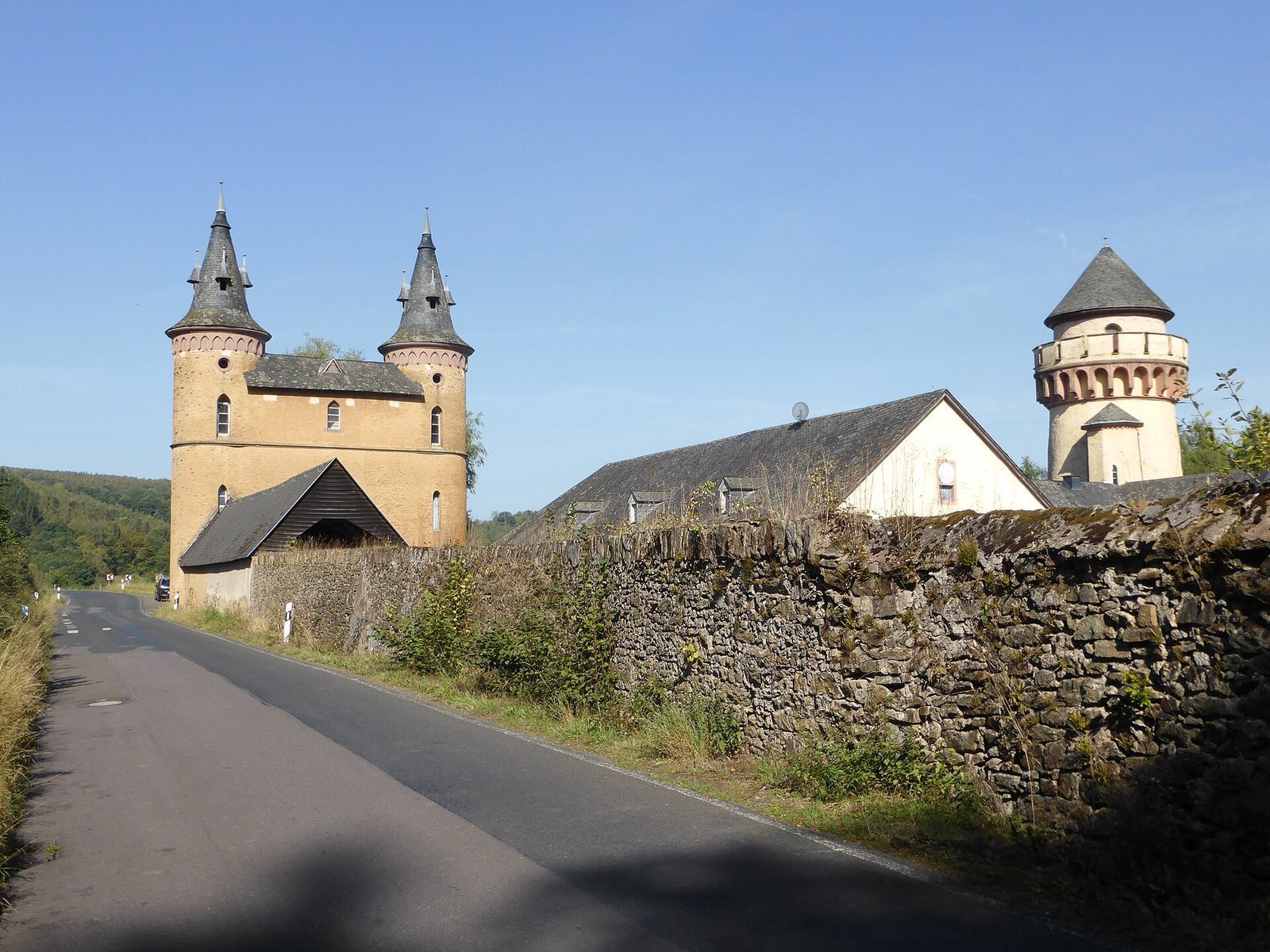
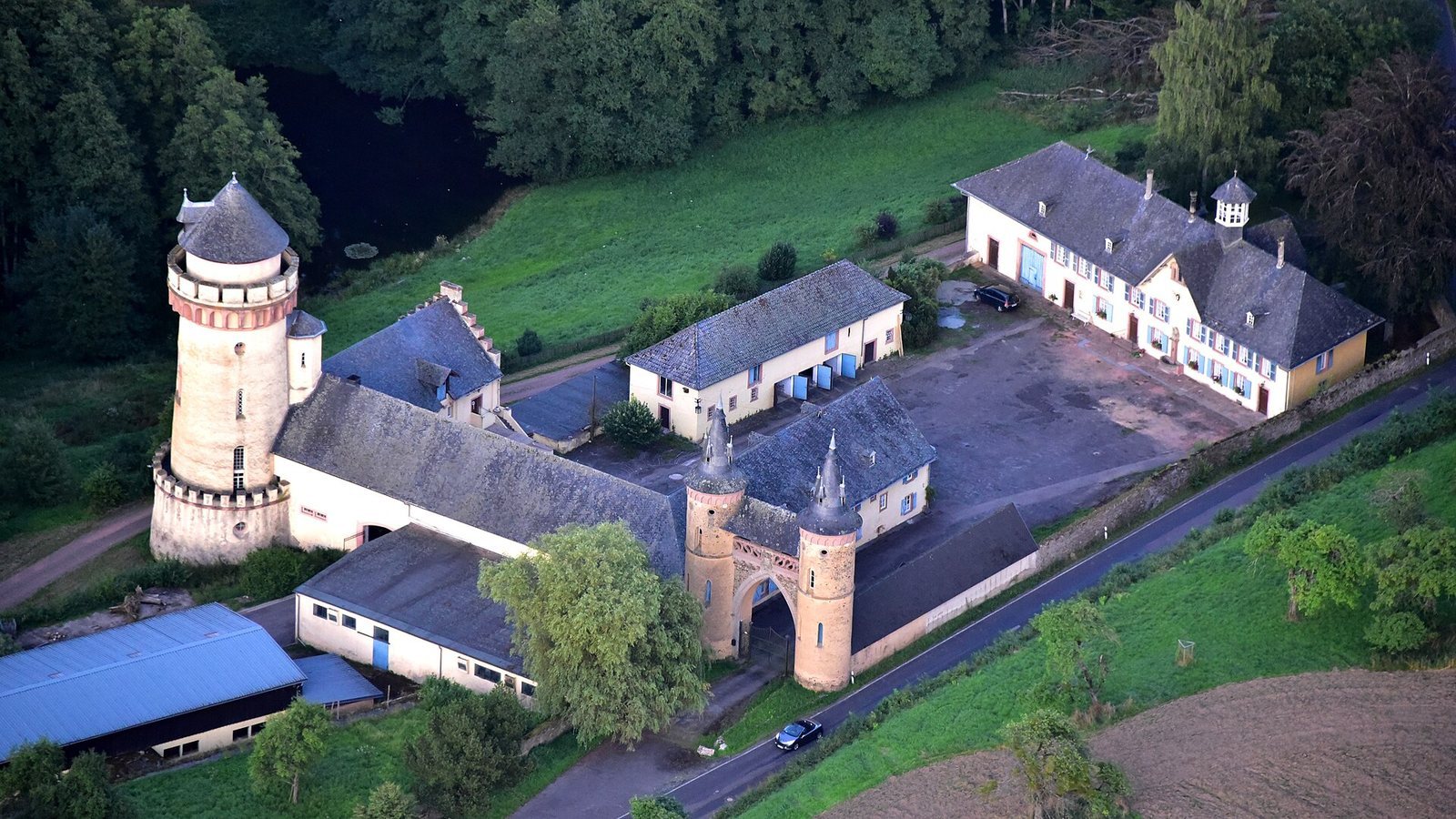
The preserved lowland castle, a castle built on relatively low ground rather than a hilltop, stands about 330 metres above sea level on the road between Lampaden and Heddert, within the municipality of Schillingen. It is near Lampaden’s former railway station and Burg Heider Mühle; nearby Heidkopf rises to 530 metres. The grounds include a constructed pond, and the surviving complex brings together an entrance, towers, a keep and a stable building.
Entrance and gate towers
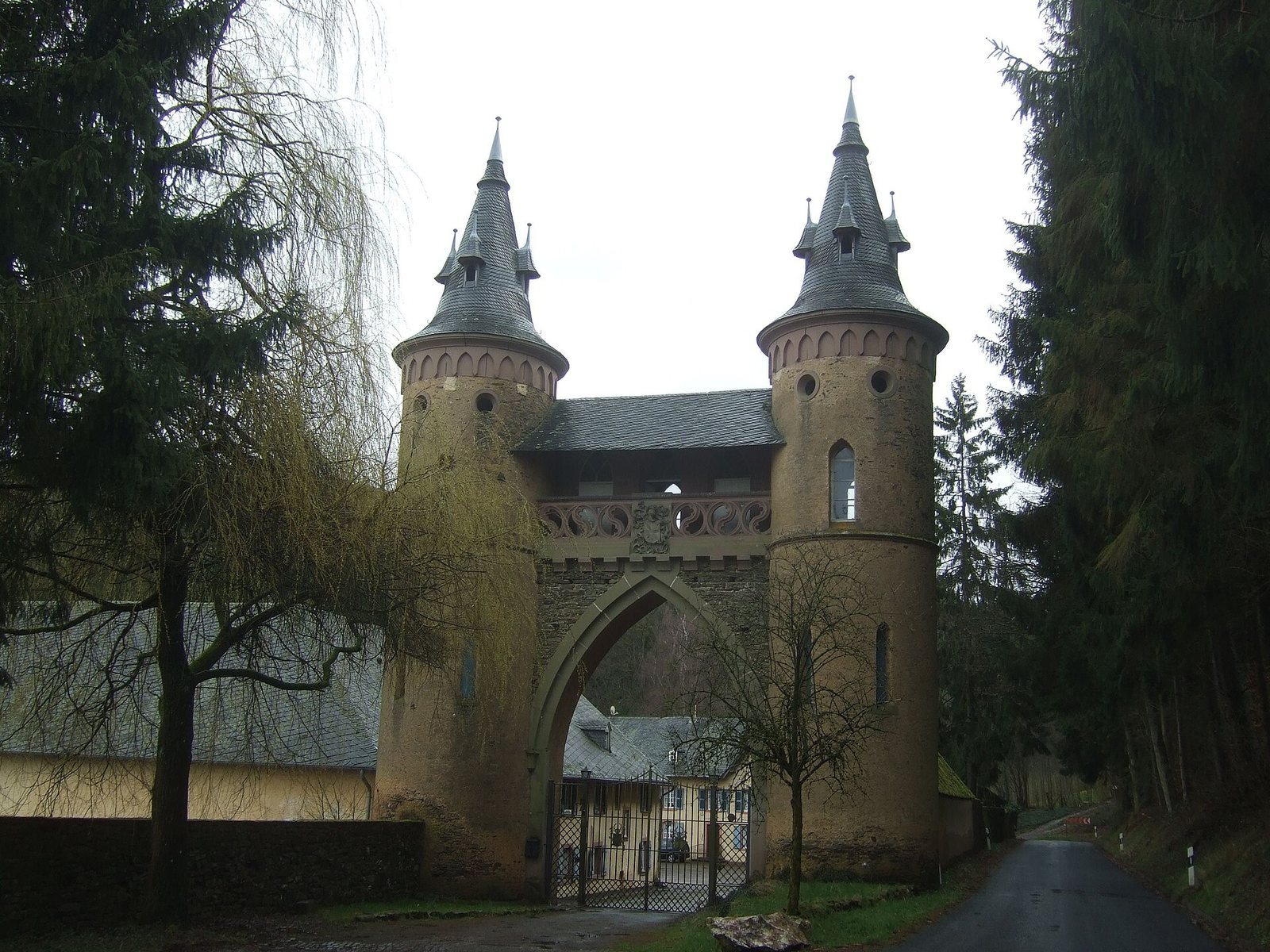
The entrance lies between two gate towers with helmet-shaped roofs. A large coat of arms carved in sandstone, belonging to the von Nell zu Thomenacher family, is set above the entrance.
Towers and stable
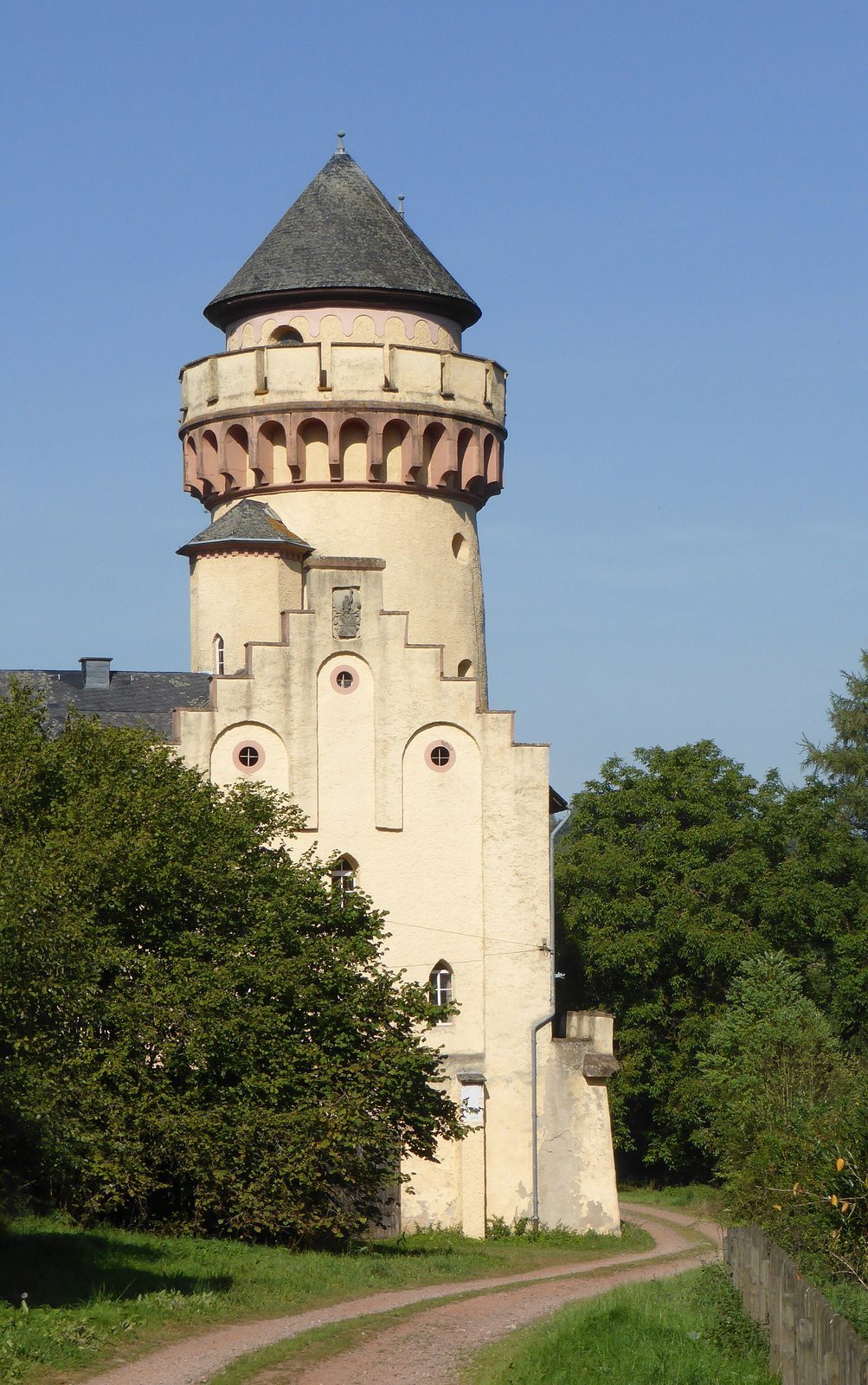
The ensemble also includes a large round tower and a keep, a fortified tower within a castle. A stable building follows the same form.
Pond and basin
The constructed pond, together with the coat of arms above the entrance, suggests that the estate may once have functioned as a water castle. In front of the main building is an 18th-century half-basin with shell-shaped ribs. Its former well post was later replaced by a red sandstone pillar bearing a figure of the Virgin Mary, the mother of Jesus in Christian tradition, holding the child Jesus on her right arm.