Grestain Abbey: A Norman Benedictine Monastery in France
Site at a Glance
- Popularity
- Medium
- Country
- France
- Primary era
- Medieval
- Eras represented
- Medieval, Early Modern
- Civilizations
- French
- Site type
- Religious
- Remains
- Fortified Monastery
On this page12 sections
History
Grestain Abbey is a Norman Benedictine monastery founded around 1050 in present-day Fatouville-Grestain, France. Norman nobleman Herluin de Conteville and his wife Arlette, the mother of William the Conqueror, established it in the Norman architectural tradition. The abbey later helped extend the family’s ecclesiastical influence in England after William’s conquest of the country.
Foundation and family endowment
Traditions about the foundation connect it with Herluin’s illness and visions of the Virgin Mary. In one version, Mary directed him to seek treatment at a healing spring at Carbec. After recovering, he founded a Marian abbey in the nearby Vilaine Valley and established a chapel at Carbec associated with the spring of Saint-Méen, a Breton saint linked to healing. Another version portrays Herluin’s illness as spiritual, requiring penance. In this account, he restored a chapel to Mary near the spring and founded the abbey there after a second vision.
The abbey began with limited resources, and members of Herluin’s family supplied nearly all its support during its first three decades. Its fortunes rose as Herluin and his sons gained influence. His son Robert, Count of Mortain and William the Conqueror’s half-brother, became the principal benefactor. Robert gave the abbey English revenues and 32 hides of land, a historical land measure, which had belonged to the dowry of his deceased first wife, Mathilde de Montgommery.
A compilation of the abbey’s charters, which record its foundation and donations in Normandy and England, survives in three later copies. Historian David Bates discovered it shortly before 1990, and Bates and Véronique Gazeau dated its original to about autumn 1082. Its closing attestations include William the Conqueror, Odo, bishop of Bayeux and Herluin’s son, Robert of Mortain, the Norman nobles Roger de Beaumont and Roger de Montgommery, and the archbishop of Rouen.
Church connections in England and monastic life
Grestain was a Roman Catholic abbey belonging to the Diocese of Lisieux. Benedictine monks, who followed the Rule of Saint Benedict, came from the Norman abbey of Saint-Wandrille and occupied Grestain for about 710 years. After the Norman Conquest, the abbey established churches and monastic houses in England, while its abbots ordained many English priests. Many churches listed in the Domesday Book, William’s survey of English land and resources in 1085–86, are traced to Grestain as their founding institution.
Associated houses included Saint-Astier, given by Geoffroi, Grestain’s second abbot; Sainte-Scolasse, also known as Saint-Nicolas-en-Scolasse, given by Herluin; and Saint-Nicol, or Saint-Nicolas-du-Val-de-Claire, near Honfleur, given by William the Conqueror. Grestain’s abbots also held the patronage of Barneville parish, giving them the right to appoint its priest and receive two-thirds of its tithe, a levy on produce or income.
For about five years, some monks devoted more attention to fishing and hunting than to prayer. A letter from the bishop of Lisieux to Pope Alexander III brought that episode to an end.
War and damage
During the Hundred Years’ War, a long series of conflicts between the English and French crowns, Anglo-Navarrese forces sacked the abbey in 1358. The monks took refuge at their house in Rouen’s parish of Saint-Éloi. The abbey came under attack again between 15 November 1364 and 10 August 1365. It was retaken in 1365, but the returning monks found it partly destroyed and nearly levelled.
Near the end of the war, King Charles VII stayed at Grestain for several days or weeks during the siege of Honfleur.
Commendatory abbots and closure
Guillaume d’Escalles became the first commendatory abbot in 1481 and held the position until 1502. A commendatory abbot received an abbey’s title and revenues, without necessarily directing its monastic community. In 1503, the monks elected Jean VIII de Fatouville, but he gave up the office at the insistence of King Louis XII. Charles de Tilly-Blaru, abbot from 1787 to 1790, was the last commendatory holder.
The bishop of Lisieux formally ended Grestain’s conventual status in 1757. The church buildings were demolished around 1766, and the rest of the abbey was destroyed in 1790 amid revolutionary upheaval in France. New owners began restoration work in the 1960s. On 7 November 1975, the abbey’s surviving fabric received listing as historic monuments in France.
Remains
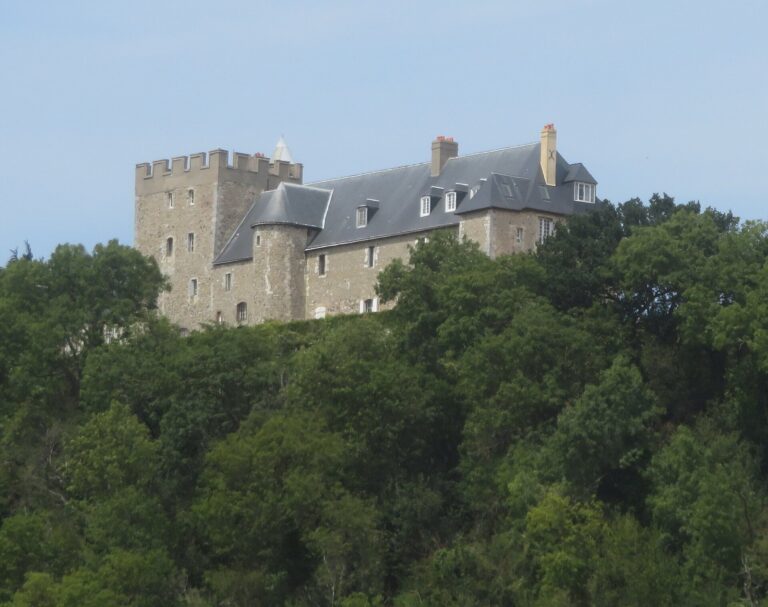
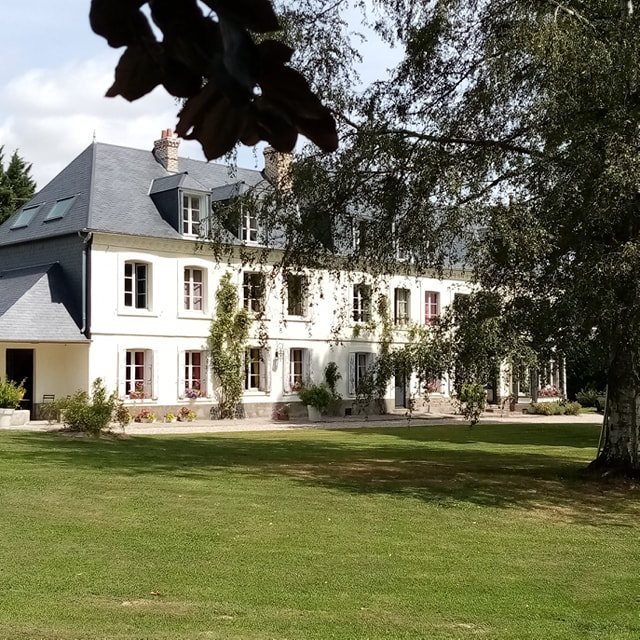
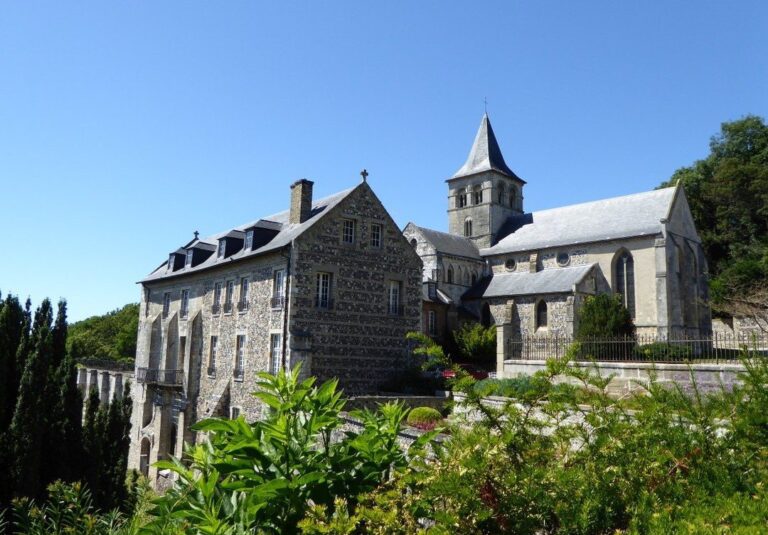
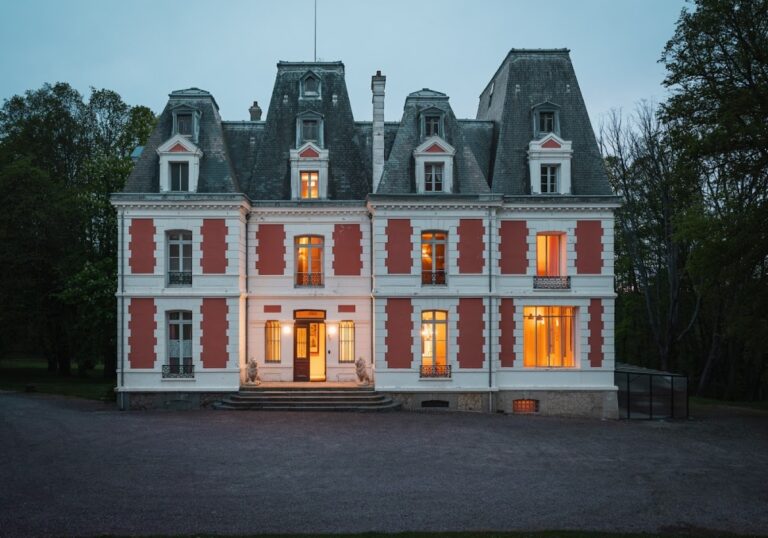
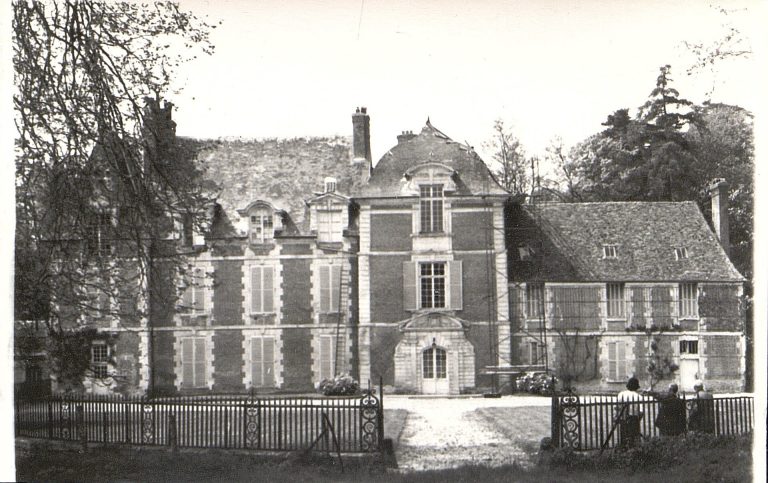
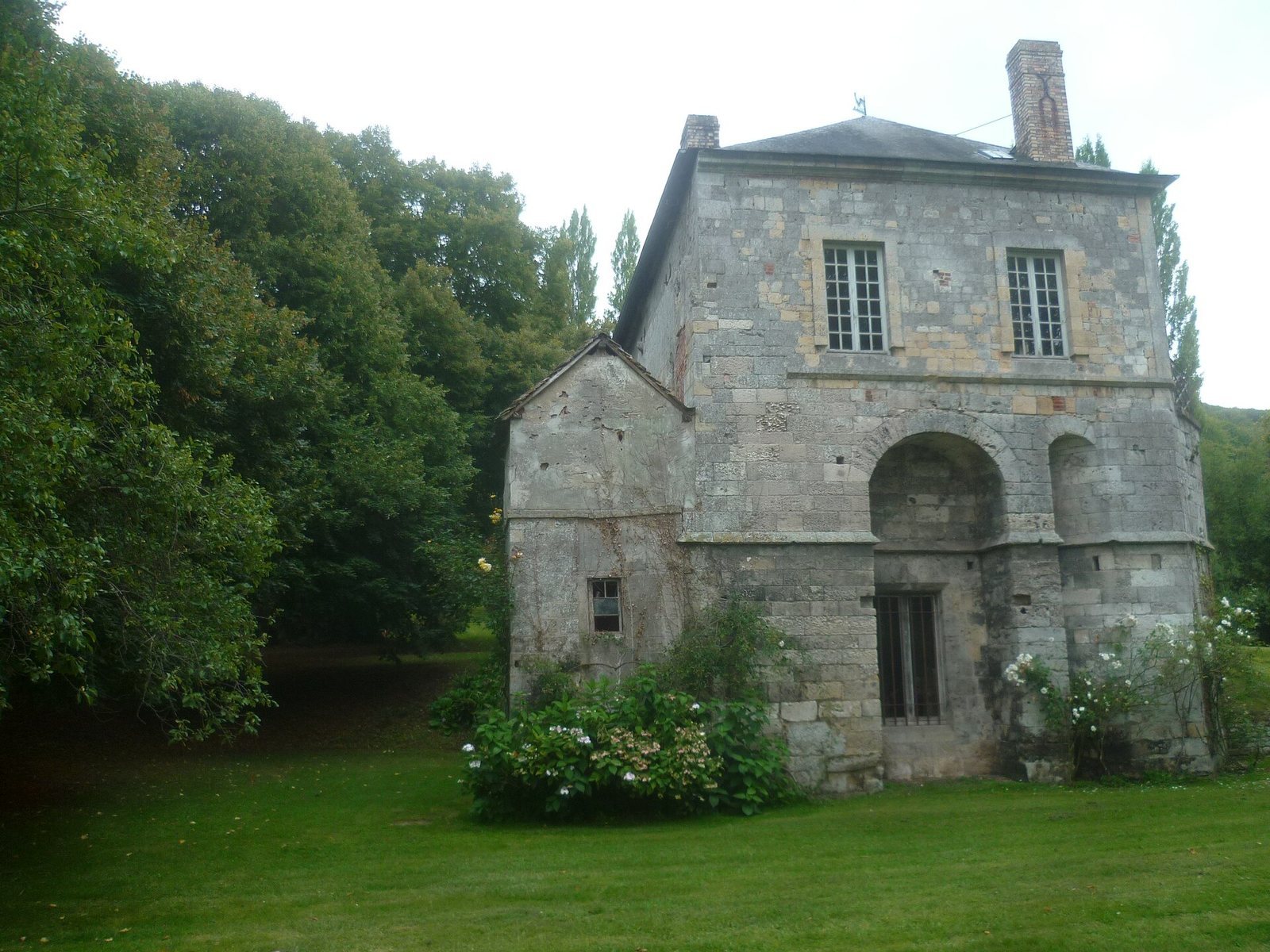
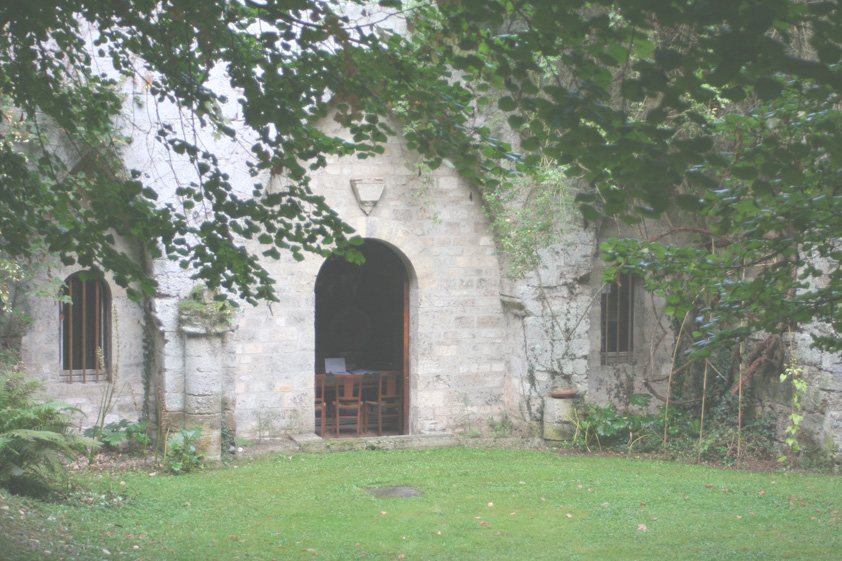
Built in the Norman style near the Seine estuary and a few kilometres from Honfleur, Grestain’s surviving ruins are incorporated into the Château de La Pommeraye complex. The remains include an enclosing defensive wall, a thirteenth-century portal, parts of the church, and a surviving church pillar. An eighteenth-century manor house stands over a thirteenth-century hall that escaped demolition.
Surviving abbey fabric
Enclosing wall and portal
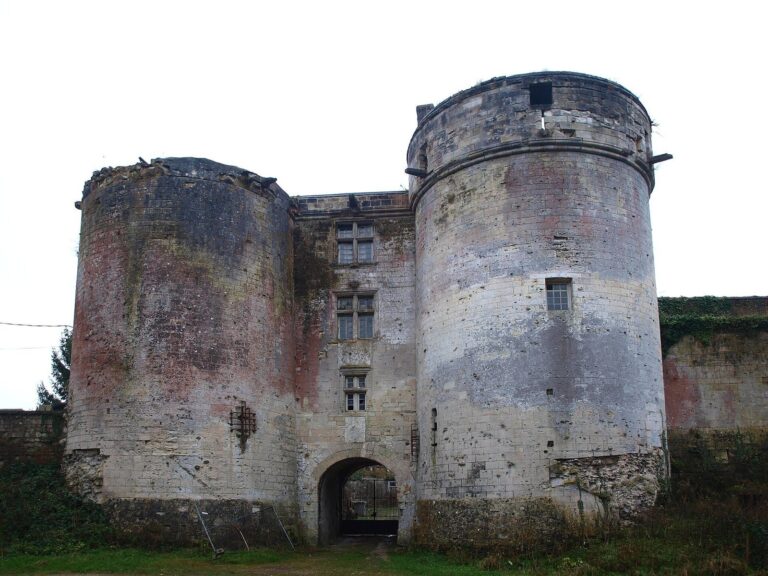
An enclosing defensive wall survives as part of the abbey remains. The site also retains a portal dating to the thirteenth century.
Church remains and pillar
Fragments of the abbey church survive, including a pillar that bears a commemorative plaque naming Arlette, Herluin, Robert of Mortain, and Mathilde de Montgommery among those buried in the former church. Arlette’s burial was also reported by the chronicler Robert of Torigni, but historian David C. Douglas considered it unlikely: the abbey was probably founded after her death, and she is not named as a benefactor.
Later buildings and associated features
Hall and manor house
A thirteenth-century hall survived the demolition of the abbey buildings. An eighteenth-century manor house was later built over it.
Former abbey altar
Alfred Canel recorded the abbey’s former altar in the choir of Notre-Dame du Val church in Saint-Pierre-du-Val. At the time of his description, the choir was the surviving part of a church that has since disappeared.