Neues Schloss Tylsen: A Renaissance Castle in Germany
Site at a Glance
- Popularity
- Medium
- Country
- Germany
- Primary era
- Early Modern
- Eras represented
- Early Modern, Modern
- Civilizations
- Holy Roman Empire, Kingdom of Prussia, Margraviate of Brandenburg
- Site type
- Domestic
- Remains
- Castle
On this page4 sections
History
Construction and enlargement
Neues Schloss Tylsen is a Renaissance castle ruin in Germany, built in 1620–1621 by Thomas II von dem Knesebeck, a member of an Altmark noble family. Its architecture reflected the Renaissance, a European cultural and artistic movement that shaped building design and the visual arts. The castle was regarded as one of the Altmark’s most magnificent. The Altmark is a historic region in present-day northern Saxony-Anhalt.
The new castle stood near a smaller castle that was still standing but in poor condition. That Old Castle housed a library dating from before the Thirty Years’ War, the major European conflict fought from 1618 to 1648. Neues Schloss Tylsen was enlarged between 1853 and 1856.
Postwar destruction
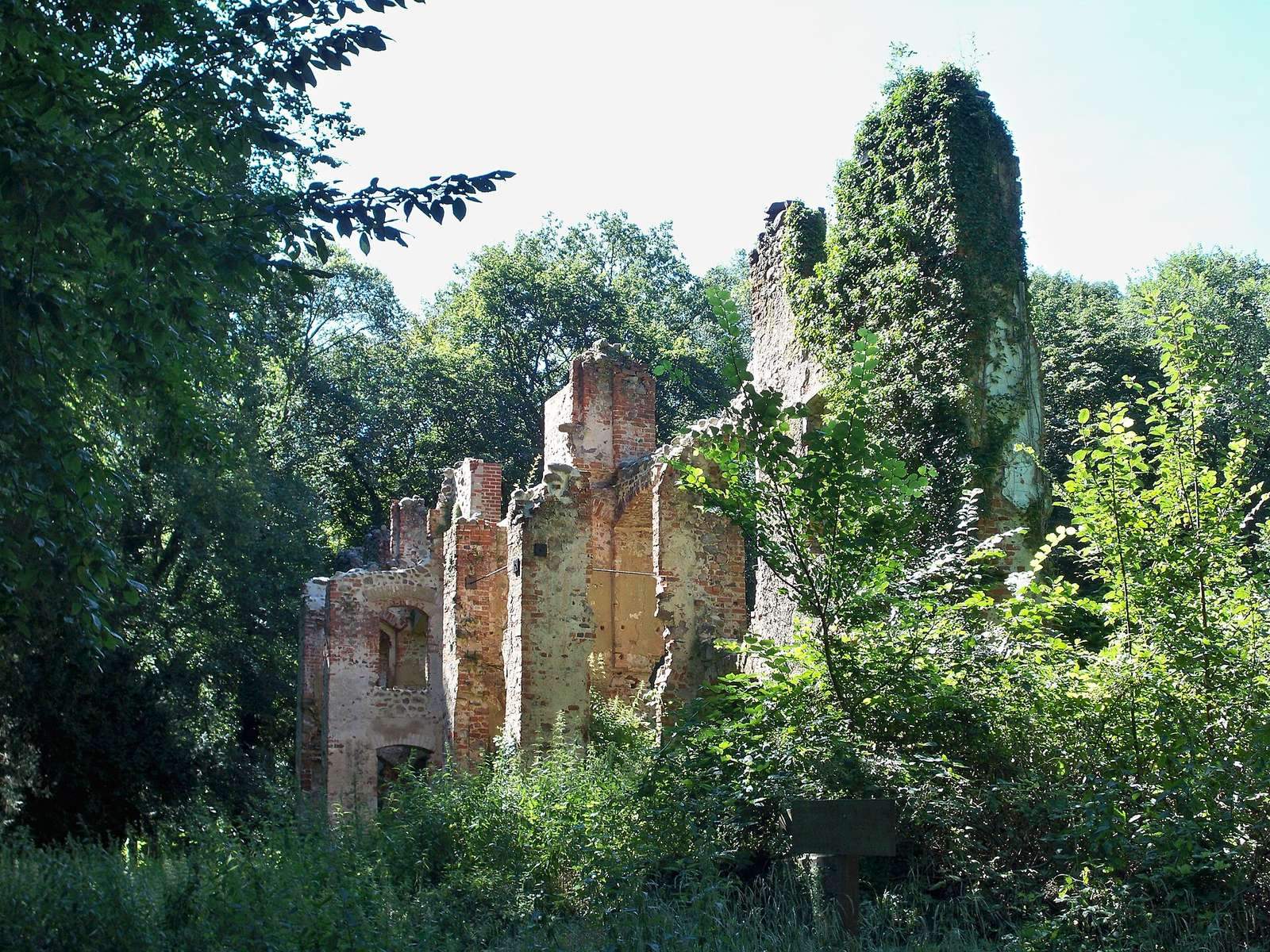
Neues Schloss Tylsen survived the Second World War without damage, but it was destroyed during the 1948–1949 land reform under Order No. 209 of the Soviet Military Administration in Germany, the Soviet occupation authority after the war. Demolition began with the removal of the roof tiles, which were reused in new buildings at Niephagen, then a district of Tylsen. Concern that the remaining structure might collapse led to a decision to renovate the ruin in 2015.
Remains
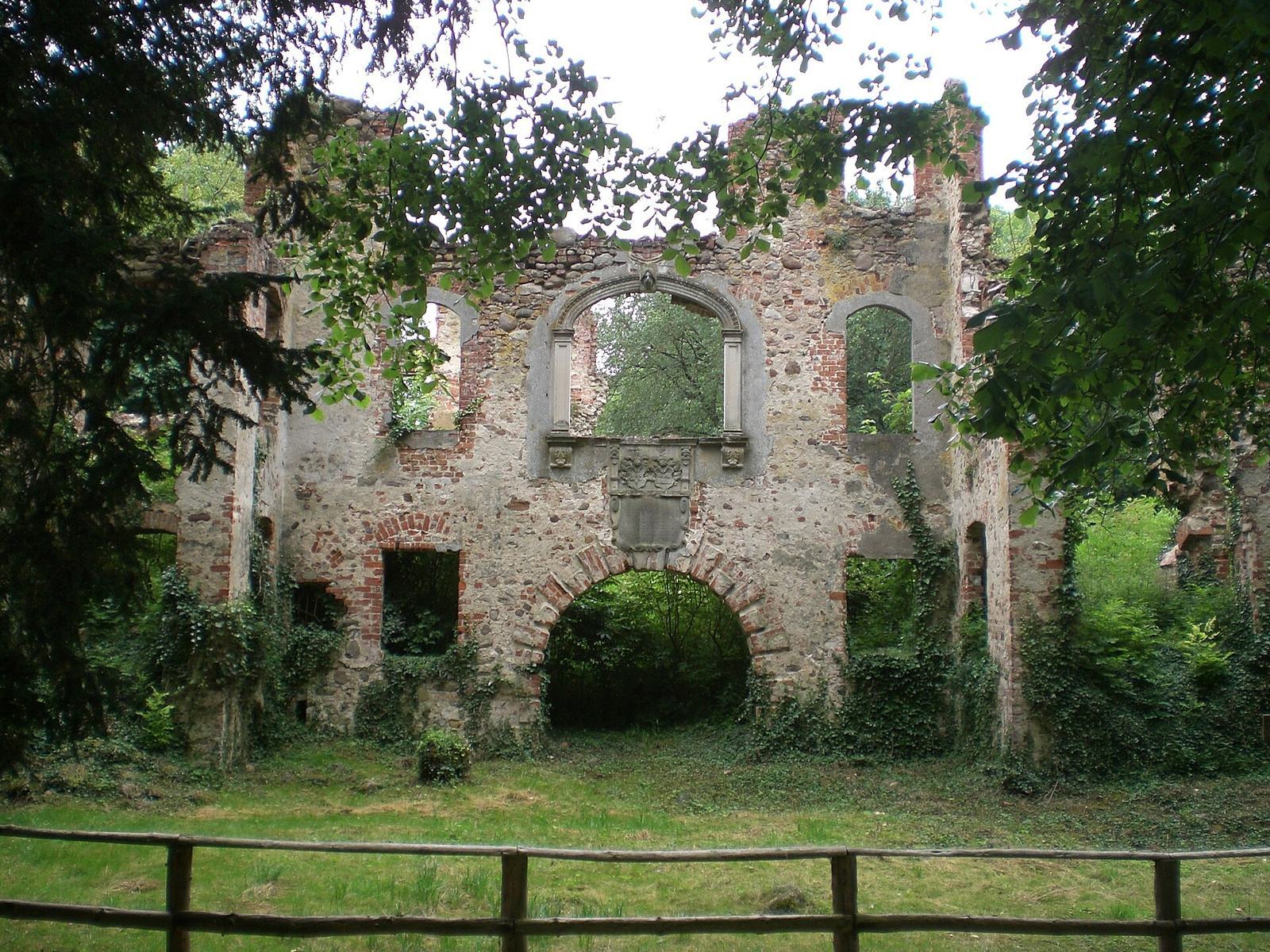
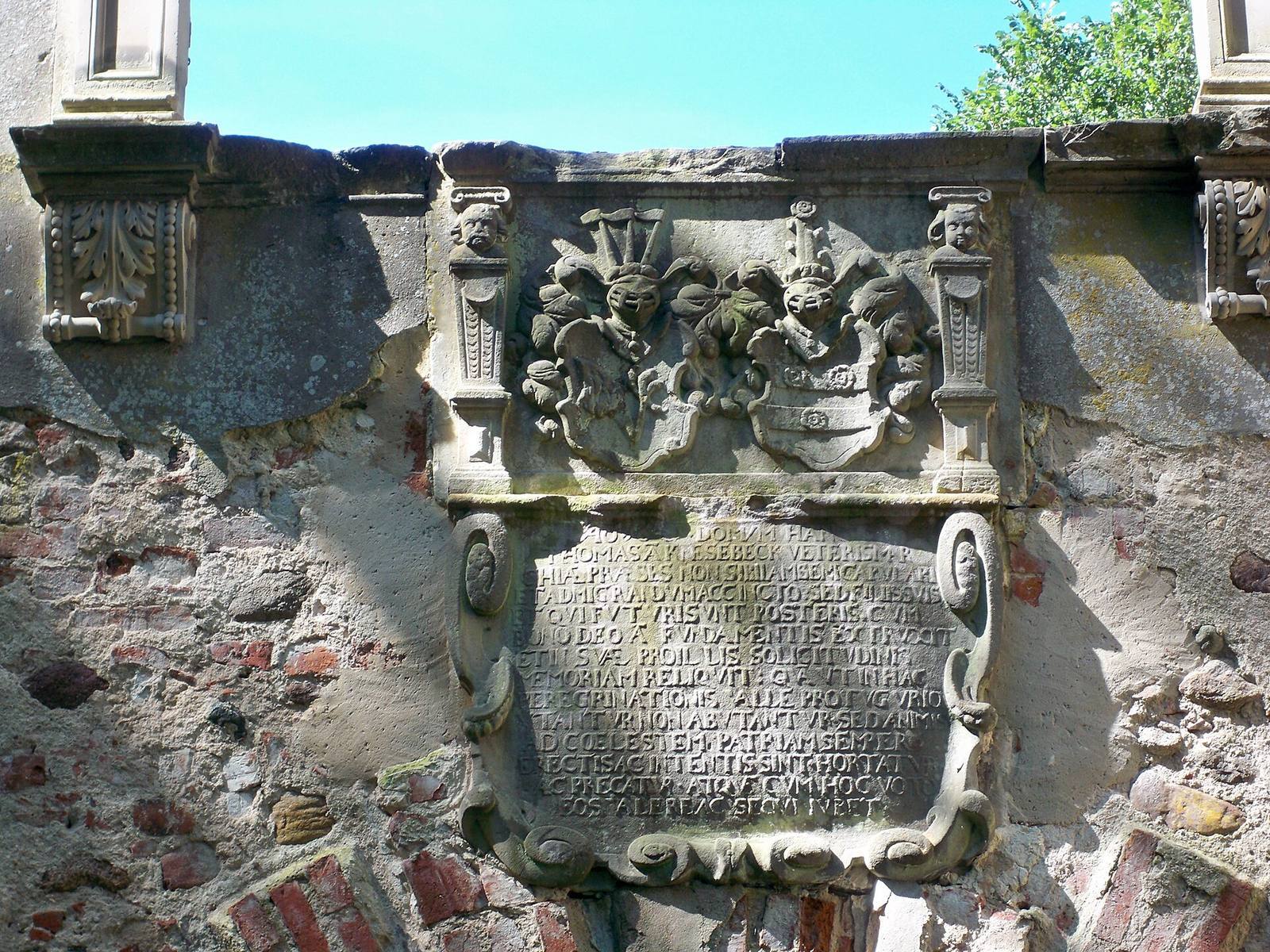
The surviving ruin is the remnant of a three-storey building with Renaissance gables. Its entrance to the inner courtyard was positioned at the center of the castle, with a double coat of arms representing the Knesebeck and Alvensleben families above it.
The castle’s interiors once held numerous paintings, including Renaissance panels and ancestral portraits dating from the sixteenth to eighteenth centuries. The portraits included works by Antoine Pesne, a French-born painter who worked at the Prussian court.