Stöckheim Megalithic Tomb: A Neolithic Burial Monument in Germany
Site at a Glance
- Popularity
- Low
- Country
- Germany
- Primary era
- Stone Age
- Eras represented
- Stone Age
- Civilizations
- Unclassified
- Site type
- Burial
- Remains
- Tomb
On this page10 sections
History
Neolithic origins
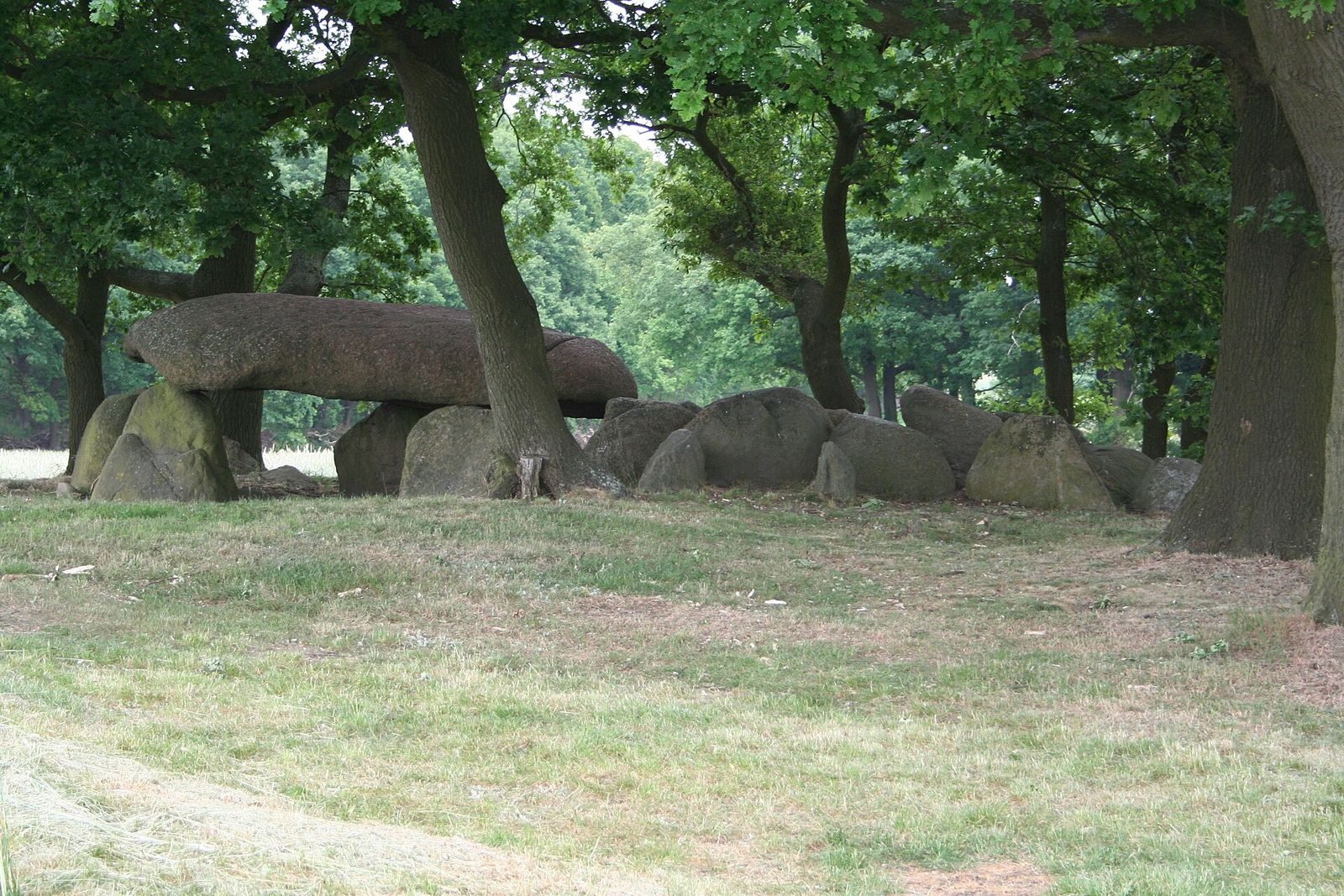
The Stöckheim Megalithic Tomb is a Neolithic burial monument in Germany. It dates to 3700–3350 BC and is associated with the Deeply Incised Pottery culture, named for pottery decorated with deeply impressed or cut patterns. The tomb is a large dolmen, a stone burial chamber formed from upright supports and covered by large capstones.
Nineteenth-century study
Johann Friedrich Danneil described the tomb in 1843. Hermann Dietrichs and Ludolf Parisius visited it in 1883 and published an account. During the 1890s, Eduard Krause and Otto Schoetensack renewed the survey of megalithic tombs across the Altmark, a historic region in northern Saxony-Anhalt.
Regional legends
Local tradition calls the tomb Goliath’s grave. In one tale, after David defeated him in the biblical story, Goliath left the Holy Land and chose Stöckheim as his resting place. He supposedly returned for a golden coffin and a gravestone, carrying the latter on his back with a gold chain. The chain was said to have worn a groove into the northern capstone. The story also claims that Goliath comes out each New Year’s night to scrape three cup-shaped hollows into the stone, each as large as the wound made by David’s sling.
Another tale attributes the chamber to underground beings who abducted children. A steward at the Ahlum manor supposedly dismissed warnings and failed to protect his daughter. The beings were said to have exchanged the healthy, beautiful girl for an ugly girl with a mental illness, who died at 18. The same beings were believed to leave the chamber to bowl on a stone near the Ahlum mill. That stone was taken away in 1901 and reused as building material.
Survey and care
Since 1972, the Young Archaeologists of the Altmark association has cleared vegetation from the tomb each year. In 2003–04, the association worked with the State Office for Heritage Management and Archaeology of Saxony-Anhalt and the Johann Friedrich Danneil Museum in Salzwedel to survey and measure all surviving megalithic tombs in the Altmark.
Remains
Setting and layout
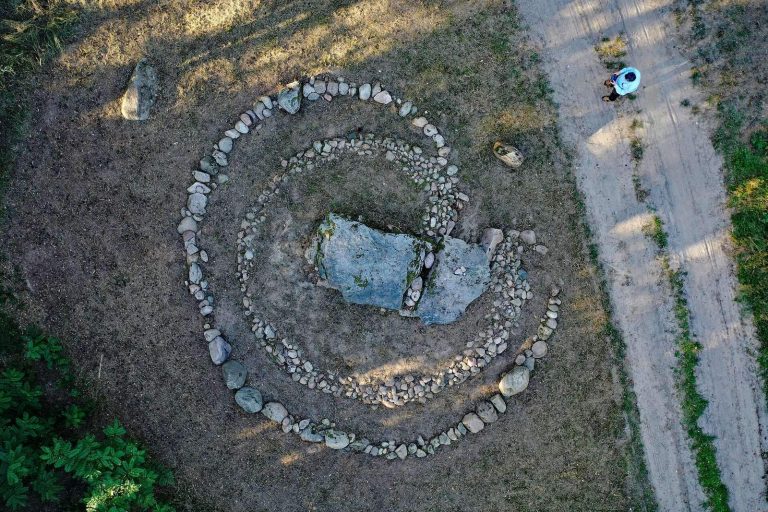
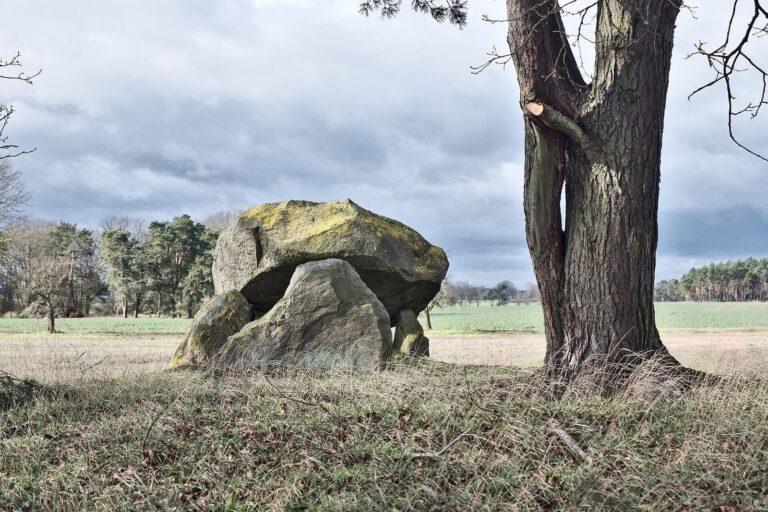
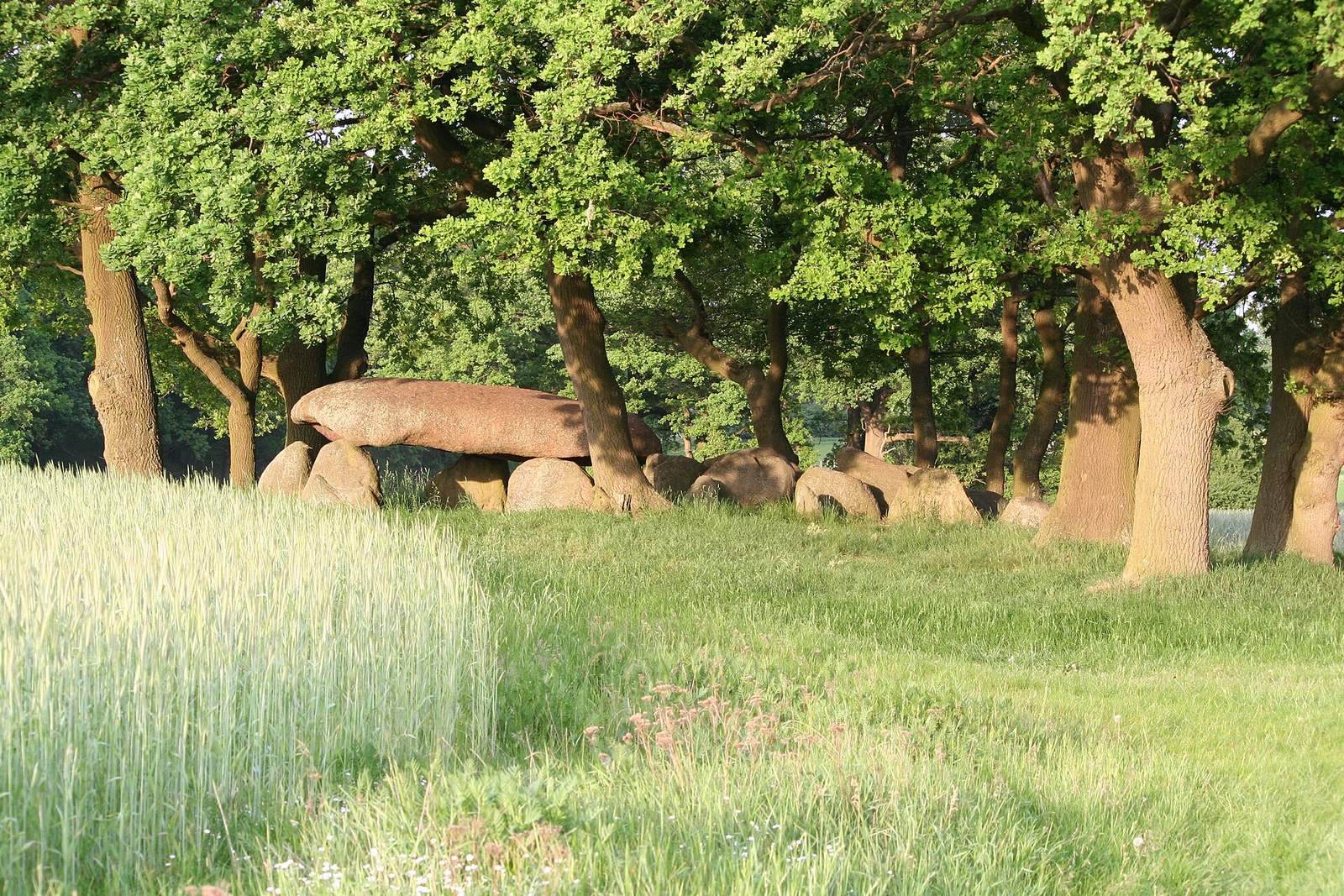
The tomb stands in a field just beyond Stöckheim’s southern edge, east of the road to Lüdelsen, among a small group of trees. It rests on a low, flat mound aligned north–south. The Lüdelsen megalithic tombs lie 1.8 km to the west-southwest.
Chamber and passage
Burial chamber
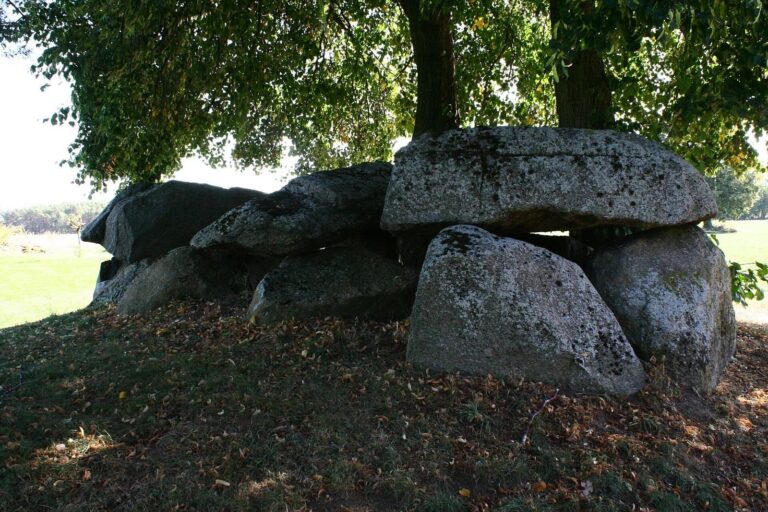
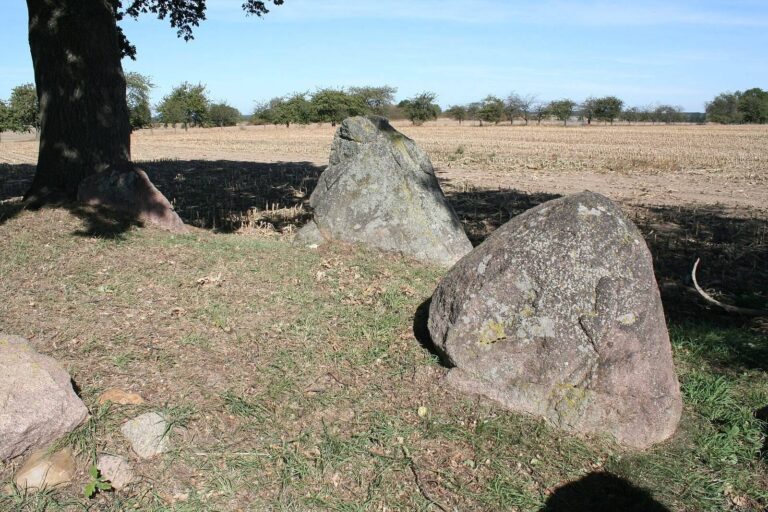
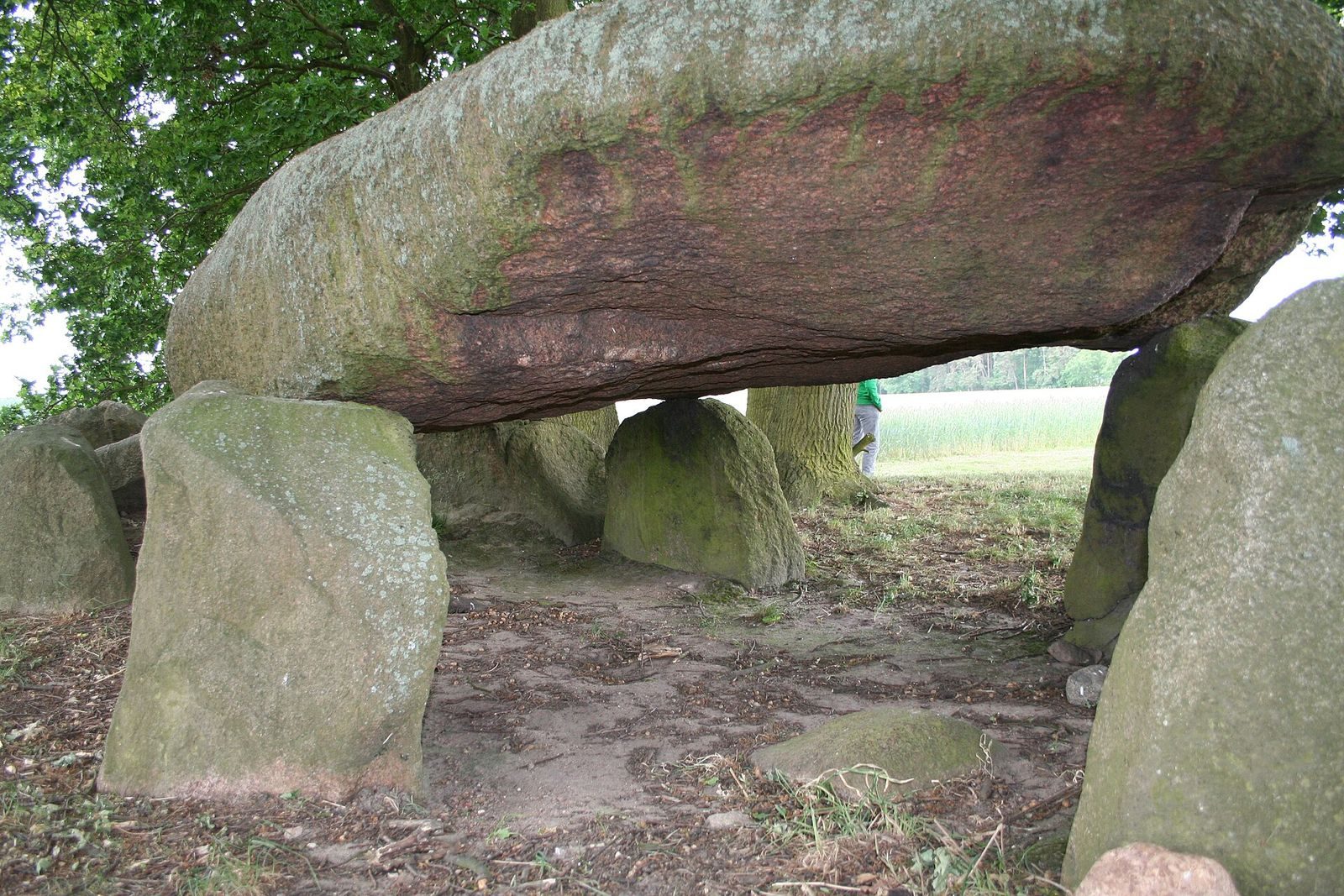
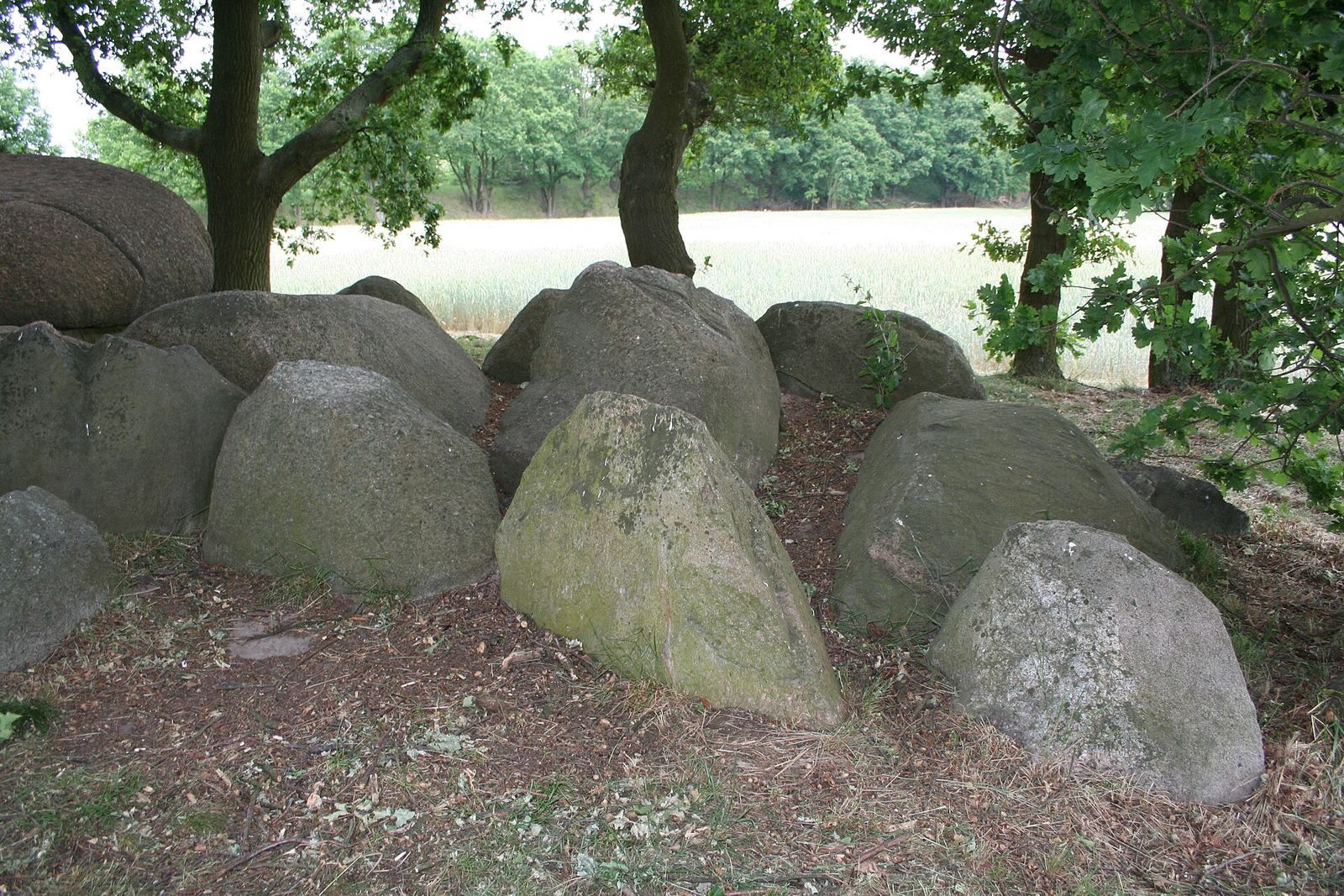
The north–south chamber was formed from 16 supporting stones and four capstones. It has a trapezoidal plan, widening toward the north, and measures 9.2 m long and 1.8–2.2 m across, with a height of about 1 m. Two supports have fallen, and the three southern capstones have collapsed. The northern capstone remains in place and is the largest surviving capstone among the Altmark’s megalithic tombs. It measures 4.5 m by 2.9 m and is 0.8 m thick, with an estimated weight of about 22 tonnes. A deep groove marks its southwest corner, and more than 80 small, cup-shaped hollows are carved into its surface.
Entrance passage
A passage leads into the chamber. Two small supporting stones and a capstone that has slipped from its position form the passage, which measures 0.8 m wide and 0.4 m high.