Schallenburg: A Historic Water Castle in Germany
Site at a Glance
- Popularity
- Medium
- Country
- Germany
- Primary era
- Medieval
- Eras represented
- Medieval, Modern
- Civilizations
- Holy Roman Empire
- Site type
- Military
- Remains
- Castle
On this page7 sections
History
Schallenburg is a lowland water castle in Germany, built between 1100 and 1200. A lowland castle stands on low-lying ground, while a water castle is associated with water as part of its setting or defenses. The castle was first mentioned in the 12th century. Its name points to the von Schall zu Bell family of Cologne, members of the city’s leading urban elite, as its original owners.
Renovation and later ownership
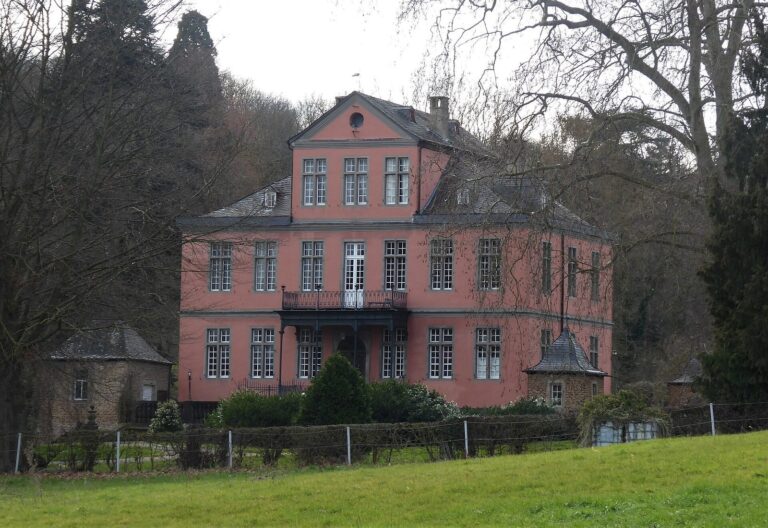
The present building was renovated in 1694. Toward the end of the 18th century, the main building passed to the Spürck family, who were part of the bourgeoisie. Arnold Spürck sold it in 1835. During the 19th century, a park and outbuildings were added. Schallenburg remains one of the few inhabited water castles in the Rhineland.
Remains
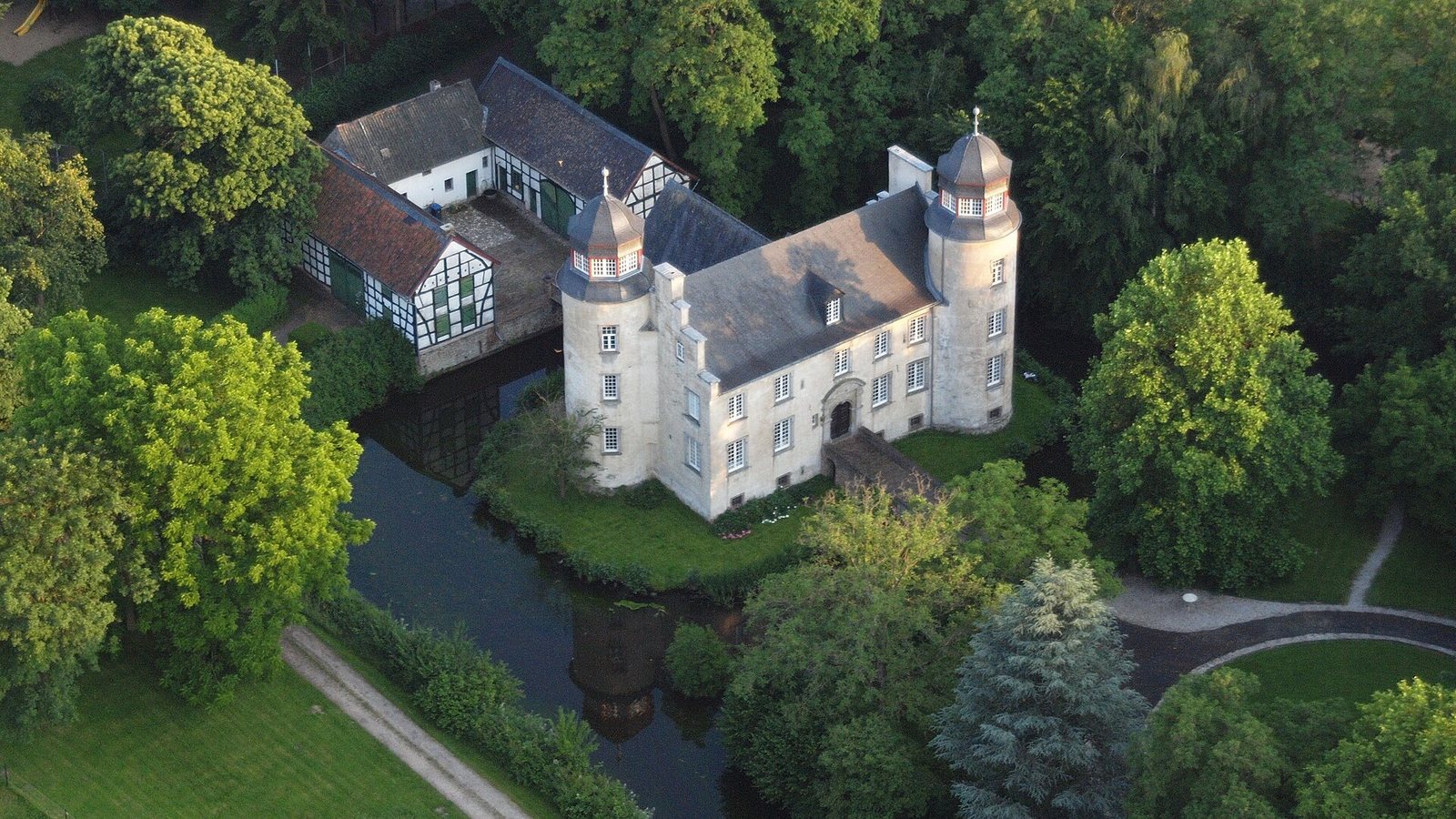
The castle complex has two parts: a principal building and a three-wing outer bailey, an area outside the main enclosure that often held supporting buildings. The surviving structures combine plastered brick construction and half-timbering, in which a timber frame is filled with other materials.
Buildings and grounds
Principal building
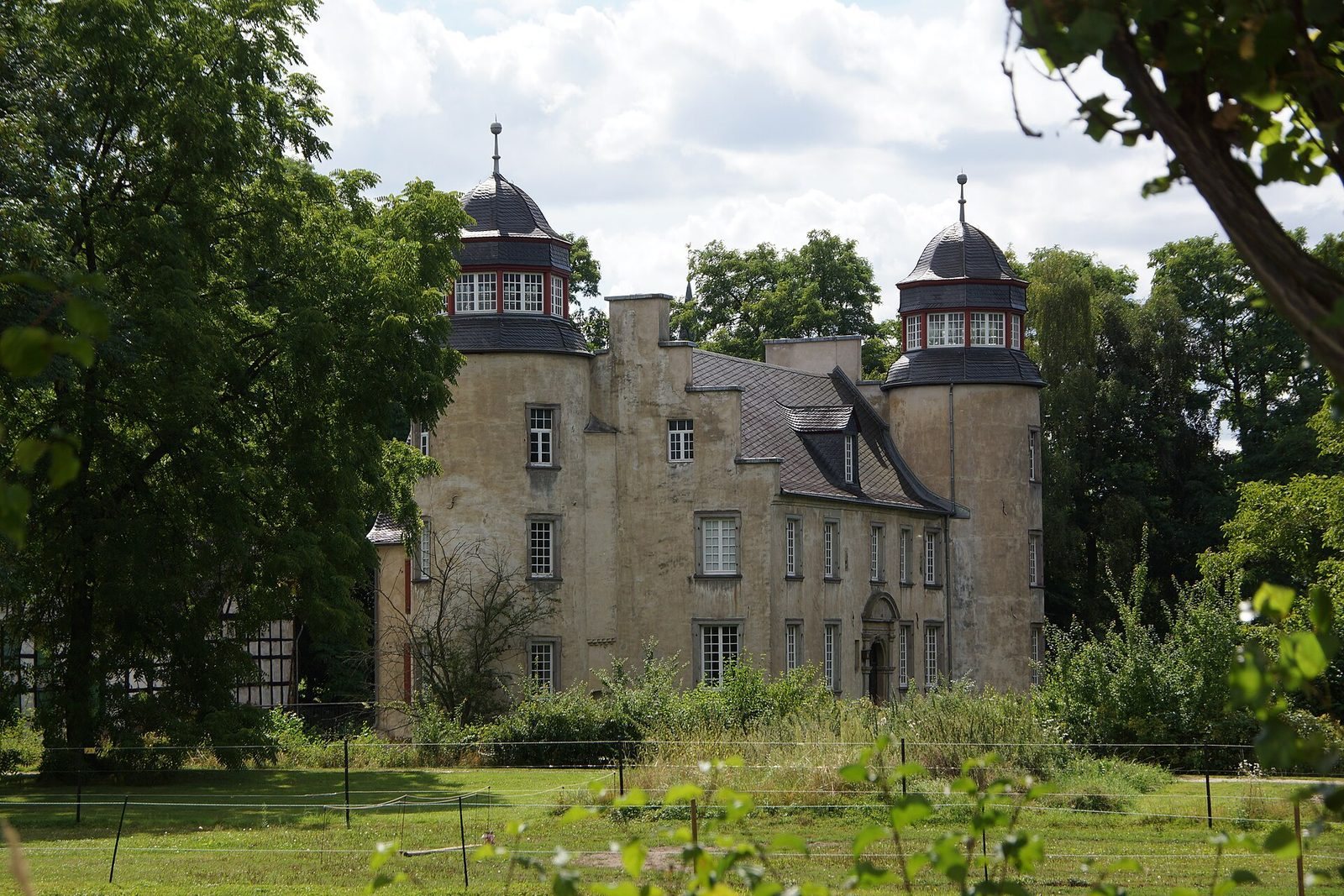
The main building is a rectangular, two-storey structure set crosswise. Its plastered brick façade is organized into five vertical divisions. Two round corner towers stand opposite one another, each rising three storeys.
Outer bailey
The outer bailey has three wings and is built using half-timbering.
Park and outbuildings
The castle grounds also include a park and outbuildings, which form part of the complex’s later development.