Abbey of the Île Barbe: A Monastic Centre in the Lyon Region
Site at a Glance
- Popularity
- Medium
- Country
- France
- Primary era
- Medieval
- Eras represented
- Medieval
- Civilizations
- Unclassified
- Site type
- Religious
- Remains
- Fortified Monastery
On this page10 sections
History
The Abbey of the Île Barbe was a Roman Catholic monastery on Île Barbe in France. It began in the fifth century as a community of hermits and became the first monastic establishment in the Lyon region, as well as one of the oldest in Gaul. The community adopted the Benedictine Rule, a set of monastic guidelines, in the ninth century. Its dedication changed from Saint Andrew to Saint Martin in the tenth century.
Early foundations and Carolingian era
In the seventh century, the monastery established a priory at the place that became Saint-Rambert-sur-Loire and is now Saint-Just-Saint-Rambert. The abbey endured repeated attacks, including plundering in 676, a raid by Saracens in 725, and an attack by Hungarians in 937. It nevertheless grew wealthy. Charlemagne, the Frankish ruler crowned emperor in 800, endowed it with a library.
In 816, Louis the Pious, Charlemagne’s son and successor, granted the monastery toll-free passage for three ships on the Saône, Rhône, and Doubs, and issued a decree of immunity and protection. Charles of Provence, a Carolingian ruler, confirmed the decree in 861. A charter issued by Conrad the Pacific, king of Burgundy, in 971 confirmed the abbey’s possessions to Abbot Heldebert. It also referred to a small dependent religious establishment dedicated to Saint John the Baptist, beside the abbey church of Saint Andrew.
Medieval estates and records
The abbey’s possessions extended across the Lyonnais, Jarez, and Forez. In the Lyonnais, they included the lands of Pollet near Villefranche, Château de Lignieux, held from 1186 to 1665, and Château de Miribel. Records also name Vimiers in 1236, Rillieux in 971, the church of Saint-Cyprien de Bey in 971, and Sainte-Croix in 1183.
In Jarez, the abbey held religious properties at Firminy, Tartaras, Saint-Romain-en-Jarez, and Saint-Paul-en-Cornillon, as well as the chapel and castle of Grangent. Churches at La Tour-en-Jarez, La Fouillouse, and Bouthéon were among those dependent on the priory of Saint-Rambert by about 1225. Other churches depended on the house at Firminy or on Saint-Rambert. Sainte-Croix-en-Jarez is associated with 1280, when Béatrice de la Tour refounded it for the Carthusian order. Its dedication may point to an earlier foundation in the Carolingian period.
Forez holdings included the church of Saint-Rambert-sur-Loire and religious properties at Cleppé, Cottance, Saint-Germain-Laval, Sainte-Foy-Saint-Sulpice, Magneux-Haute-Rive, Mizérieux, and Marclopt. The abbey also held churches at Chambles, Bonson, and Saint-Bonnet-le-Château, among others. Some possessions appear in records from 971, while others are named in the twelfth and thirteenth centuries. Several churches in the region depended on the priory of Saint-Rambert.
A scroll compiled in 1367 gathered records of homage, rights, donations, property titles, land purchases, and acknowledgements by the abbey’s vassals. Nearly half of it, 24 parchment skins, concerned an agreement with Charles I of Anjou, Count of Provence, over the abbey’s possessions in the Gap and Embrun regions.
Secularization and destruction
In the early sixteenth century, the abbey came under the commendam system, in which an ecclesiastical benefice was entrusted to a holder outside its resident community, for the benefit of the d’Albon family. On 12 April 1549, Pope Paul III secularized the monastery, replacing its monks with canons, clergy serving a church chapter rather than following a monastic rule. In 1562, during the French Wars of Religion, a series of conflicts between Catholics and Protestants in France, Protestant troops under the Baron des Adrets devastated and burned the site.
In 1741, Pierre Guérin de Tencin, Archbishop of Lyon, merged the canons’ chapter with that of Saint-Jean Cathedral. The Saint-Pothin seminary, founded in 1737 to care for aged or infirm priests, moved into the vacated buildings in 1745. It closed in 1782, and the buildings returned to the cathedral chapter.
Revolution, reuse, and protection
The abbey’s property was sold and dispersed in March 1793. During the French Revolution and Napoleon’s First Empire, the remaining buildings were used as a stone quarry. Many blocks were sold to builders and reused in Vaise and Saint-Rambert. Carved stones incorporated into a building at 36 quai Arloing were later sold to a collector in Saint-Didier-au-Mont-d’Or in 1943.
The island site received protected-site status in 1937. A church on the site received a separate historic-monument designation in 1993.
Remains
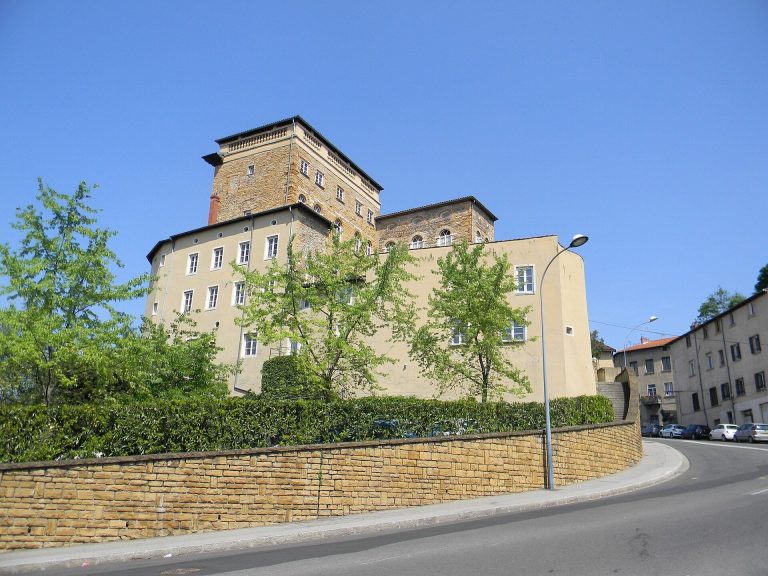
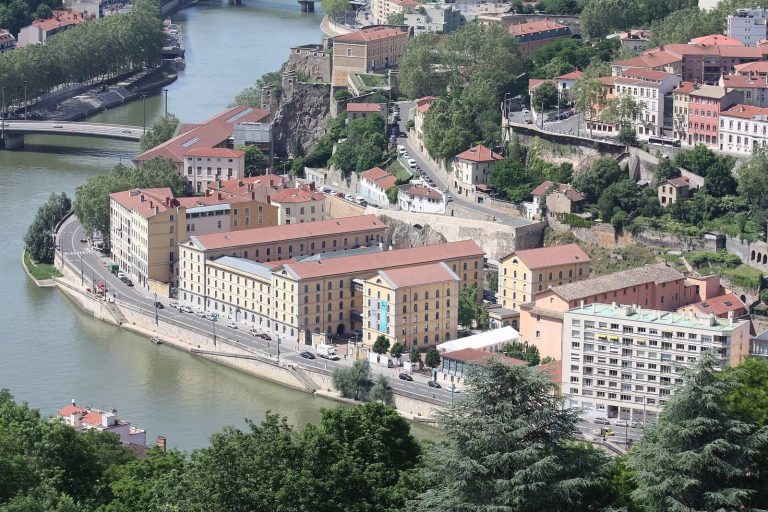
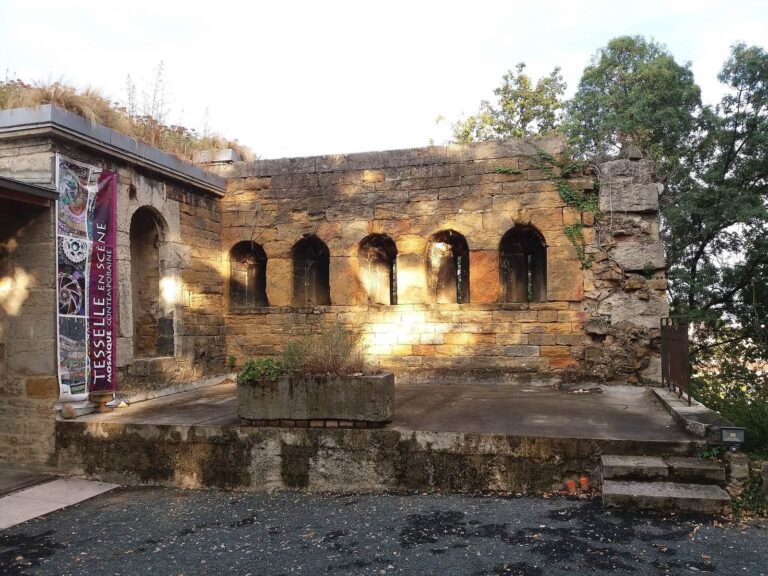
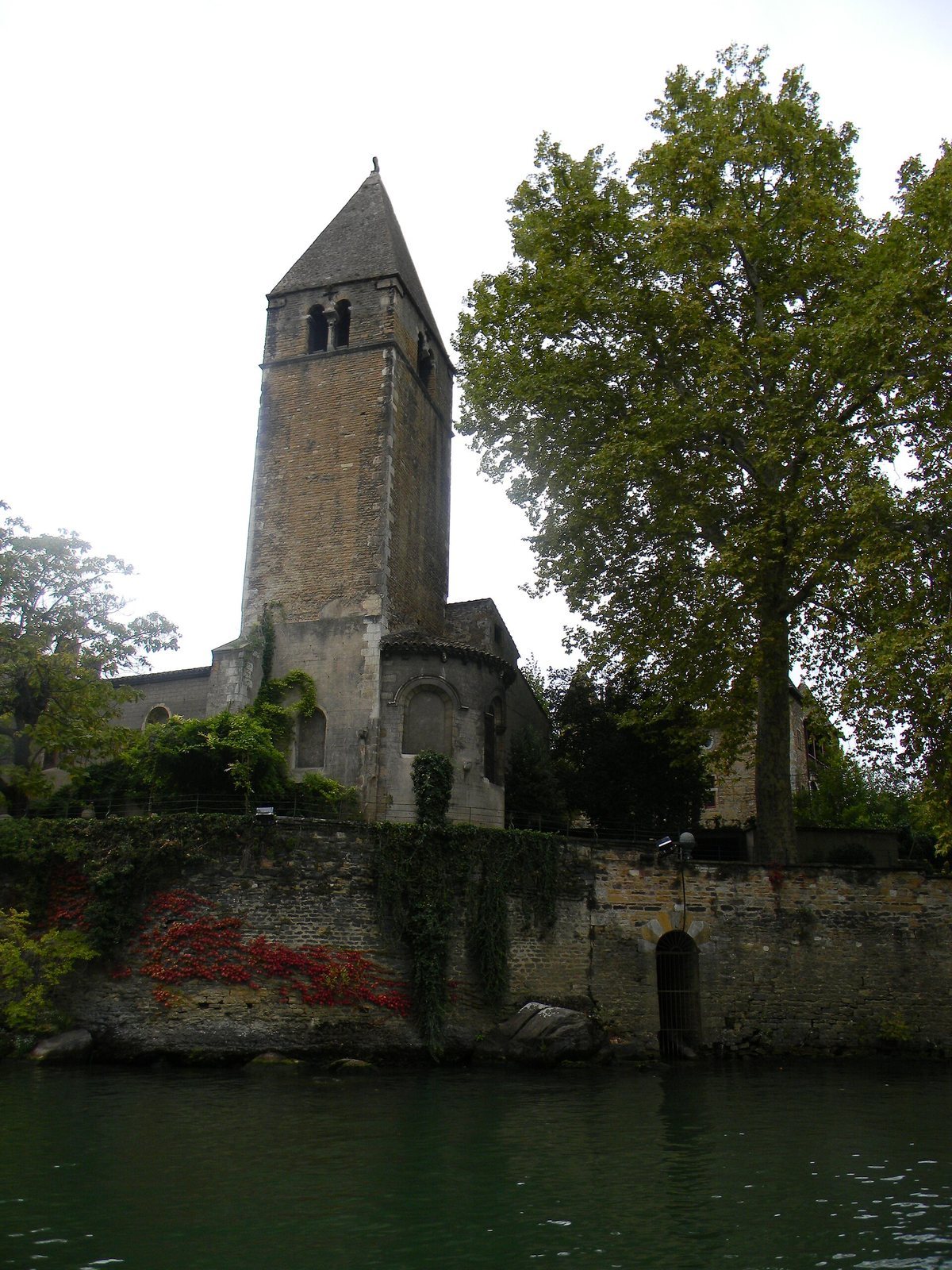
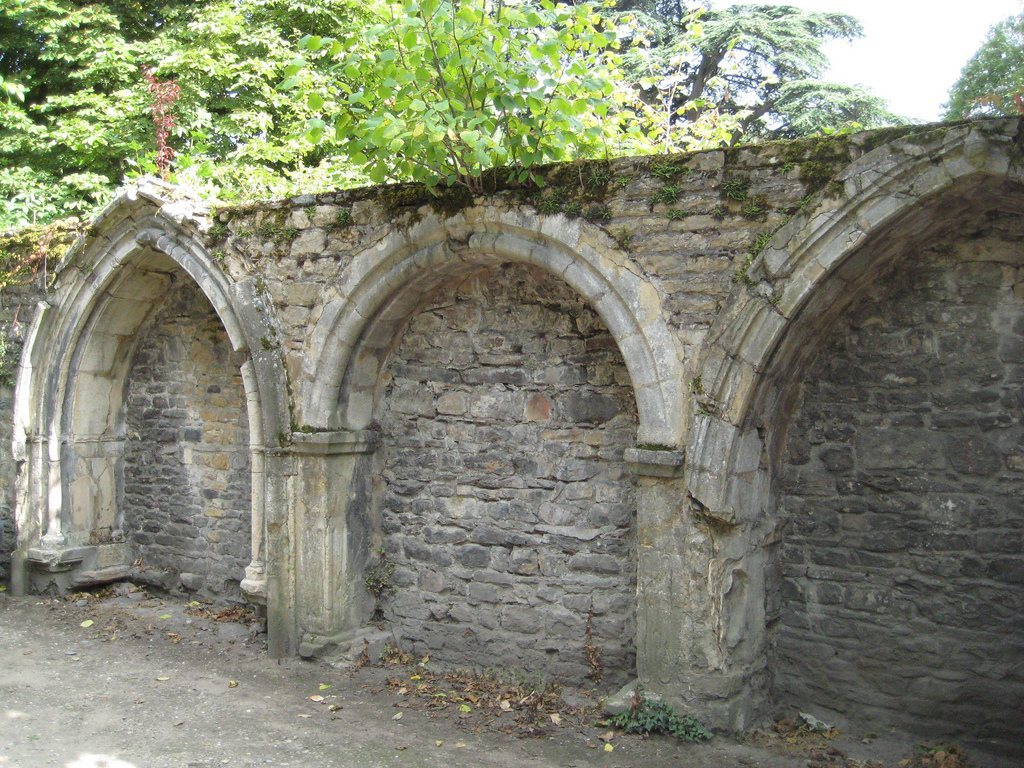
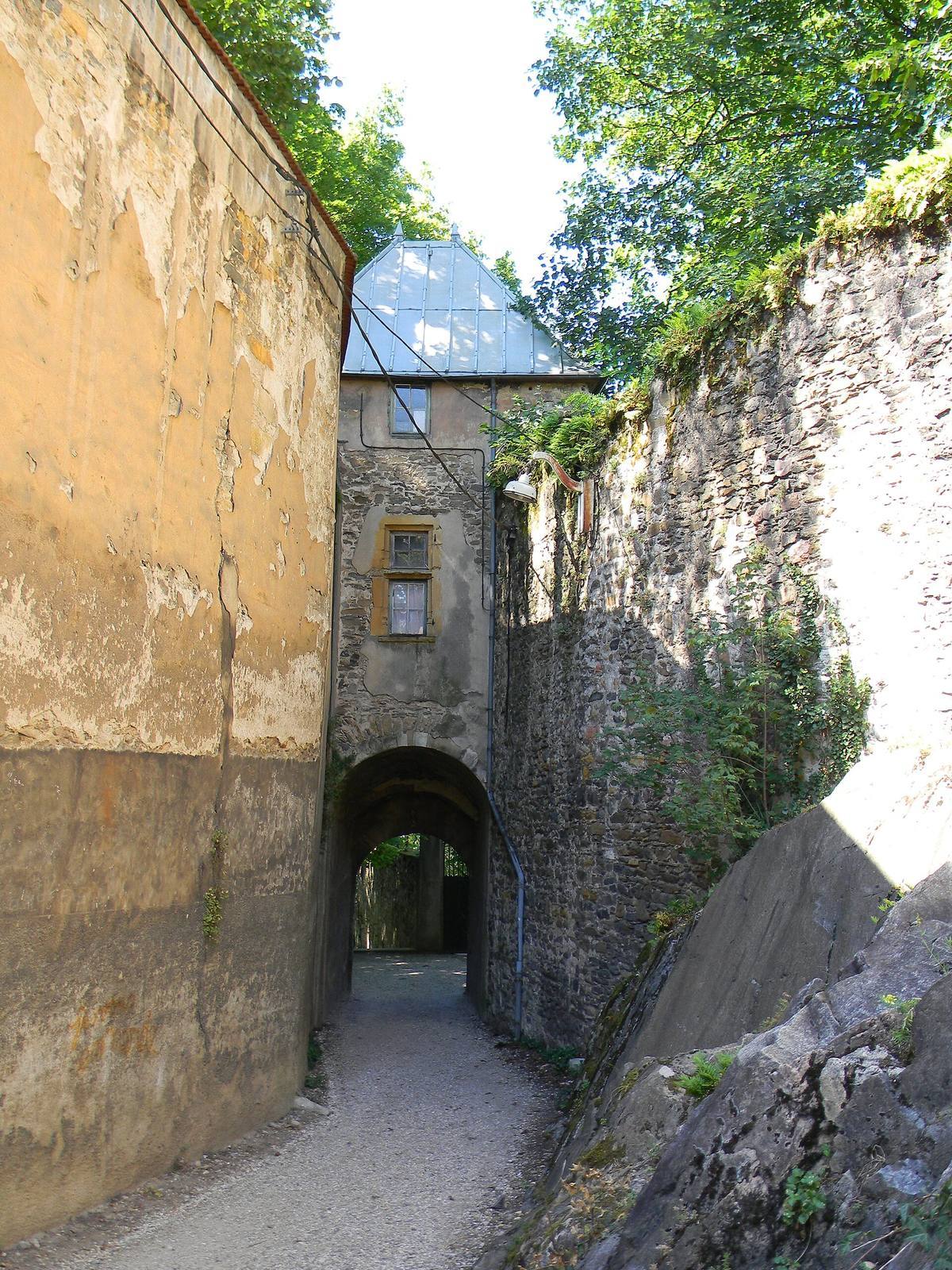
The abbey’s remains occupy an island precinct once enclosed by a fortified wall. The surviving religious buildings include the Romanesque church of Notre-Dame, part of the former church of Saint-Loup, and remains of other religious structures. The historic layout also included gates, ports, a northern religious precinct, and buildings arranged around the great cloister.
Enclosure and island approaches
The fortified wall’s line follows the wall that now bounds a tree-lined promenade. The domain had two gates, Notre-Dame and Sainte-Anne, and three ports. Saint-Rambert port lay southwest of the enclosure wall, Notre-Dame port faced east toward Cuire-le-Bas, and Sainte-Anne port stood to the northwest.
Northern castle and priory
At the island’s northern end, a fortified castle stood on a rock and served as a refuge during invasion. It contained the rich library associated with Charlemagne. The priory of Saint-André occupied a separate enclosed area nearby, with a chapel dedicated to Saint Andrew and Saint Anne.
Churches
The monastery had two churches. Notre-Dame was open to pilgrims, while the abbey church was dedicated to Saint Martin and Saint Loup. The surviving Romanesque church of Notre-Dame and part of the former Saint-Loup church preserve evidence of this religious complex.
Monastic buildings
Behind the Notre-Dame gate, Notre-Dame Square contained a tithe house, associated with collecting or storing contributions to the Church, and the abbot’s house, which had a chapel dedicated to Saint Denis. Other monastery buildings stood around the great cloister, the covered passage and courtyard at the centre of the complex. Near the Saône, on the Saint-Rambert side, were the monks’ refectories and vaulted cellars.