Saint-Vanne Abbey of Verdun: A Benedictine Monastery and Center of Reform
Site at a Glance
- Rating
- 3.7
- Popularity
- Very Low
- Country
- France
- Primary era
- Medieval
- Eras represented
- Medieval, Early Modern
- Civilizations
- Holy Roman Empire
- Site type
- Religious
- Remains
- Monastery
On this page9 sections
History
Saint-Vanne Abbey of Verdun was a Christian monastery in Verdun, France. Bishop Bérenger founded it as a Benedictine abbey in 952 at the tomb of Saint Vanne, the city’s eighth bishop. Its church developed through Romanesque and Gothic building phases, and the abbey became a center of monastic reform in Lorraine and beyond.
Early church and Benedictine foundation
A Christian oratory, or small place of worship, was built on the site in the fourth century by Saintin, Verdun’s first bishop. A later church dedicated to Saints Peter and Vanne was probably built by Saint Vanne, who was buried there. The church became the burial place of Verdun’s early bishops; the cathedral did not receive a bishop’s burial until the tenth century. The deacon Adalgisel-Grimo mentioned the church in his testament of 634.
Bishop Hatton formally elevated Saint Vanne’s relics at the church. After a Norman raid in the ninth century, the church was restored and served by canons, a community of clergy. Bishop Bérard established a community of canons there before replacing them with monks in 952. The monks followed the Rule of Saint Benedict, the guidelines governing Benedictine monastic life.
Reform and medieval fortunes
Abbot Richard, who led the community from about 1004 to 1046, made Saint-Vanne a center of monastic reform in Lorraine and beyond. He renewed religious discipline and the abbey’s organization, improved its material condition and economy, and oversaw a well-equipped scriptorium, a place where manuscripts were copied and produced. Under Abbot Rudolf, whose tenure ran from 1075 to 1099, the monks adopted customs associated with Cluny without formally joining that monastic center.
During the Investiture Controversy, a conflict between popes and secular rulers over the appointment of church officials, Saint-Vanne’s monks supported the pope while Verdun’s bishop supported the emperor. The monks were forced into exile as a result. Several nobles were also connected with the abbey. Frederick, Count of Verdun, became a monk there in 997 and died there on 6 January 1022. Louis I, Count of Chiny, was murdered at the abbey on 28 September 1025. Hermann of Eenham, Count of Verdun, was buried there after his death on 28 May 1029, as were Godfrey II and Godfrey III.
From the thirteenth to the fourteenth century, the abbey again wielded influence in the region while remaining independent of Cluny and Cîteaux. It maintained a priory at Flavigny-sur-Moselle from about 1050; that house became autonomous in 1130. In the fourteenth century, the abbey’s finances deteriorated as its final abbots squandered its resources. Gérard de Vadenay, abbot from 1353 to 1381, mortgaged its property, and only five or six monks remained. Recovery began gradually in the fifteenth century.
Commendatory rule and monastic renewal
Forty-five abbots led Saint-Vanne between 952 and 1508. From the mid-fifteenth century, commendatory abbots held the title and revenues of the abbey without necessarily governing its community. In 1516, following the Concordat of Bologna, an agreement between the French crown and the papacy on church appointments, Francis I established this system in France. Verdun, its bishopric, and the abbey passed to France under the Treaty of Chambord in 1552. The abbey’s revenues were transferred to the bishopric in 1572, and by the end of the sixteenth century the two sets of revenues had been united. From Nicolas Psaume onward, the bishop of Verdun also held the abbacy.
The Wars of Religion left Saint-Vanne severely weakened by 1598. That year, Bishop Éric of Lorraine asked the monks to choose a regular prior, a monastic official selected from within their community. They chose Didier de La Cour, who sought to reform nearby abbeys in the spirit of the Council of Trent, the Catholic reform council held from 1545 to 1563. Some religious opposed his efforts. On 30 April 1603, at Didier’s initiative, Saint-Vanne joined with the Abbey of Saint-Hydulphe at Moyenmoutier to form a new monastic family. Pope Clement VIII established the Congregation of Saint-Vanne and Saint-Hydulphe on 7 April 1604.
The congregation grew to about fifty monasteries in Lorraine, Franche-Comté, and elsewhere in France; in 1672 it included 48 houses, mainly in Alsace and Lorraine. From 1618, French monasteries separated to form the Congregation of Saint-Maur, while the Saint-Vanne reform also spread to Bavaria, Swabia, and the Spanish Netherlands.
Citadel, dissolution, and preservation
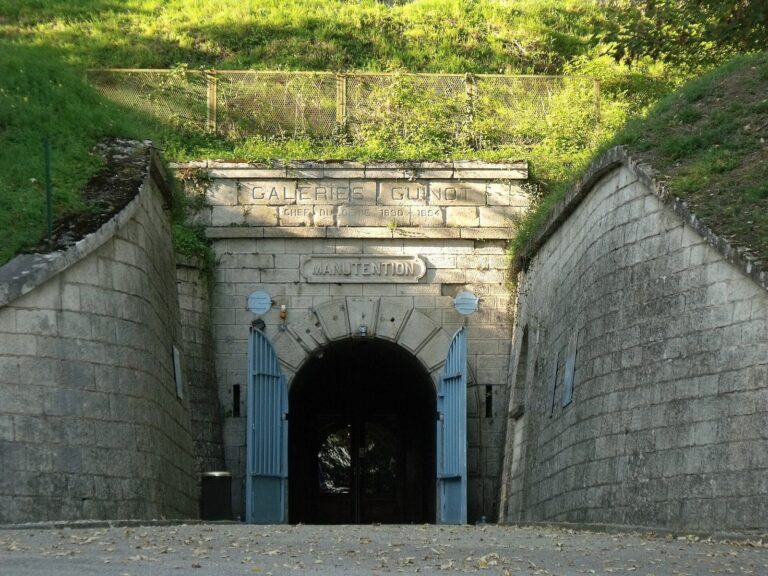
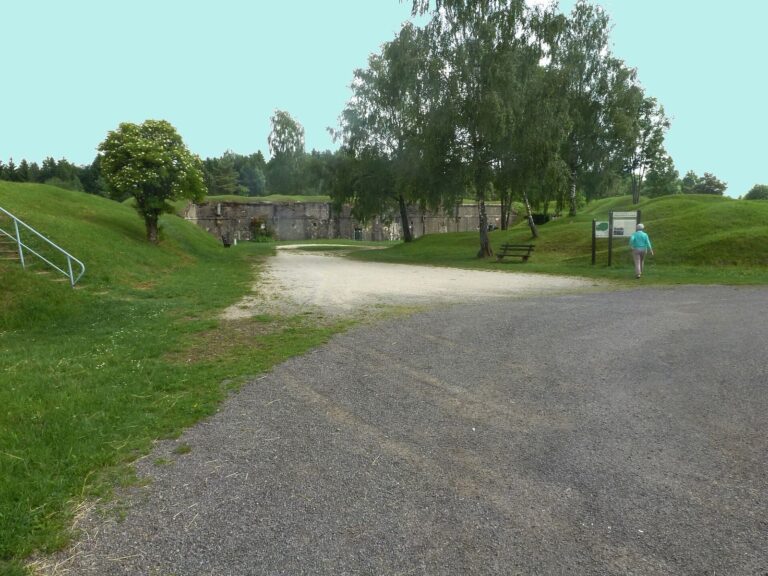
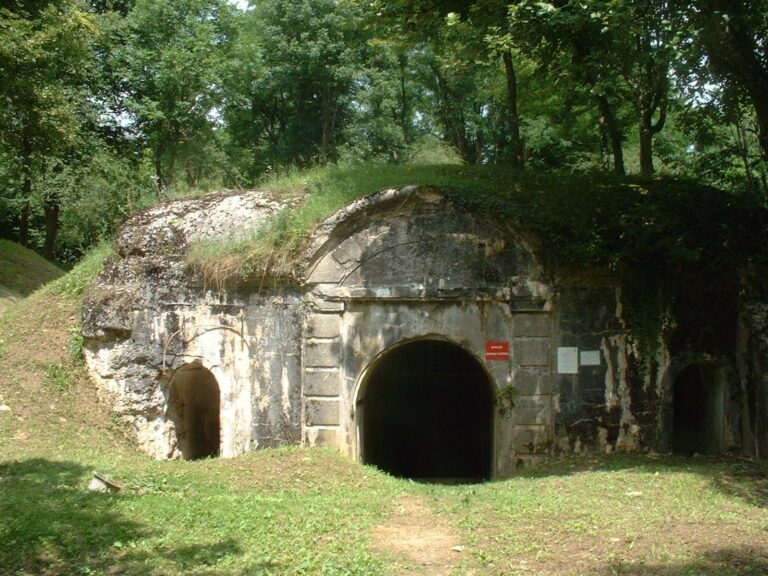
King Henry II ordered a citadel at Verdun in 1554. Work began but remained unfinished; the citadel was completed in 1624 in place of the abbey’s walls, and from 1630 the abbey lay within its enclosure. The medieval towers were adapted as parts of the fortress. The French Revolution brought the abbey’s dissolution and the suppression of its congregation in 1791. In August 1792, after the Prussian army took Longwy, volunteers from Mayenne-et-Loire sacked the abbey. It was closed, converted into a barracks, and later abandoned.
In the 1830s, most of the abbey was demolished because restoration funds were lacking and military engineers advised its removal. Bombardment during the 1870 war further damaged the ruins. In the First World War, the surviving tower served as an observation post and wireless-telegraph station. It received historic-monument designation in 1920. The army transferred the citadel grounds to the city of Verdun in 2009. A scientific council began studying the site in 2010, and archaeological excavations started in 2012.
Remains
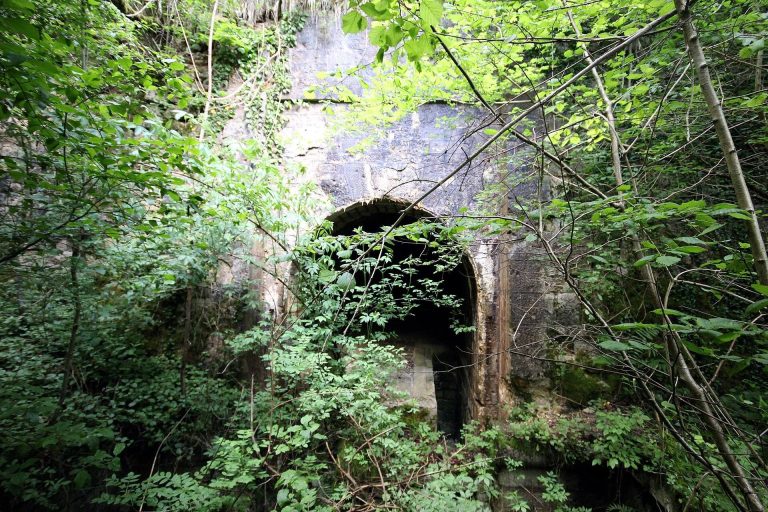
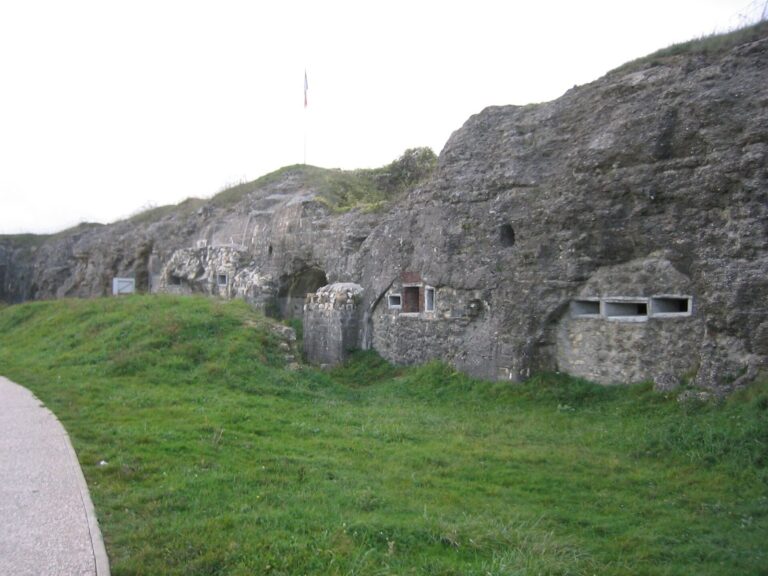
The abbey stood within the grounds now occupied by the Citadel of Verdun. Its architectural remains include a Romanesque church extended by later Gothic construction, together with fragments of the cloister, an underground cellar, and the former entrance gate.
Church and towers
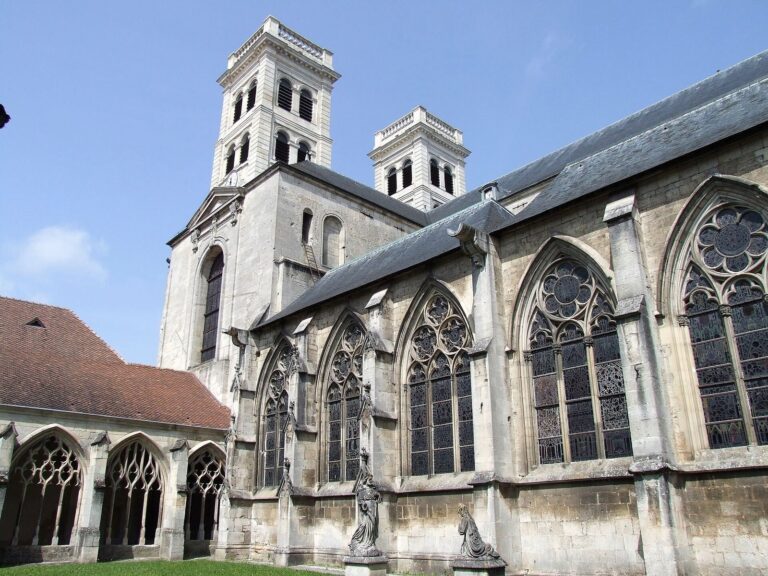
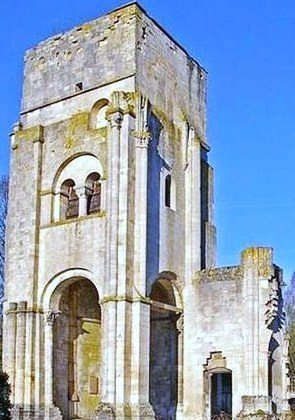
A Romanesque church, built in the twelfth century, had two towers at its western end. A new abbey church was constructed between 1417 and 1452, and a Gothic nave, in another major medieval European architectural style, was attached to the older towers during the fifteenth and sixteenth centuries. The church was a hall church, with side aisles about as high as the nave, so high windows could light the interior. The surviving Saint-Vanne Tower is the north tower of the twelfth-century church. Its capitals, the upper parts of columns or pillars, remain decorated.
Other surviving structures
The abbey’s former entrance gate is preserved, as are fragments of the thirteenth-century cloister and the monks’ underground cellar. These remains preserve parts of the complex beyond its surviving church tower.
Excavated remains
Excavations in 2012 uncovered architectural elements and stone coffins, or sarcophagi, dating to the sixth and seventh centuries.