Nová Říše Monastery: A Premonstratensian Religious House in Czechia
Site at a Glance
- Rating
- 4.7
- Popularity
- Medium
- Country
- Czechia
- Primary era
- Early Modern
- Eras represented
- Early Modern
- Civilizations
- Habsburg, Habsburg Austria, Holy Roman Empire, Margraviate of Moravia
- Site type
- Religious
- Remains
- Monastery
On this page14 sections
History
Nová Říše Monastery is a Premonstratensian religious house in Czechia, founded around 1211 by Markvart of Hrádek and his wife, Vojslava. The Premonstratensians are a Catholic order of canons regular founded by the 12th-century religious reformer Norbert of Xanten. Nová Říše began as a convent for Premonstratensian canonesses, women members of the order. It was initially under Zábrdovice Abbey, which provided its provost, and the monastery and church were first dedicated to Our Lady.
Foundation and Hussite destruction
During the Hussite Wars, conflicts in the Bohemian lands driven by religious and political disputes associated with the reformer Jan Hus, the monastery and church were plundered and burned. Attacks in 1423 and 1424 left the complex devastated. Nuns who did not escape were captured and drowned in a local pond.
From canonry to abbey
The women’s community ended around 1597, and the house became an independent Premonstratensian canonry, a community of canons. The Thirty Years’ War, a major European conflict fought from 1618 to 1648, brought further hardship. On 16 May 1641, canons from Zábrdovice arrived at Nová Říše. In 1654, the provost received the privilege of using pontifical insignia, ceremonial symbols and vestments associated with bishops.
The canonry was raised to abbey status in 1733. Under Abbot Pelikán, its library was enlarged and improved, and a school was established. After 1784, canons from Zábrdovice also came to Nová Říše following the dissolution of their monastery under Joseph II. His reforms closed monasteries judged not to serve a direct religious or public purpose.
Rebuilding and cultural life
A fire in 1813 damaged both the town and monastery. The complex was rebuilt and altered according to its old plan, with the work finished by 1821. Pavel and Antonín Vranický, both composers, received their education at the monastery. Bedřich Franz (1796–1860), a professor and photographer who also served as abbot, was associated with the house. The poet Otokar Březina taught at the local elementary school from 1888 to 1901, maintained close ties with the monastery, and used its chapel for meditation.
Persecution, closure, and return
On the evening of 29 May 1942, the Gestapo, Nazi Germany’s secret state police, raided the monastery. The community was taken to Brno for questioning. Three novices were released, while the other monks were deported to Auschwitz, a Nazi concentration camp, arriving on 16 January 1943. Six members of the community were killed, tortured to death, or died from illness. Among those who died, Norbert Hrachovský was killed by poison injection on 18 January; Zikmund Záběhlický died on 20 January; prior Vavřinec Novotný died on 27 January; and abbot Pavel Souček died of dysentery on 28 January. Siard Nevrkla, a fellow Premonstratensian who had served as a chaplain in Brno, was killed on 21 February at the Rajsko subcamp, a satellite camp within the concentration-camp system.
The surviving monks, including Heřman Josef Tyl, were transferred to Buchenwald in August 1943 and lived until the end of the war. The monastery was converted into a camp for children moved from cities threatened by air raids. Premonstratensians returned in 1945, and Augustin Machalka, formerly the community’s provost, was elected abbot. A shared novitiate, the period and community in which candidates prepare for religious life, was established there for Premonstratensian houses in the Czech lands.
After the Communist takeover, the monks were arrested in 1950. Authorities alleged that weapons had been hidden in the monastery, and Machalka was accused of leading a group engaged in treason on behalf of the Vatican. In a show trial of religious-order leaders, he was sentenced to 25 years in prison. The buildings, possessions, artworks, and books were confiscated, and a military camp was set up in the monastery. The house closed, and the canons could not return until after 1989.
The monastery was re-established in 1989–1990, and its buildings were returned to the Premonstratensians in 1991 in very poor condition. The community resumed its work, with Bernard František Palka leading it from 1992 and Marian Rudolf Kosík succeeding him as abbot in 1999. Renovation under an architectural heritage rescue program took place between 1995 and 2014.
Remains
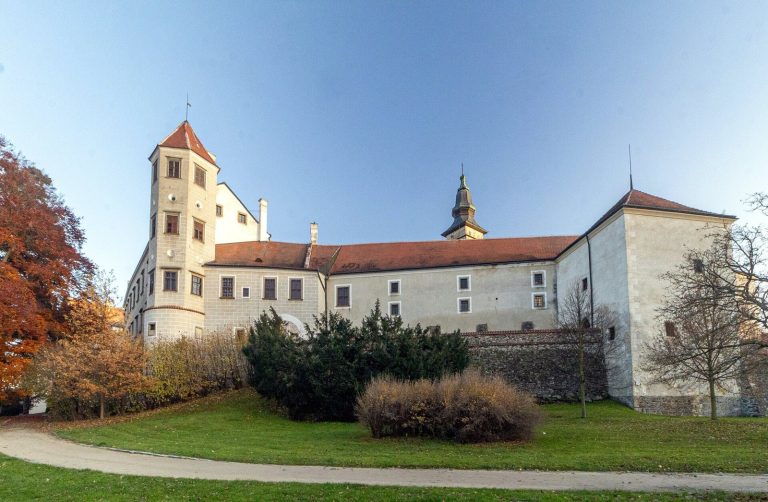
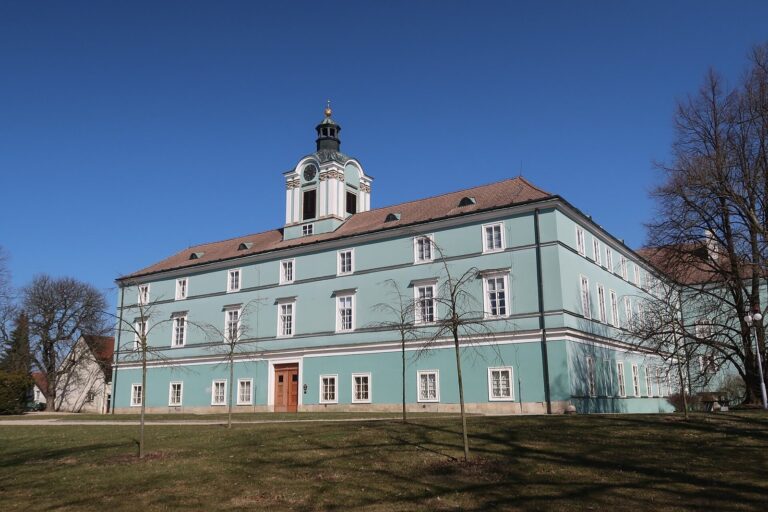
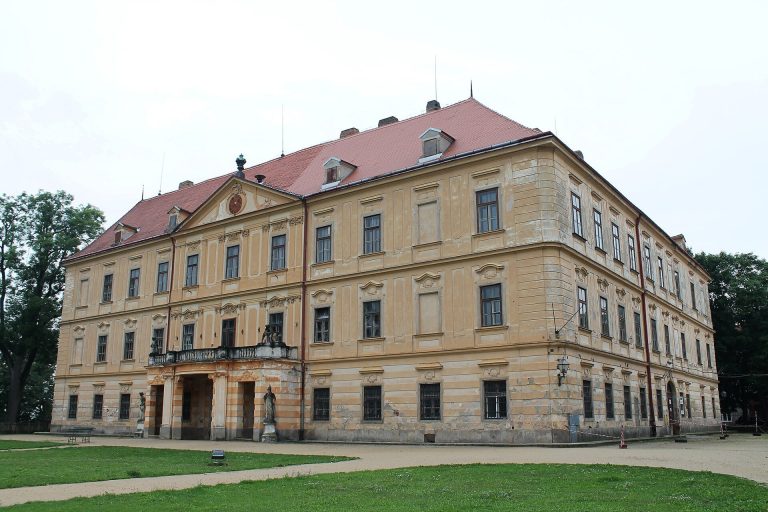
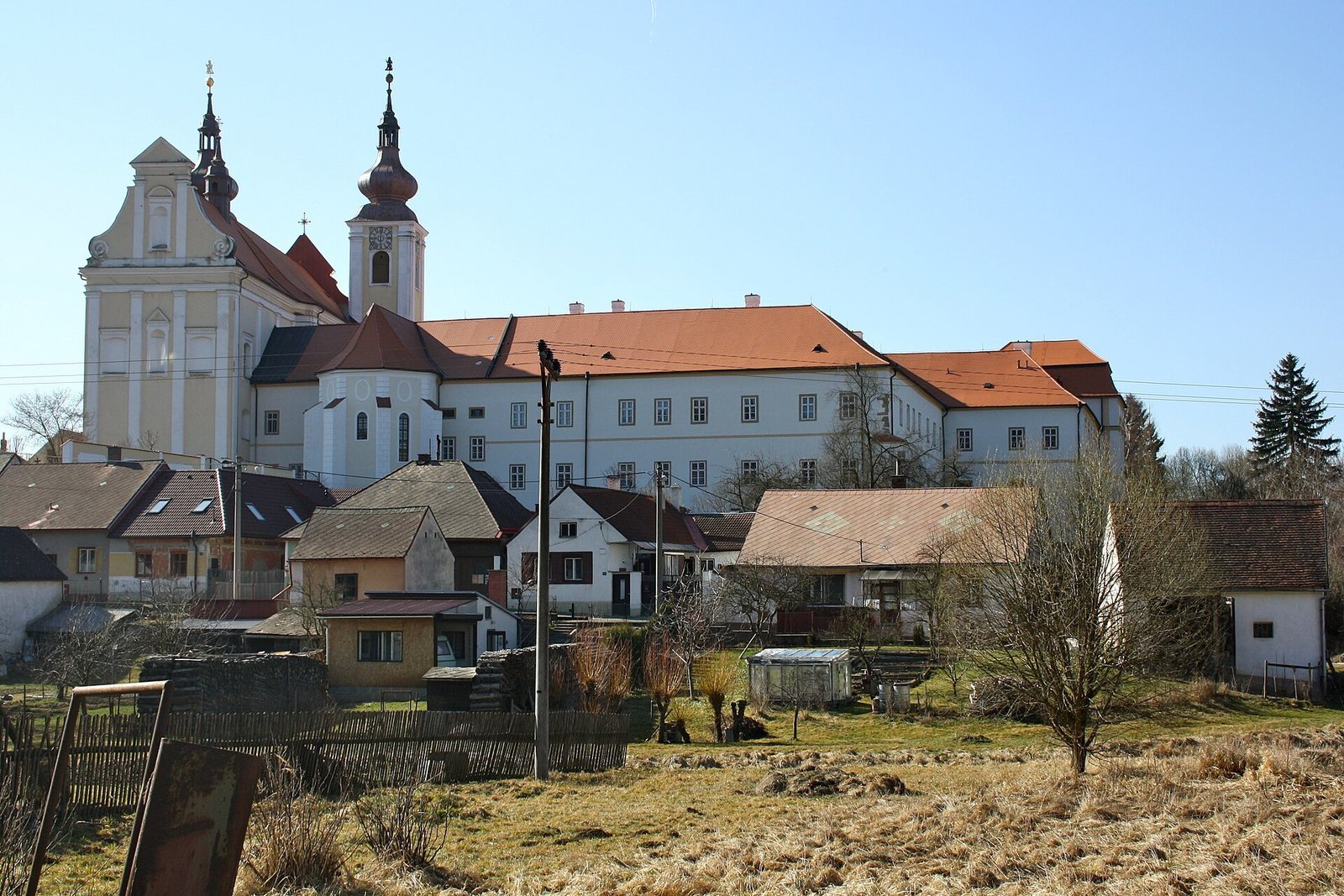
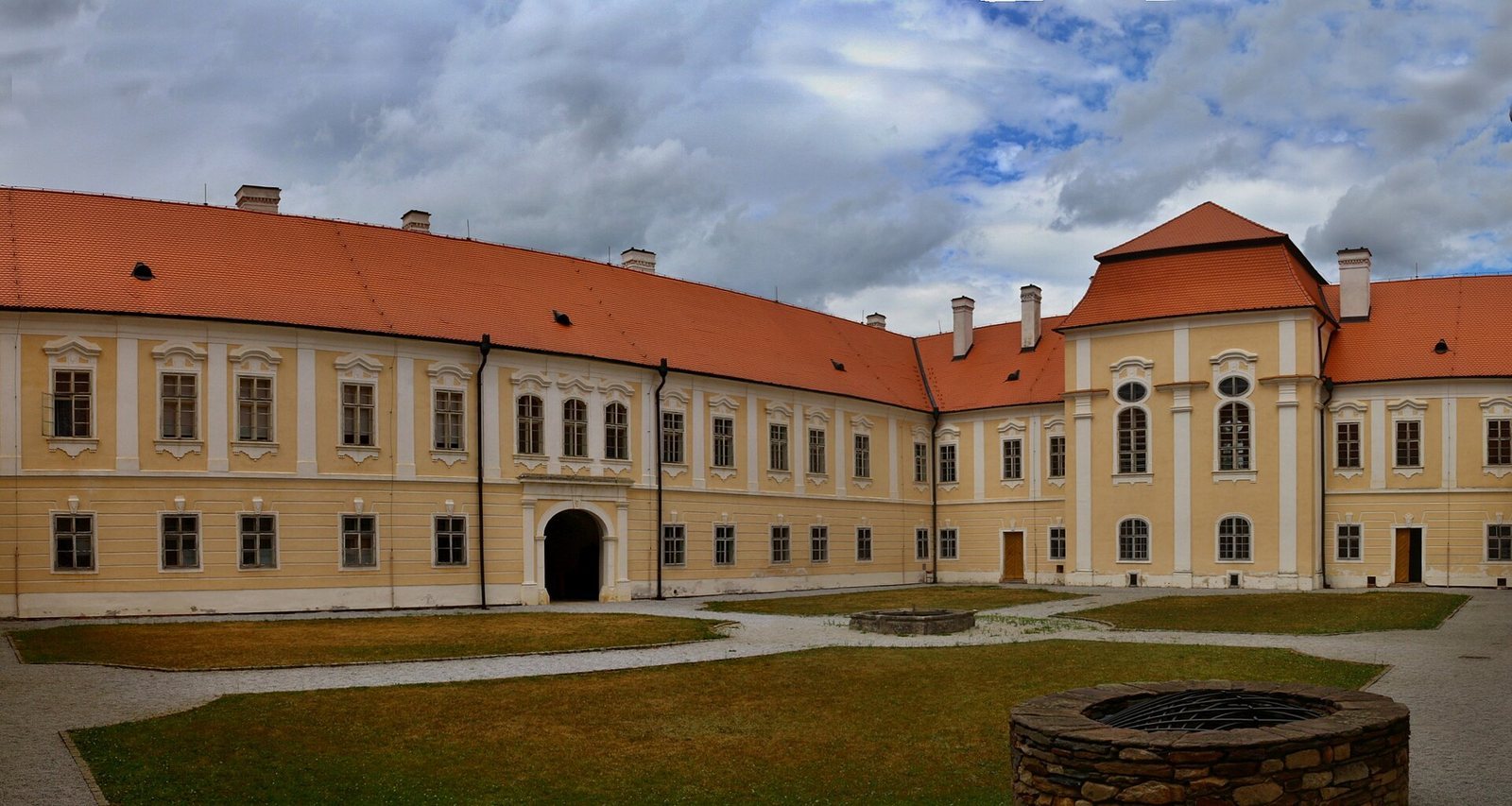
The complex is arranged around two rectangular courtyards, with an additional range at the rear. A connecting corridor joins the monastery to the Church of Saints Peter and Paul. The buildings combine interior decoration on both floors with a layout shaped by the rebuilding on the older plan.
Monastic buildings
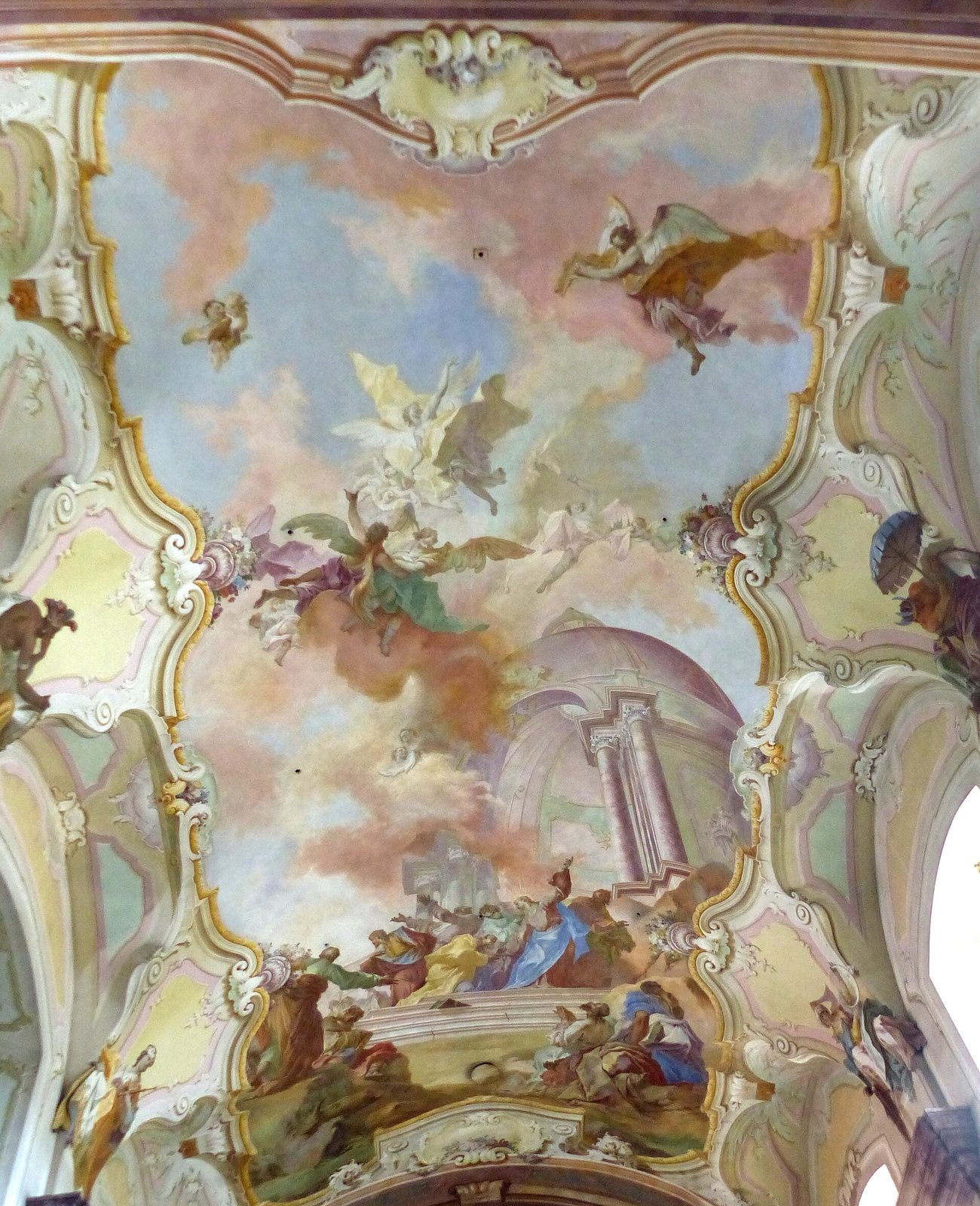
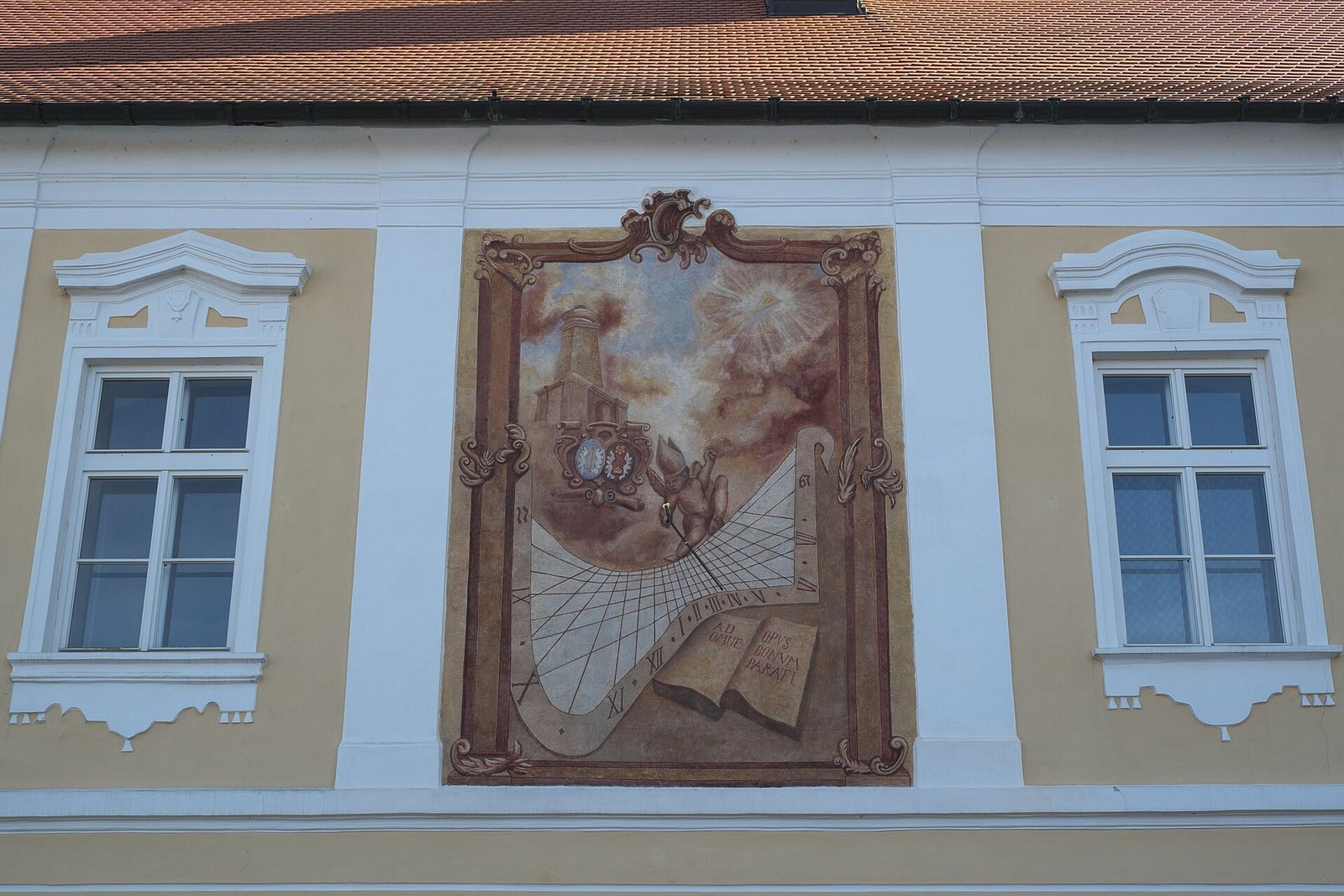
Stucco decoration survives in ground-floor rooms, while upper-floor spaces have illusionistic paintings, which create the appearance of three-dimensional space, and figurative frescoes. These interior features preserve different forms of decoration within the monastery ranges.
Church of Saints Peter and Paul
Plan and dimensions
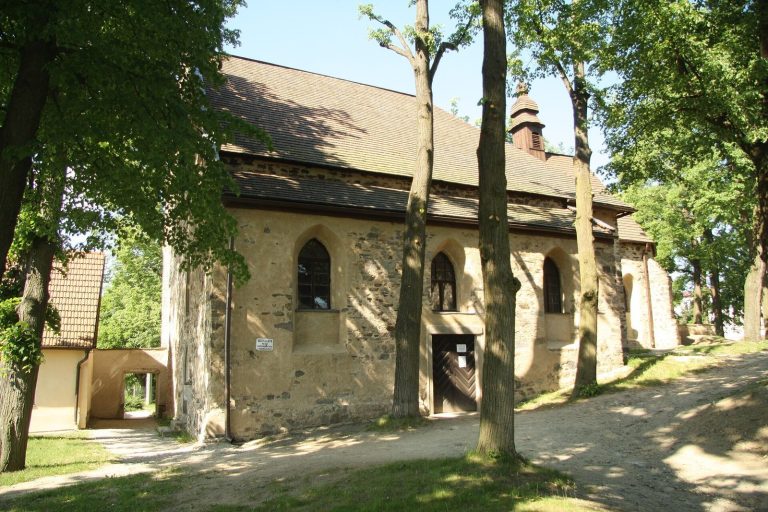
The church stands on the site of an earlier church dating to 1504. It measures 45 metres long, with a nave 12 metres wide and a presbytery, the sanctuary end, 9 metres wide.
Frescoes and furnishings
Frescoes painted by Jan Lukáš Kracker in 1766–1767 decorate the interior. The furnishings include a 1705 painting of Saints Peter and Paul, choir stalls made in 1696 by an unidentified carpenter, and a pulpit carved by Arbeiter in 1700. Reliefs of the four Evangelists, traditionally identified as the authors of the four Gospels, and ornamental carving decorate the pulpit.
Organ
Bedřich Semrád, an organ builder from Nová Říše, made the church organ in 1764–1765. It has 23 stops, or sets of pipes, two keyboards, and a pedal.
Chapel and Stations of the Cross
The side chapel of Our Lady of Sorrows contains relics of Saint Candida, remains or objects associated with a saint and preserved for veneration. The Stations of the Cross are works by František Bílek and Viktor Förster.
Library
The library occupies a rectangular first-floor hall in the convent building. Its Baroque interior, an elaborate European style prominent in the 17th and 18th centuries, was adapted around 1770. Ignác Mayer painted the ceiling scenes of Saint Norbert’s life and miracles in 1774. In 1776, shelves and part of the collection came from the dissolved Jesuit college in Telč and were fitted for use at Nová Říše. The collection later grew with books from the German monastery at Düsttel, which was dissolved in 1805.
Sculpture and memorial
A statue of Saint Anne from the second half of the 14th century is regarded as the sole remnant of the monastery from before its destruction during the Hussite Wars. A memorial at the monastery commemorates members of the community who were victims of Nazi persecution.