Palace Smith Mangilli Valmarana: A Venetian Residence and Artistic Center
Site at a Glance
- Popularity
- Medium
- Country
- Italy
- Primary era
- Medieval
- Eras represented
- Medieval, Early Modern
- Civilizations
- Venetian
- Site type
- Domestic
- Remains
- Elite Residence
On this page7 sections
History
From medieval palace to Smith’s ownership
Palace Smith Mangilli Valmarana is a palace on the Grand Canal in Venice, Italy, first built in the fourteenth century in the regional Veneto-Byzantine style, also called Byzantine-Gothic, which combines Byzantine and Gothic forms. It is also known as Palazzetto Mangilli-Valmarana. Nobles from Treviso owned the palace from 1518 to 1666, after which it passed to another family.
In 1700, an import-export company run by a British consul operated from the house. Joseph Smith, an English merchant, art collector, and patron, worked for the company and became its sole owner in 1720. He bought the palace in 1740 and became British consul in Venice in 1743. The building served both as his residence and as the seat of the English embassy.
Joseph Smith and Venetian artistic life
Smith’s collecting and patronage made the palace an important meeting place for Venetian artists and writers. Visitors included painters Canaletto, Francesco Zuccarelli, Francesco Guardi, Pietro Longhi, and Giovanni Battista Tiepolo. The circle also included poet and librettist Apostolo Zeno, essayist Francesco Algarotti, playwright Carlo Goldoni, writer and antiquarian Scipione Maffei, and publisher Giovanni Battista Pasquali. Artistic gatherings also provided cover for secret political meetings.
For Smith, painter and engraver Antonio Visentini redesigned the façade from 1743 to 1751 in the Palladian style, which draws on classical forms associated with the Italian architect Andrea Palladio. The work extended only to the palace’s present first principal floor, its main upper storey.
Mangilli, Selva, and later use
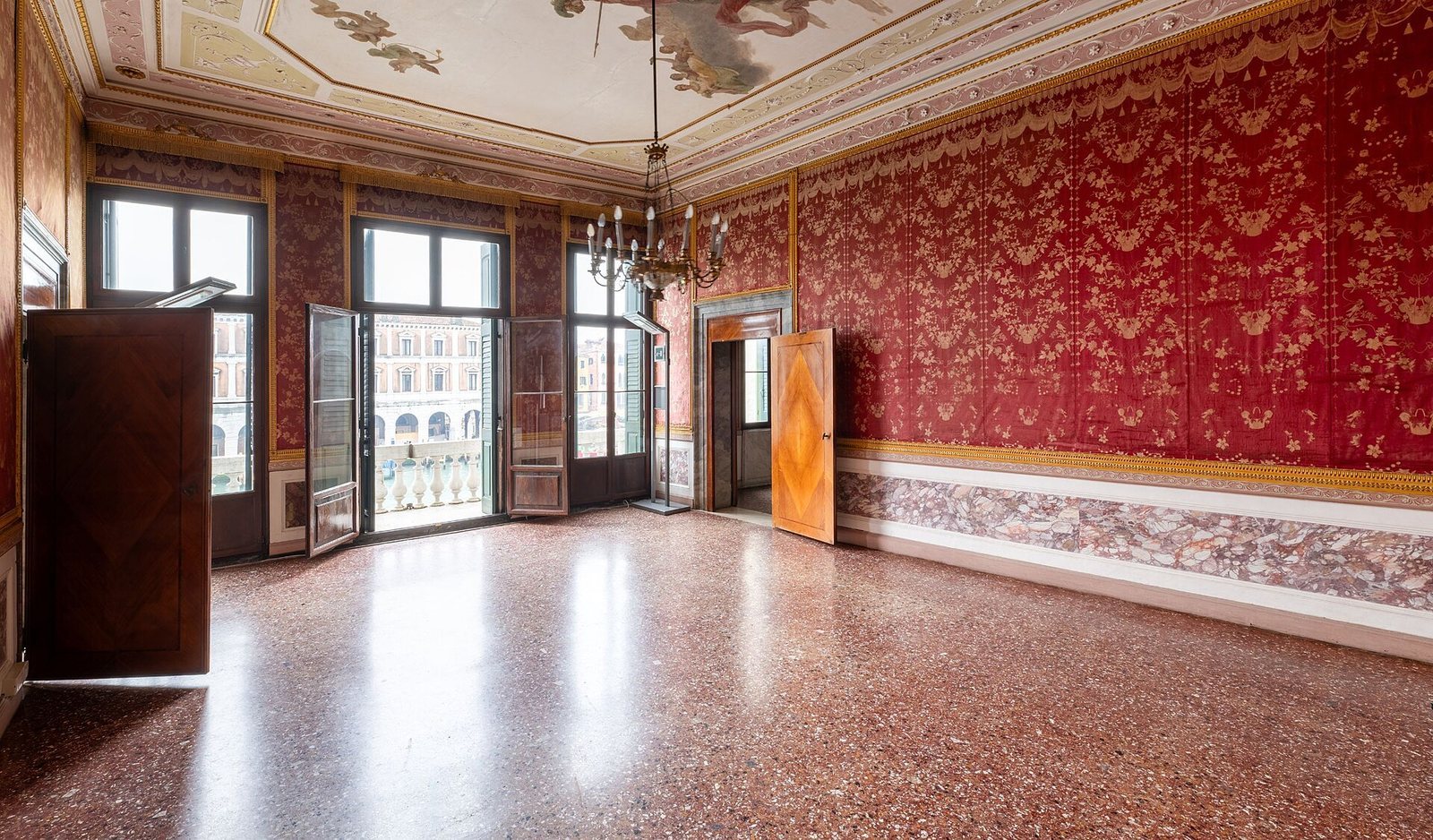
Smith died in 1770, and his widow sold the palace in 1775. Count Giuseppe Mangilli acquired it in 1784 and commissioned architect Giannantonio Selva to add upper floors and redecorate the interiors. Selva created a unified Neoclassical suite of rooms, using forms revived from ancient Greek and Roman architecture. The palace later passed to the Valmarana family of Vicenza. Since the 1990s, it has housed an aparthotel.
Remains
Canal frontage and exterior
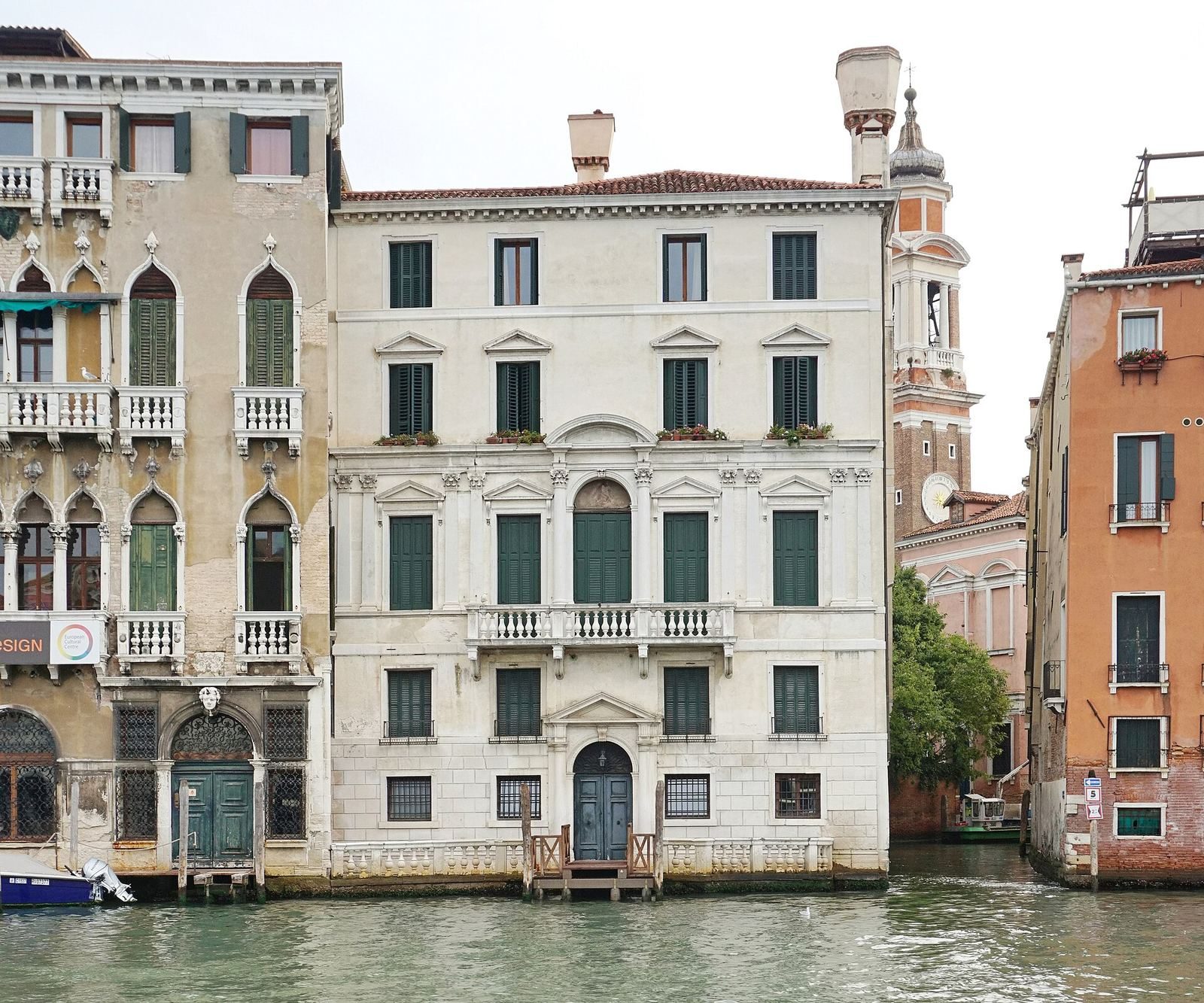
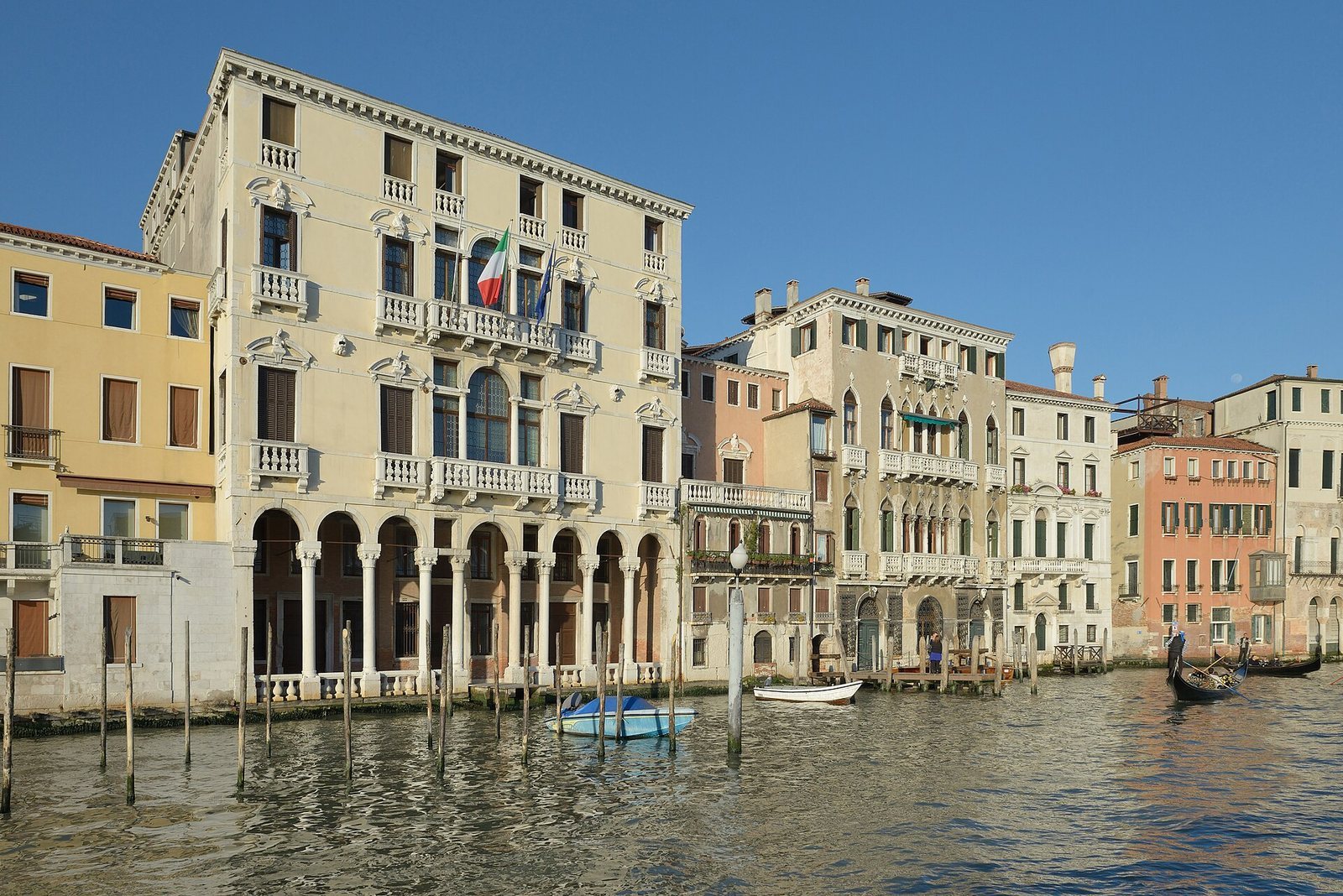
The palace stands in Venice’s Cannaregio district, facing the Grand Canal where the Rio dei Santi Apostoli enters it; Palazzo Michiel del Brusà is next door. Its exterior combines the building’s earlier Byzantine-Gothic origins with a Neoclassical appearance. The palace has three main stories, a mezzanine, meaning an intermediate floor, and a half-storey in the attic. A cornice with a row of small tooth-like blocks runs along the attic. At ground level, the central entrance opens onto the water and is topped by a gable-shaped pediment with a central field.
Each of the two main upper floors has four regularly spaced rectangular windows, each with a pediment. On the first principal floor, pairs of Corinthian pilasters, shallow column-like projections with ornate capitals, divide the windows. A broad, round-arched opening occupies the center, flanked by half-columns that support a larger pediment.
Interior
Selva’s unified Neoclassical suite of rooms survives inside the palace, preserving the interior scheme created during Mangilli’s ownership.