Frymburk Castle: A Medieval Stronghold in Czechia
Site at a Glance
- Popularity
- Medium
- Country
- Czechia
- Primary era
- Medieval
- Eras represented
- Medieval
- Civilizations
- Holy Roman Empire, Kingdom of Bohemia
- Site type
- Military
- Remains
- Castle
On this page5 sections
History
Origins and changing ownership
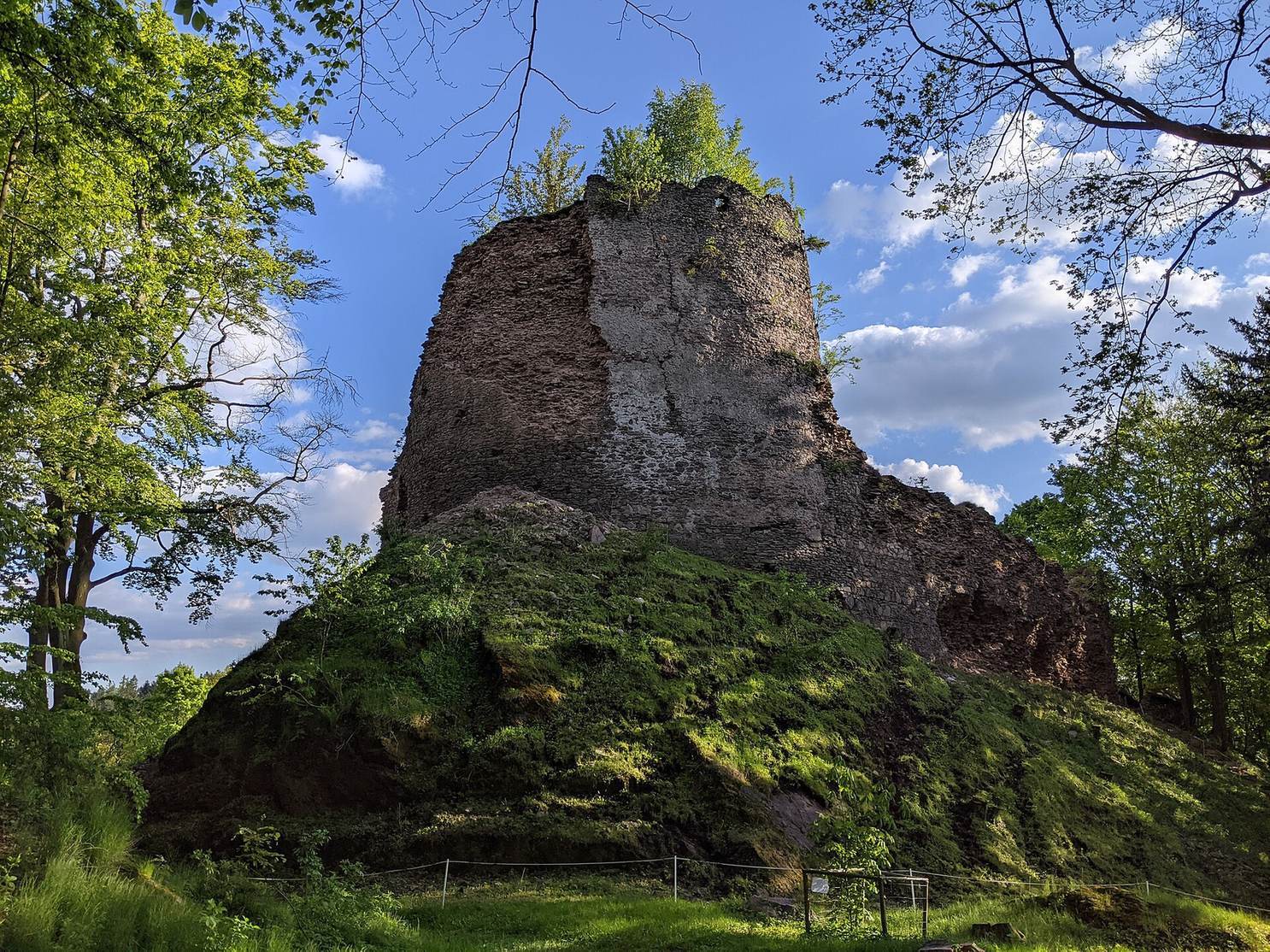
Frymburk Castle is a medieval ruin above the Olešenka valley, west of Nový Hrádek in Czechia. The Lords of Leipa, a Bohemian noble family, probably built it in the early fourteenth century. Its first known owner, Matouš von Frymburk, appointed a priest at Gießhübel on 11 June 1354. In 1359 the castle passed to Čeněk of Leipa, who served as Supreme Marshal of the Kingdom of Bohemia under Charles IV, king of Bohemia and Holy Roman Emperor. Later owners included Johann of Leipa, castellan of Kraków, and, after Johann’s death in 1364, Heinrich of Leipa, who also held the marshal’s office. Johann of Lichtenburg acquired the castle from Heinrich. In 1367 it came to the brothers Hynko and Ješek of Dubá, who had held the Náchod lordship since 1353.
By the time Sezema of Dobruška and Opočno died in 1373, Frymburk was among his possessions; when he acquired it is unknown. His sons initially inherited the estates together. By the late 1370s at the latest, they had divided them, assigning Frymburk and nearby villages to the youngest, Johann, who also called himself “of Frymburk.” Probably after Johann’s death, before 1430, his nephew Johann Městecký of Opočno inherited the castle.
Hussite destruction and Trčka ownership
During the early-fifteenth-century Hussite Wars, conflicts in Bohemia associated with the reform movement begun by Jan Hus, Johann Městecký fought alongside the East Bohemian noble party but submitted to the Hussites twice. In 1425 the Orphans, a Hussite faction, destroyed Frymburk. After Johann Městecký died in 1432, Jiřík of Dubá and Vízmburk became lord of the castle.
Jan Trčka of Lípa acquired the Frymburk lordship from Achilles Anděl of Ronov in 1534. From 1537 he shared it with his cousin Zdenko the Younger Trčka of Lípa of Vlašim; the following year, Jan sold his share to Zdenko’s son, Jan the Younger. After his father died, Jan the Younger held both the Frymburk and Opočno lordships alone. Frymburk’s lands, which included Dobruška, Dobřany, Olešnice, Slavoňov, twenty other villages and four farms, were incorporated into the Opočno lordship. Under the Trčkas, iron-ore mining began in the valley below the castle, and a settlement called Doly grew there. The castle had been deserted since the middle of the sixteenth century.
Destruction, ruin, and modern history
During the Thirty Years’ War, a European conflict lasting from 1618 to 1648, rebellious peasants occupied and burned the castle in 1626. Swedish forces burned it again in 1638. It remained a ruin, first in Trčka hands and later belonging to the Counts Colloredo-Wallsee, who owned the Opočno lordship.
Textile industrialist Josef Bartoň of Dobenín, from Nové Město nad Metují, bought the ruin on 22 August 1925. His son Václav, who took ownership in 1939, planned to rebuild it and commissioned Prague architect Pavel Janák to prepare designs in 1940. The Second World War prevented the project. After the February 1948 coup brought communist rule to Czechoslovakia, the family was expropriated. The castle became a protected monument in 1950. A group formed in 1991 to seek repairs, and work began but stopped after the ruin was returned to the Bartoň-Dobenín family.
Remains
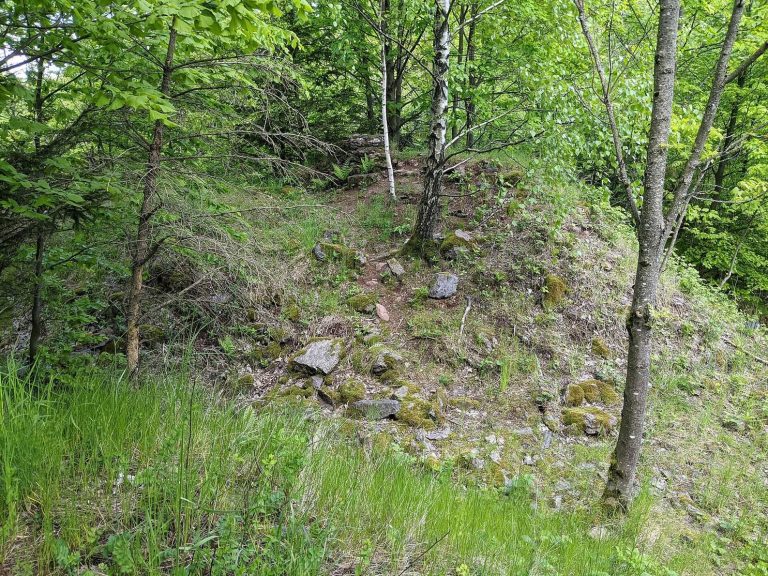
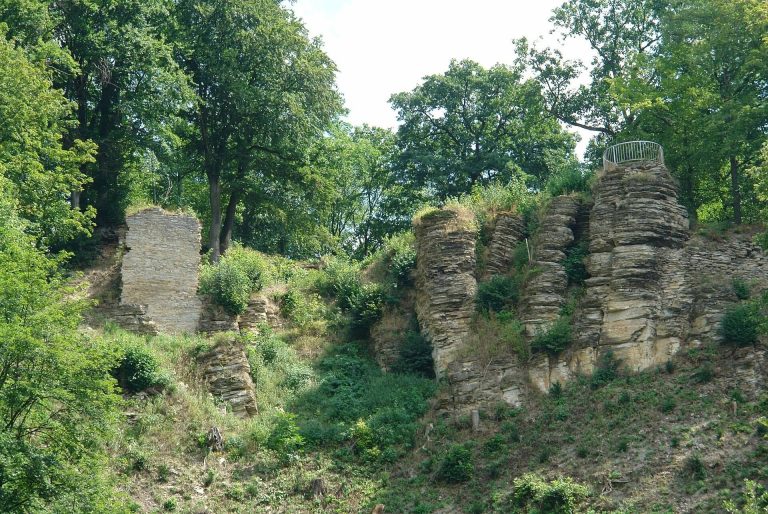
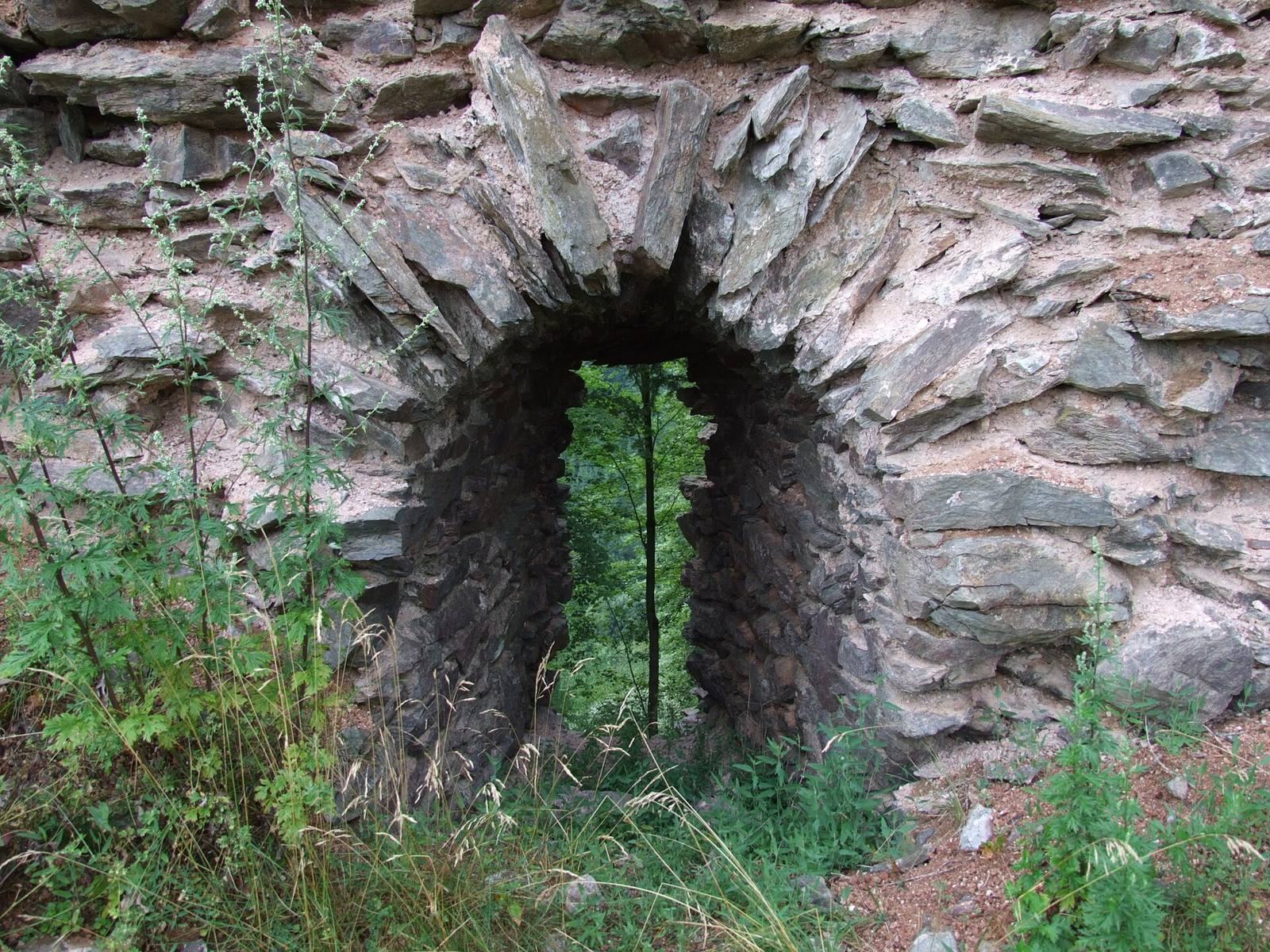
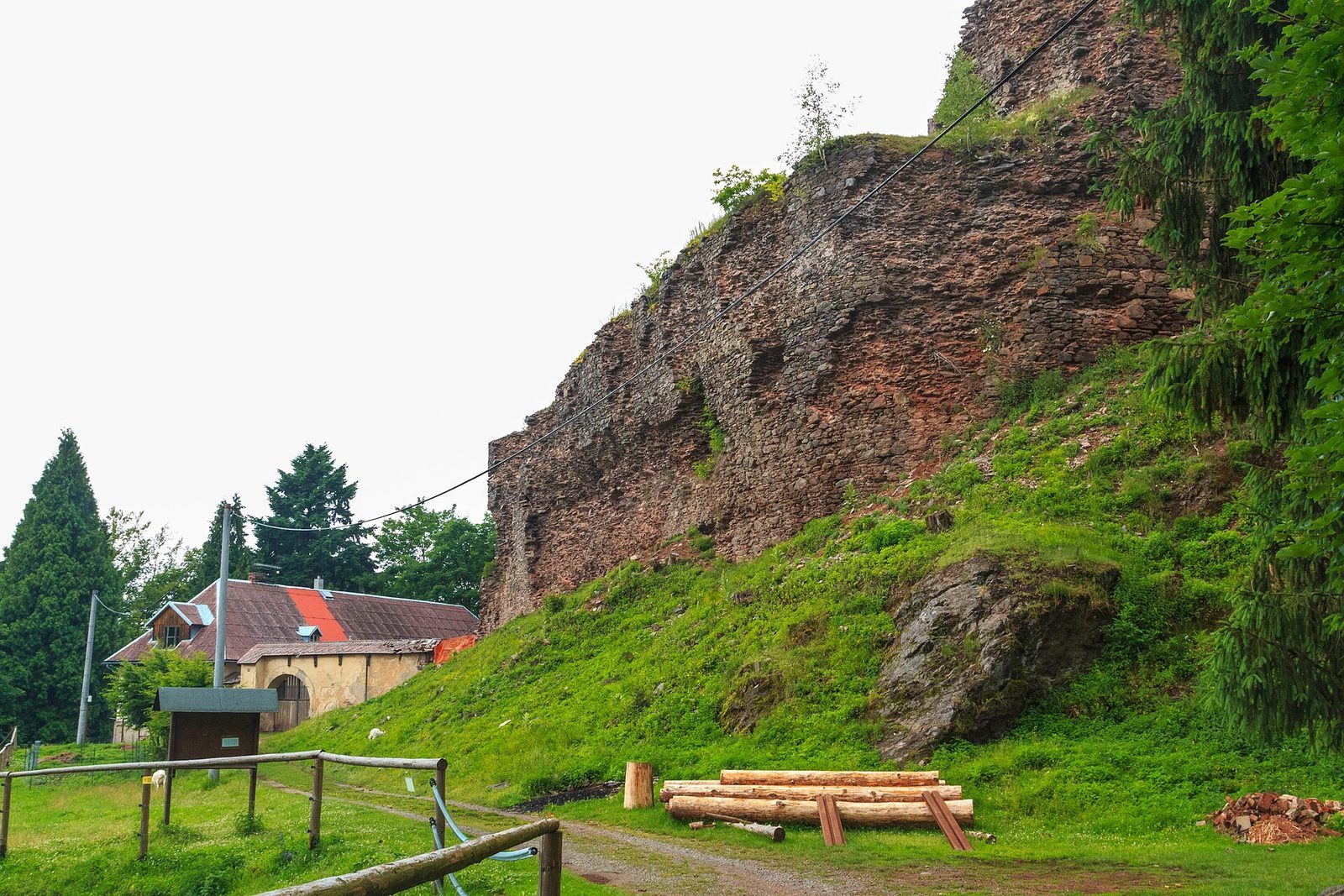
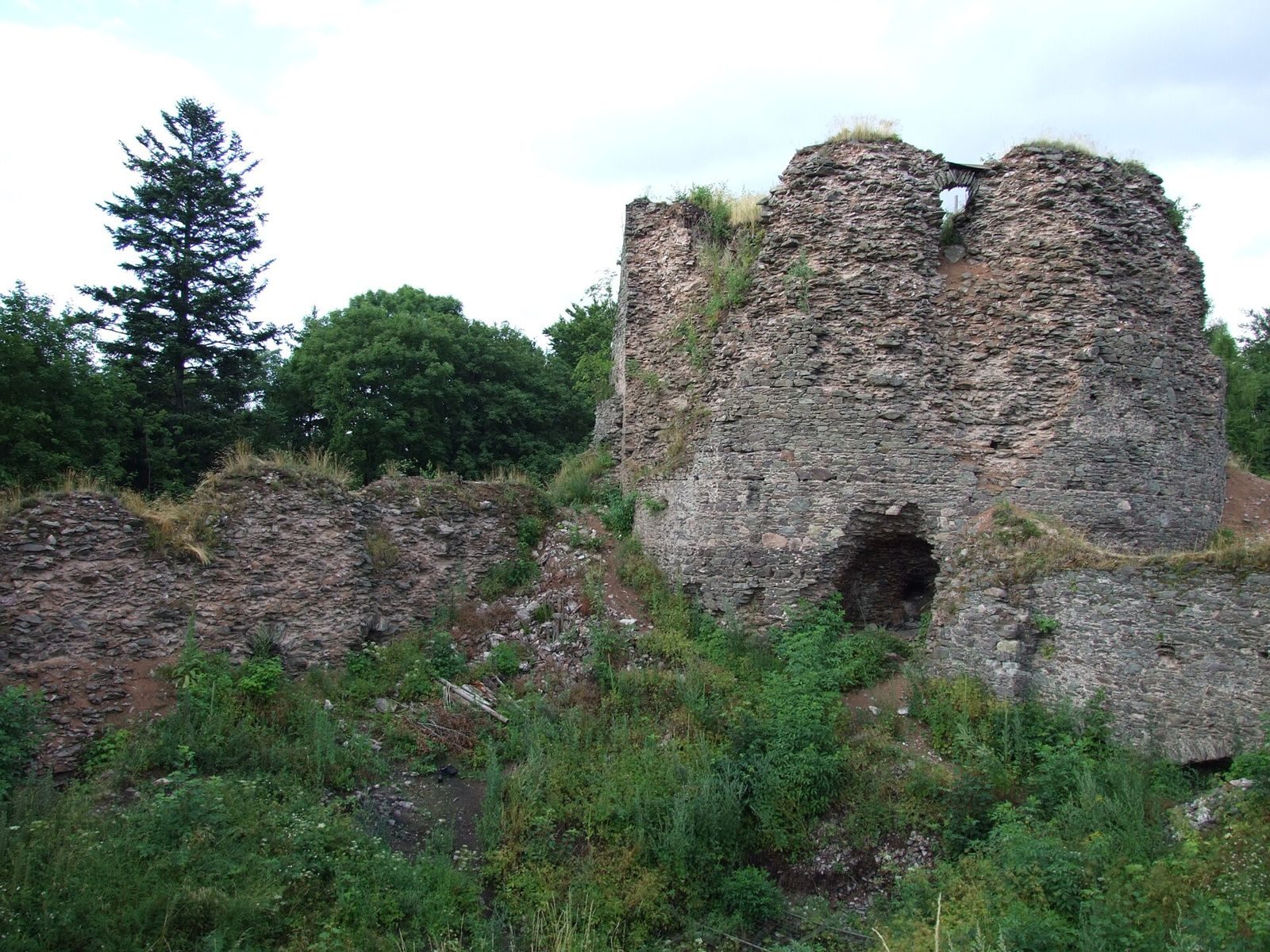
The ruin stands above the Olešenka valley in the northwestern Eagle Mountains. The complex comprised a castle and an outer bailey (an enclosed area outside the main stronghold), enclosed by a wall that reached ten metres in height. A partly displaced main defensive tower and sections of the gate walls remain.