Palazzo Aldrovandi: An Eighteenth-Century Rococo Residence in Bologna
Site at a Glance
- Popularity
- Medium
- Country
- Italy
- Primary era
- Early Modern
- Eras represented
- Early Modern
- Civilizations
- Papal States
- Site type
- Religious
- Remains
- Palace
On this page5 sections
History
Palazzo Aldrovandi, also known as Palazzo Montanari, is an eighteenth-century Rococo palace in the historic center of Bologna, Italy. Rococo is an eighteenth-century style known for elaborate ornament and curving forms. Cardinal Pompeo Aldrovandi commissioned the residence in 1725 to replace the fifteenth-century Casa Aldrovandi.
Commission and construction
The Aldrovandi family had been a prominent aristocratic family for centuries, with status connected to Bologna’s governing senate. Francesco Maria Angelini designed the new palace, but died in 1731 before its completion. Alfonso Torregiani took over the work, finished it in 1752, and designed its façade.
Changing ownership and uses
In 1795, Filippo Aldrovandi Marescotti established a ceramic factory in the palace. During the nineteenth century, the Aldrovandi family also operated a majolica factory, producing tin-glazed earthenware, in part of the building. The palace was sold in the early nineteenth century and passed to the Torlonia family. The cardinal’s art collection went mainly to the National Gallery in London, while the library had been dispersed by the middle of the century.
Camillo Montanari acquired the palace in 1860. He, his son Francesco, and their heirs preserved its eighteenth-century rooms and artworks. During the twentieth century, the building housed the City Public Library, the Cineteca film archive, and the Press Club. The library later moved to Sala Borsa, Bologna’s civic library and cultural center; the Cineteca relocated to the former Tobacco Manufactory, and the Press Club ceased to exist. The ground floor also housed the Bologna Women’s Center before it moved to Santa Cristina.
Remains
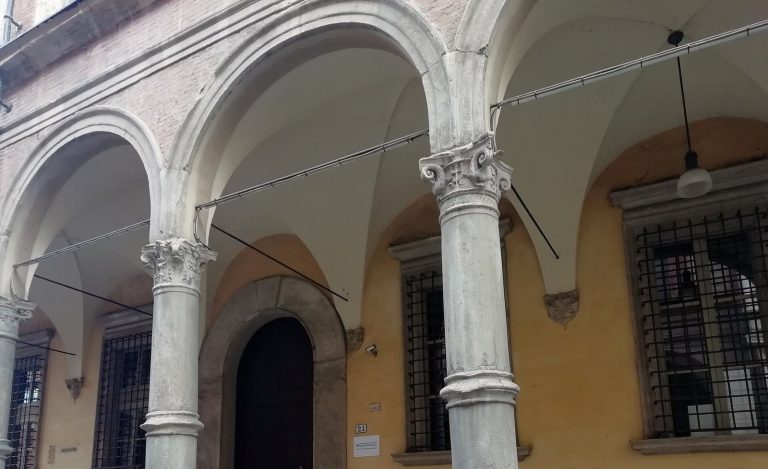
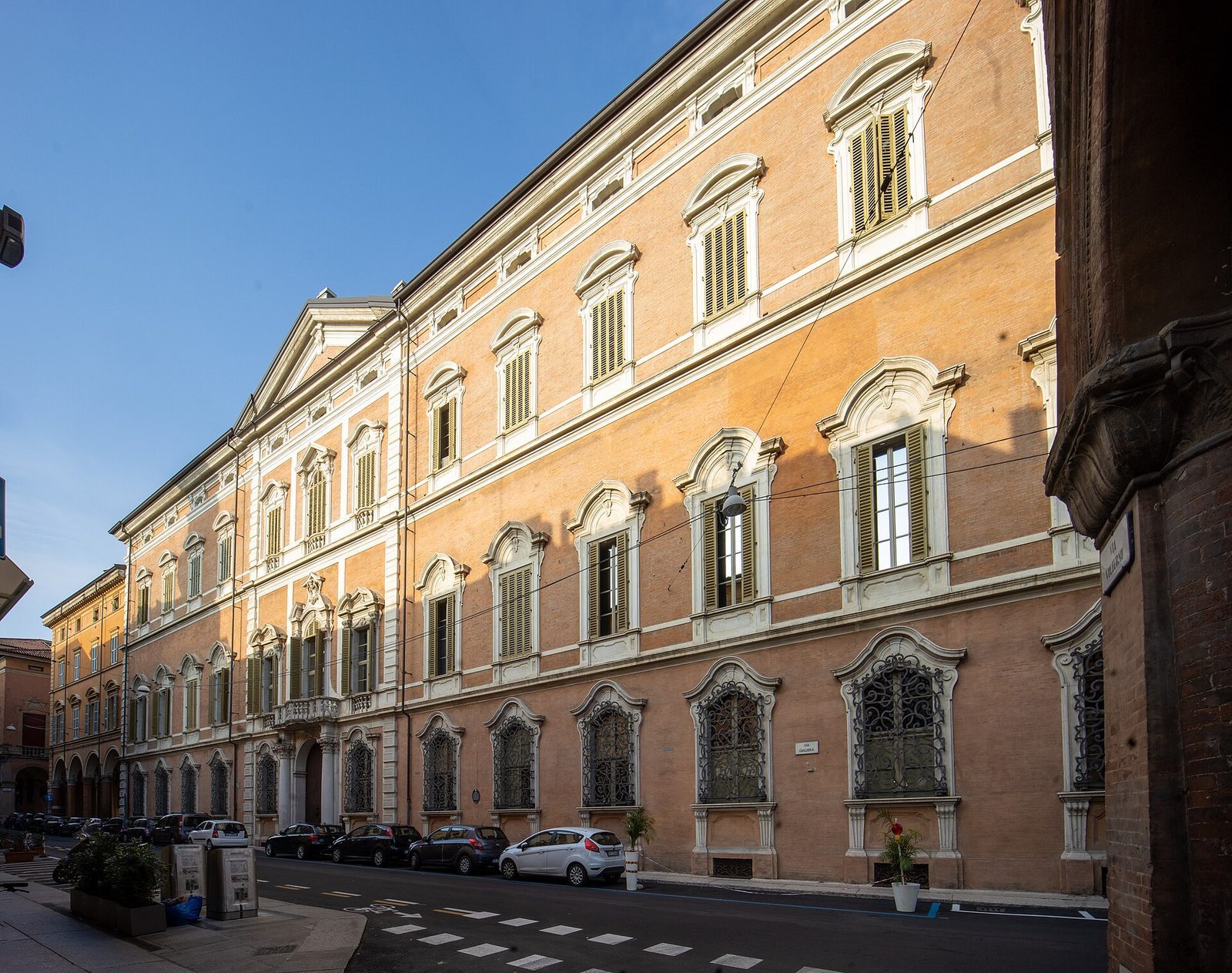
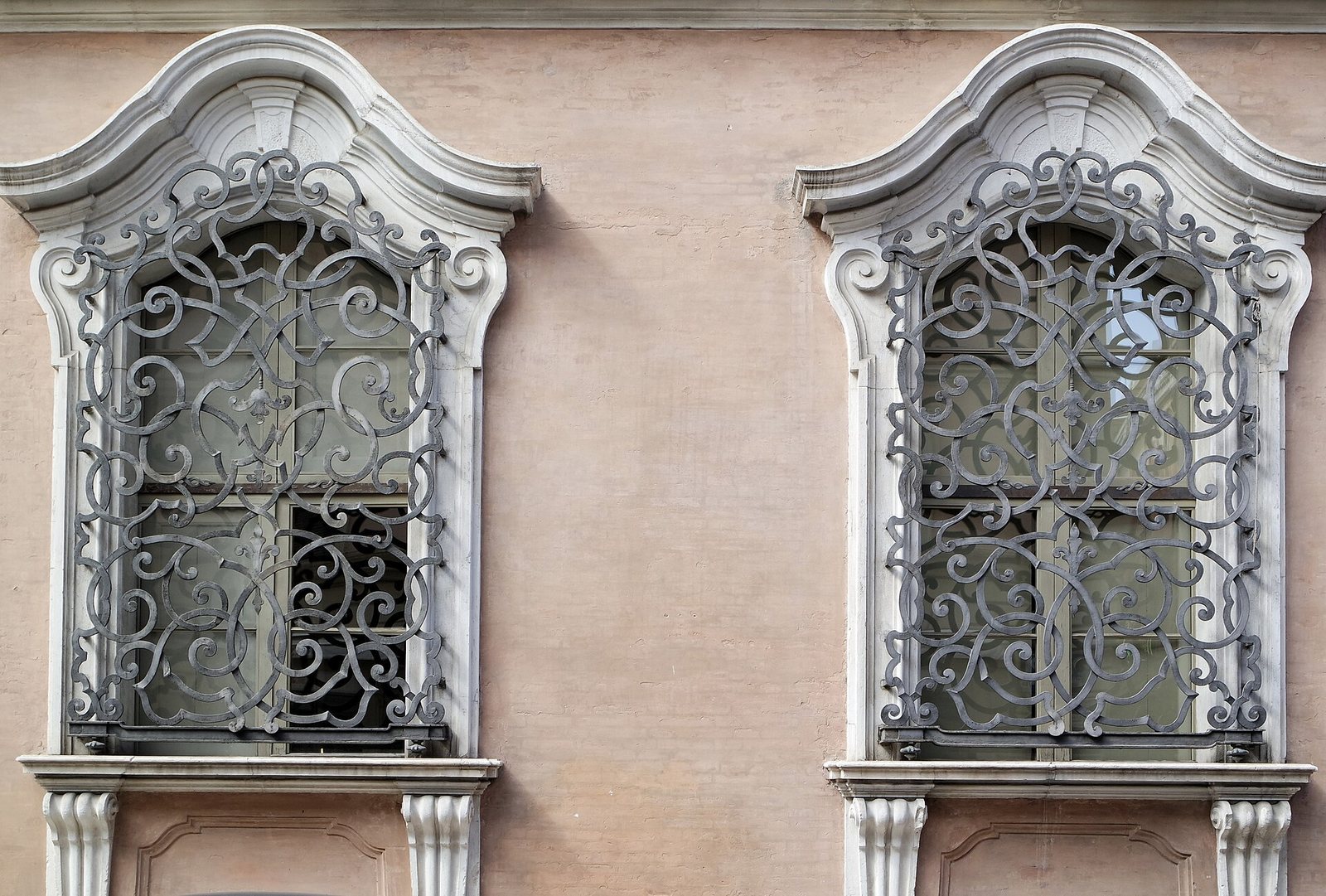
The palace combines a Rococo exterior with decorated interior spaces arranged around a courtyard. Its façade uses white Istrian stone alongside red brick masonry. Curving ornament covers much of the front, and the windows have undulating arches at their tops.
Interior and sculpture
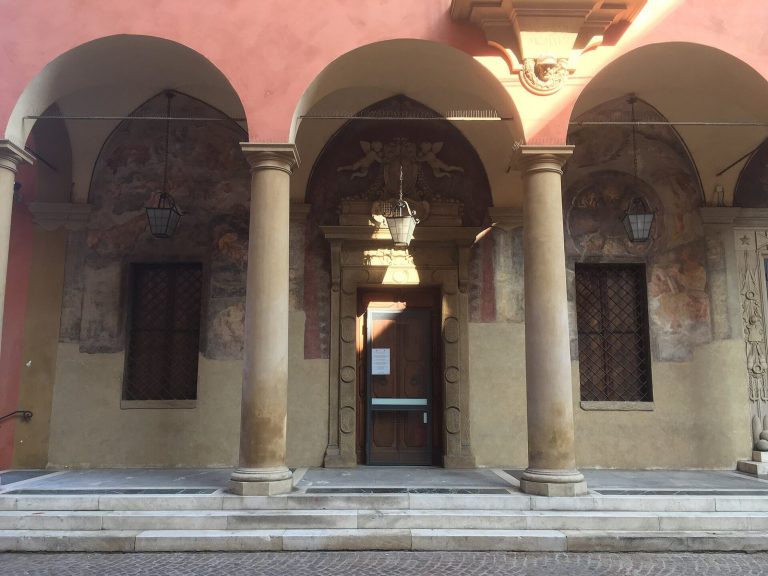
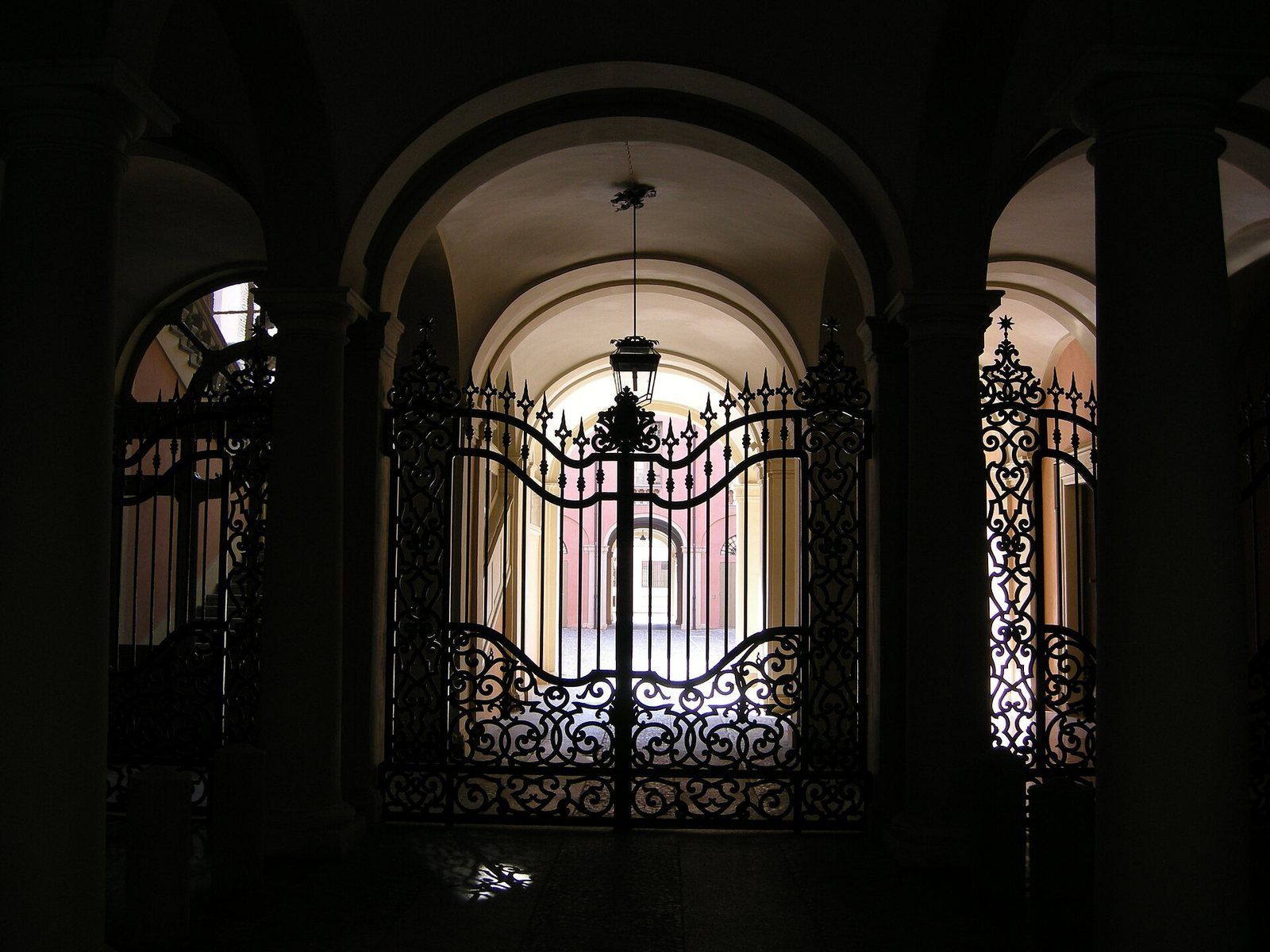
The entrance atrium opens toward the courtyard, and a grand staircase is a notable feature of the interior. Frescoes painted around 1755 by Vittorio Maria Bigari, with painted architectural perspective by Stefano Orlandi, depict members of the Aldrovandi family and episodes associated with them. They remain visible in the atrium, the vaulted stairwell, the Gallery of the Statues, and the main salon. The palace’s former collection of marble busts and reliefs was transferred to the British Museum in the second half of the nineteenth century.