Colloredo-Mansfeld Palace: An Aristocratic Residence in Prague
Site at a Glance
- Popularity
- Medium
- Country
- Czechia
- Primary era
- Early Modern
- Eras represented
- Medieval, Early Modern, Modern
- Civilizations
- Austrian Empire, Habsburg, Habsburg Austria, Holy Roman Empire, Kingdom of Bohemia
- Site type
- Domestic
- Remains
- Elite Residence
On this page11 sections
History
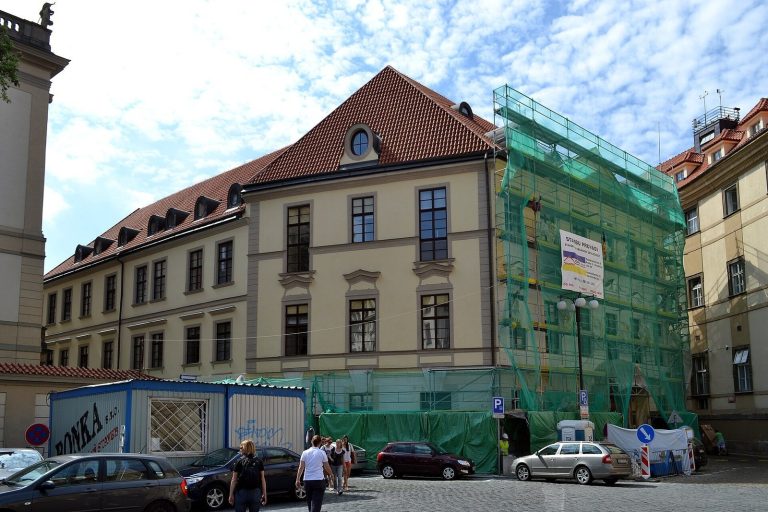
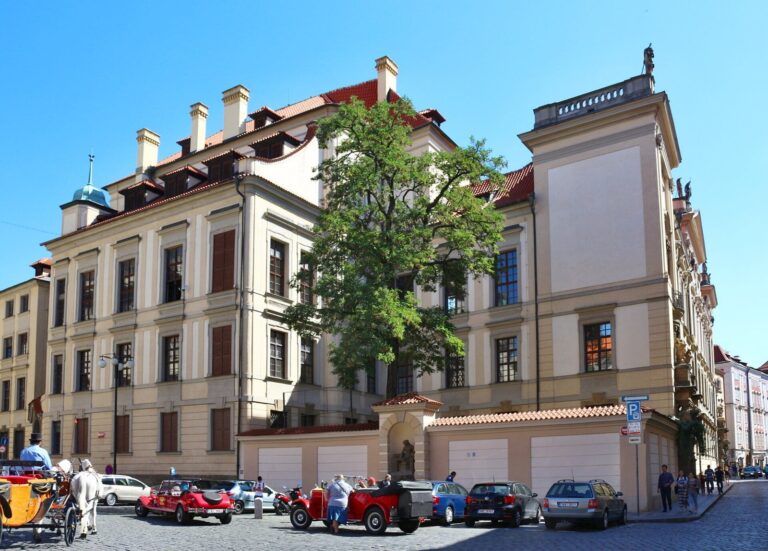
Colloredo-Mansfeld Palace is an aristocratic residence in Prague, Czechia, rebuilt in the late Renaissance style during the seventeenth century on the site of an earlier Romanesque house, later altered in the Gothic style. An eighteenth-century Baroque reconstruction shaped the building, which has a Neo-Rococo façade. Its history also intersects with the political crisis that followed the Battle of White Mountain in 1620.
The earlier house and the seventeenth century
On the night of 8–9 November 1620, after the Czech Estates’ forces were defeated at the Battle of White Mountain, the house hosted the final meeting of the royal council of Frederick V of the Palatinate. The Czech Estates were representative political bodies in the Bohemian lands, while Frederick V was a German prince who had ruled Bohemia briefly from 1619 to 1620. The battle was a decisive Habsburg victory over the Bohemian forces.
The property later belonged to Jáchym Ondřej Šlik, a Bohemian nobleman and Protestant political figure. He was executed in Old Town Square in 1621.
Baroque reconstruction
Count Bredow initiated an eighteenth-century Baroque rebuilding. Giovanni Battista Alliprandi is considered a possible designer, but the work was completed to a plan by František Ignác Prée for Count Jindřich Pavel of Mansfeld, who bought the palace in 1735.
Auersperg ownership and later use
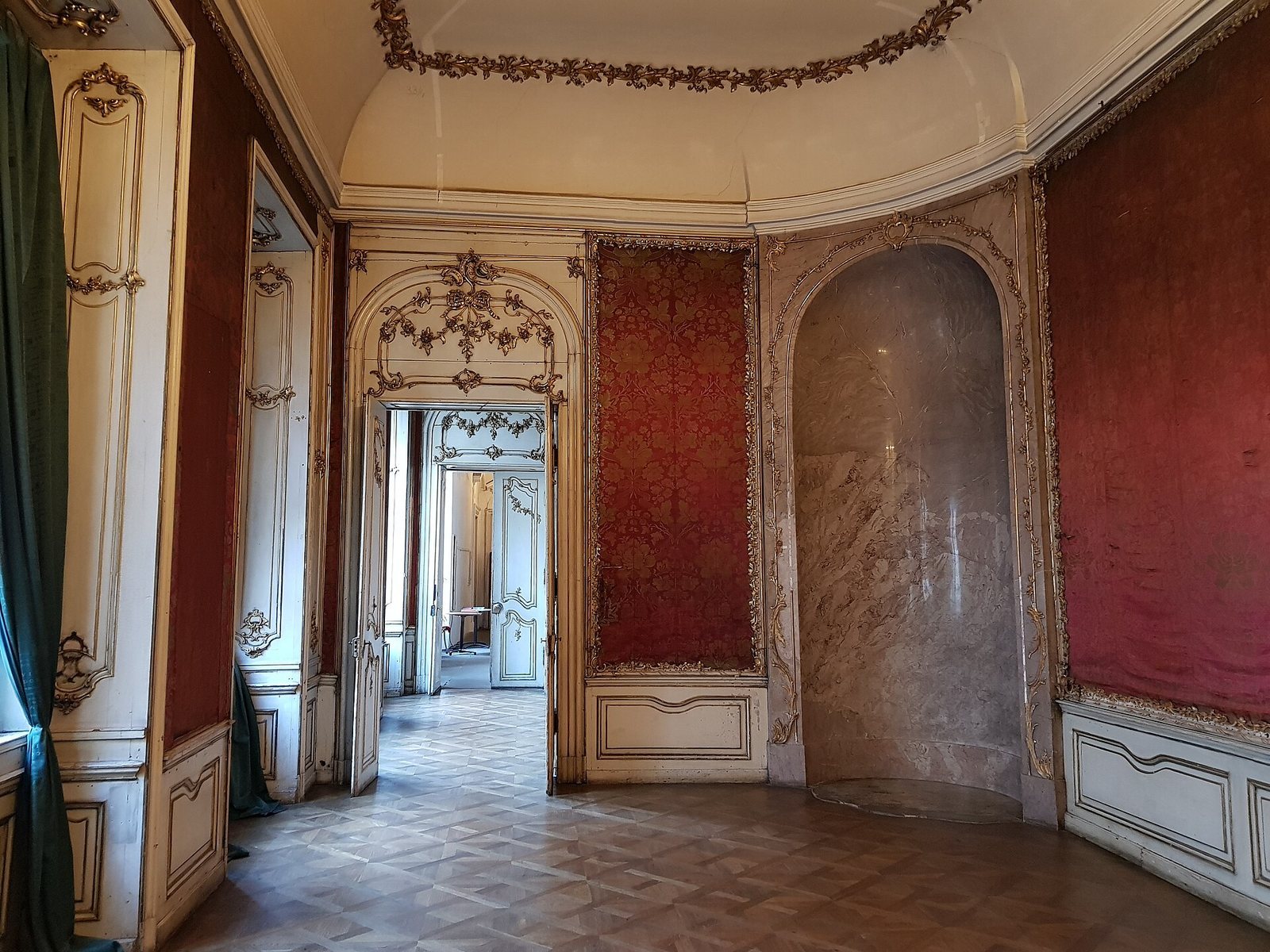
In 1842, an adjoining house was incorporated to provide a new passage. Vilemína Colloredo-Mannsfeldová received the palace as her dowry in 1848, and alterations in 1853 introduced Rococo interiors modeled on Viennese examples. She was married to Prince Vincent Charles of Auersperg, who owned Slatiňany Castle, where a dining room and Pink Salon with almost identical interiors survive.
The palace remained with the Auersperg family until 1942, when Ferdinand, the last childless member of the family line, died. During the 1866 conflict between Prussia and Austria, the building temporarily served as Prussian headquarters. It was expropriated in 1945. The City of Prague owns the palace, and the Prague City Gallery administers it. It is protected as a cultural monument and has held National Cultural Monument status since 2026.
Remains
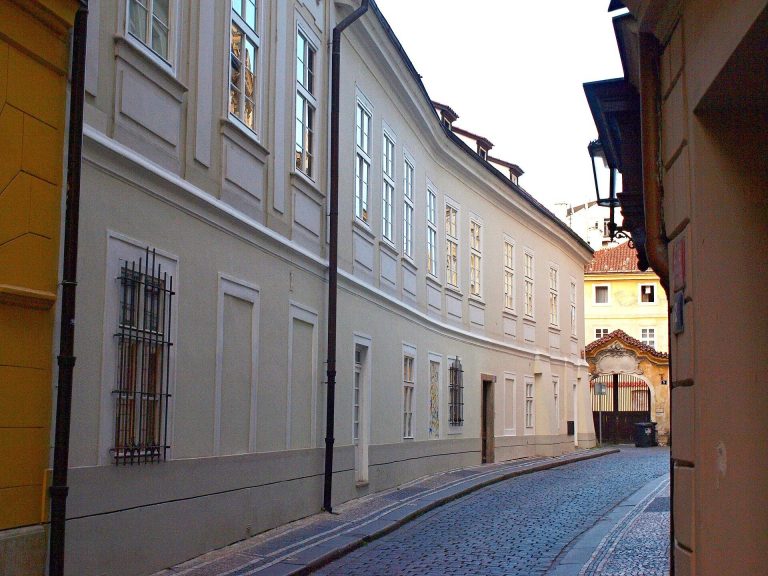
Four wings enclose a rectangular courtyard at the center of the palace. The building combines Baroque fabric with a Neo-Rococo façade, while preserved cellars and decorated interior spaces reflect earlier phases.
Exterior and courtyard
Plan and main façade
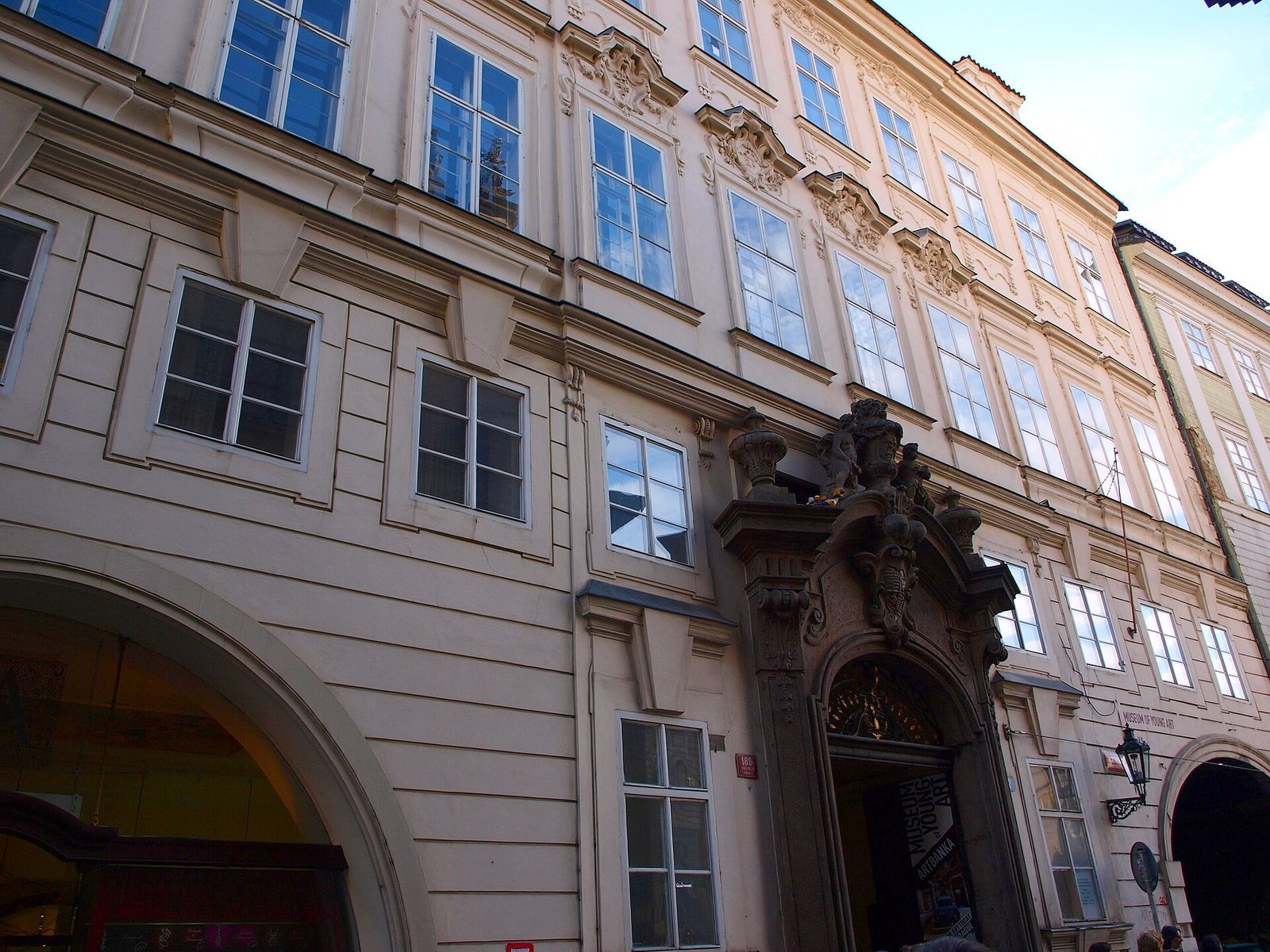
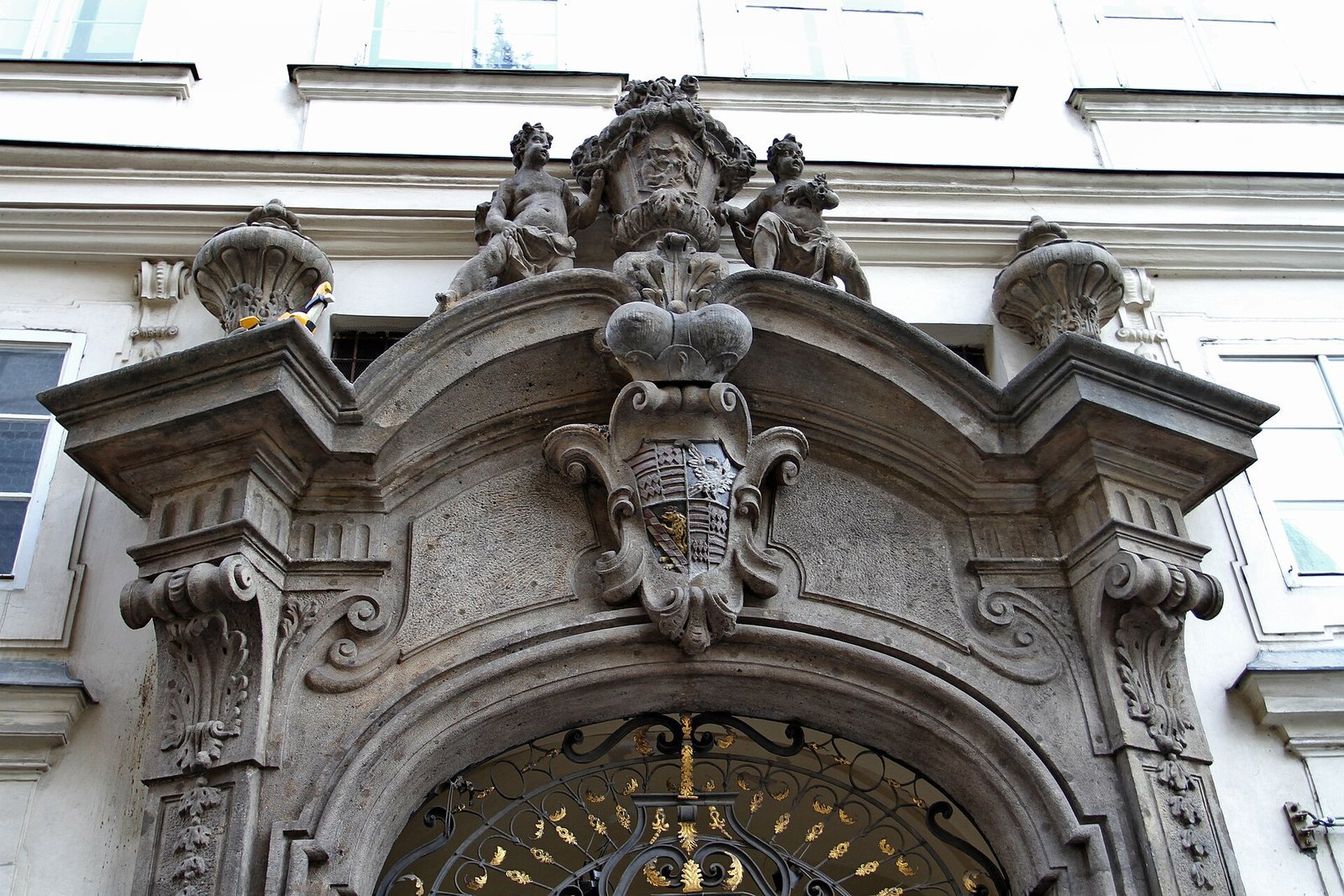
The two-storey main façade faces Karlova Street. Its High Baroque portal is ornamented with vases, child figures, and the Colloredo-Mansfeld coat of arms. The portal is probably the work of the sculptor Antonin Braun.
Courtyard fountain
At the rear of the courtyard stands a sandstone fountain dating to about 1735, with a statue of Neptune, the Roman god of the sea.
Interior fabric
Cellars and ground-floor rooms
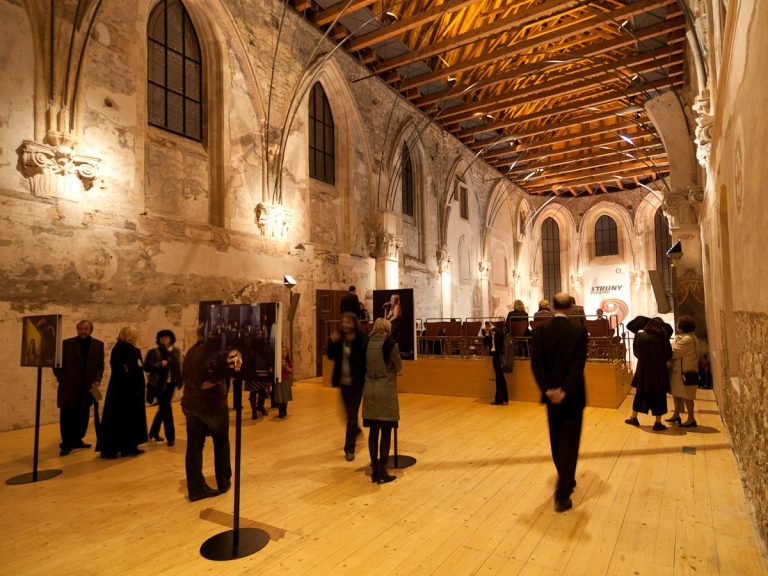
The preserved cellars retain evidence of the house’s Romanesque origins. Several ground-floor rooms contain surviving features from the High Baroque period.
Ceiling fresco
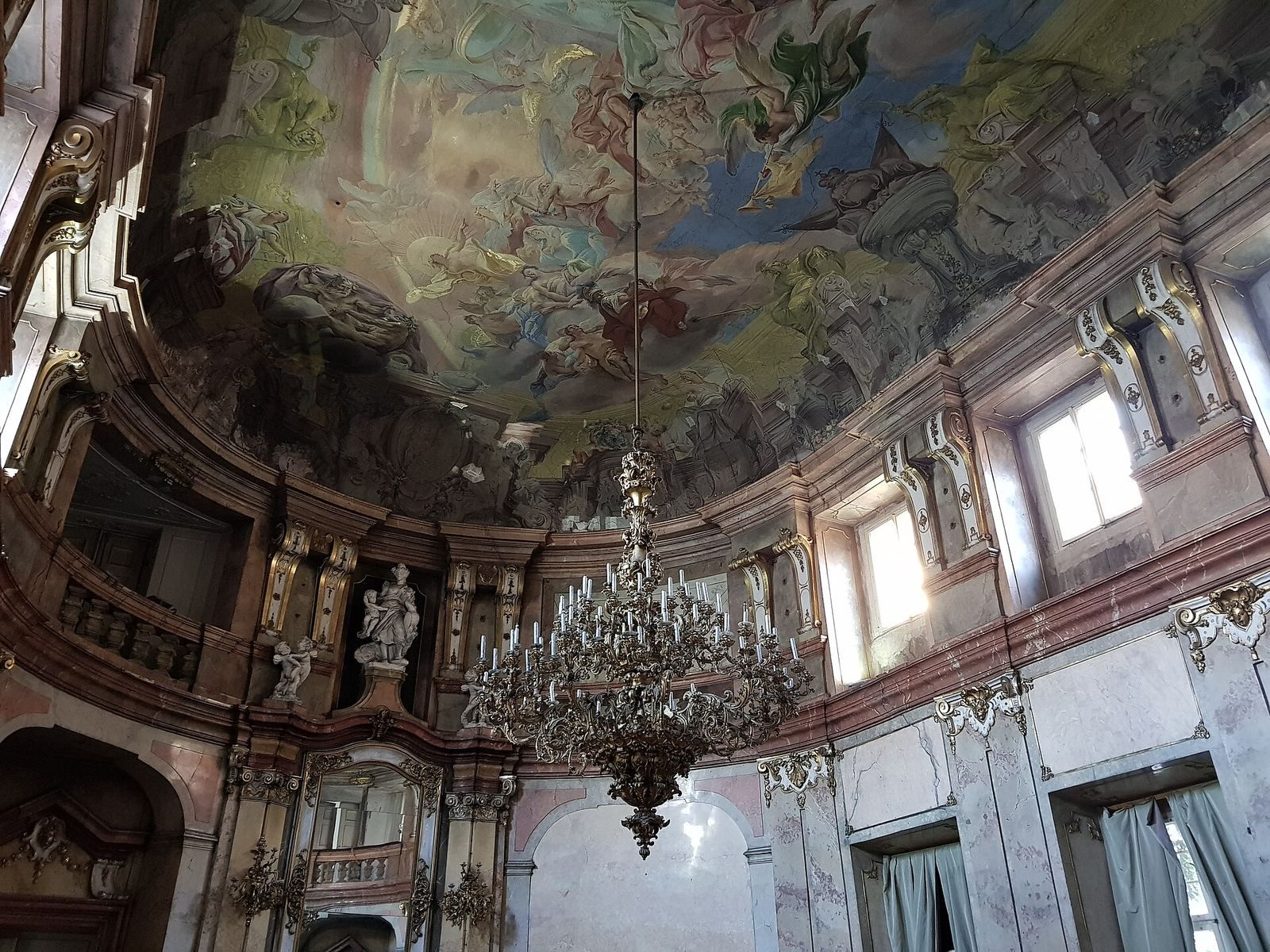
On the first floor, a ceiling fresco by Bartolomeo Scotti depicts an allegory of the Habsburg monarchy’s victory over the Ottoman forces. A fresco is a painting made on wet plaster.