Elbroich: A Former Knightly Estate in Düsseldorf
Site at a Glance
- Popularity
- Medium
- Country
- Germany
- Primary era
- Early Modern
- Eras represented
- Early Modern, Modern
- Civilizations
- Duchy of Berg, Holy Roman Empire
- Site type
- Domestic
- Remains
- Castle
On this page7 sections
History
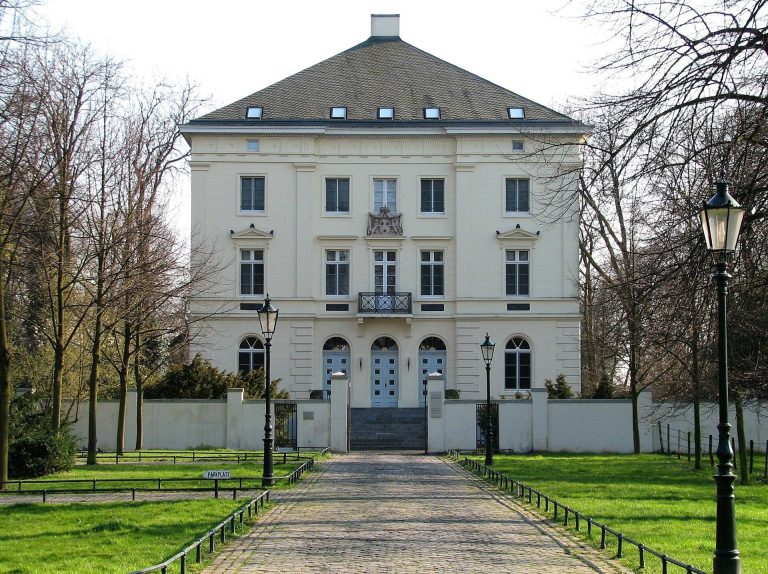
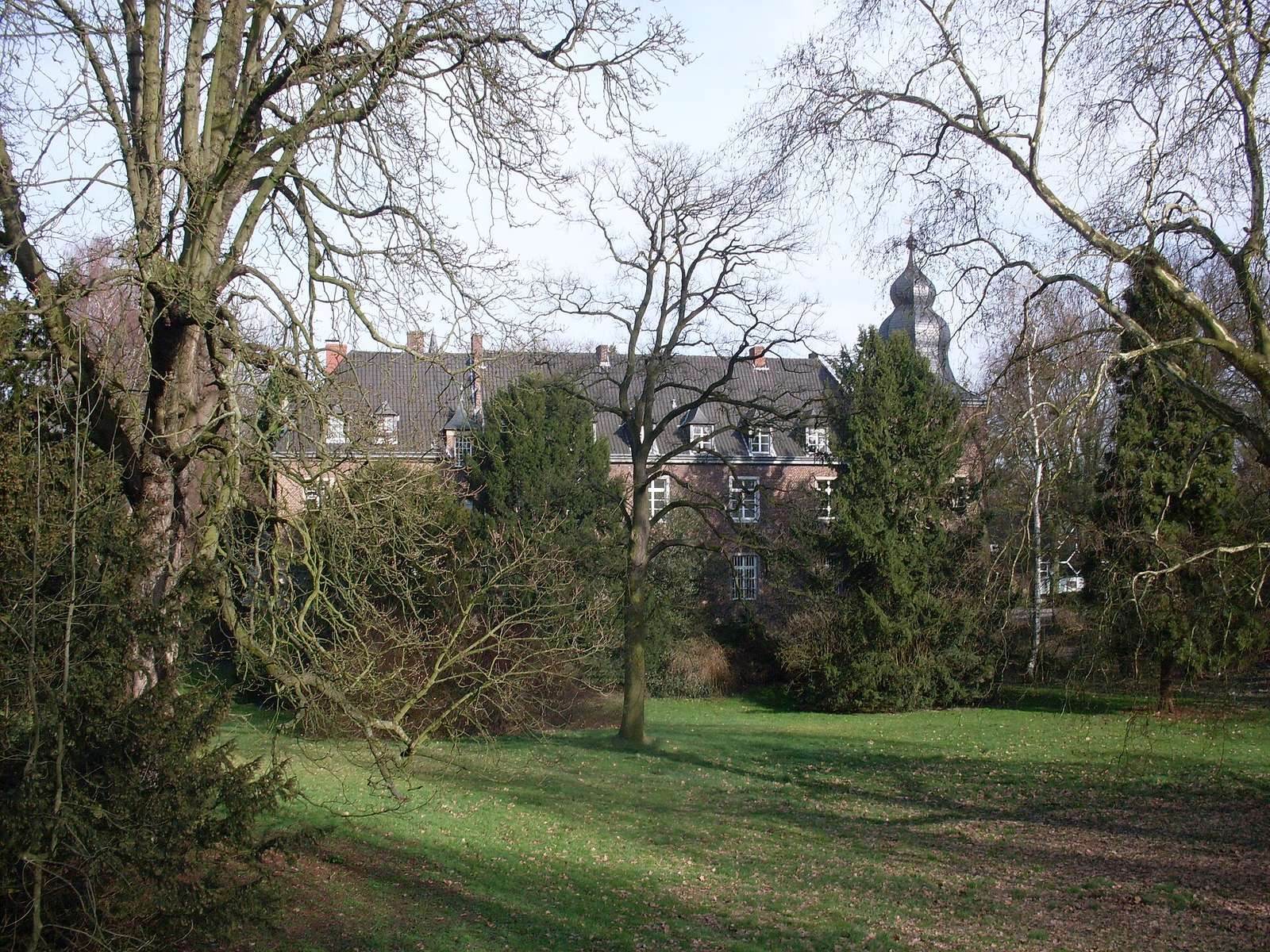
Elbroich is a former knightly estate in Holthausen, Düsseldorf, Germany. Its castle was rebuilt around 1600 in much the form it retains today, and ownership of the estate later carried political privileges in Prussia.
Medieval and early modern ownership
Elbroich’s origins are difficult to trace because its archive was almost entirely destroyed during the Second World War. Around 1189, the Lords of Teveren sold the settlement of Düsseldorf and several associated properties, including Elbroich, to the Counts of Berg. Elbroich was transferred as an allod, meaning property owned outright rather than held as a fief. The Counts of Berg ruled the medieval County of Berg in the Rhineland.
The estate passed to the Lords of Eller in the 15th century. On 10 April 1589, Georg von Neuhoff acquired Elbroich for 6,500 talers. The castle was newly built around 1600. In 1679, Elbroich passed through marriage to the Lords von der Horst.
Nineteenth-century owners and political rights
In 1852, banker Christian Gottfried Trinkaus senior owned the estate. Ownership brought the right to serve as an unelected representative in the Prussian district and provincial assemblies, bodies concerned with local and provincial affairs.
Elbroich later passed as a dowry through Alice Trinkhaus (1871–1930), daughter of Christian Gottfried Trinkaus junior, to Hermann Heye, son of Gerresheim Glassworks founder Ferdinand Heye. In 1895, Hermann Heye bought additional nearby land and entered the real-estate business. The venture developed into Industrieterrains Düsseldorf-Reisholz AG, now owned by the city.
Charitable, educational, and later uses
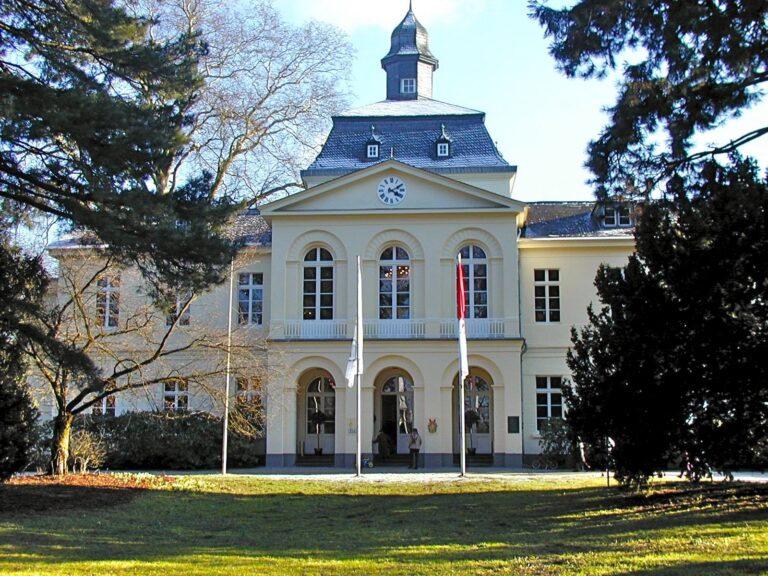
In 1954, Hermann Heye’s heirs gave the castle and park to Caritas, a Catholic charitable and social-welfare organization. Caritas established an educational institution for children with developmental disorders. The children’s home closed in summer 1972; Caritas subsequently used the property for a school of social pedagogy and a specialist training seminar in geriatric care. A geriatric hospital was established on the estate in 1980. Caritas sold the castle to a consulting company in 1989. Ownership changed in 2021, and the castle now serves as a company headquarters.
Remains
The estate includes the castle and its entrance gate, a former water moat, parkland, and later institutional buildings. The surviving castle retains much of its early modern form.
Castle, entrance gate, and moat
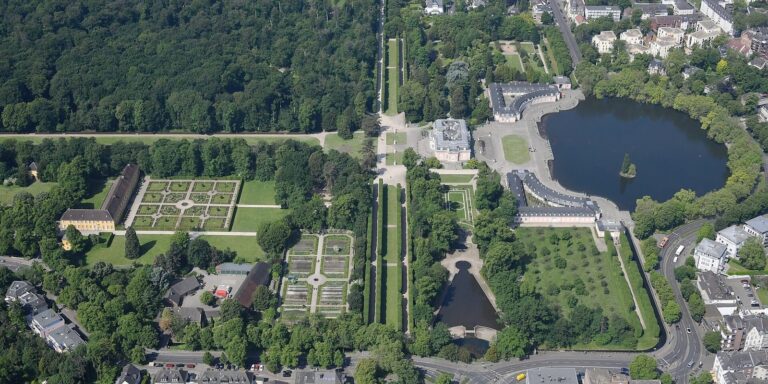
Additions and alterations to the castle were made in 1748. A year numeral on the entrance gate commemorates this work. The estate’s water moat is now dry. In 1760, the Itterbach was diverted to supply water features in the gardens of Benrath Palace, laid out by architect and garden designer Nicolas de Pigage. Benrath was an electoral palace, a residence for a prince entitled to take part in choosing the Holy Roman Emperor.
Park and institutional buildings
The park was enlarged during the 19th century. The geriatric hospital established in 1980 occupied the estate’s play and open-air grounds. An ancillary building houses a day clinic for psychosomatic medicine and psychotherapy.