Inverugie Castle: A Medieval Stronghold and Renaissance Residence in Scotland
Site at a Glance
- Popularity
- Medium
- Country
- United Kingdom
- Primary era
- Medieval
- Eras represented
- Medieval, Early Modern
- Civilizations
- Kingdom of Scotland
- Site type
- Military
- Remains
- Castle
On this page7 sections
History
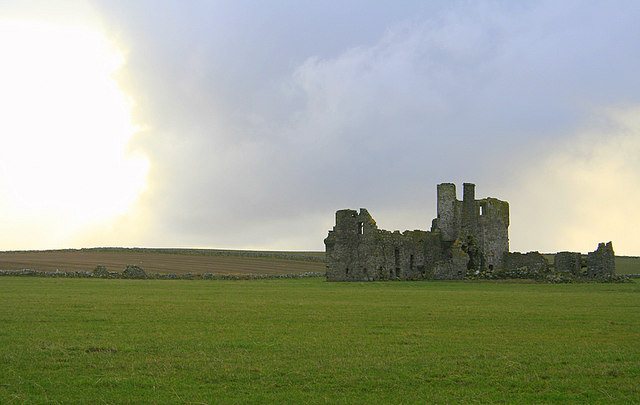
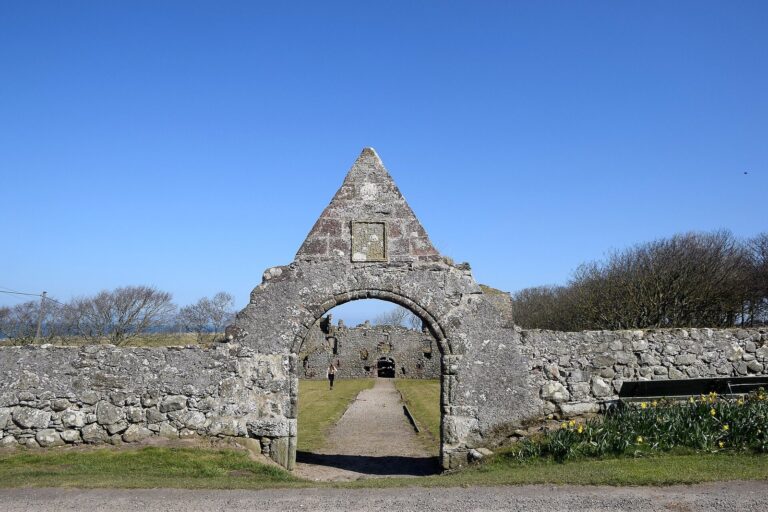
Inverugie Castle is a ruined medieval castle in Aberdeenshire, Scotland, United Kingdom. Its earliest defensive phase is associated with the Cheyne family, and its mound dates to the 13th century. Around 1660, the Keith family built a Renaissance-style stone residence nearby, reflecting a later phase in the site’s history.
Cheyne origins and Keith inheritance
The date of the earliest Cheyne stronghold is uncertain. In 1345, following the death of Reginald le Chen, Baron Inverugie, the estate passed to the Keith family through the marriage of his daughter and heiress, Marjory, to Edward Keith. Marjory’s mother was Helen de Strathearn. The Keiths held the hereditary Scottish title of Earl Marischal, while their principal seat was Dunnottar Castle.
The Keith residence
The Keiths built the stone castle around 1660. An oak heraldic shield found in a nearby cottage during the 19th century bore the arms of William Keith, 7th Earl Marischal, and the date 1660. After the Keith lands were forfeited to the Crown following the Jacobite Rebellion of 1745, an uprising by supporters of the Stuart claim to the British throne, the estate went to James Ferguson, 3rd Laird of Pitfour, a Scottish landowner. Ferguson kept the castle in excellent condition until his death in 1820. The fifth Laird later stripped away restoration work, and his successor let the building deteriorate further.
Decline and destruction
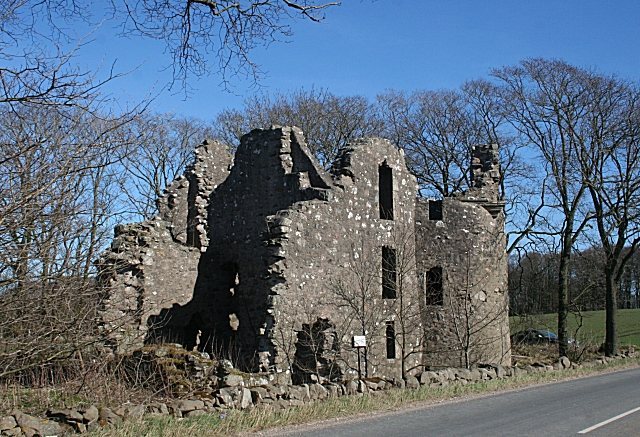
By 1890 the castle was in poor condition. Storms in April brought down walls and the stair tower. After further storms on New Year’s Day 1899, the local authority declared the building unsafe. Estate manager William Ainslie, probably acting on the Laird’s instructions, arranged for much of the remaining ruin to be blown up. Within a fortnight, little of the castle remained. Scotland designated Inverugie a scheduled monument on 30 December 1936, giving the site legal protection for its historic or archaeological importance.
Historical references can confuse Inverugie Castle with nearby Ravenscraig Castle, also called the Craig of Inverugie. That separate stronghold belonged to the Cheynes and stood less than a mile away in a more defensible position. Another, older coastal castle at the mouth of the River Ugie was visible until the late 19th century but has since disappeared. William Burnes, father of the poet Robert Burns, trained as a gardener at Inverugie before moving to Ayrshire.
Remains
The site combines a raised defensive mound with a later stone residential group, whose remains lie slightly to the mound’s south. A motte is a raised defensive mound; a bailey is an enclosed area paired with it.
The motte
Sometimes called Castle Hill, the original mound survives above the River Ugie, rising about 3 m. It formed part of the earlier castle site, while the later residence occupied ground a little to its south.
The stone castle
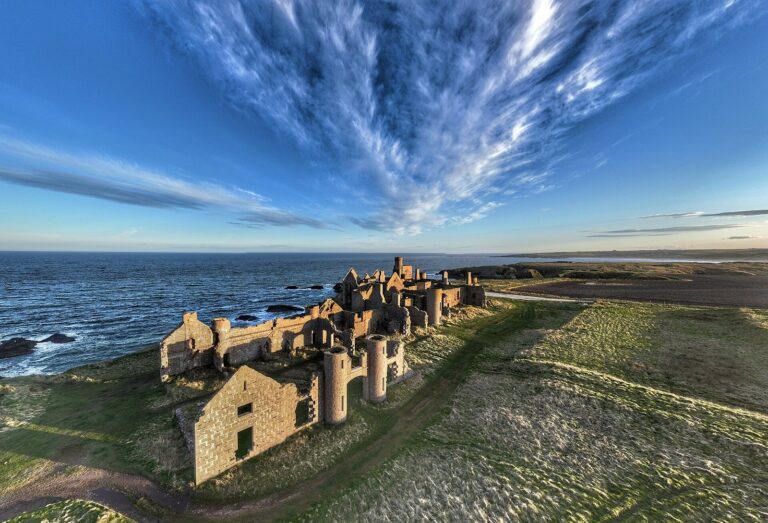
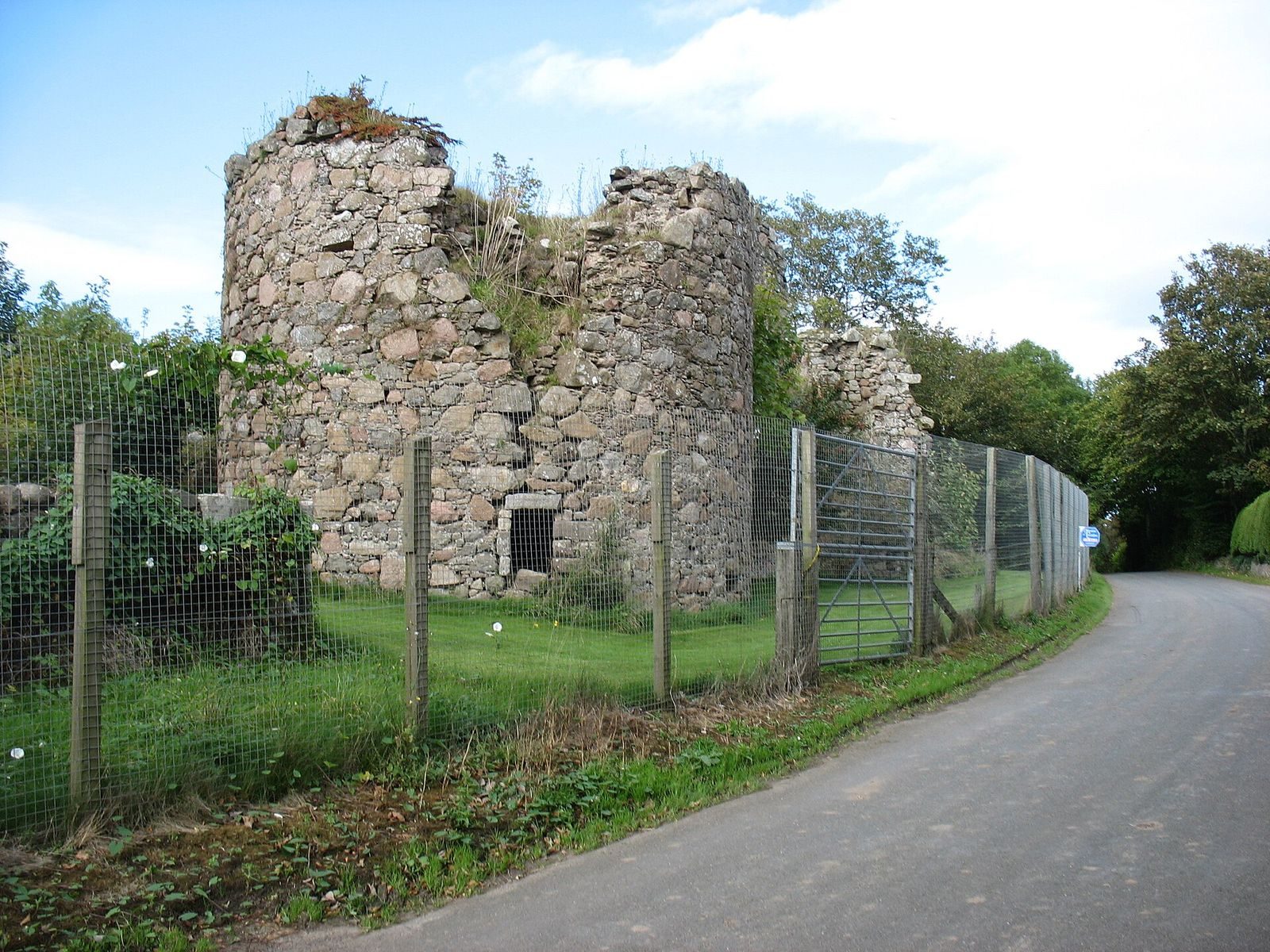
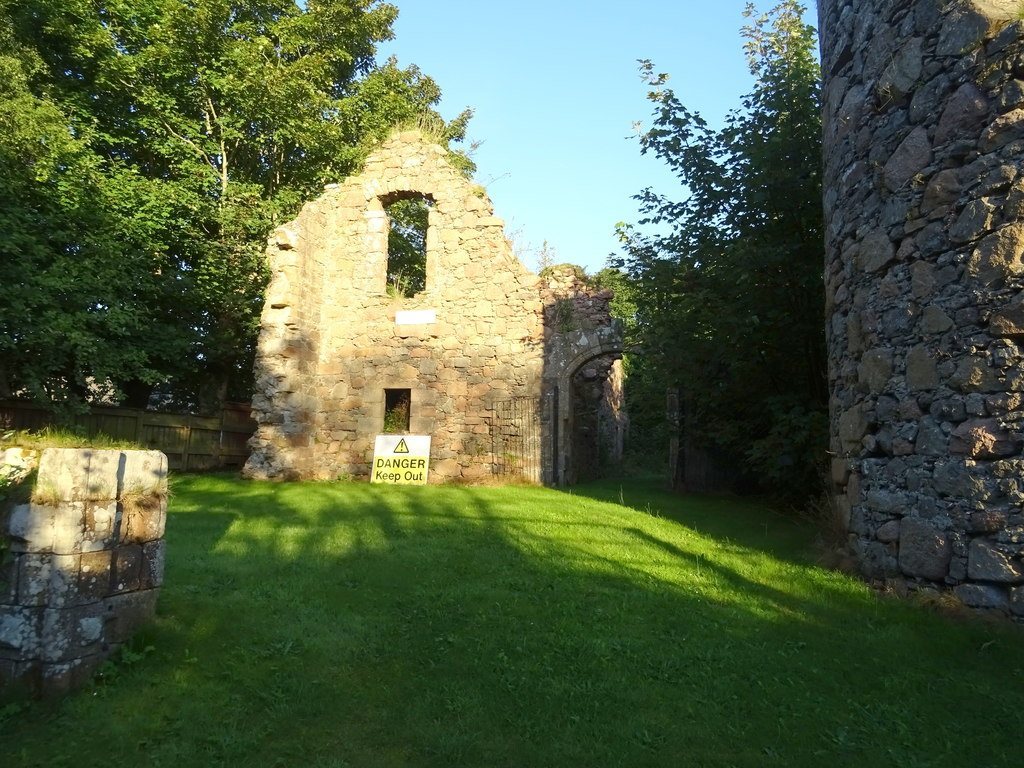
The stone residence had a rectangular main block, four storeys high, and two courtyards. Its ground floor contained storage cellars and a kitchen, with the great hall on the first floor. Short, straight stairways at the hall’s north and south corners led to two round towers. A third tower, midway along the building’s west side, held the main staircase and faced a paved courtyard. A courtyard wall stood directly on the bank of the Ugie. The building also had circular corner towers and a stair turret; masonry in the part known as Cheyne’s Tower may have belonged to an earlier structure.