Gondorf Castle: A Fortified Renaissance Complex on the Moselle
Site at a Glance
- Popularity
- Medium
- Country
- Germany
- Primary era
- Early Modern
- Eras represented
- Medieval, Early Modern, Modern
- Civilizations
- Electorate of Trier, German, Holy Roman Empire
- Site type
- Military
- Remains
- Castle
On this page11 sections
History
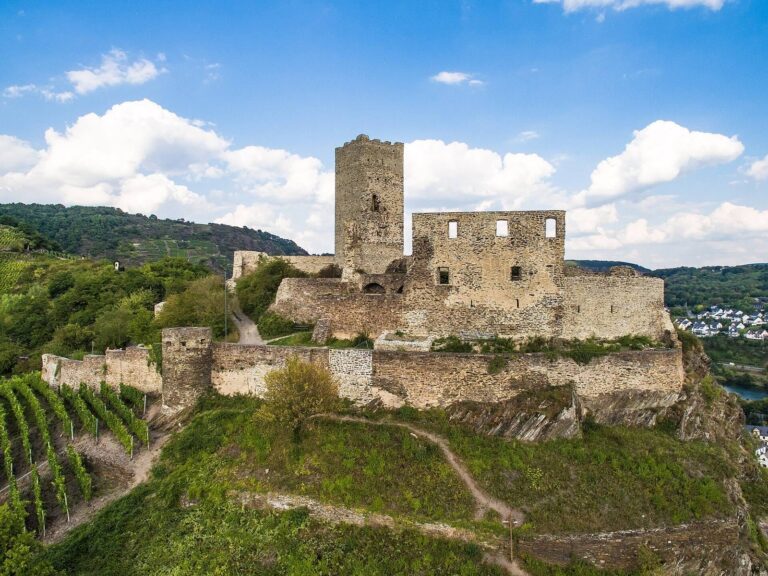
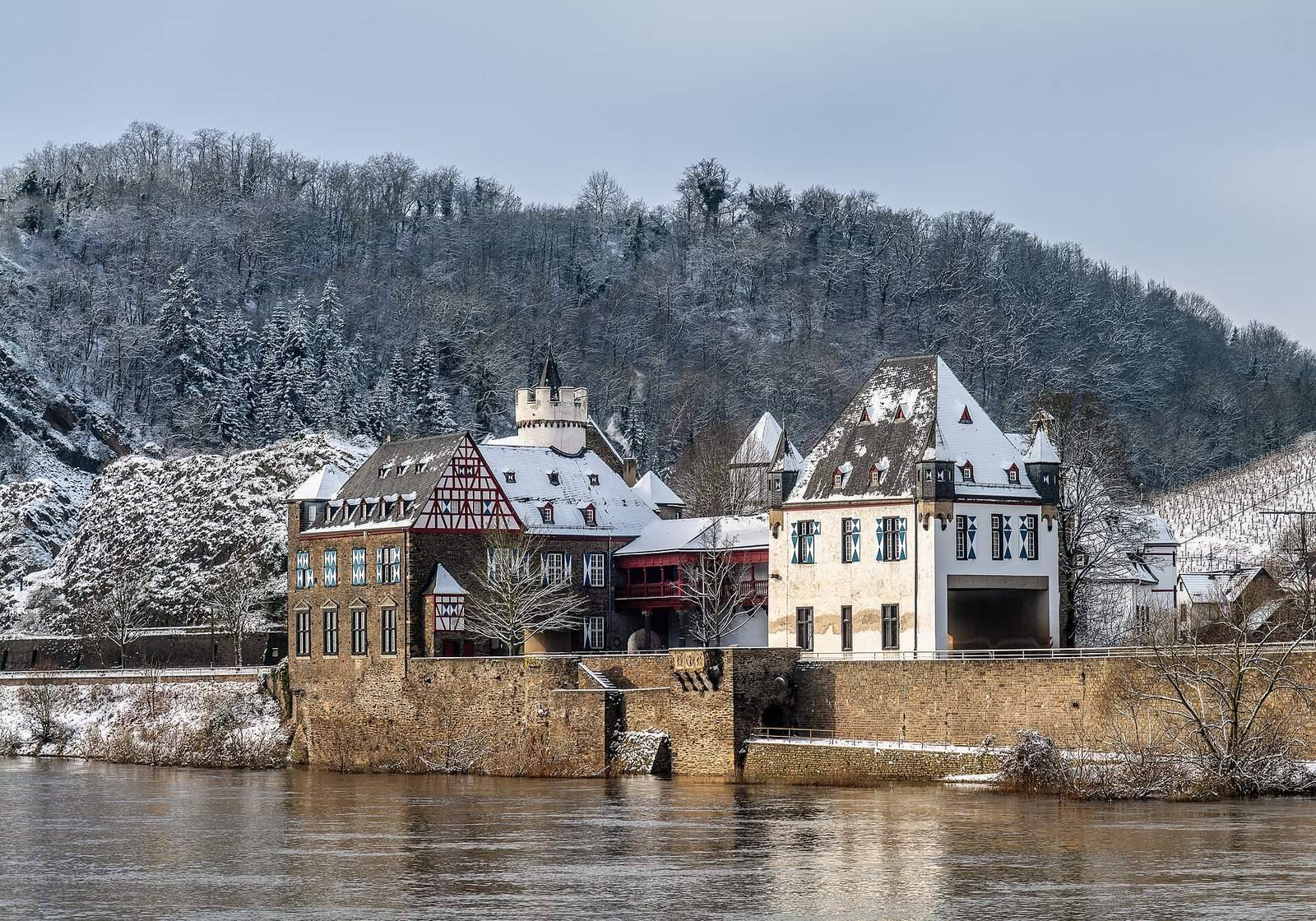
Gondorf Castle is a fortified complex in Gondorf, within Kobern-Gondorf, Germany, on the Moselle. Its extensive form dates from the fourteenth century, and it is described as Renaissance-style, a European architectural tradition drawing on classical forms. The castle became the ancestral seat of the Lords, and later Princes, von der Leyen, a German noble family.
Early settlement and noble seat
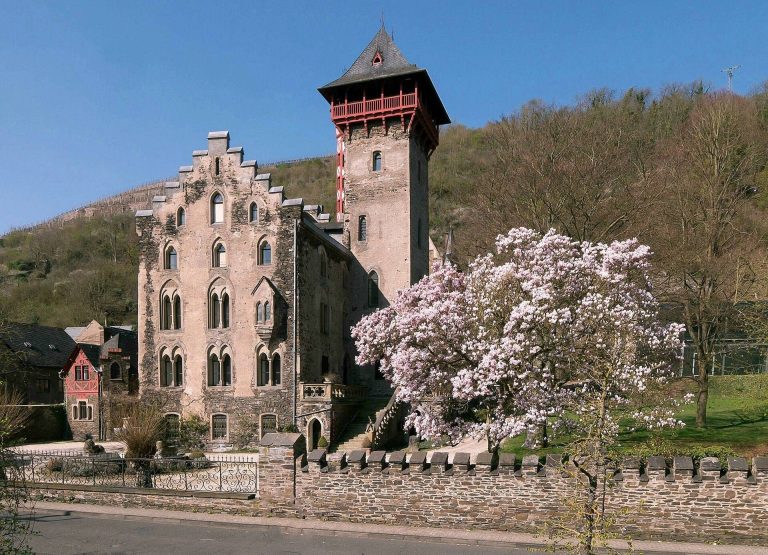
The site may have offered a defensible position for a fortified settlement as early as the fifth or sixth century. Engelbertus von Guntravia was the complex’s first owner. It was also called Oberburg, a name that distinguished it from Niederburg, or Schloss Liebieg.
Renaissance building and decline
A major building phase took place around 1560 under Johann VI von der Leyen, Archbishop and Prince-Elector of Trier. A prince-elector was a ruler entitled to participate in choosing the Holy Roman Emperor. The castle later fell into disrepair as different branches of the family established residences in the Bliesgau, Bavaria, and southwestern Germany.
Restoration and change of ownership
In the early nineteenth century, Philipp von der Leyen restored parts of the family’s ancestral castle. An Imperial Count, a noble count of the Holy Roman Empire, he had been elevated to Prince of Hohengeroldseck, a territory in southwestern Germany that became part of Baden in 1819. After Philipp’s death, his son Erwein I sold the complex, its lands, its formerly important wine cellar, and other property to the municipality of Gondorf.
Railway and modern status
Railway expansion in 1876 led to the demolition of the church southwest of the castle. The Prussian State Railway paid for a replacement church built elsewhere. The municipality of Kobern-Gondorf is now the castle’s owner, and the complex is protected as a cultural monument under Rhineland-Palatinate’s Monument Protection Act.
Remains
Physical layout and surviving features
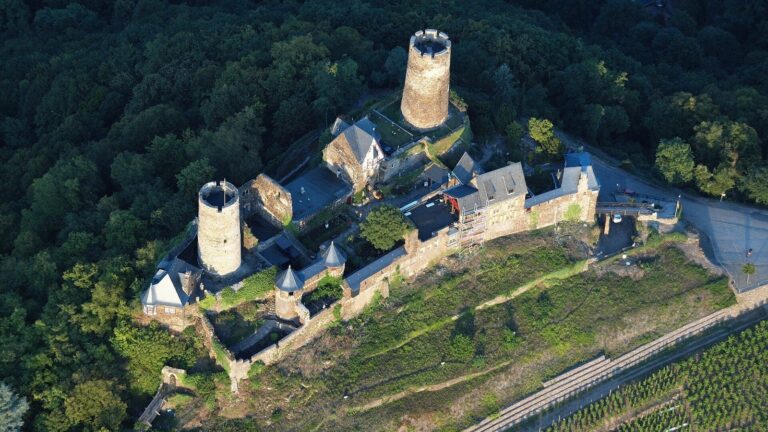
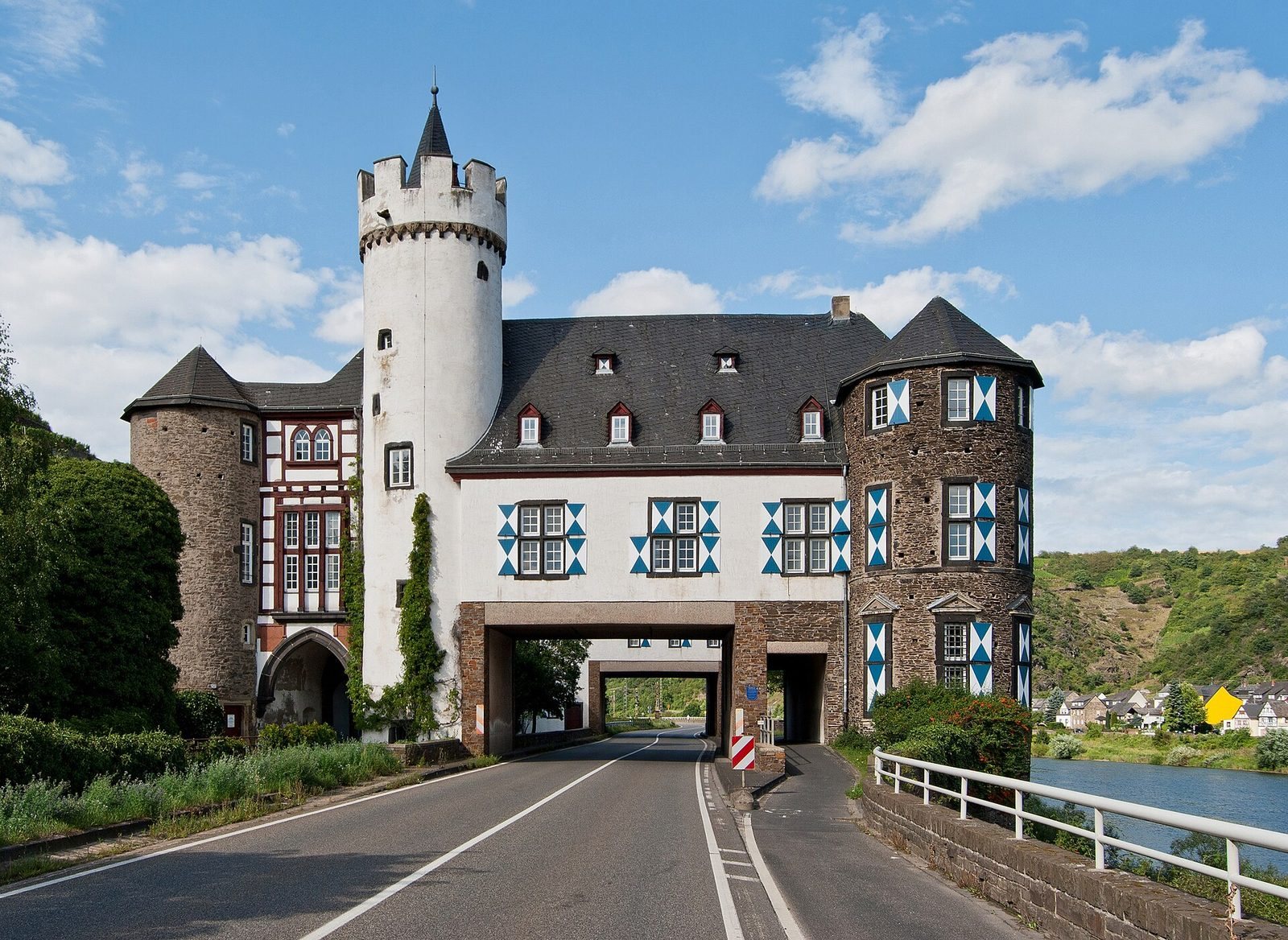
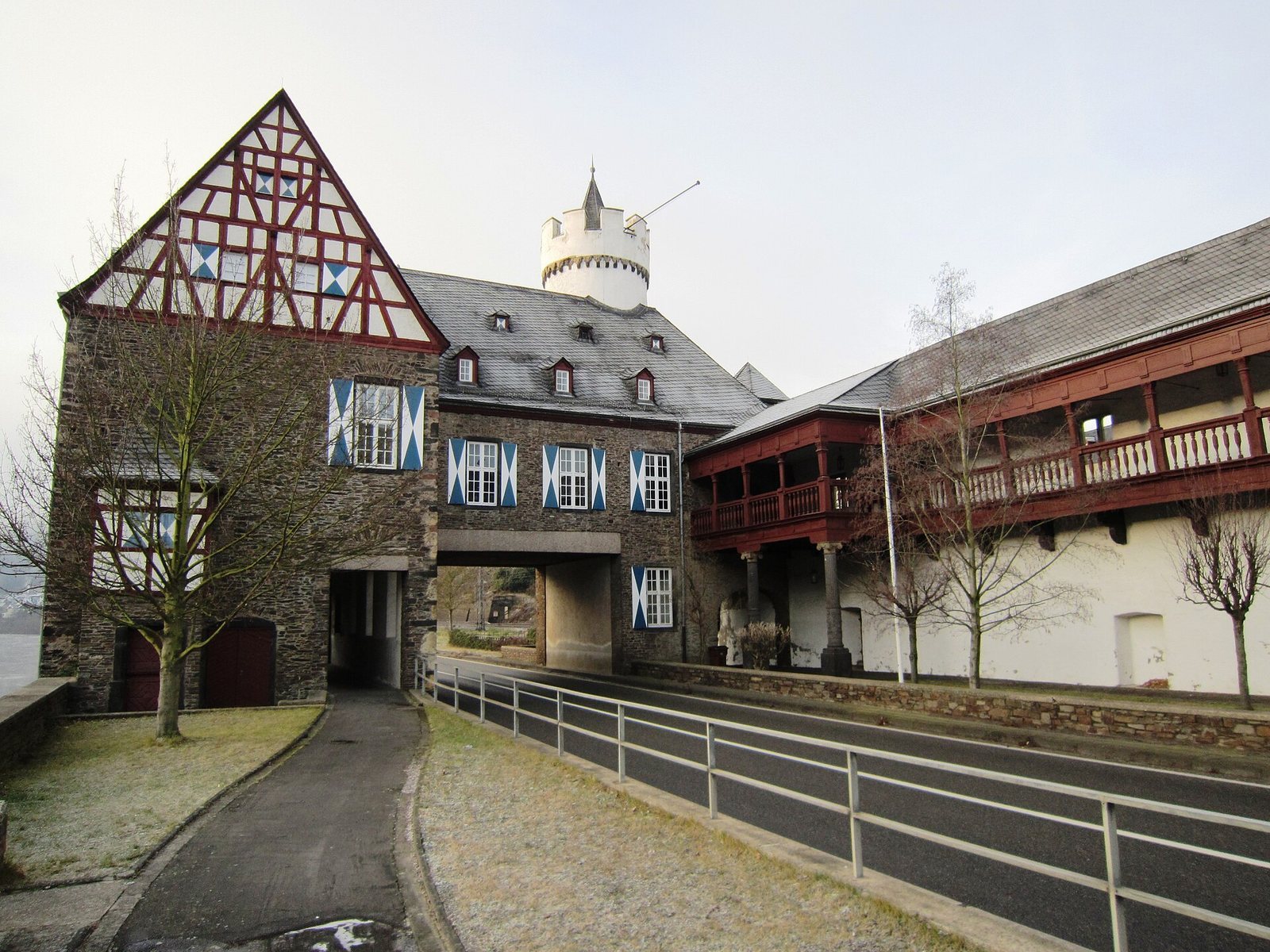
The Renaissance-style complex occupies a peninsula-like site, with the Moselle along one side and the Nothbach stream to the rear. Its plan includes an outer bailey, the outer fortified area, a fortified gatehouse, and an inner castle, the principal fortified core.
Outer bailey and gatehouse
A fortified gatehouse was added to the outer bailey in 1527. A gate is located in the southwestern part of the complex.
Inner castle
The inner castle forms the complex’s main fortified core, set within the larger arrangement of defensive areas.
Landscape and infrastructure
The railway line divides the complex into two parts. Bundesstraße 416, a German federal highway, passes through the castle over the former courtyard; work on the road in 1971 required ground-floor sections to be opened up or rebuilt. In the 1970s, the Nothbach was diverted and built over.
Philipp von der Leyen bust
A bronze bust of Philipp von der Leyen stands in front of the outer bailey. Made by sculptor Karol Badyna, it was donated by the Gondorf volunteer fire brigade and unveiled in 2002.