Palace in Bulowice: A Neo-Gothic Larisch Family Residence
Site at a Glance
- Popularity
- High
- Country
- Poland
- Primary era
- Modern
- Eras represented
- Modern
- Civilizations
- Austria-Hungary, Habsburg
- Site type
- Domestic
- Remains
- Castle
On this page5 sections
History
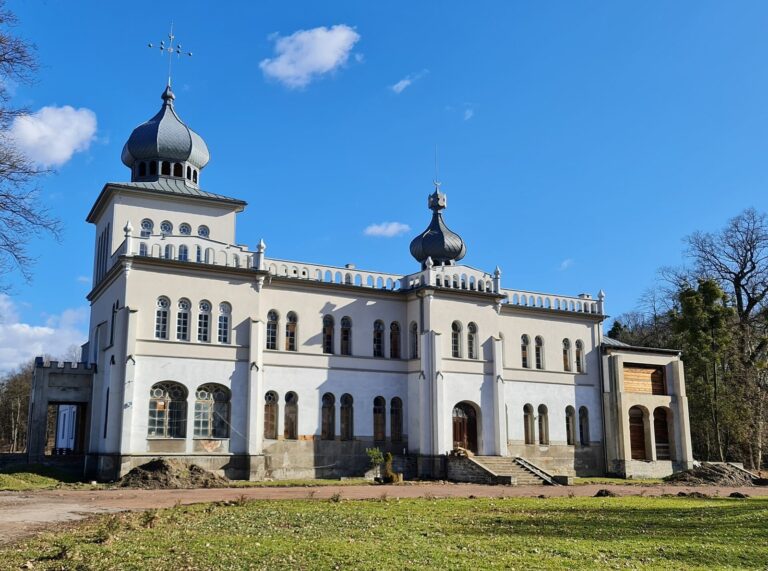
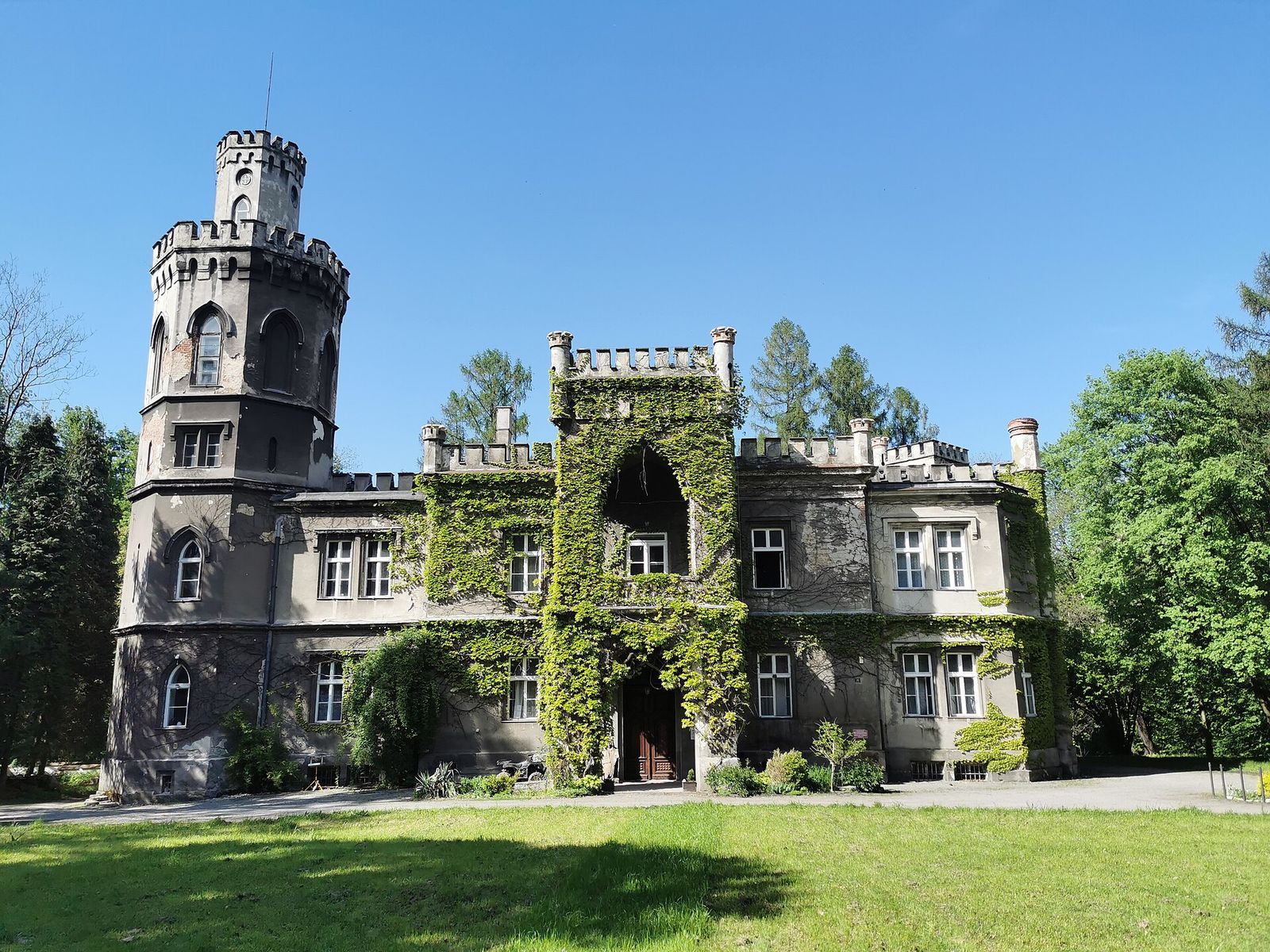
The Palace in Bulowice is a Neo-Gothic residence in Poland, completed in 1882 for the Larisch family. Its English historicist design drew on earlier architectural styles, while Neo-Gothic revived forms associated with medieval Gothic buildings.
Construction for the Larisch family
Baron Edmund Larisch, a member of the nobility, initiated the palace’s construction. He wanted his wife, Jessie Paterson, to feel as comfortable there as she had in her native Scotland.
State control and institutional use
The 1945 expropriation reform, which compelled private owners to surrender property to the government, forced the Larisch family to leave, and the state took over the palace. Later owners included a provincial psychiatric hospital and the State Treasury. During the 1960s and 1970s, the building served as a sanatorium for people with tuberculosis. From the 1980s until 2008, it housed an addiction-treatment ward.
Return to family ownership
In 2013, ownership of the palace passed to heirs of the Larisch family.
Remains
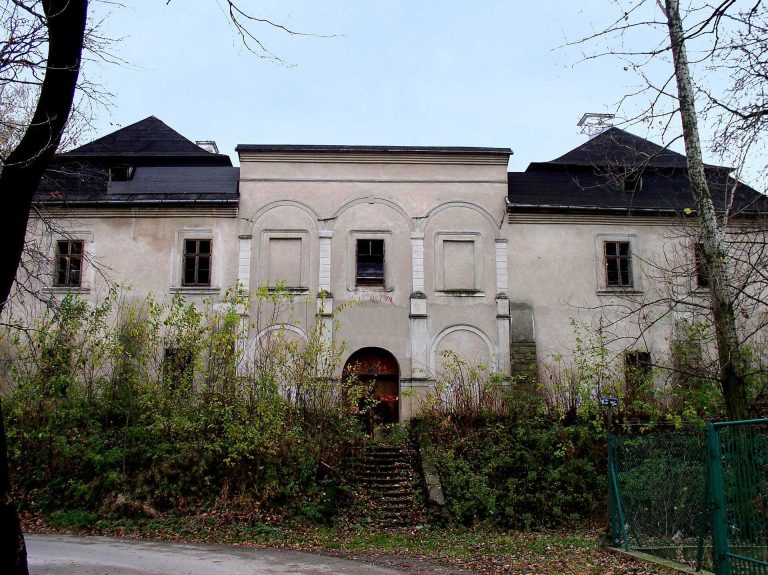
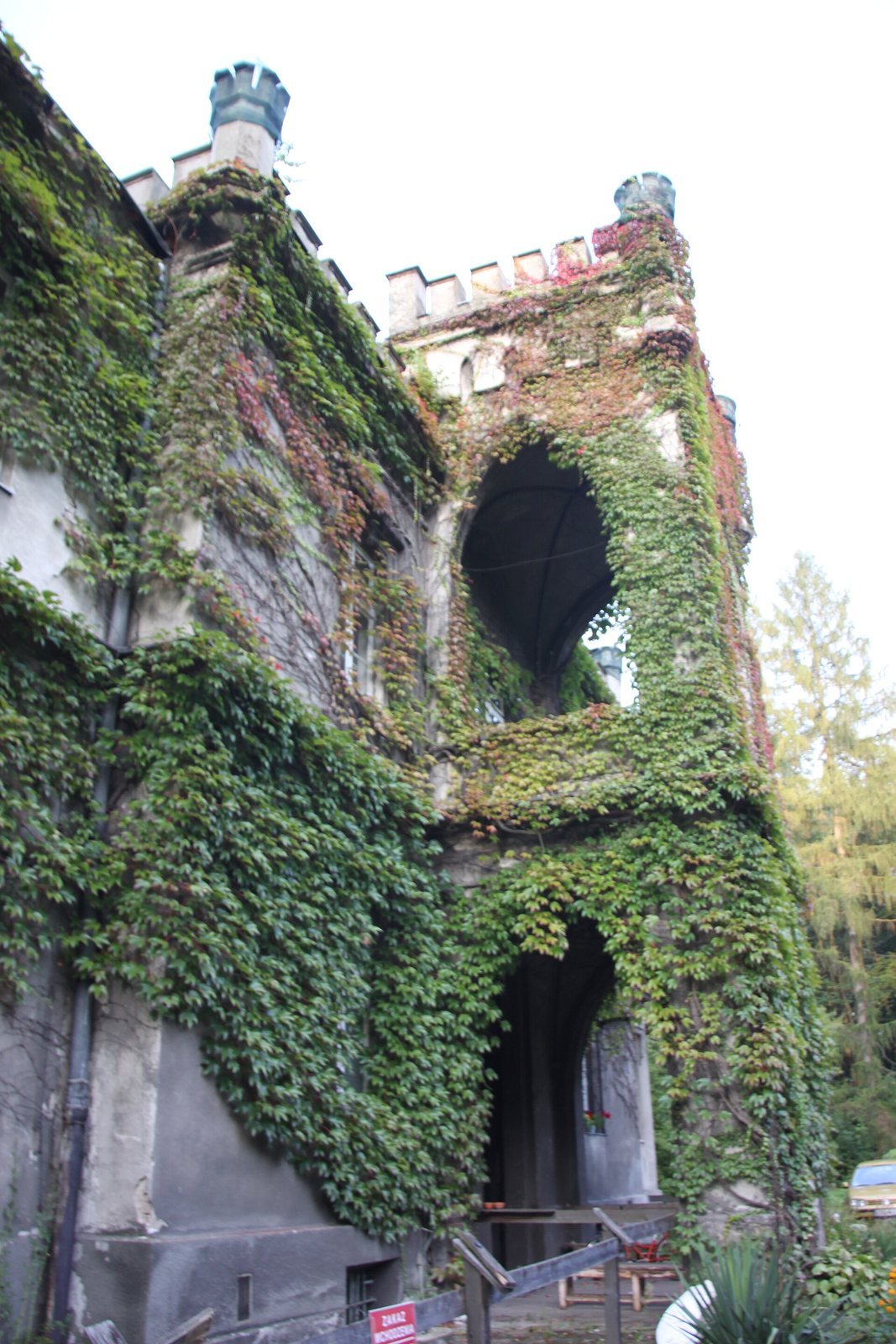
The palace has a rectangular plan and three storeys, with towers at three of its corners. It is 50 metres high and includes a spacious terrace and a viewing loggia, an open-sided gallery integrated into a building. Its Neo-Gothic design, in the English historicist style, was modeled on Huntly Castle in Scotland. The palace and its park complex are preserved together.