Julin Hunting Palace Complex in Wydrze, Poland
Site at a Glance
- Popularity
- Medium
- Country
- Poland
- Primary era
- Modern
- Eras represented
- Modern
- Civilizations
- Austria-Hungary, Austrian Empire, Habsburg
- Site type
- Domestic
- Remains
- Elite Residence
On this page6 sections
History
Foundation and Potocki use
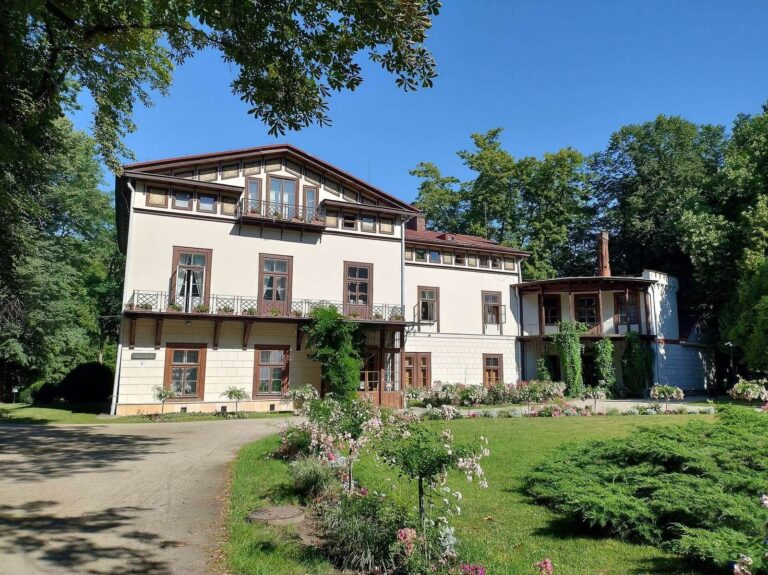
Julin Hunting Palace Complex is a nineteenth-century hunting residence in Wydrze, Poland, built by Polish nobleman Alfred Józef Potocki in the Tyrolean-Swiss style. Potocki, the second holder of the Łańcut entail, an inherited estate governed by rules restricting its division or transfer, built the palace between 1845 and 1880. The complex was completed in 1880.
A farm and small settlement called Julcin, also known as Julin, were established in 1845 in honor of Julia Ewa of Liechtenstein, a princess. The Potocki family used the palace for hunting and summer stays and held receptions there. Guests included Polish prince Stanisław Radziwiłł, Crown Prince Rudolf of Austria-Hungary, and Archduke Franz Ferdinand, heir to the Austro-Hungarian throne.
Later changes and museum use
The complex received a water-supply system in 1923, followed by a power plant in 1925. Since 1996, it has been used by the Łańcut Castle Museum, an institution associated with Łańcut Castle.
Remains
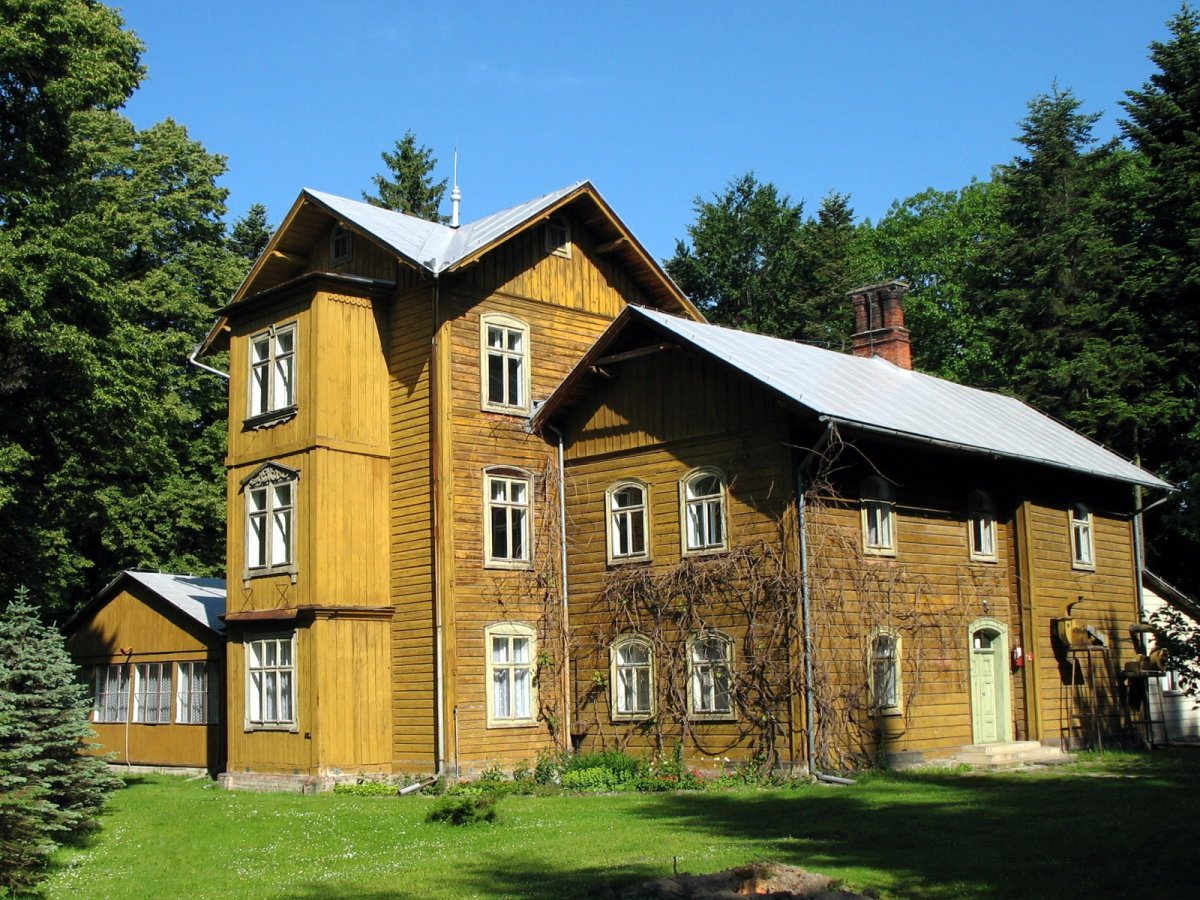
The complex lies in the Julin woodland, part of Wydrze village in Rakszawa municipality, near Leżajsk and at the edge of the Sandomierz Forest. Its buildings include the palace, a service house also described as the director’s or assistant’s house, a kitchen building, and an icehouse. The palace has an approximately T-shaped plan, with several distinct sections.
Palace exterior
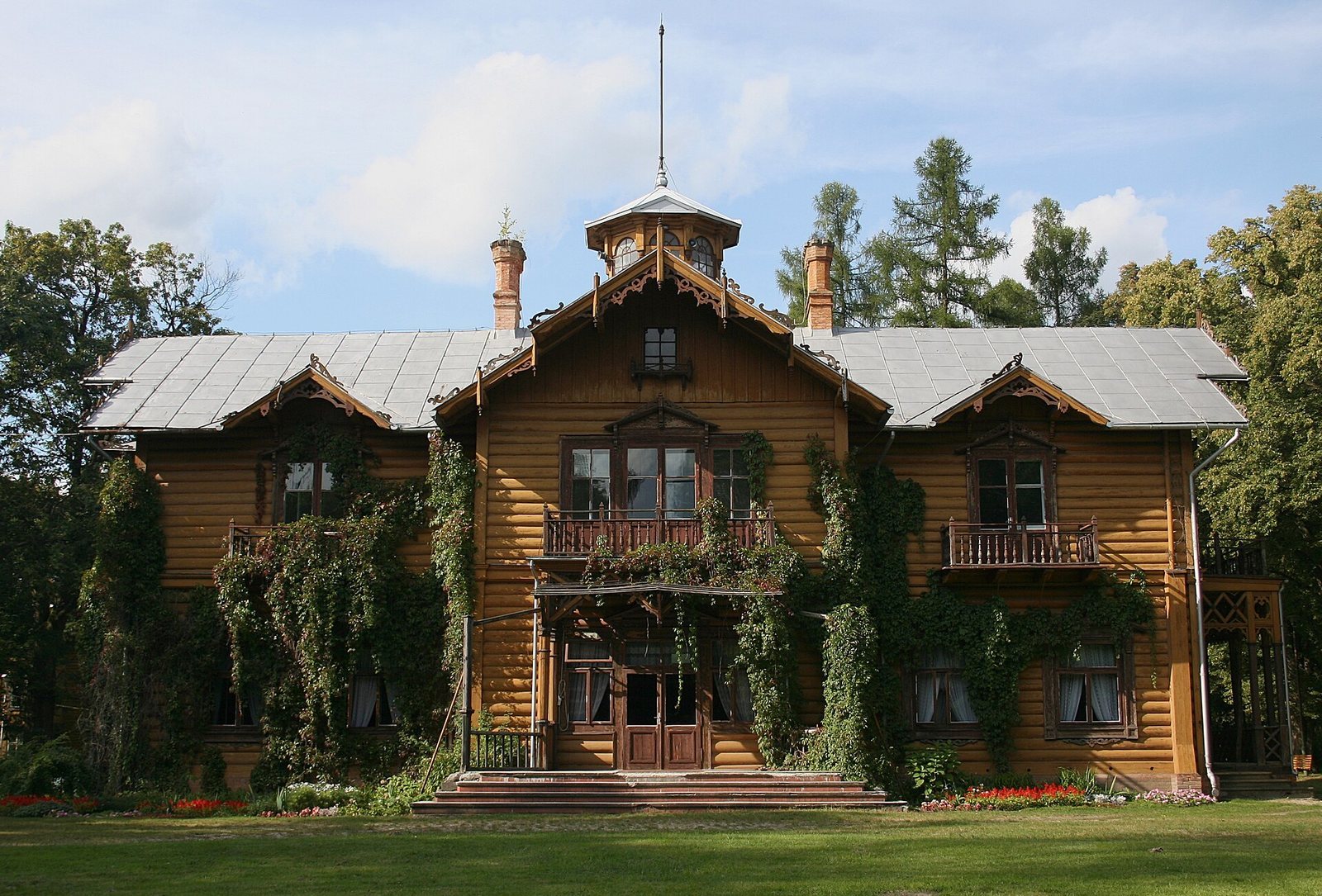
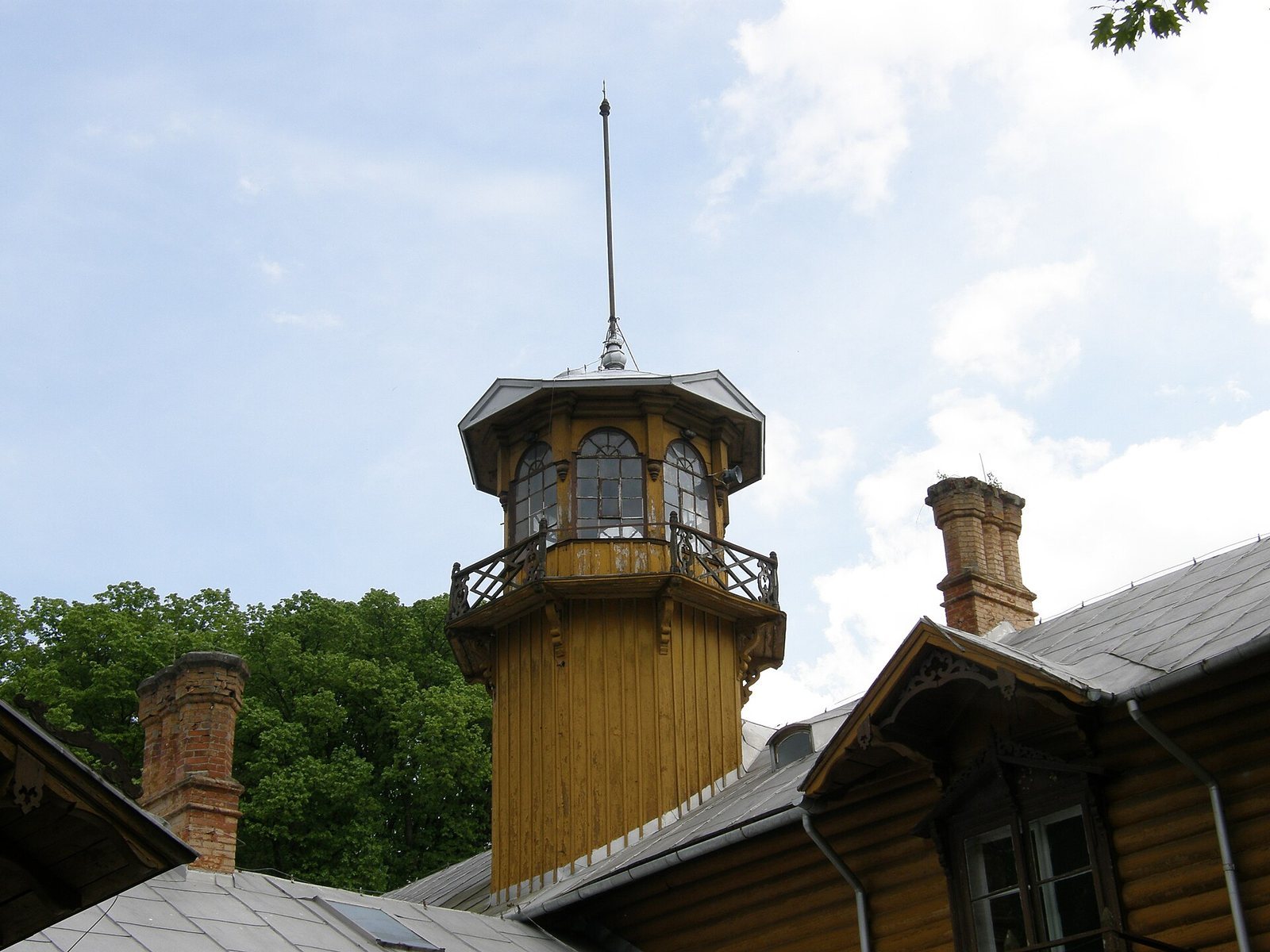
The palace is built from thick larch slabs, with unboarded walls and vertical boarding at the corners. It is partly two storeys high, while its northern and southern sections have one storey. Several gabled roofs cover the separate sections; decorative chimneys and a small belvedere, or rooftop lookout tower, rise above them. Surviving exterior details include openwork surrounds around windows and doors, decorative window pediments, ornamental gables, balconies, railings, and roof eaves.
Palace interior
The richly decorated interior includes detailed window and door joinery, wall paneling, ornamental ceilings, stoves, fireplaces, wrought-iron railings, and library cabinets.