Palazzo Zanca: Messina’s Neoclassical Municipal Palace
Site at a Glance
- Popularity
- Medium
- Country
- Italy
- Primary era
- Early Modern
- Eras represented
- Classical, Early Modern
- Civilizations
- Ancient Greek, Habsburg, Habsburg Spain, Spanish
- Site type
- Civic
- Remains
- Town Hall
On this page7 sections
History
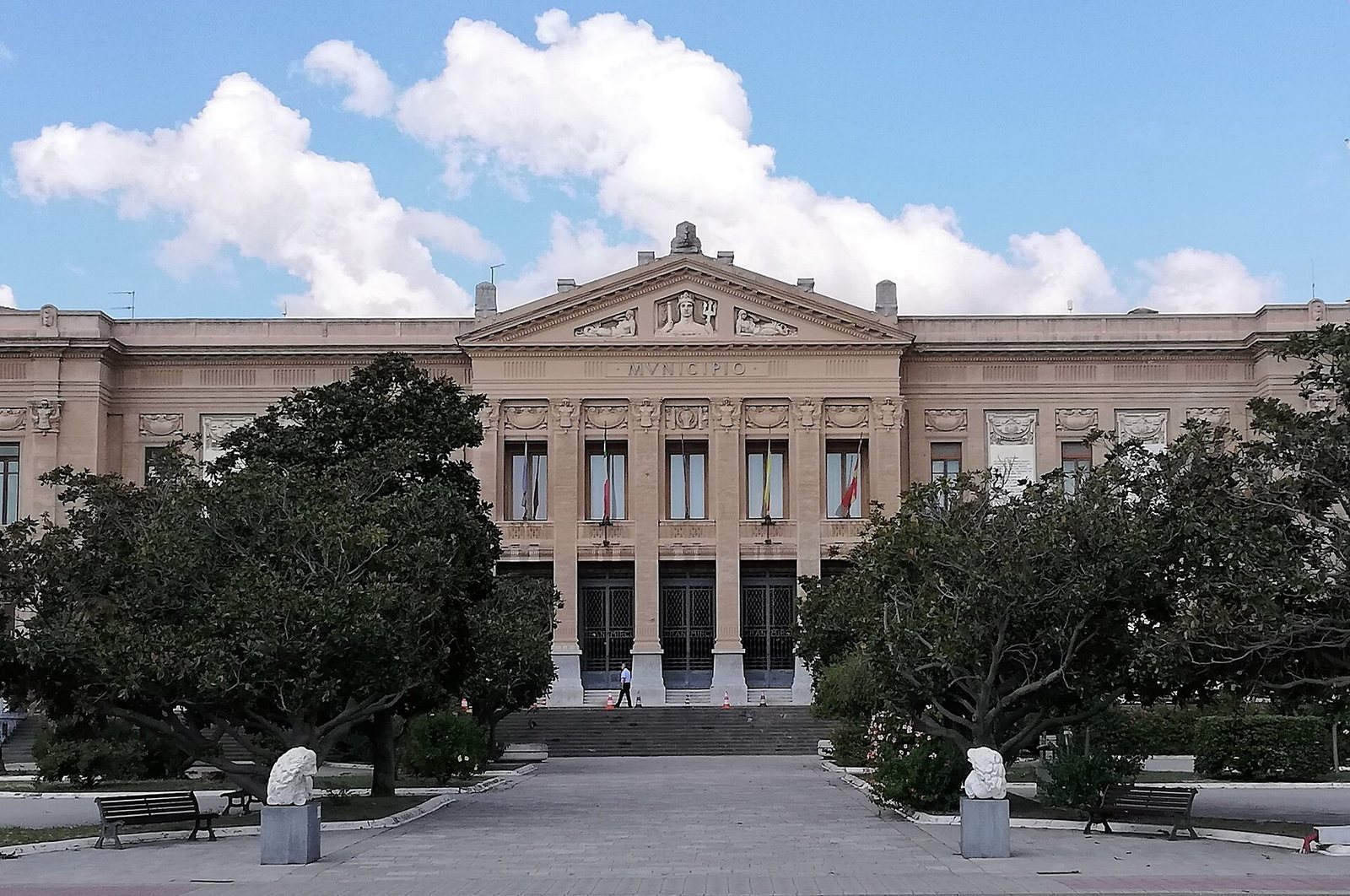
Palazzo Zanca is the neoclassical municipal palace in Messina, Italy. Its rebuilding began in December 1914 and was completed in 1924 under the direction of Palermo architect Antonio Zanca. Today it is the seat of the city government, including the municipal executive committee and city council.
The earlier municipal palace
The earlier palace belonged to the seventeenth-century Palazzata, a continuous group of buildings that formed a monumental frontage along Messina’s crescent-shaped harbor. The ensemble was associated with Simone Gullì, a Sicilian architect active in the seventeenth century.
Earthquakes and rebuilding
The 1783 earthquake severely damaged the earlier palace, and the 1908 earthquake destroyed it. The rebuilding led by Zanca produced the present municipal building.
Remains
Exterior and plan
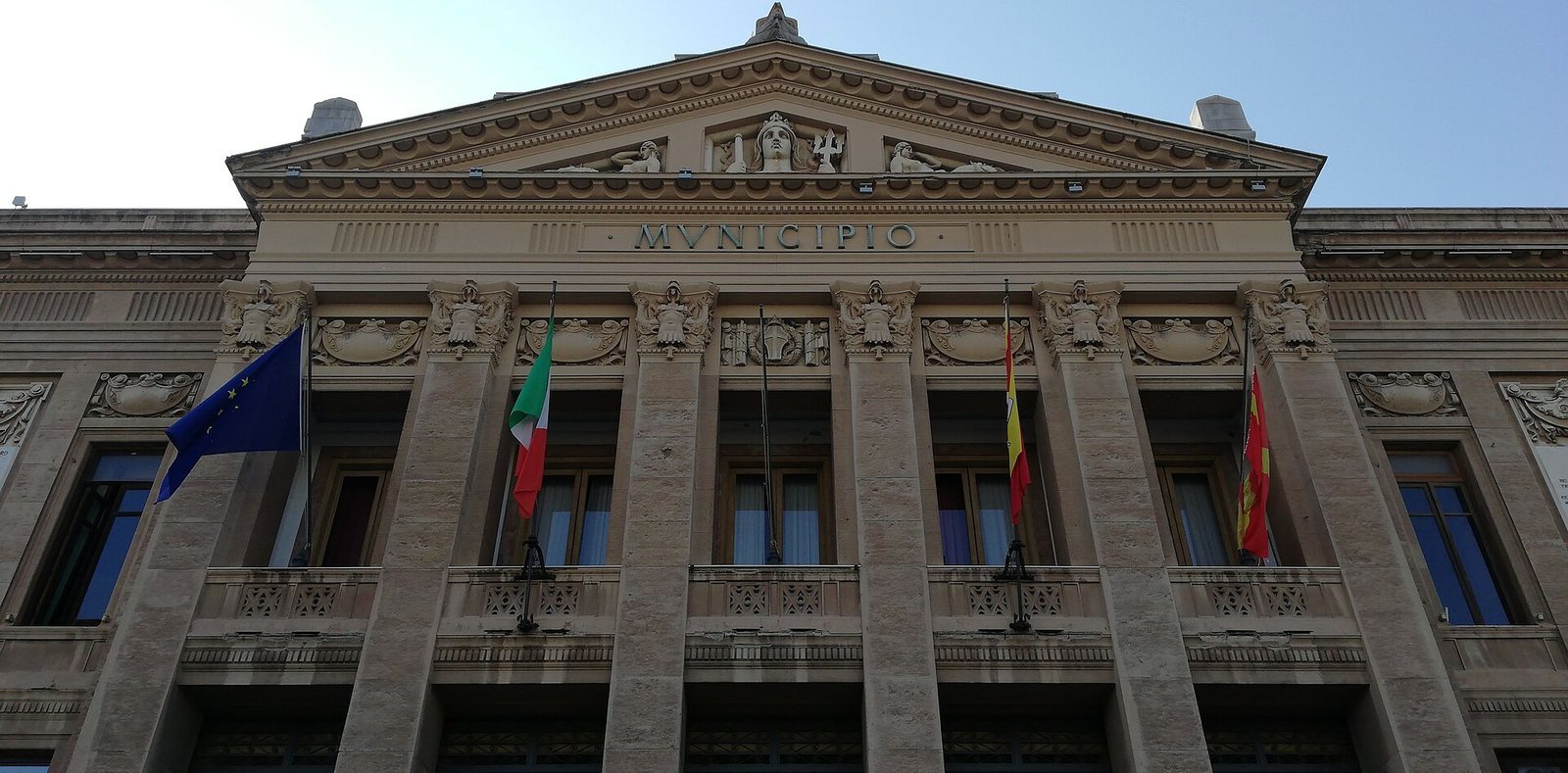
The palace covers approximately 12,000 square metres and has two floors, a ground floor and a principal floor. Its façade combines sculptures connected with Messina’s civic identity and plaques commemorating important events. In the upper triangular section, the Queen of Peloro holds a trident between two reclining sirens, an allegory of the city’s commercial identity and maritime trade. Along Via San Camillo, low-relief carvings depict Dina and Clarenza, legendary heroines remembered for resisting the Angevin siege of 1282. On Via Consolato del Mare, a covered entrance faces the 1619 Senatorial Fountain. The rear of the building faces Corso Cavour and Piazza Antonello, and its portico is decorated with low-relief carvings by local artisans.
Archaeology and civic rooms
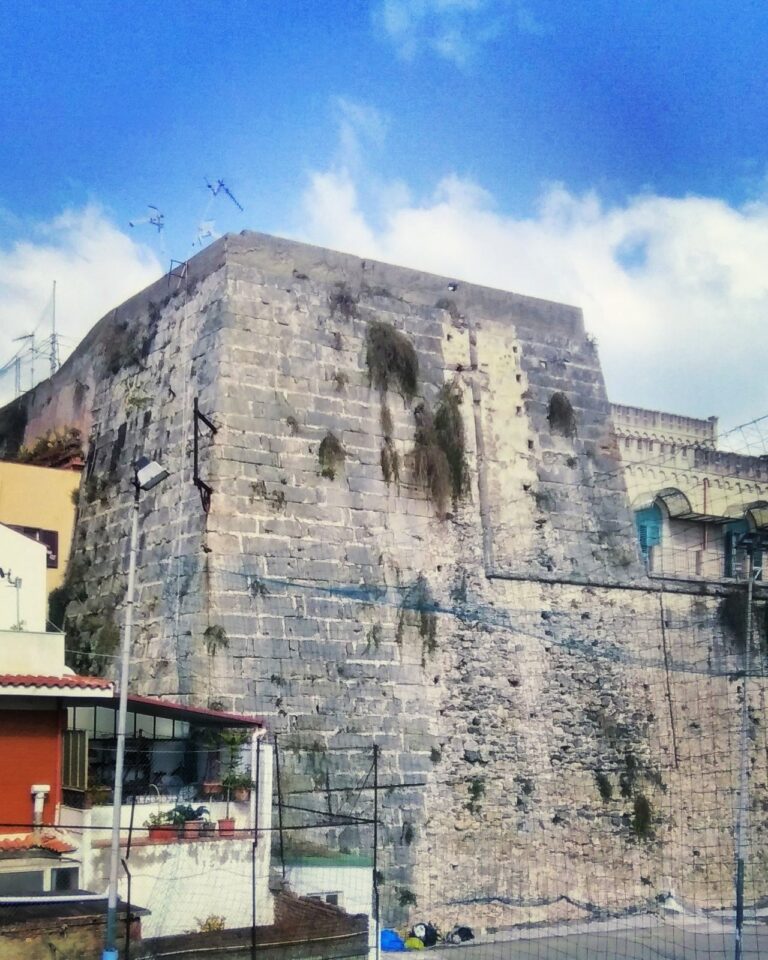
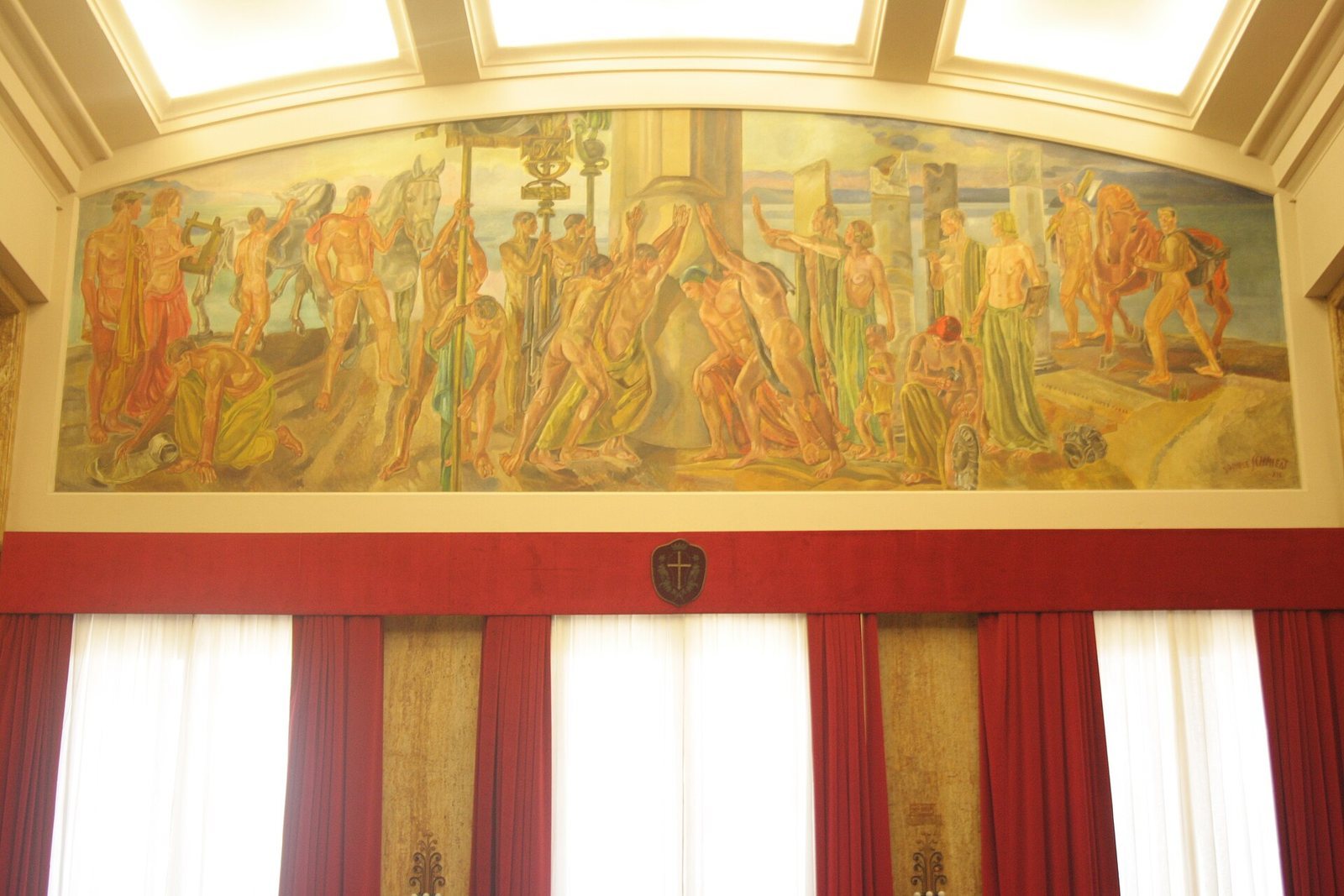
Remains of ancient Greek-period city walls survive inside the palace, alongside areas connected with archaeological excavations and an antiquities museum. On the principal floor, the Salone delle Bandiere (Hall of Flags) and the Sala della Giunta (Executive Committee Room) serve as civic rooms. The latter contains a large seventeenth-century canvas of the Last Supper by Alonso Rodriguez. The painting was commissioned for the church of Santa Maria di Gesù di Ritiro Inferiore and later restored by Messina painter Letterio Subba.
Vara Museum
Established as a permanent exhibition in 2015, the Vara Museum presents material related to the Vara, a monumental religious processional structure associated with Messina’s traditions. Its collections include memorabilia, period prints and engravings, lithographs and color lithographs, paintings, magazines, publications, souvenirs, documents, newspaper front pages, and medals. Objects connected with the processional structure include seats, harnesses, and decorative elements that were later replaced.