Nové Město nad Metují Castle: A Renaissance and Baroque Residence
Site at a Glance
- Popularity
- Medium
- Country
- Czechia
- Primary era
- Early Modern
- Eras represented
- Early Modern, Modern
- Civilizations
- Austria-Hungary, Habsburg, Habsburg Austria, Holy Roman Empire, Kingdom of Bohemia
- Site type
- Domestic
- Remains
- Castle
On this page11 sections
History
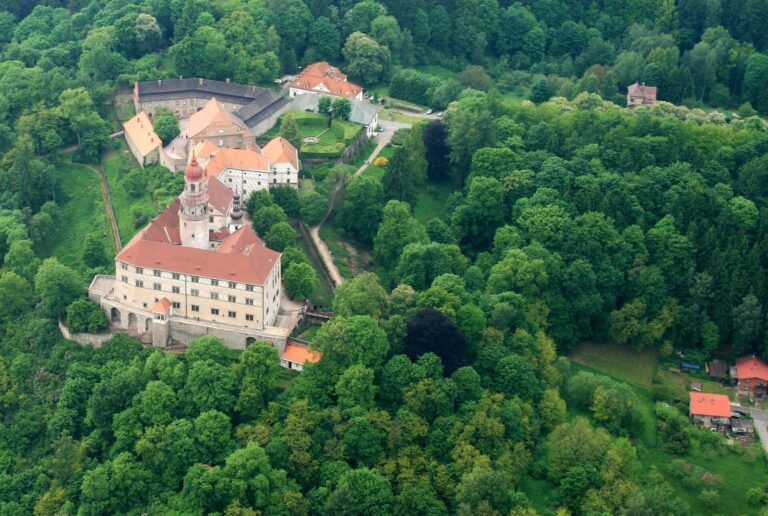
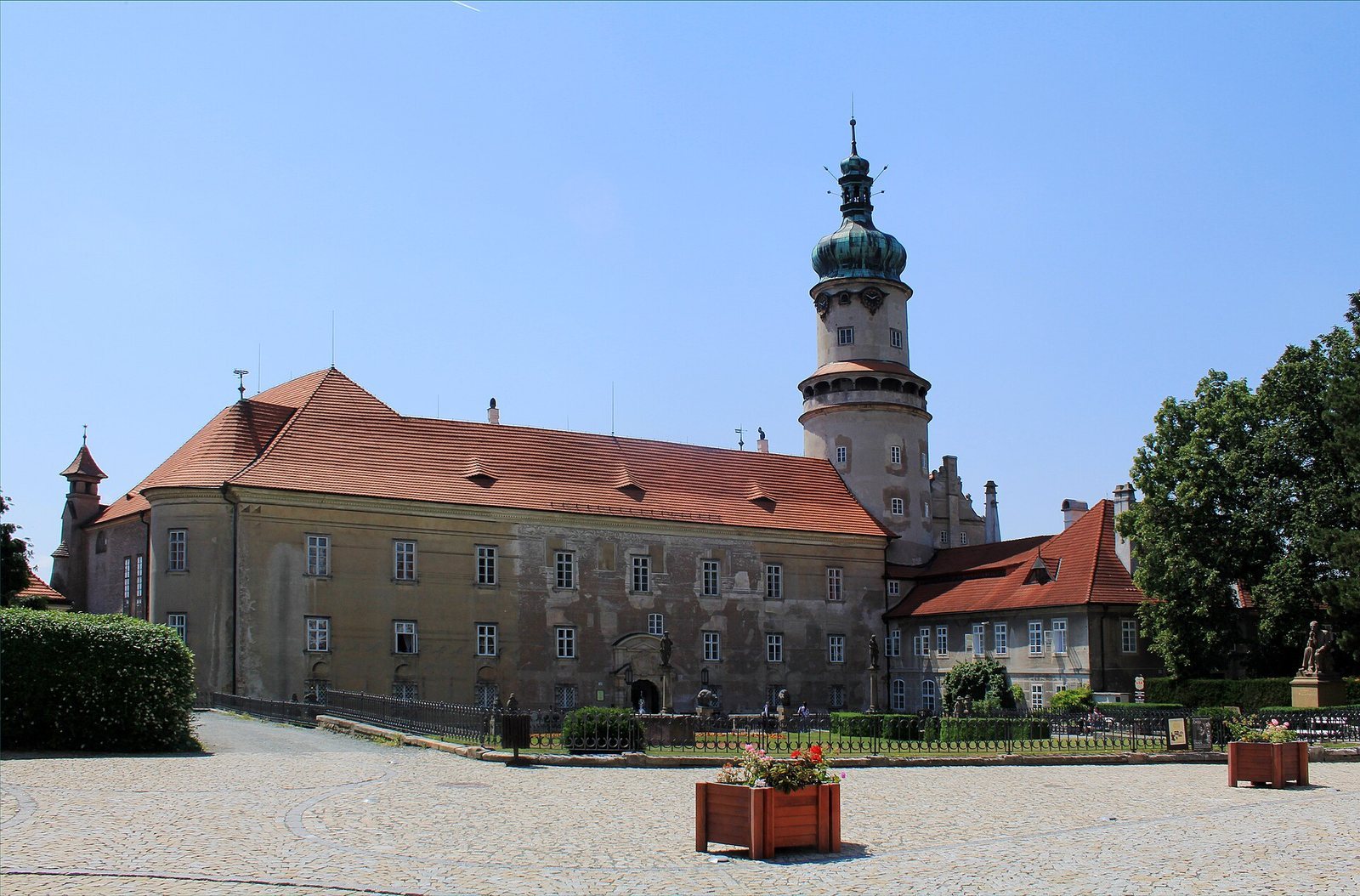
Nové Město nad Metují Castle stands on the northwest side of the town’s rectangular market square in Czechia. A medieval fortress preceded it. In 1501 or later, Johann Černčický von Kácov, the town’s founder, built a fortified residence there.
Foundation and Renaissance conversion
Adalbert von Pernstein acquired the residence in 1528, enlarging and altering it. The Stubenberg family took possession in 1548 and expanded it into a castle in the Renaissance style, a European artistic and architectural movement, between 1558 and 1568.
Changing ownership and Early Baroque remodelling
After the Battle of White Mountain in 1620, a major conflict in Bohemia during the Thirty Years’ War, the descendants of Protestant nobleman Rudolf von Stubenberg were dispossessed. The castle and estate passed to military commander Albrecht von Wallenstein. He sold them in 1624 to Maria Magdalena Trčka von Lobkowicz, who lived with her husband, Jan Rudolf Trčka von Lípa, at Opočno. In 1628, she transferred the property to her son Adam Erdmann Trčka von Lípa.
Adam Erdmann and Wallenstein, his brother-in-law, were murdered at Eger in 1634. Holy Roman Emperor Ferdinand II then granted Nové Město to Walter Leslie, who had participated in the conspiracy. Under Leslie, the castle was remodelled between 1655 and 1661 in the Early Baroque style, another European artistic and architectural style.
Later owners and modern transformation
When the Leslie family died out, the Dietrichsteins inherited the estate in 1802. In 1858 it passed to the Liechtensteins, Waldstein-Wartenbergs, and Lembergs. These families did not live at Nové Město, and other uses and neglect contributed to the castle’s decline. Among its visitors during this period were Emperor Joseph II in 1782 and Russian Emperor Alexander I, who spent several hours there on 16 June 1813 while travelling to Opočno.
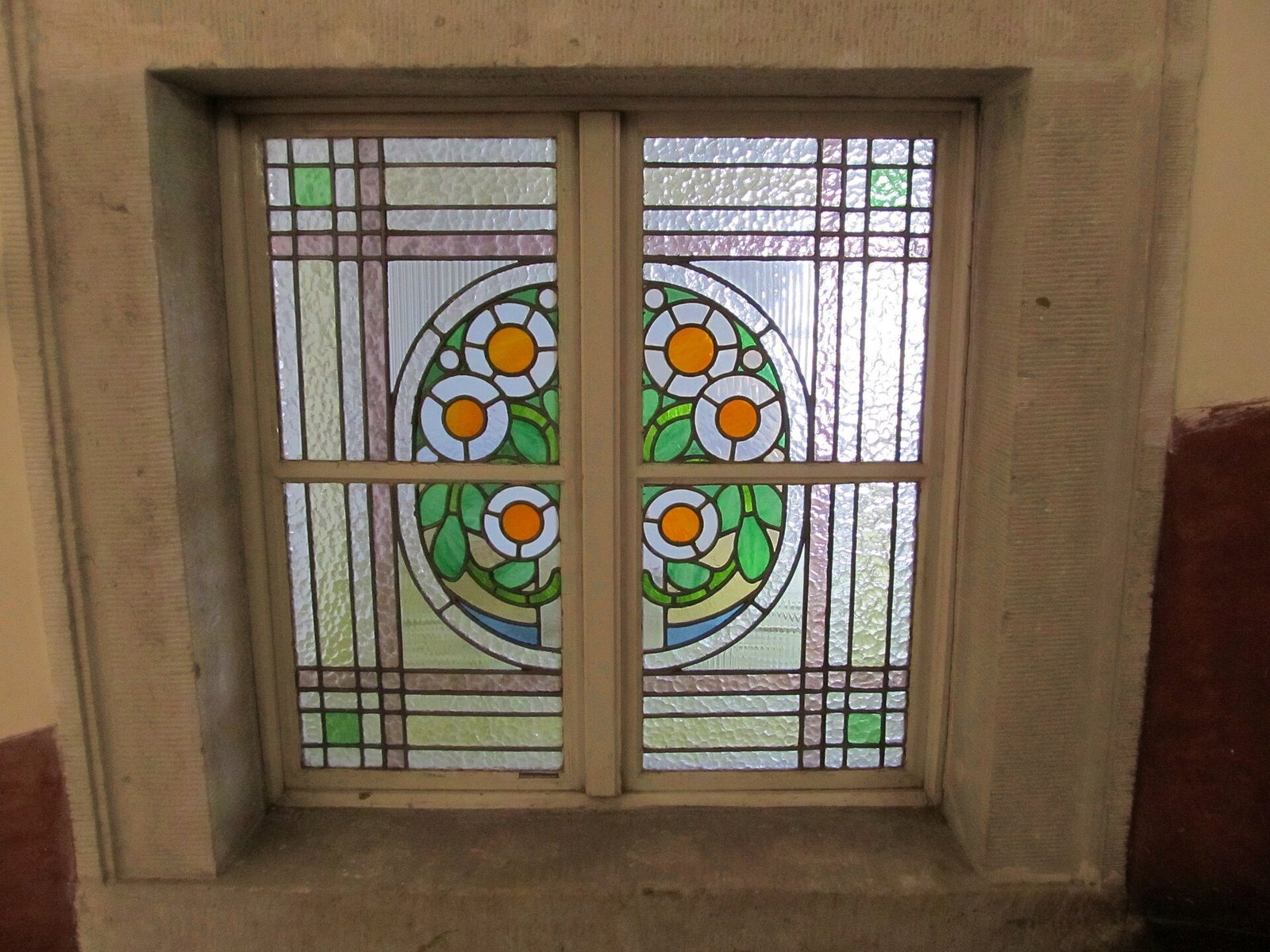
Textile industrialist Josef Bartoň bought the castle in 1908 and, with Cyril Bartoň, commissioned its early twentieth-century renovation and modernization. The Art Nouveau, a European artistic and architectural style, changes established its present appearance, and the interiors received contemporary artworks. Czechoslovak president Tomáš Garrigue Masaryk visited the Bartoň family there on 13 July 1926.
The state confiscated the castle without compensation in 1948. It remained state property until 1992, when it was returned to the Bartoň family’s descendants. Since 2008, it has held Czech National Cultural Monument status, a national-level heritage designation.
Remains
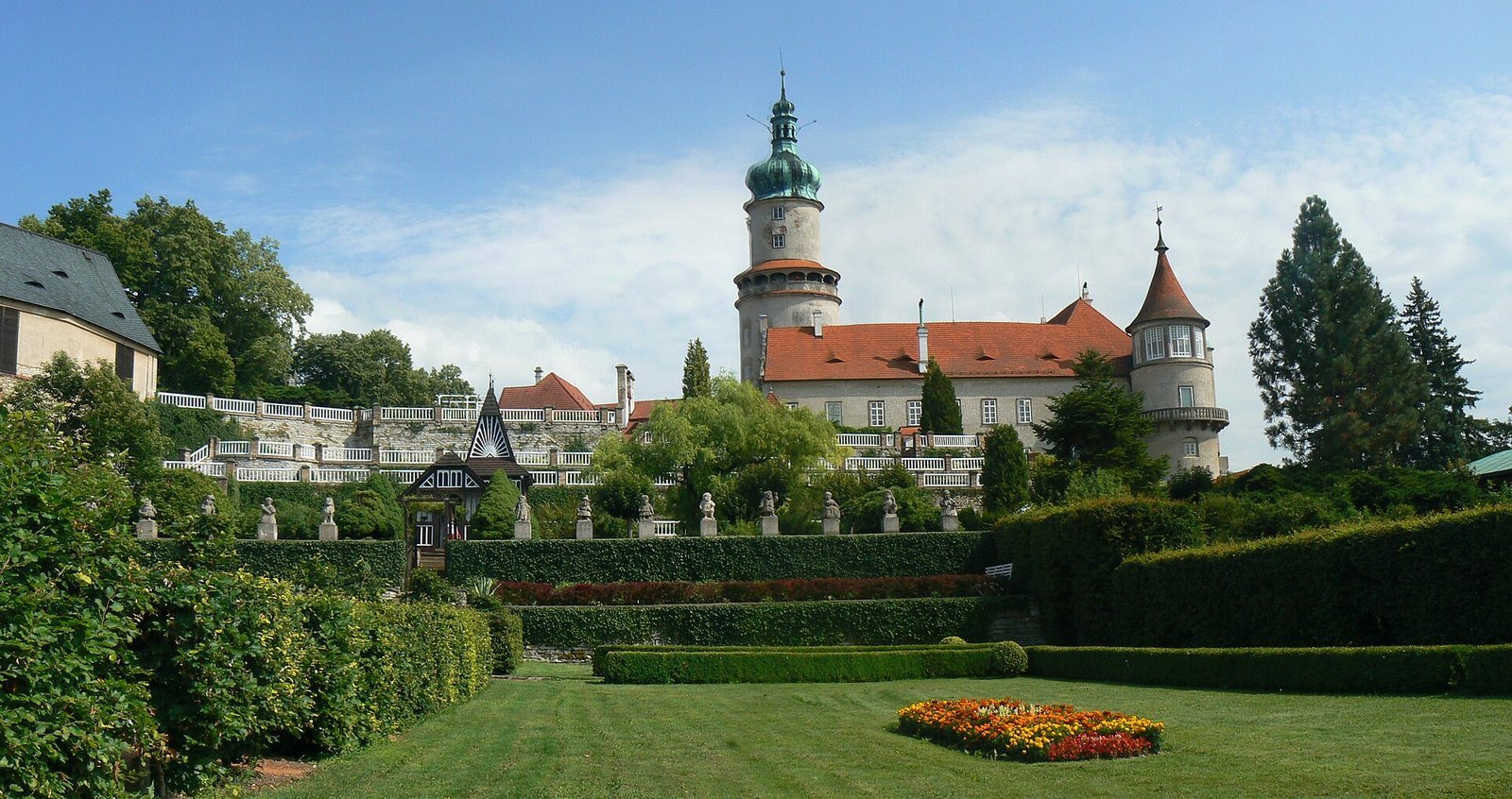
The castle occupies the northwest side of the market square and is separated from the town by a moat, despite having once formed part of the town’s defences. Its surviving fabric reflects successive building and alteration campaigns. The grounds include a redesigned garden, a wooden crossing over the moat, and a terrace wall decorated with figures.
Castle buildings
Main structure and tower
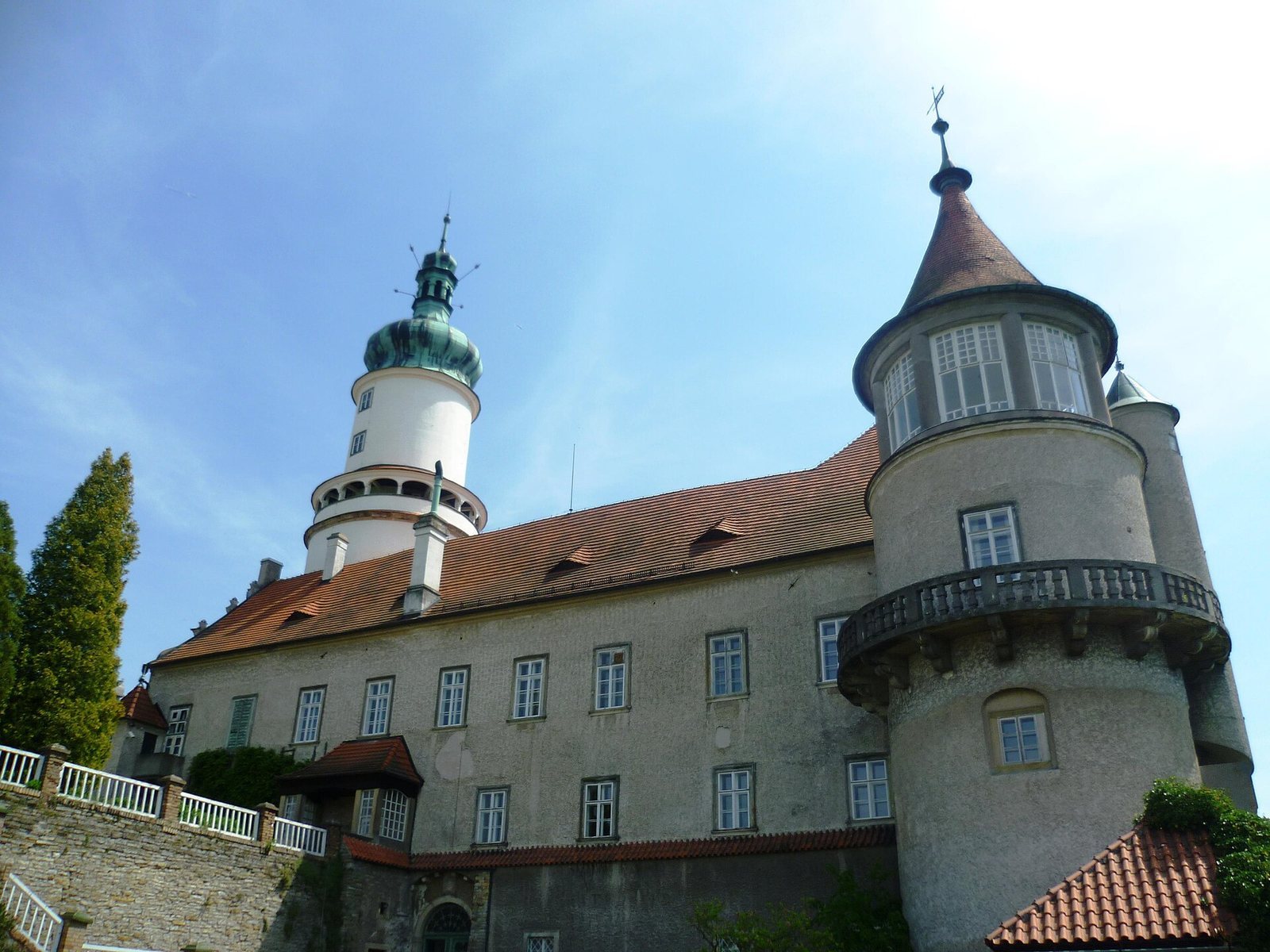
The castle’s Renaissance fabric was reshaped during the Early Baroque remodelling. Architect Carlo Lurago carried out that work, while Giovanni Battista Bianco and Domenico Egidio Rossi executed its stucco decoration. The castle tower dates to this phase. Early twentieth-century changes by Dušan Jurkovič and Pavel Janák contributed to the building’s present form.
Chapel and courtyard entrance
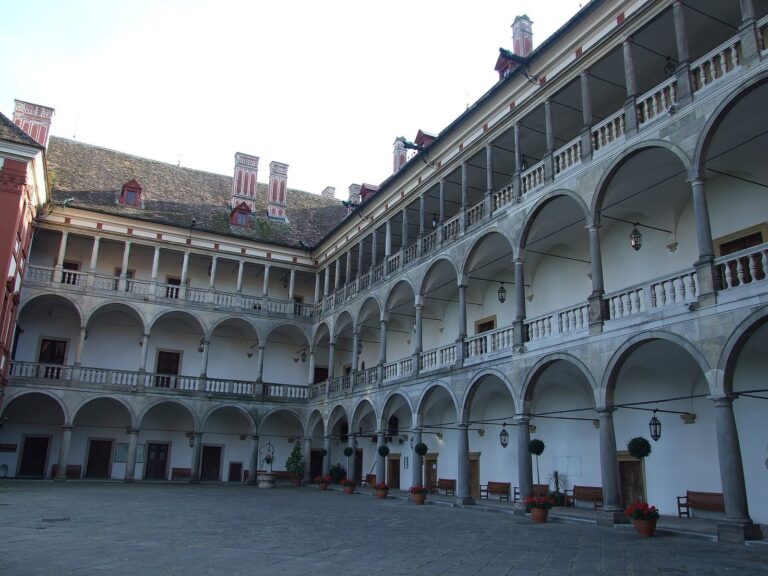
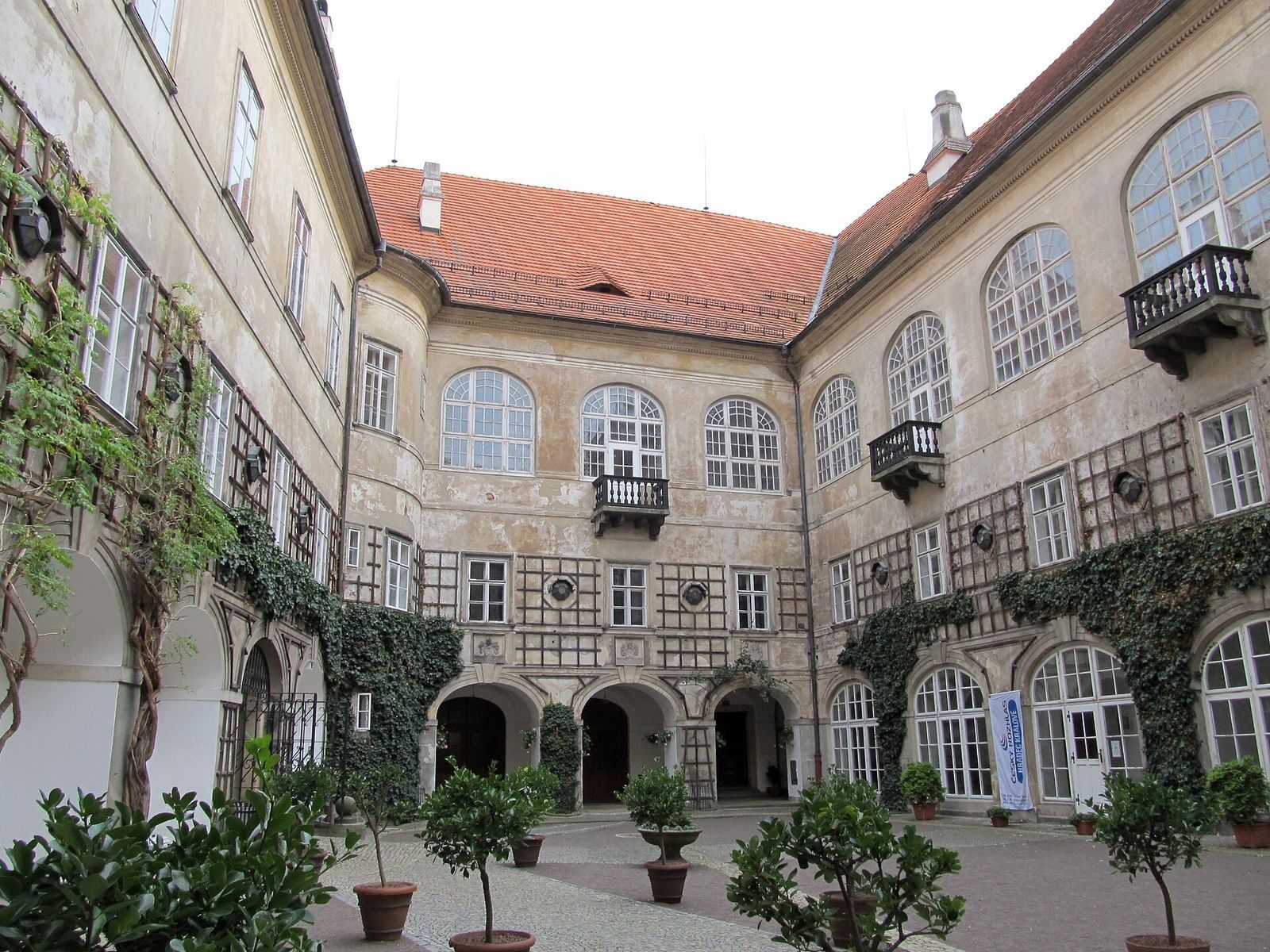
A chapel was incorporated into the castle during its Early Baroque remodelling, and Fabián Václav Harovnik painted it. At the portal leading into the courtyard, an ornamental panel called a cartouche displays the coats of arms of Francis Leopold Leslie and his wife, Luisa von Wallenstein.
Moat, garden, and sculpture
Garden and moat crossing
Around 1910, Jurkovič redesigned the castle garden and park. A wooden bridge in the garden crosses the moat that separates the castle from the town.
Terrace figures
Twenty-four dwarf figures from the workshop of Baroque sculptor Matthias Bernhard Braun decorate the terrace wall. The Bartoň family acquired the figures in 1932.