Niddry Castle: A Scottish Tower House
Site at a Glance
- Popularity
- Medium
- Country
- United Kingdom
- Primary era
- Early Modern
- Eras represented
- Early Modern
- Civilizations
- Kingdom of Scotland
- Site type
- Military
- Remains
- Castle
On this page4 sections
History
The Setons and Mary, Queen of Scots
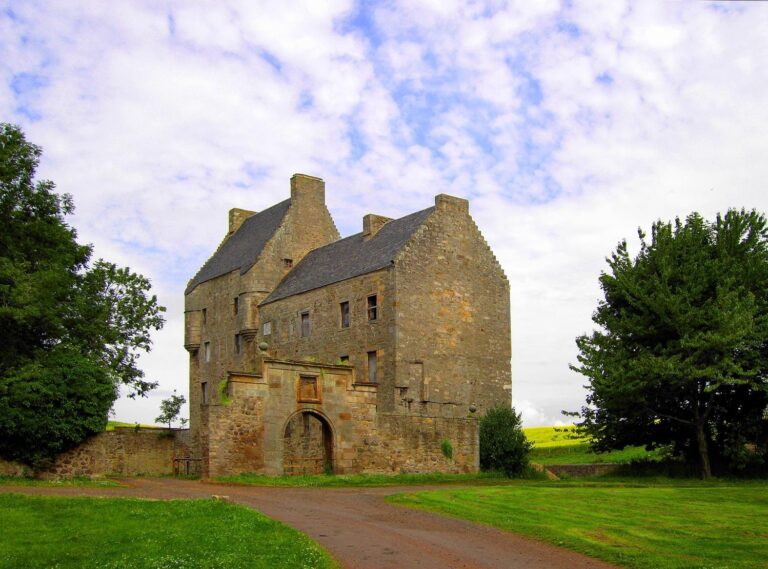
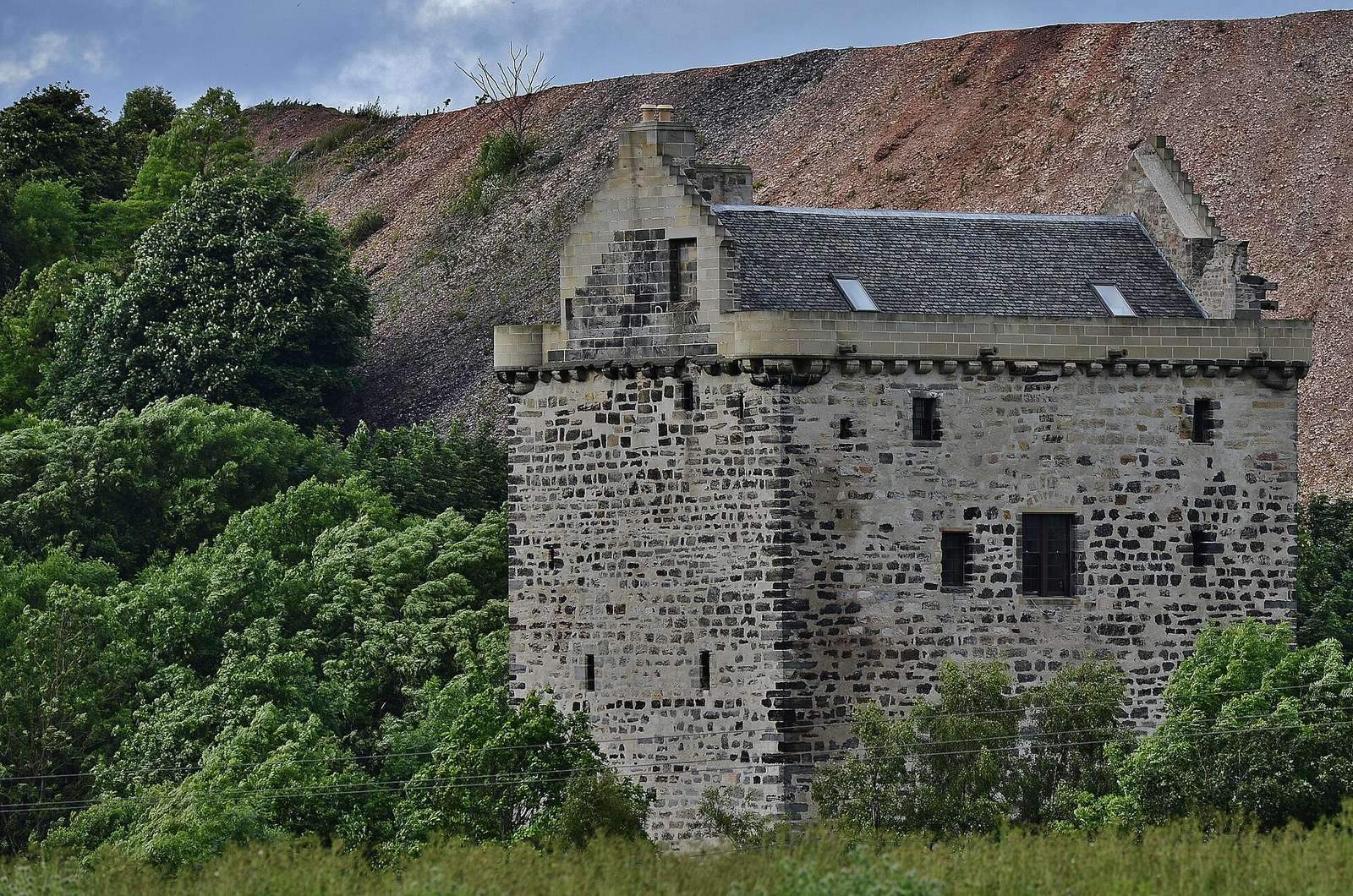
Niddry Castle is a fortified tower house, a residence organized around a defensive tower, near Winchburgh in West Lothian, Scotland. Built around the turn of the sixteenth century for a Lord Seton, probably John Seton, 2nd Lord Seton, it was regarded as an important regional fortification. The castle was also called Niddry Seton or West Niddry, names that distinguished it from other places called Niddry and from Longniddry.
On 2 May 1568, Mary, Queen of Scots, was brought to Niddry by Claud Hamilton after escaping captivity at Lochleven Castle. She wrote to her allies at the castle before continuing to Hamilton.
During the Scottish civil war of 1572, a conflict between supporters of Mary and James VI, George Seton, 7th Lord Seton, held Niddry for the queen. The castle came under attack in April and again in June. During a night assault in April, Captain Scougall repelled attackers climbing ladders by dropping heavy timber beams suspended around the tower. The garrison of Edinburgh Castle also aided Niddry by attacking Merchiston Castle, held for James VI, as a diversion.
On 1 August 1574, Lord Seton’s daughter Margaret married Claud Hamilton at Niddry in a celebration described as especially grand. On 13 May 1590, Peder Munk, Great Admiral of Denmark, and Danish commissioners stayed at the castle while taking possession of lands granted to Anne of Denmark, queen consort of James VI. They rode to Linlithgow Palace the next morning. That July, Patrick Gordon of Auchindoun stayed as Lord Seton’s guest, hoping to regain royal favour.
Later ownership and restoration
Around 1680, Niddry passed to the Hope family and became part of the Hopetoun estate. The family later held the title Marquesses of Linlithgow and received the additional title Baron Niddry in 1814. After a long period when the castle stood vacant, William Cadell removed the added upper storeys, returning the tower to its earlier height, and lived there.
In the 1990s, proprietor Peter Wright restored the castle for use as a private residence and initiated extensive archaeological excavation of the building and its surrounding barmkin, an enclosed area associated with a tower house. Its former Scheduled Monument status was removed in 1996 to allow the restoration, and the building has Category A listed status. Niddry Castle also appears briefly in the closing pages of Sir Walter Scott’s historical novel The Abbot, which concerns Mary, Queen of Scots’s flight to England.
Remains
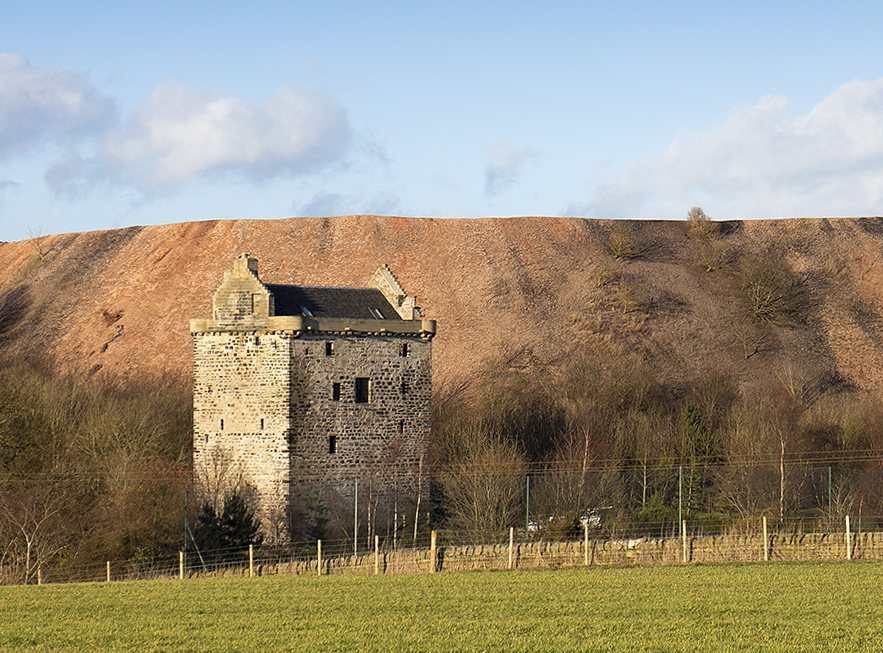
Niddry Castle stands near Winchburgh, close to the Union Canal and between two large oil-shale waste heaps. It is also situated a few hundred metres southeast of Winchburgh, between the railway line linking Glasgow and Edinburgh and the M9. The four-storey tower has an L-shaped plan and is built of roughly dressed rubble stone laid in horizontal courses. A turret added in the seventeenth century occupies the angle of the L, while a parapet projecting on stone supports crowns the tower.
Inside, the basement has a vaulted ceiling, and a spiral stair leads to the upper floors. The hall is on the first floor. A side wing was added as the tower was enlarged, and the large kitchen retains dimensions associated with that enlarged phase.