Princely Palace in Alba Iulia: From Diocesan Chapter House to Princely Residence
Site at a Glance
- Popularity
- Medium
- Country
- Romania
- Primary era
- Early Modern
- Eras represented
- Medieval, Early Modern, Modern
- Civilizations
- Hungarian
- Site type
- Domestic
- Remains
- Palace
On this page10 sections
History
From diocesan building to princely residence
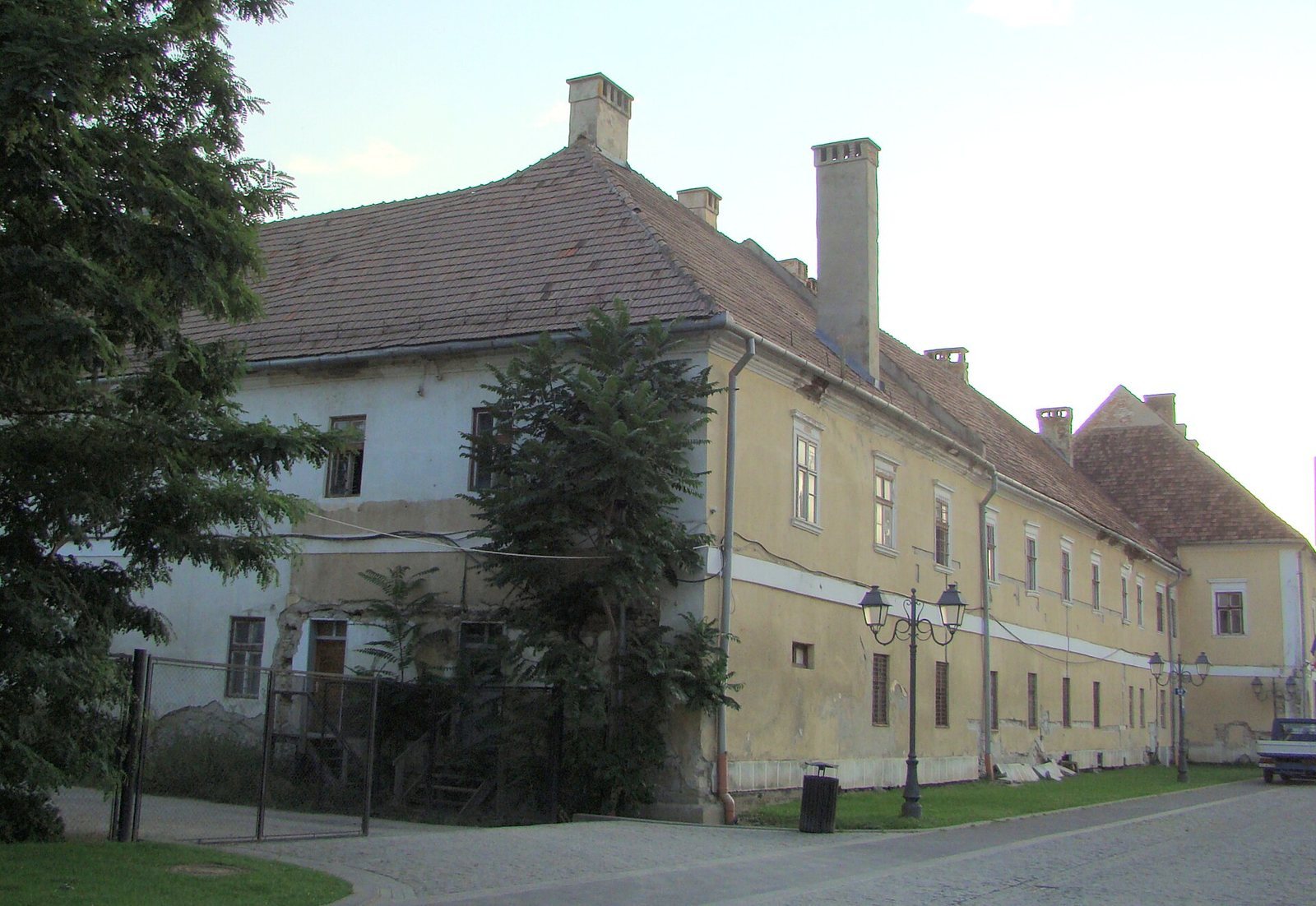
The Princely Palace in Alba Iulia is a fifteenth-century palace in Romania, built for the chapter of the Diocese of Transylvania, a clergy body with ecclesiastical and administrative responsibilities. Rebuilt and enlarged in the sixteenth century, it later became a residence of the princes of Transylvania.
Michael the Brave, a Wallachian prince and military leader of the late sixteenth century, based his court in the palace in 1599–1600. He was the first ruler to bring Wallachia and Moldavia, historic principalities, together with Transylvania under a single authority.
Damage and military use
Raids by the Ottoman Empire, a power that had expanded into southeastern Europe, severely damaged the palace in 1658 and 1662. Following the Habsburg conquest of Transylvania, the building passed into military use for more than three centuries. The Habsburgs were a European ruling dynasty whose monarchy included the Austrian lands. From the seventeenth century, the palace housed an Austrian garrison, an arsenal and artillery barracks.
In December 1918, the Romanian armed forces’ 21st Infantry Regiment occupied the building. Reconstruction work in the 2010s exposed earlier parts of the palace and its decoration.
Remains
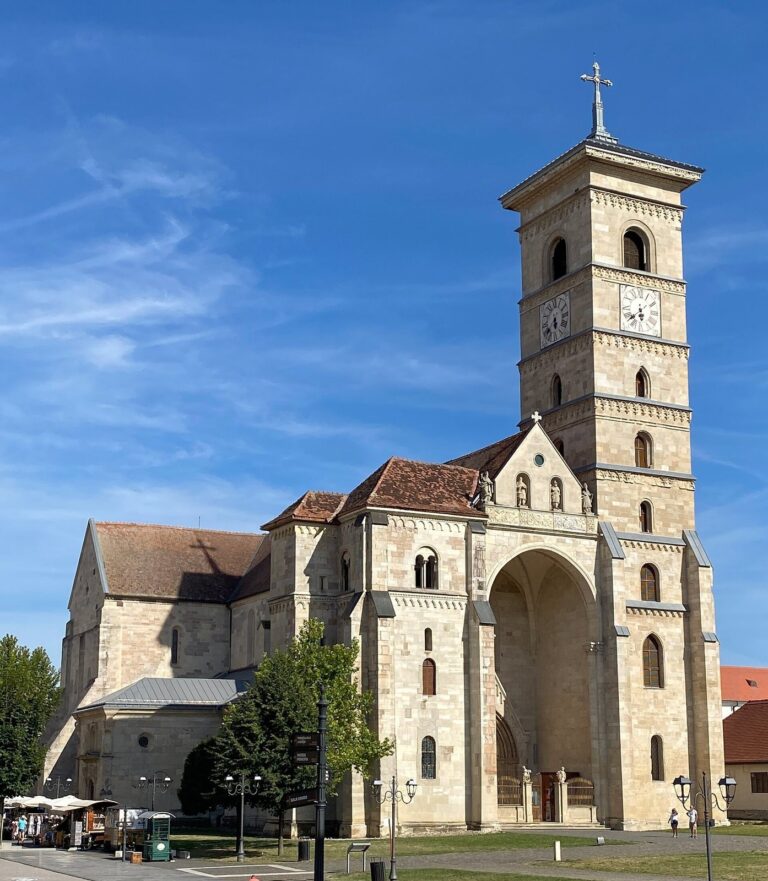
The palace stands within Alba Carolina Fortress, beside the Catholic Cathedral of St Michael. It is a two-storey rectangular building with two square interior courtyards and architectural features from the Gothic, Renaissance and Baroque periods. Elaborate marble staircases and numerous wall frescoes once enriched its interior.
Stonework and decoration
South wall
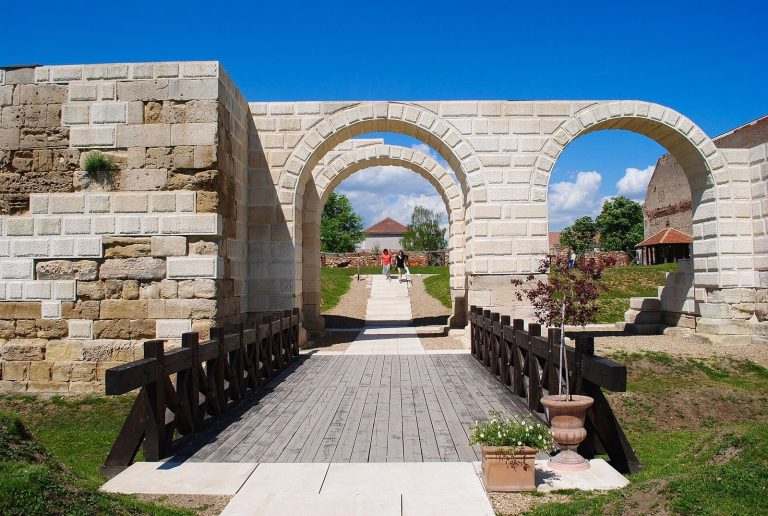
The south wall is made from massive stone blocks taken from Apulum, a Roman settlement and military site in the area of modern Alba Iulia.
Paintings and sculpture
Opening the walls during reconstruction revealed fragments of Renaissance and Baroque wall paintings, other paintings from the Baroque and Rococo periods, and sculpture from different periods. The sculptural decoration includes the coat of arms of Bishop Francisc Várdai, who held office from 1514 to 1524.
Commemorative works
Equestrian statue
A nine-metre equestrian statue of Michael the Brave, by sculptor Oscar Han, stands in front of the palace’s main façade. It was installed on 28 November 1968.
Unification relief
Behind the statue is a relief by sculptor Horia Flămându, measuring 6.2 metres long and 3 metres high. Made in 1975 for the 375th anniversary of the unification, it depicts Michael the Brave receiving tribute from the three Danubian principalities.