Ubica Buildings in Utrecht: Historic Buildings Adapted for Hotel and Café
Site at a Glance
- Popularity
- Medium
- Country
- Netherlands
- Primary era
- Medieval
- Eras represented
- Medieval, Modern
- Civilizations
- Dutch, Holy Roman Empire
- Site type
- Domestic
- Remains
- House
On this page9 sections
History
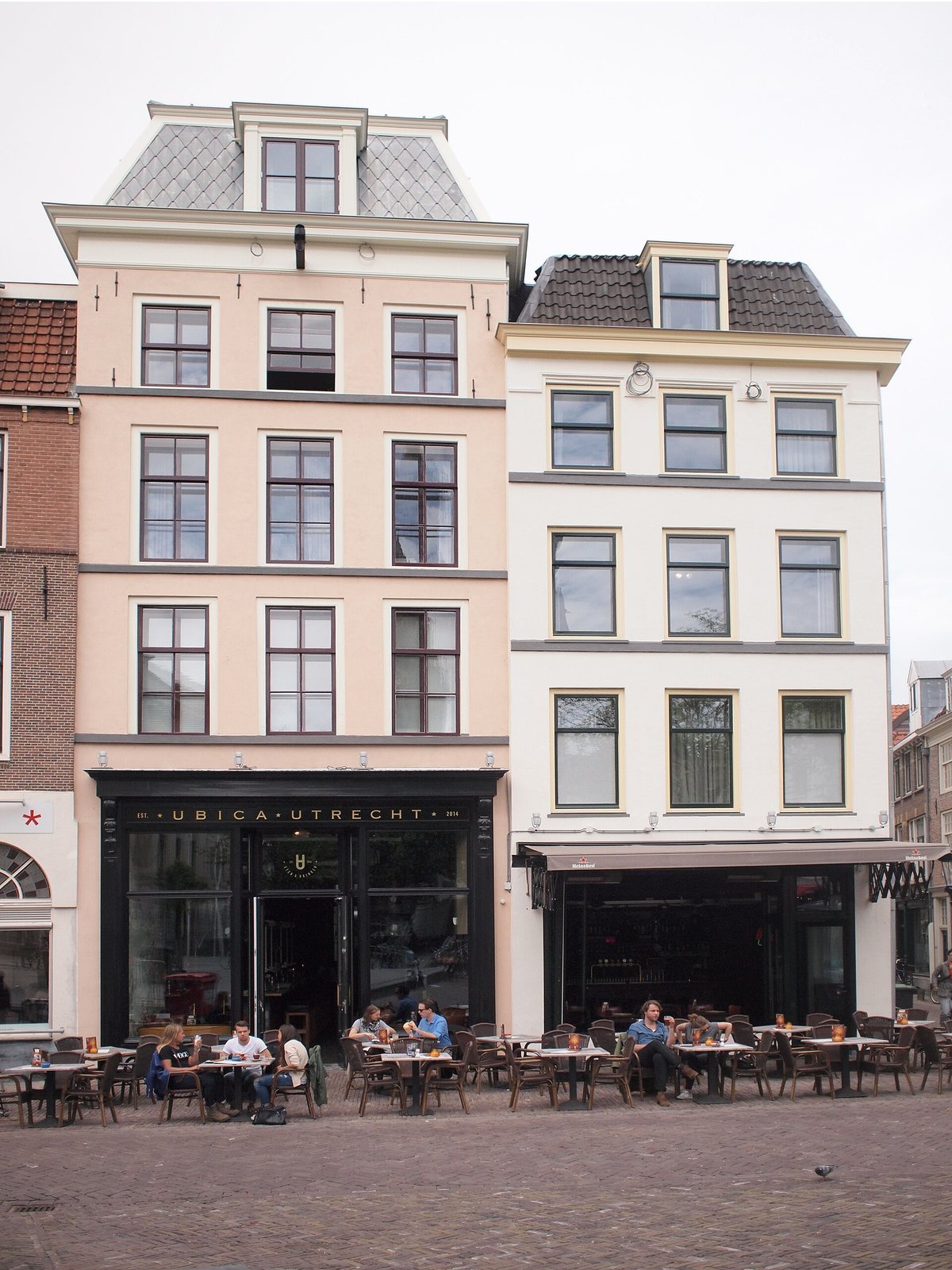
The Ubica Buildings are two adjoining historic buildings at Ganzenmarkt 24 and 26 in Utrecht, the Netherlands. Number 24, first known as Huize Compostel, was built around 1302 and is first mentioned in 1319; number 26 was built in 1865. After centuries of residential use, the buildings housed a mattress business, then a long-running squat, and eventually a hotel and café.
Residential use and the Ubica business
In 1931, mattress maker Ubica took over the buildings. Fires at the business followed in 1931, 1933, and 1937. A much larger fire in 1989 left the properties unusable. The owner failed to pay the contractor hired to repair them, and the buildings were placed under attachment.
Squatted buildings and ownership dispute
Squatters occupied the vacant buildings from February 1992 until their eviction in May 2013, about 21 years. With limited resources, they repaired the properties and adapted them for 10 to 15 residents. Their community projects included PUSCII’s free internet and technology workshop, Schism’s information and resource centre, the De Wilde Ganzen art collective, and Tranendaal, a free shop offering goods at no cost. Residents also ran the Black Lentil café, a vegan restaurant and cargo-bike hire, and held concerts and art exhibitions.
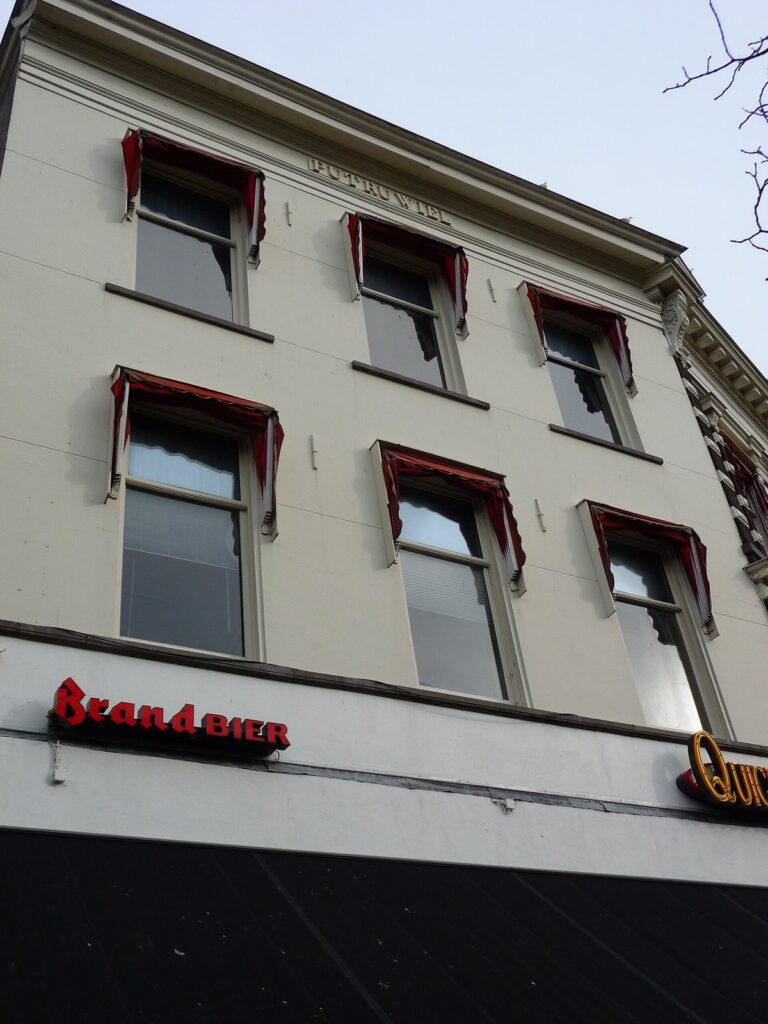
In 2002, the squatters painted the façades black and white, adding a yellow band between them. After a city councillor raised the matter, Utrecht’s municipal aesthetics committee ruled that the painting failed to meet reasonable standards. The city ordered owner Wim Vloet, rather than the residents who had painted the buildings, to remove it and threatened a €15,000 fine. Vloet refused to cooperate with either the city or the residents.
Vloet, a property speculator who owned more than 40 buildings in Utrecht, faced 23 court cases brought by the city by 2012. That year he received a six-month prison sentence for seven criminal offences. In early 2012, developer Willem Klaassen was named as the buyer of Ubica and proposed a hotel and grand café. Vloet disputed that he was obliged to sell, prompting a legal dispute.
Eviction and redevelopment
After an Arnhem appellate court approved the eviction, the squatters resisted, saying they feared the buildings would remain empty and doubted that Vloet would transfer them to Klaassen. On 24 May 2013, protesters defaced the city hall opposite, broke a window, and set car tyres on fire. Police were pelted with fireworks and paint, and riot police intervened. Inside the buildings, squatters chained themselves to the structure and resisted passively. The eviction continued until 3:30 p.m. the following day.
Ten squatters were arrested. Nine received one-month prison sentences and 120 hours of community service, and were ordered to pay €14,000 to the city and police. After the eviction, the city declared the buildings uninhabitable and closed them, boarding up their lower floors while the ownership dispute continued. Vloet signed the sale contract with Klaassen in July 2013, allowing renovation to proceed. A café-restaurant opened across the ground floors in 2014, with the hotel above. The café first used the name Hoppe Utrecht, but changed it to Ubica after a complaint from Amsterdam’s Café Hoppe; the hotel became known as Mother Goose. Number 24 is protected as a national monument, while number 26 has municipal monument status.
Remains
The two buildings stand side by side at Ganzenmarkt. Number 24’s present façade dates from the nineteenth century and visually pairs with number 26. The combined ground floors house the café-restaurant, while the hotel occupies the upper floors.
Building fabric and interior remains
Number 24
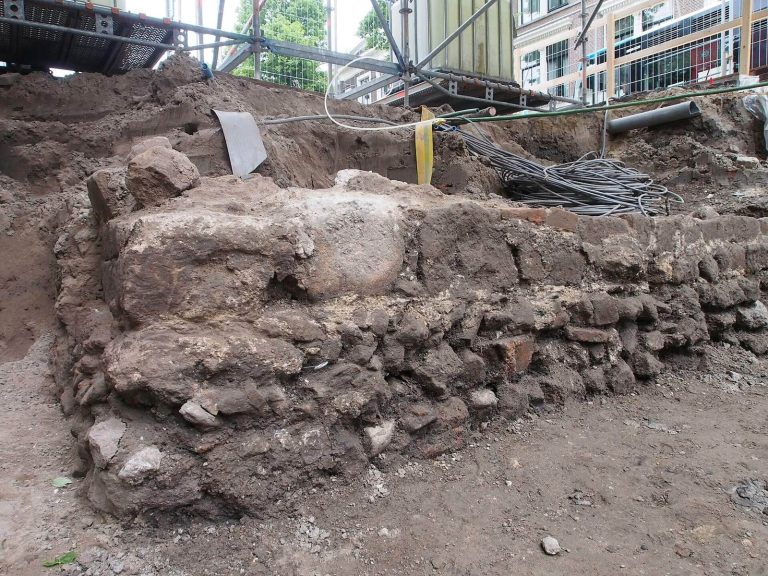
Number 24 began as a fortified urban stone house. Its interior walls and beams are believed to follow the arrangement of a thirteenth-century structure. Beside it lay a remnant of a former river channel. On the third floor, the surviving base of a wall-walk, a path along a defensive wall, and half of its parapet, the low protective wall at the edge, remain.
Number 26
Number 26 stands on foundations belonging to a fourteenth-century house. Its exterior forms a visual pair with the nineteenth-century façade of its neighbour.
Repairs and interior features
During renovation in 1917, workers removed number 24’s roof structure and oak ceiling beams. Painted sections of the beams, decorated with rhymes and images, were transferred to Utrecht’s Centraal Museum, whose collections include art, design, and local history. A tile floor from the early fourteenth century came to light during the renovation begun in 2013.
Repair work after the 1989 fire stabilized the buildings and their floors, and made the roofs and façades weather-tight.