Château de Réghaud: A Medieval Castle in France
Site at a Glance
- Popularity
- Medium
- Country
- France
- Primary era
- Medieval
- Eras represented
- Medieval, Early Modern
- Civilizations
- French
- Site type
- Military
- Remains
- Castle
On this page7 sections
History
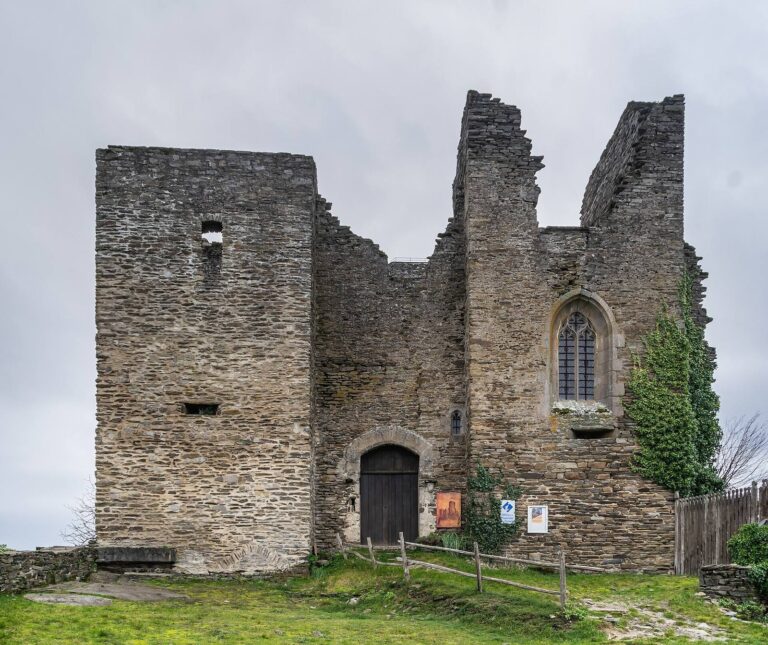
Château de Réghaud, also known as Rigaud, is a medieval castle near the village of Sénezergues in France. It probably originated in the 13th century as a lord’s residence and seat. Reghaud, a knight, was its first known possessor and the founder of the Réghaud family, also called the Régaux.
Origins and rebuilding
The castle served as an important lordly residence before English forces ravaged it a few decades after its construction. Archambaud de la Roque rebuilt it around 1440.
The Réghaud and Sénezergues families
The Réghaud family supported the Catholic cause and perished during the Wars of Religion, sixteenth-century conflicts between Catholics and Protestants in France. Its members were buried in a monument near the church at Sénezergues. Excavation of the monument uncovered a medallion depicting Henry III, king of France from 1574 to 1589, and a strip of braid from the uniform of a Catholic League member. The League was a Catholic political and military movement active during the conflicts.
The castle later passed to the Sénezergues family, probably an illegitimate branch of the La Rocque family, lords of Sénezergues. Guy de Sénezergues and Guillaume de Sénezergues are identified as lords of Réghaud.
Revolution and later use
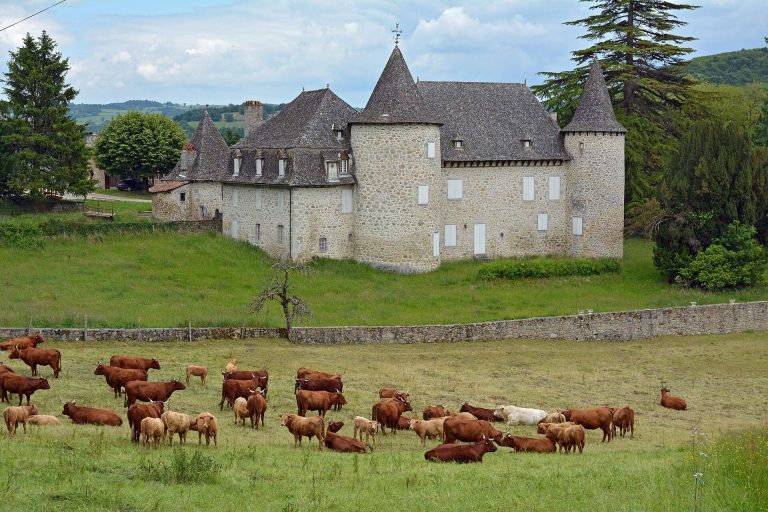
The French Revolution brought alterations to the castle, and its ditches were filled in. Château de Réghaud has held French historic-monument status, a formal heritage-protection designation, since 7 October 1931. It remains a private residence and serves as the base of an agricultural operation.
Remains
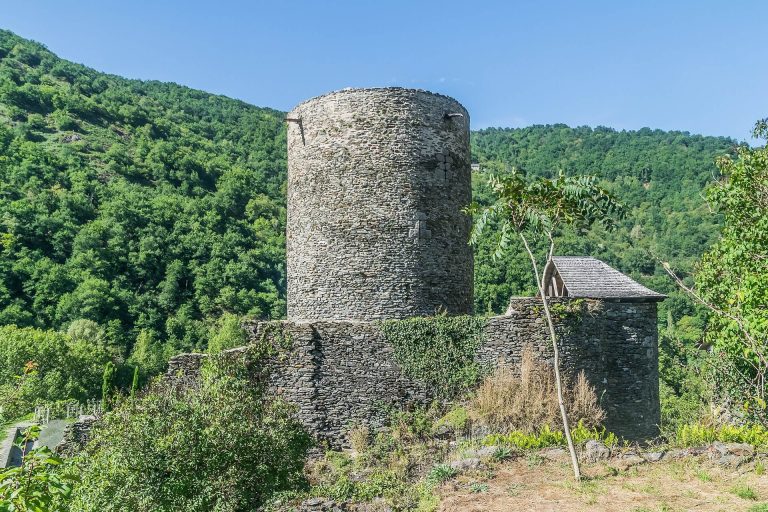
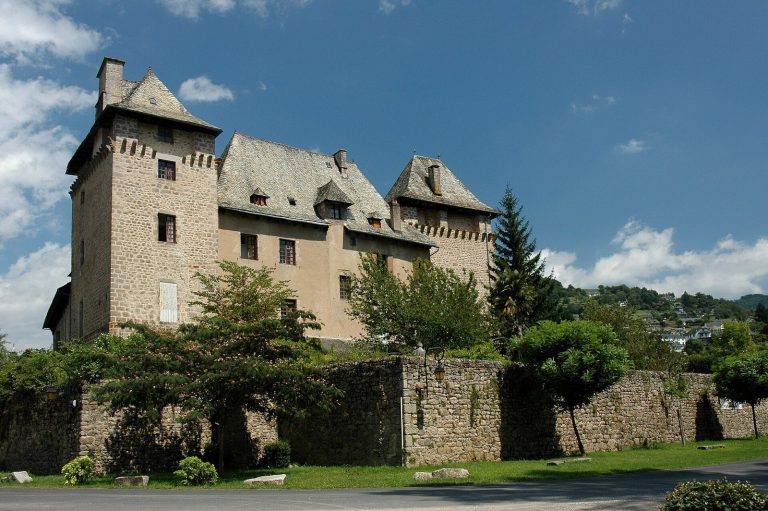
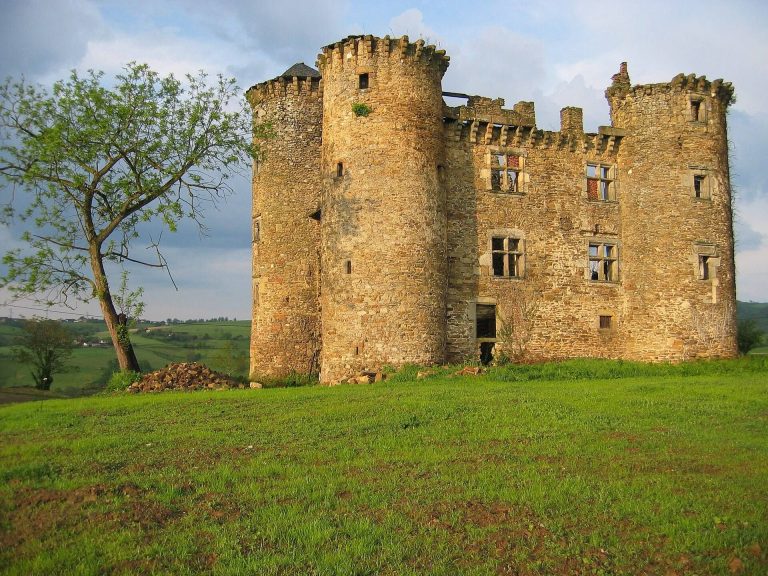
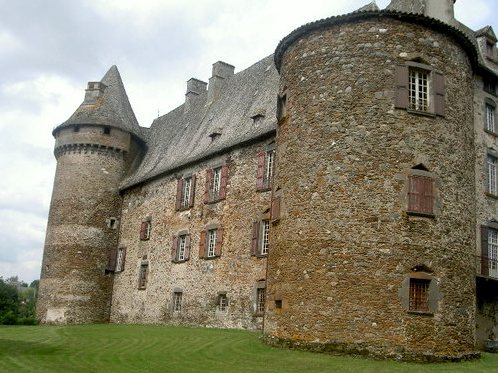
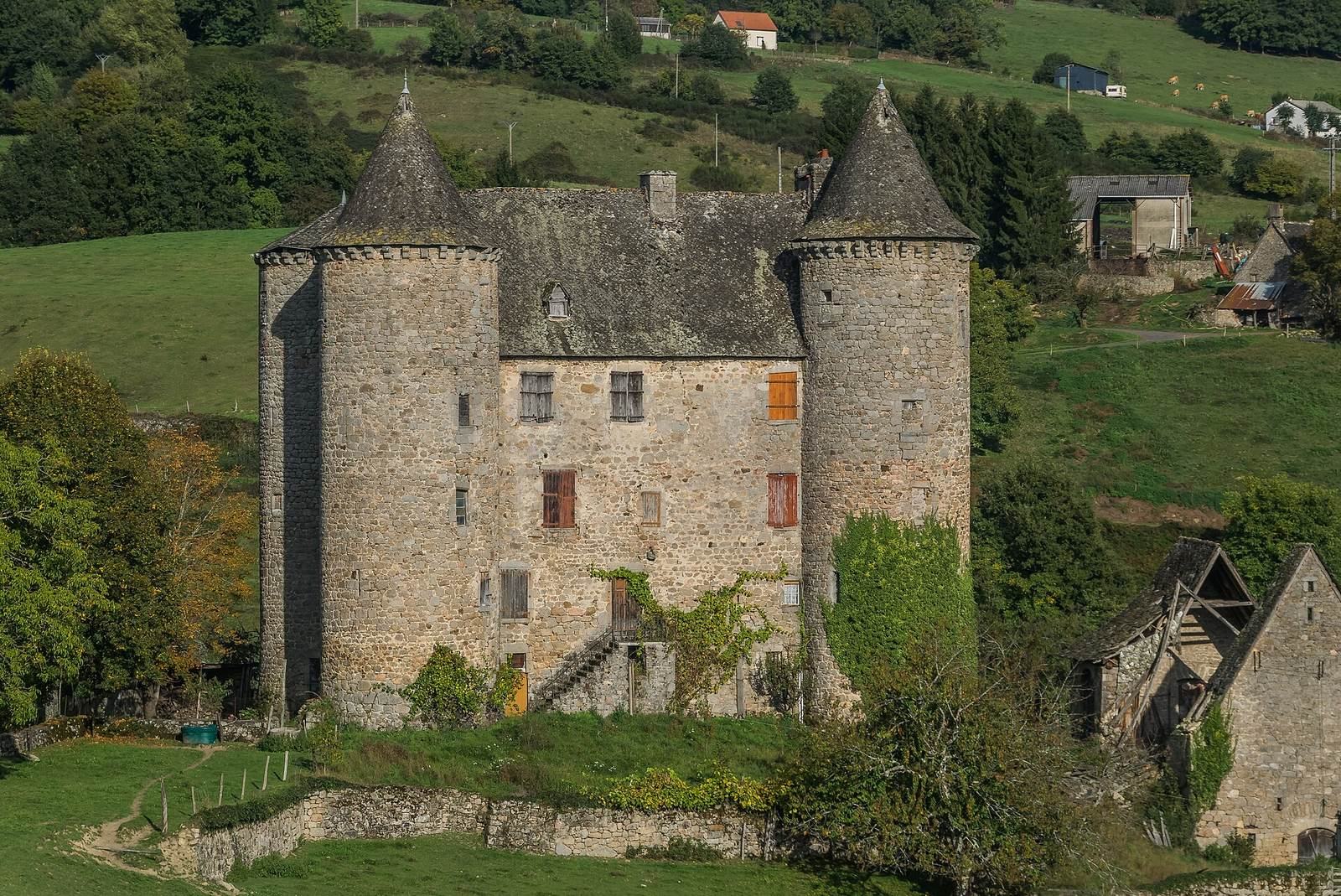
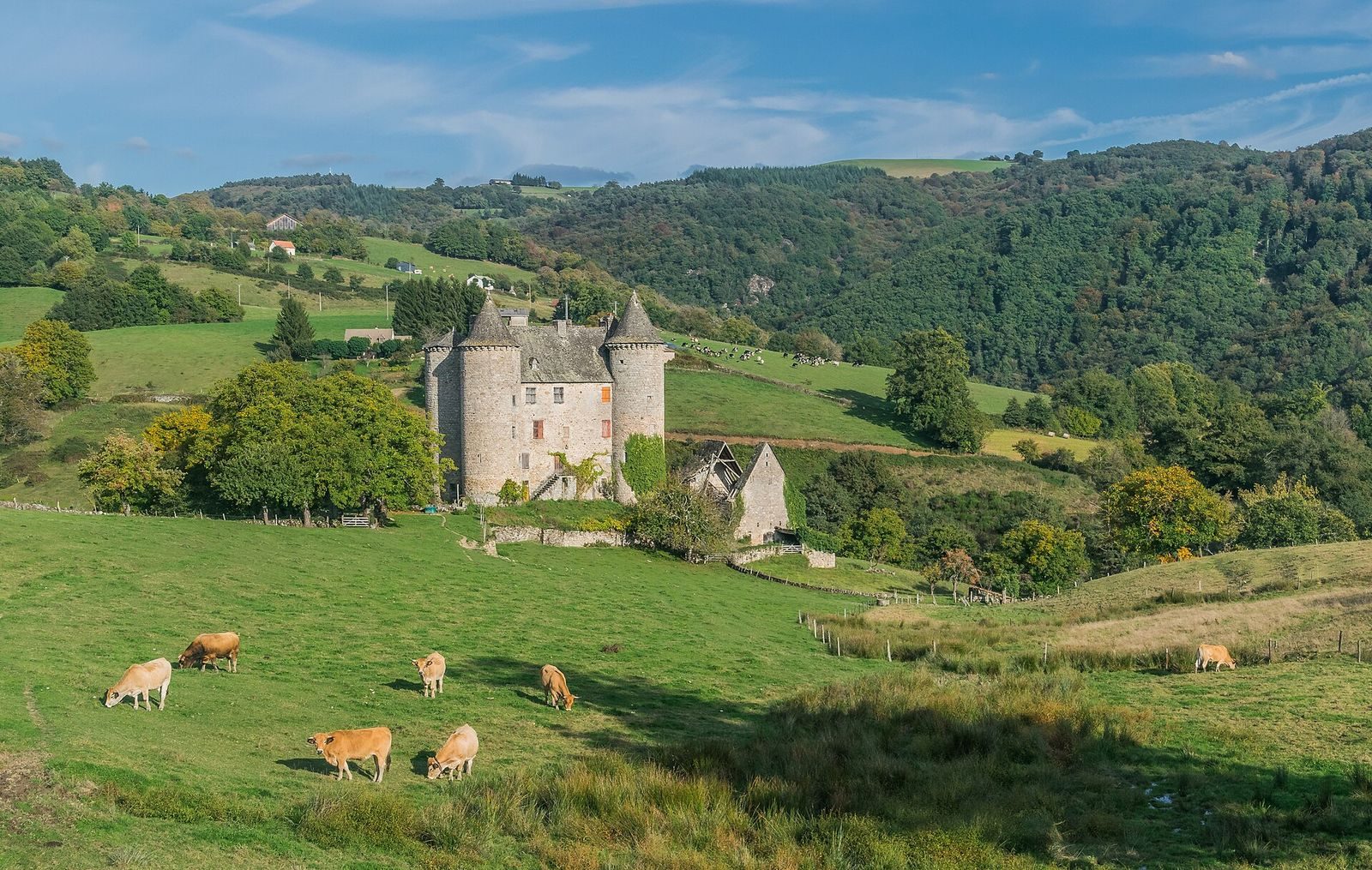
Set on a hillside near Sénezergues, the château is organized around a rectangular main building with four flanking towers. Despite alterations, its outline remains close to its earlier form.
Towers and defenses
The towers have projecting machicolations, structures with openings through which defenders could watch or attack below, and crenellations, alternating raised sections and gaps along the parapets. The largest tower is partly collapsed.
Entrance and vaulted interiors
A staircase leads to a doorway topped by a shield bearing three chess rooks. A damaged crown appears above the shield, framed by palm branches. The lower parts of the towers have dome-shaped vaults, while the ground floor of the main residential block has a rib vault, supported by projecting structural ribs.