Gottlieben Castle: A Medieval Episcopal Residence in Switzerland
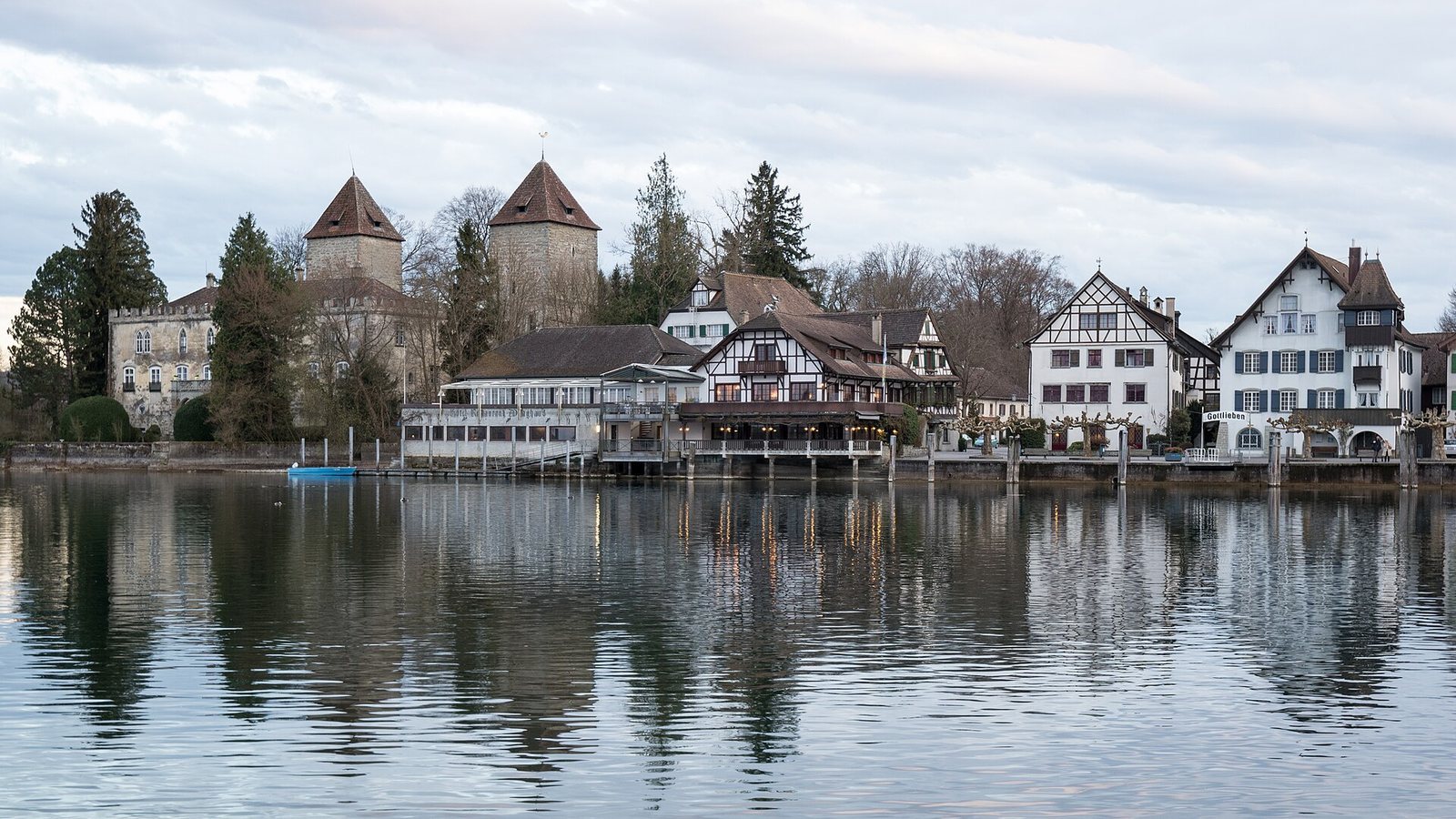
Site at a Glance
- Popularity
- High
- Country
- Switzerland
- Primary era
- Medieval
- Eras represented
- Medieval, Modern
- Civilizations
- Holy Roman Empire, Swiss
- Site type
- Military
- Remains
- Castle
On this page11 sections
History
Episcopal foundation and medieval use
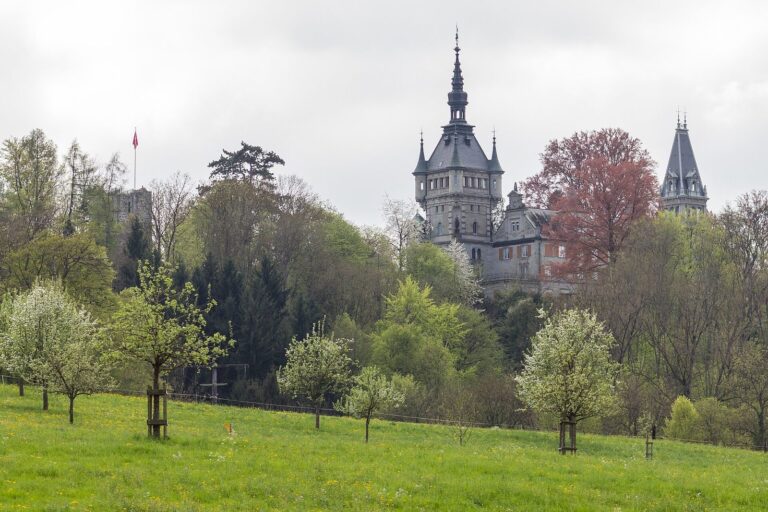
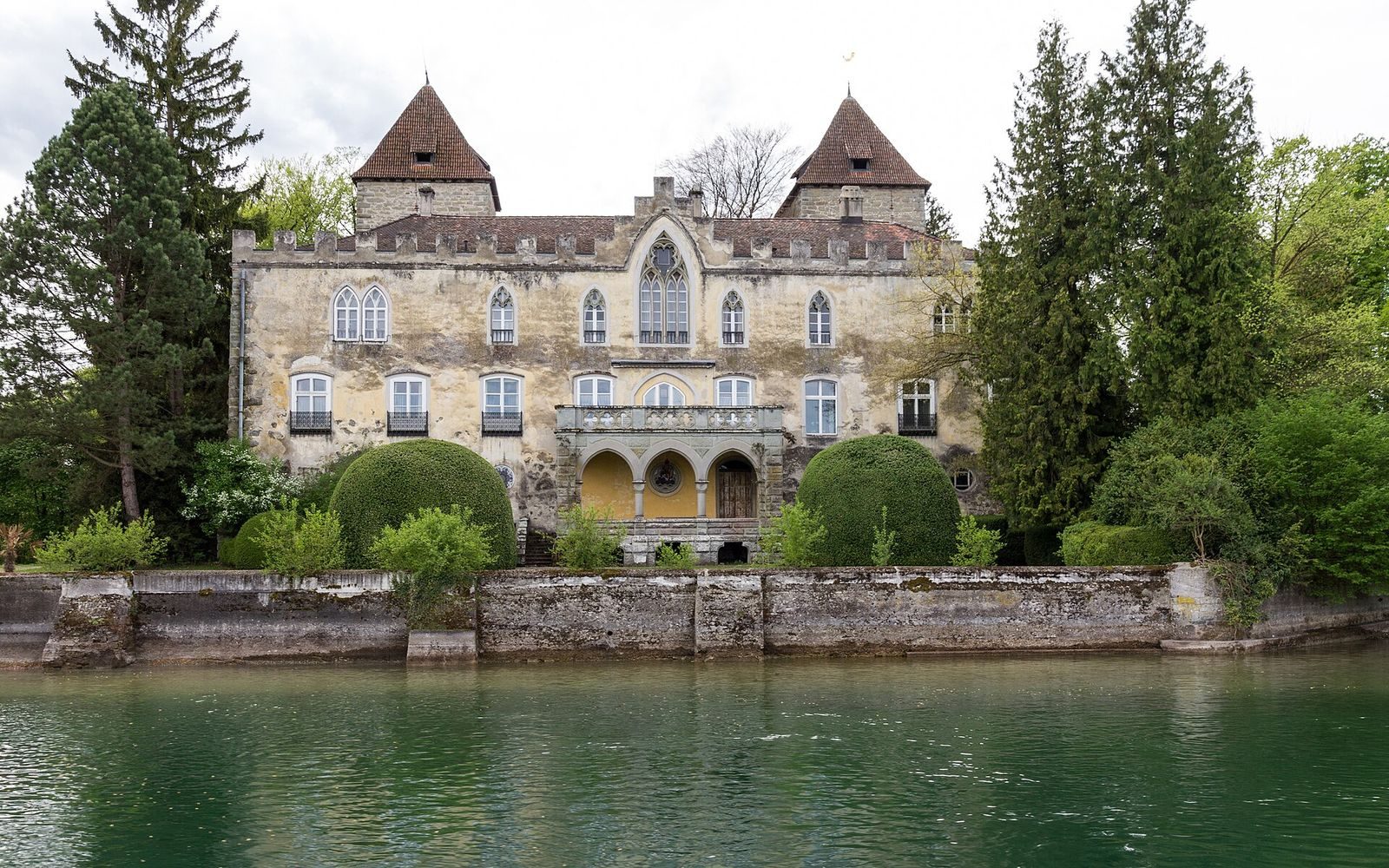
Gottlieben Castle is a medieval water castle on the eastern edge of Gottlieben, Switzerland, built in 1251 by Bishop Eberhard II von Waldburg as a residence for the bishops of Constance. It was renovated in 1837 in the Neo-Gothic style, a 19th-century revival of Gothic forms. Gottlieben village is first recorded around the end of the 10th century, when its lands belonged to the Bishop of Constance.
Eberhard ordered a wooden bridge across the Rhine beside the castle to create an alternative crossing and put economic pressure on nearby Constance, whose town council he opposed. During the early-15th-century Council of Constance, a major church council, the prison in the west tower held the Bohemian religious reformer Jan Hus, the theologian and reformer Jerome of Prague, and the fugitive, deposed Pope John XXIII. John had convened the council and invited Hus.
Administrative seat and private ownership
After the Swabian War of 1499, a conflict involving the Swiss Confederacy and forces associated with the Habsburgs and the Swabian League, the castle became the seat of the bishop’s chief bailiff. This administrator exercised the bishop’s authority in Gottlieben, while the local low court handled judicial matters. The bailiwick also included Engwilen, Siegershausen, and Tägerwilen. The arrangement continued until 1798, and the castle became private property in 1808.
In the 19th century, Louis-Napoleon, later Emperor Napoleon III, considered the castle as an alternative residence to Arenenberg, bought it, and lived there briefly. The 1837 renovation gave it its Neo-Gothic character.
Twentieth-century ownership
German diplomat Johann Wilhelm Muehlon acquired the castle in 1926 and transferred it to Schloss Gottlieben AG in 1932. Concerned in September 1939 that its closeness to the border made it dangerous, he left the castle and moved to Klosters. In 1950, opera singer Lisa della Casa and her husband, Dragan Debeljevic, acquired the company and the castle. Della Casa lived there until her death in 2012. The castle was offered for sale in 2023, and its new owners are soprano Tatjana Gazdik and Thomas Huber. Gottlieben Castle is recognized as a Swiss heritage site of national significance.
Remains
Layout and surviving structures
Setting and overall plan
The castle stands beside the Seerhein, the Rhine channel connecting the Upper and Lower Lakes of Constance. It has a rectangular plan and is largely preserved. Its medieval form was that of a water castle, with a defensive wall-walk running around it.
South towers and wall-walk
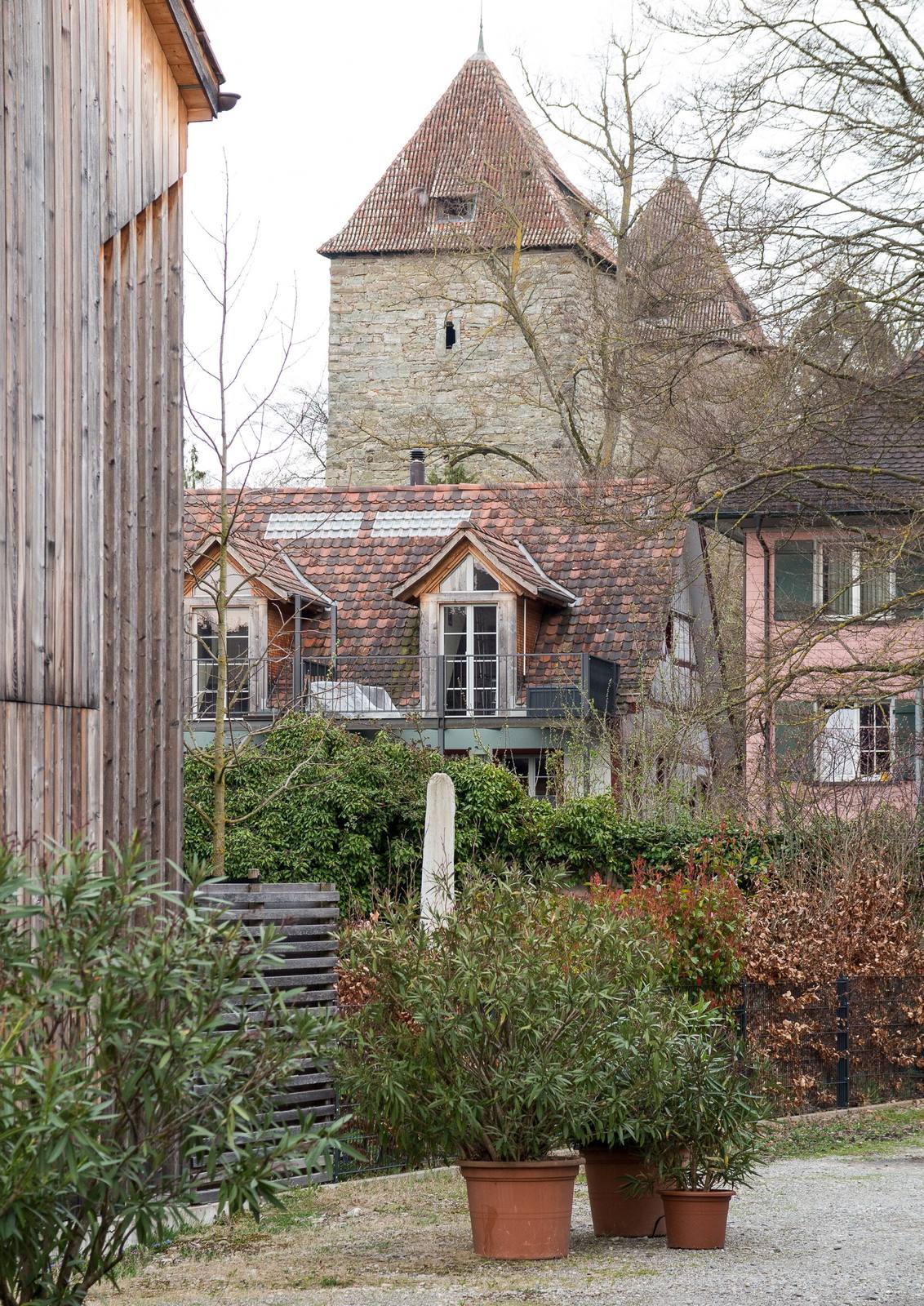
Two massive towers occupy the southern, landward corners of the castle. They date to the mid-13th century. The wall-walk formed part of the castle’s defensive circuit.
Palace and wings
A palace was added in 1346 and partly destroyed in 1352/1355. The east wing dates to 1434–1446, while the north wing was built between 1475 and 1491.
West tower prison
The attic of the west tower contains a prison associated with Jan Hus. It is not accessible.
Reused windows
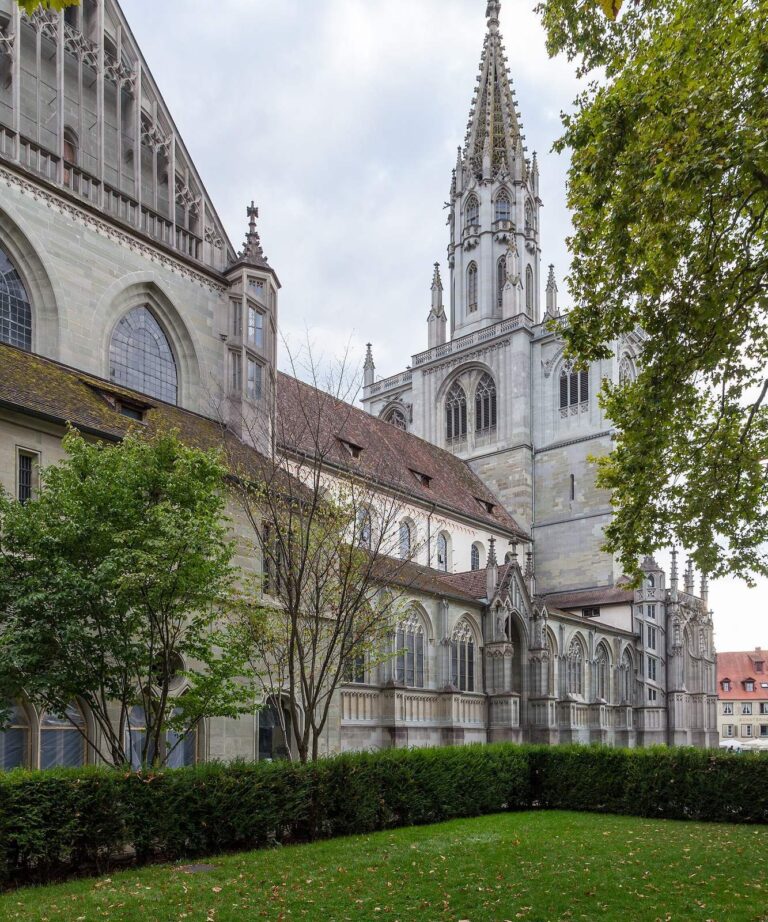
Windows with patterned stonework, known as tracery, from the cloister of Constance Minster were reused during the castle’s 19th-century renovation. The minster burned in 1824.