Millom Castle: A Historic Manor House in the United Kingdom
Site at a Glance
- Popularity
- Medium
- Country
- United Kingdom
- Primary era
- Early Modern
- Eras represented
- Early Modern
- Civilizations
- English
- Site type
- Military
- Remains
- Castle
On this page8 sections
History
Millom Castle is a historic manor house in the United Kingdom, associated with the estate of Millom and the Hudleston family.
The manor and fortification
Around 1134, Godard de Boyvill, who already owned the Manor of Millom, received a manor on the castle site. A manor was a landed estate linked to a lord’s rights over land and tenants. Around 1240, the manor passed to the Hudleston family when de Boyvill’s granddaughter married into the family. In 1335, John Hudleston received royal permission to add battlements to his manor house. This licence does not establish when the surviving castle buildings were built.
The Wars of the Roses
During the Wars of the Roses, a struggle between the Yorkist and Lancastrian factions for the English throne, Sir John Hudlestone fought for the Yorkists at the Battle of Blore Heath in 1459 and the Battle of Bosworth Field in 1485. Lancastrian forces captured Millom Castle in 1460. After Henry VII became king in 1485, Sir John and his son Henry obtained a pardon and kept the estate.
Civil War and decline
During the English Civil War, Sir William Hudlestone, a leading Royalist colonel in Cumberland and Lancashire, was defeated by Parliamentarian forces. Royalists supported the king, while Parliamentarians fought against royal authority. Cannon fire damaged the castle, and fines imposed by the victors began the Hudleston family’s descent into debt.
By 1739, the castle walls had fallen into disrepair. Elizabeth Huddleston sold the castle in 1748 to Sir James Lowther of Whitehaven. Millom Castle is a Grade I listed building, England’s highest listed-building category, and a Scheduled Monument, a legally protected historic monument.
Remains
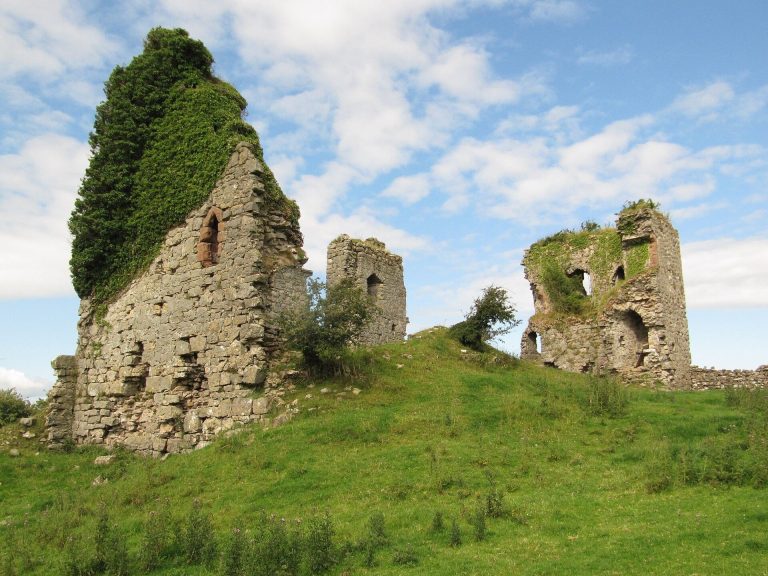
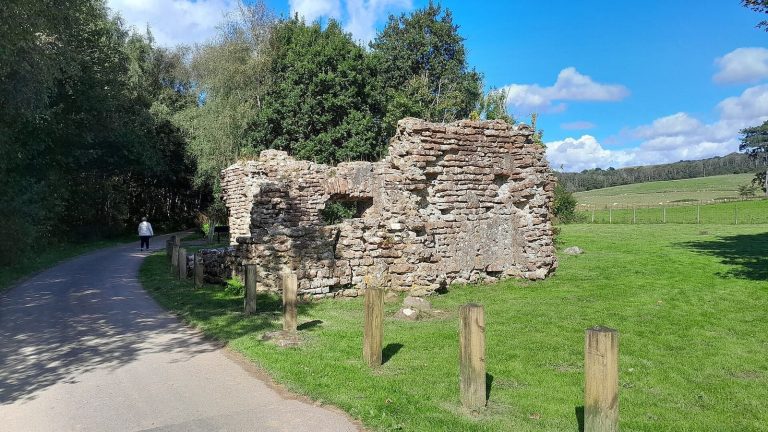
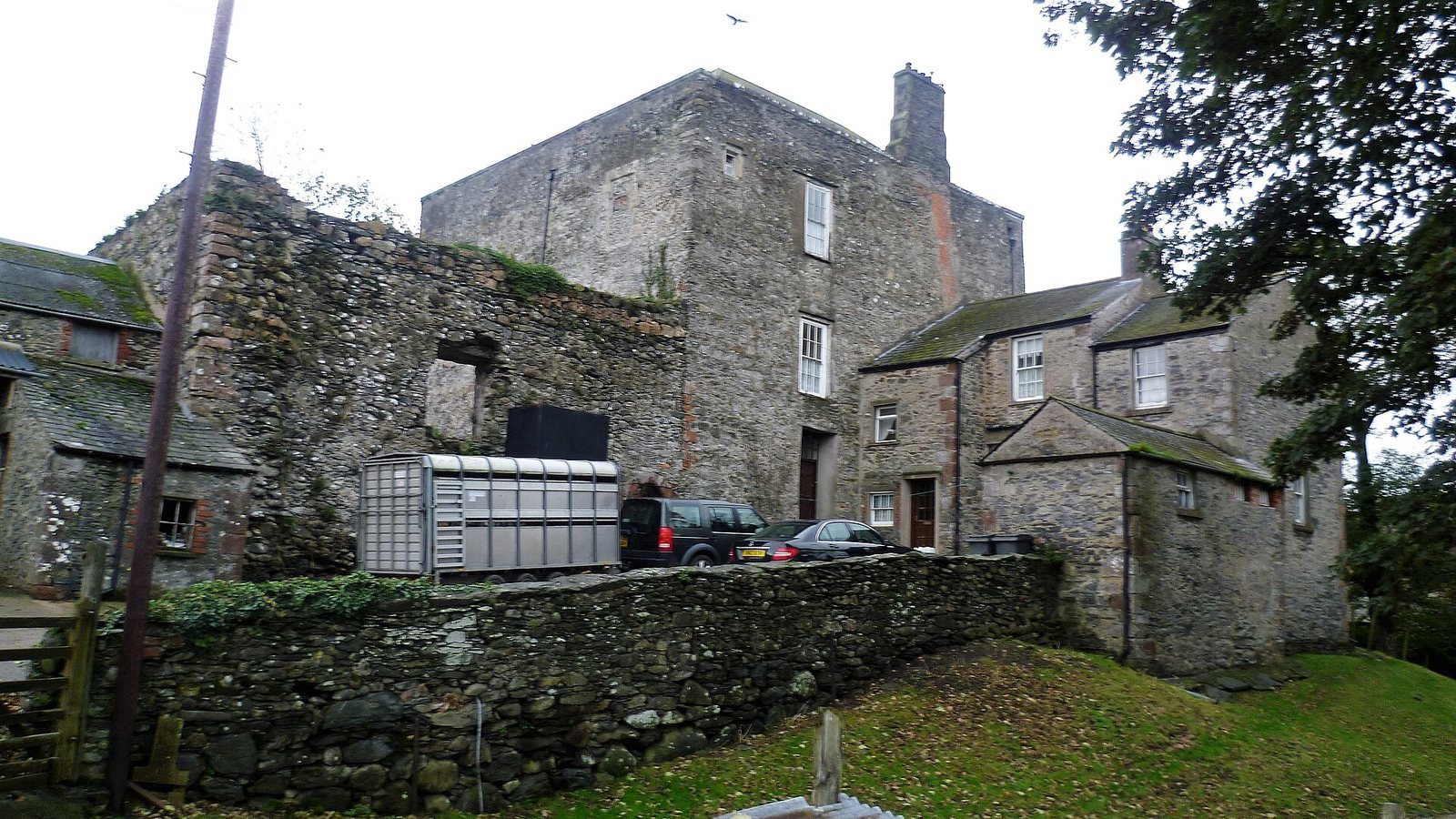
The castle survives as a stone complex, with farm buildings attached on the north and west sides and traces of a moat to the north and west.
Main building
The stone building has ashlar dressings (finely finished stonework used for architectural details) and slate roofs. Its great tower dates from the sixteenth century or possibly the seventeenth century, and is now used as a farmhouse.
Entrances
Gatepiers were added in the seventeenth or eighteenth century. On the east side, a seventeenth-century gatehouse and steps survive; on the west side is a pointed entrance.
Farm buildings and moat
Barns and outhouses are attached to the north and west sides of the castle. Remains of the moat lie to the north and west as well.