Trebur Royal Palace: A Royal Court Complex in Germany
Site at a Glance
- Popularity
- Medium
- Country
- Germany
- Primary era
- Medieval
- Eras represented
- Medieval
- Civilizations
- Carolingian
- Site type
- Civic
- Remains
- Palace
On this page8 sections
History
The Trebur Royal Palace was a royal court complex at Trebur, Germany, first referred to in a document issued by Louis the Pious in 829. A larger court of the Carolingians, a ruling dynasty in the Frankish and German lands, may have existed there earlier. The palace became an important royal residence in the Rhine–Main region and hosted major political gatherings.
Carolingian royal court
Under Louis the German, a Carolingian king in East Francia, Trebur became one of the royal palaces he visited most often in the region. Imperial diets, assemblies of the empire’s political authorities, were held there; the earliest mentioned took place in 871. Charles the Fat gave up the throne at Trebur in 887. In 895, his successor Arnulf of Carinthia convened an important church assembly at the palace.
Ottonian rule and royal grants
Royal stays became less frequent under the Ottonians, the dynasty that followed the Carolingians. Otto the Great granted the palace and other estates to his second wife, Adelaide of Italy, as provision for her widowhood. In 985, Otto III gave the estate of Tribur to his aunt Mathilde, abbess of Quedlinburg, a senior leader of a religious community. After Mathilde’s death, the palace probably returned to imperial control.
Salian revival and end of regular visits
Royal visits increased again under the Salians, a later ruling dynasty. In 1053, Henry IV was chosen at Trebur as heir to the throne. In 1076, leading nobles gathered there in an effort to settle the Investiture Controversy, a dispute over who had authority to appoint church leaders. Regular royal visits ended after this meeting.
From imperial possession to regional rule
An imperial diet called for Trebur in 1119 was moved elsewhere. The palace remained in imperial hands until the end of the Staufer period, under a later ruling dynasty. In 1249, William of Holland, a rival claimant to the German kingship, pledged the palace to the Counts of Katzenelnbogen; it later passed fully into their possession. After their line died out, Trebur became part of the Landgraviate of Hesse in 1479 and Hesse-Darmstadt in 1567.
Remains
Site and palace layout
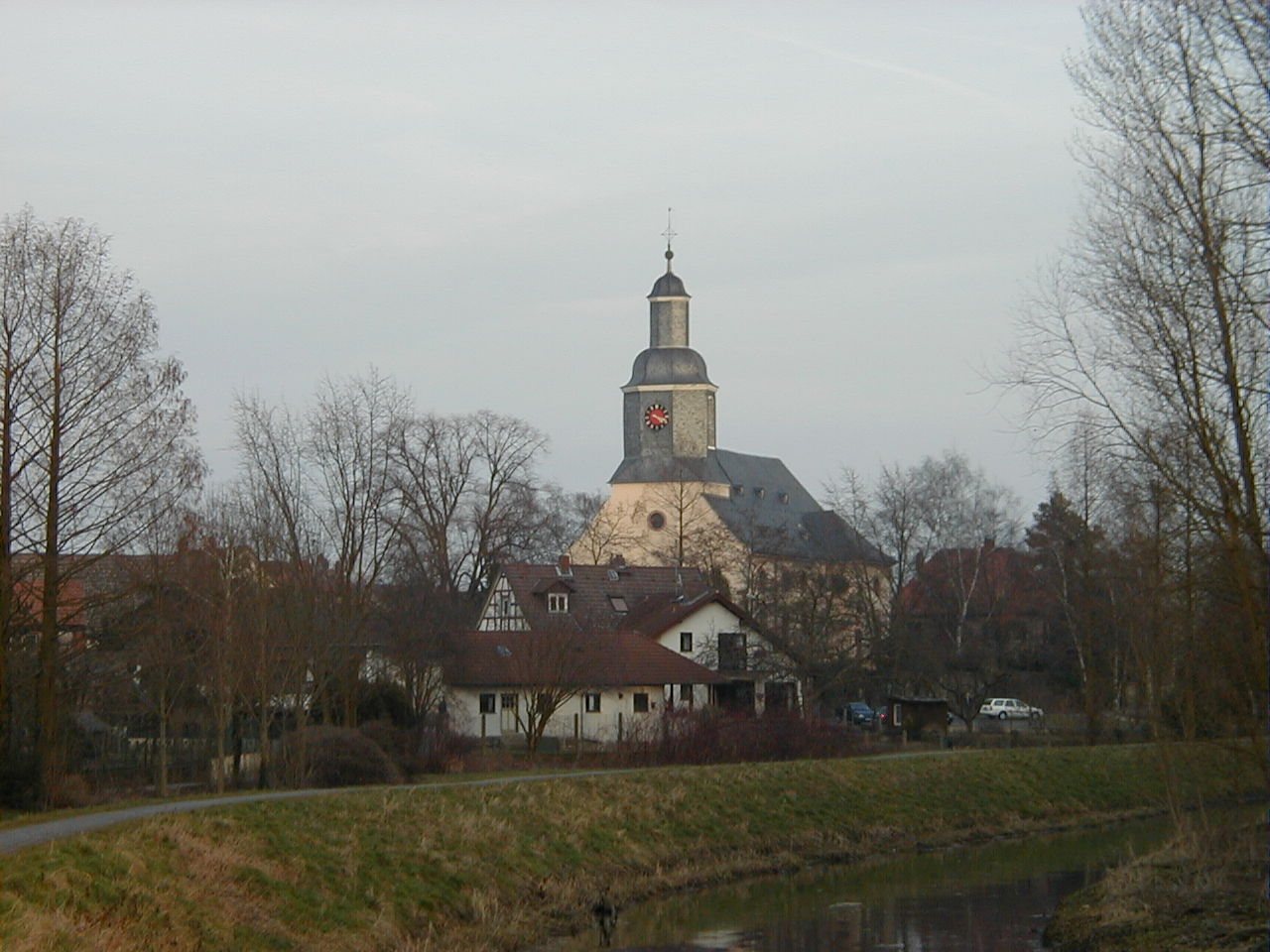
The palace complex occupied a low hill at the southern edge of the village, near former waterways associated with the Landgraben or its meeting with the Schwarzbach. Its area is thought to have extended around St. Lawrence’s Church, where Carolingian building fabric survives. In Louis the German’s time, the complex probably included a formal royal residence and a larger basilica, a church with a central nave and side aisles, near the site of today’s Baroque parish church of St. Lawrence. Substantial rebuilding probably took place during the Ottonian period.
Decay and reuse
The palace buildings began to deteriorate in the twelfth century. Their stones may later have been reused in Landskron Castle near Oppenheim, across the Rhine.