Ardenne Castle: A Royal Residence and Luxury Hotel in Belgium
Site at a Glance
- Popularity
- Medium
- Country
- Belgium
- Primary era
- Modern
- Eras represented
- Modern
- Civilizations
- Belgian
- Site type
- Domestic
- Remains
- Palace
On this page7 sections
History
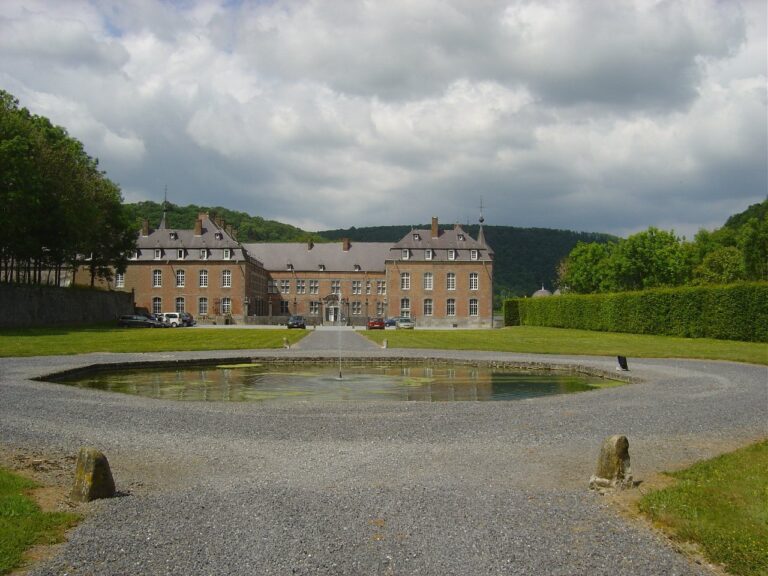
Ardenne Castle was a royal country residence later converted into a luxury hotel at Houyet, Belgium. King Leopold II commissioned its construction in 1874, and the castle was completed in 1891. Designed by architect Alphonse Balat, it formed part of an effort to attract affluent travelers to Belgium.
The royal estate and hotel project
On 21 March 1837, Leopold I acquired 708 hectares known as Terre d’Hardenne et de Férage. He also purchased a country house from the Orban family and used it as a hunting lodge. The lodge stood where the later castle was built. Leopold I commissioned a rock tower on the estate in 1843.
After Leopold II succeeded his father in 1865, he arranged for the manor to be demolished in 1874 and a new castle to be built on its site. Its gardens were designed by landscape architect Élie Lainé. Although initially planned as a royal retreat, the building was developed as a hotel with 140 rooms.
The hotel was part of a wider plan to encourage luxury travel. Belgian railway entrepreneur Georges Nagelmackers proposed a luxury rail network in 1872 with Leopold II’s support. The initiative led to the International Sleeping-Car Company and European Grand Expresses in 1876. Leopold II became a shareholder and promoted both rail journeys and visits to the castle. The estate and Houyet became known as ‘Little Belgian Switzerland.’
A second tower was added to the park in 1878. The hotel’s annex, designed by Alban Chambon, was built in 1897–98. A halt on railway Line 166 opened to serve the castle on 23 June 1898, with a French presidential train making the official inaugural journey. The halt closed in 1919.
Changing management and wartime use
Colonel James North was selected to manage the hotel but died in 1898 before beginning the role. The lease then went to Nagelmackers and the International Company of European Grand Hotels, a subsidiary of the International Sleeping-Car Company. After that hotel company was dissolved in 1907, Colonel Alexis Mols took over the lease.
When Leopold II died in 1909, the estate, then about 4,200 hectares, passed to the Belgian Royal Donation, the institution managing property made available for the royal family and public uses. The hotel closed for a time and reopened in 1912. Following advice from King Albert I, Mols formed a hotel company that placed operations with Les Grands Hôtels Belges, led by Georges Marquet.
During the First World War, French troops and then German troops occupied and looted the hotel. It reopened in 1920 under Marquet, whose family continued to take part in its management until the hotel’s final closure. In 1927, its capacity rose to 200 rooms, and an airfield was established on the estate in 1929. French writer Colette worked on her novel La seconde at the castle that year.
During the Second World War, senior Nazi official and German foreign minister Joachim von Ribbentrop established his headquarters at the castle. The German army formally requisitioned it in 1941. British forces, followed by American forces, occupied the estate in 1944. It also served as the U.S. Fifteenth Army’s command post, which was evacuated during the Battle of the Bulge, a major German offensive against Allied forces in the Ardennes. German prisoners of war worked on the estate for a period after the conflict.
Closure and later changes
The hotel reopened to the public in 1945 under Léon Elleboudt and Marie-Louise Lemineur. It closed permanently in September 1949 as demand for luxury holidays from France and England had declined. The furnishings were sold at public auction in 1950.
In March 1950, Baron Gaston Braun leased the estate’s nine-hole golf course and the Leopold Tower from the Royal Donation. The course was expanded to 18 holes in 1992. On 23 August 1968, the abandoned castle caught fire during roofing work commissioned by the Royal Donation. The ruins and the undamaged annex were cleared between 1970 and 1972.
Remains
The estate at Houyet is crossed by the Lesse and Ywoigne rivers. Its historic complex included the main hotel building, a separate annex, towers in the grounds, and designed gardens.
Hotel buildings
The main castle was arranged as a hotel with 140 rooms. Their fittings included bathrooms, running water, electric lighting, and telephones; the hotel later accommodated up to 200 rooms. The separate annex, designed by Alban Chambon, was described as matching the main building in luxury.
Towers and gardens
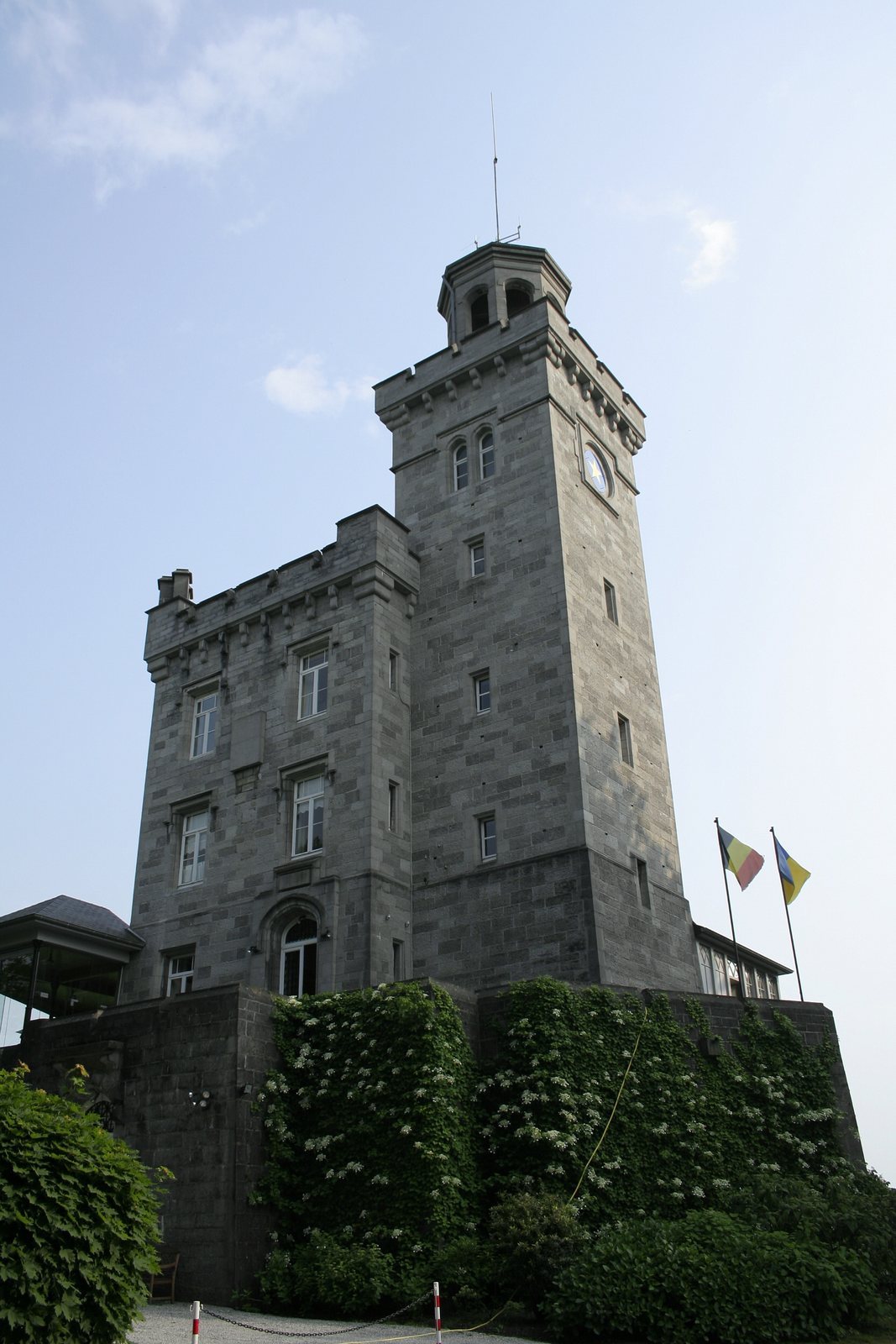
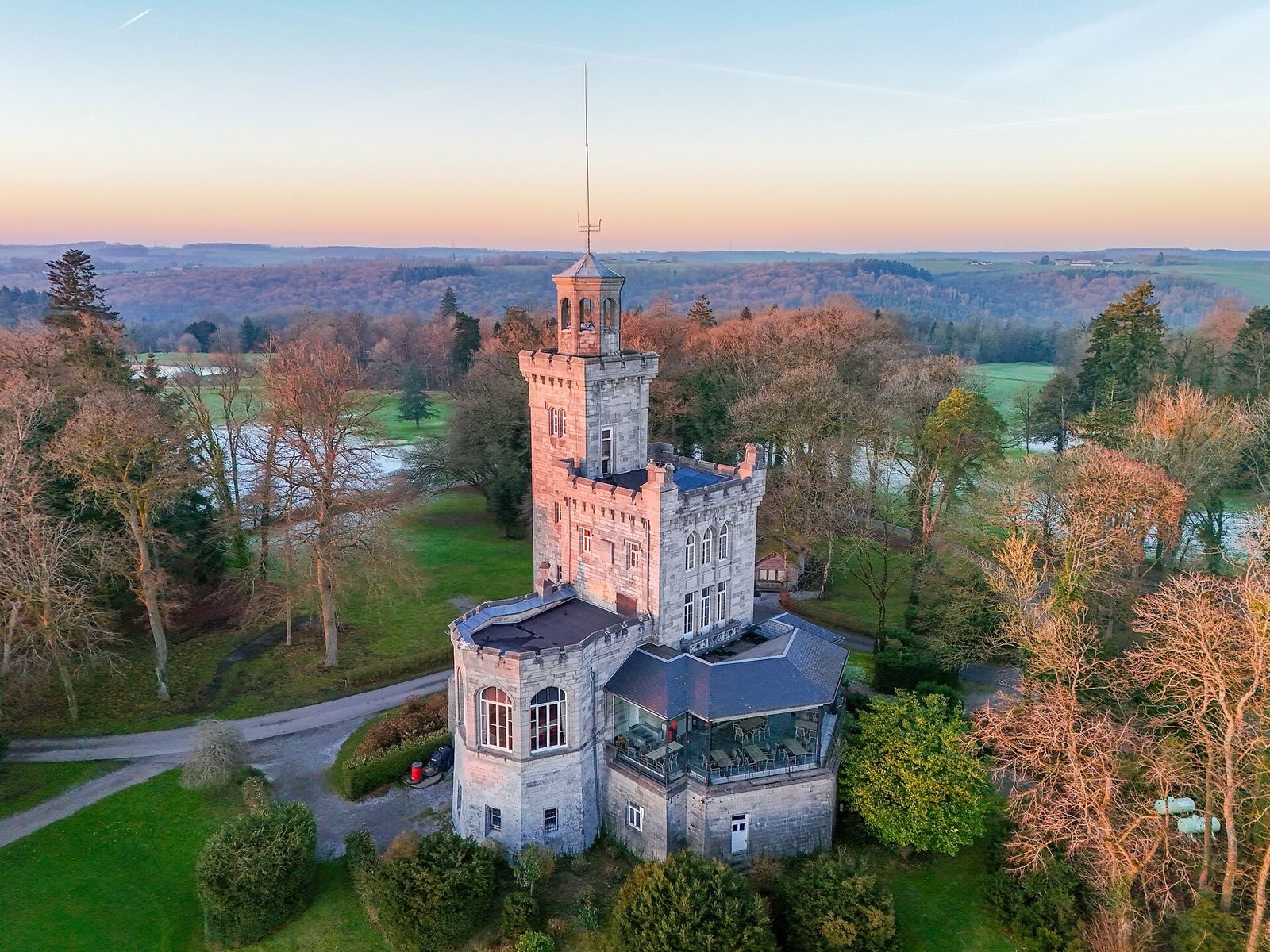
The Rock Tower, built in 1843, was destroyed in 1975. The park’s second tower, erected in 1878 and known as the Leopold Tower, is the sole surviving remnant of the castle complex. It serves as a golf-club clubhouse. Lainé’s gardens included sculptures, some of which were transferred to Laeken Park in Brussels. These included Seahorses by sculptor Thomas Vinçotte.