Siri Fort: Alauddin Khalji’s Fortified City in Delhi, India
Site at a Glance
- Popularity
- Very High
- Country
- India
- Primary era
- Medieval
- Eras represented
- Medieval
- Civilizations
- Delhi Sultanate
- Site type
- Military
- Remains
- Wall
On this page11 sections
History
Siri Fort was a fortified city founded around 1303 by Alauddin Khalji in Delhi, India, in a style classified as Afghan-Seljuk. Built to defend Delhi and northern India against the Mongols, whose empire spread across much of Eurasia, it served as Alauddin’s seat of power during his campaigns of territorial expansion. Colonial-era historians shaped the conventional sequence of Delhi’s seven historic cities, in which Siri is placed second.
Foundation and Mongol attacks
Craftsmen associated with the Seljuq dynasty, a Turkic ruling house with territories in West Asia, contributed building skills after seeking refuge in Delhi during Mongol invasions there. In 1303, the Mongol general Targhi besieged Siri while Alauddin was away during a Mongol expedition into India. Targhi failed to break through the defenses and retreated to Central Asia. Alauddin’s forces defeated the Mongols at Amroha in 1306.
Tradition holds that Siri’s foundations were laid over the severed heads of about 8,000 Mongol soldiers killed in battle, and links the city’s name to a word meaning head. Another legend credits 70,000 workers to Alauddin’s building projects in the city.
Jahanpanah and Timur’s account
In 1326–27, Muhammad bin Tughluq enclosed Siri and the area around Adilabad Fort within the walls of Jahanpanah, a new city, connecting Siri to its defenses. Siri was also known as Darul Khilafat, meaning Seat of the Caliphate, a polity associated with a caliph’s authority as leader of the Muslim community.
During his invasion of Delhi in 1398, Timur, a Central Asian ruler and military conqueror, described Siri as fortified and counted seven gates there. His account gave a total of 30 gates across the defenses of Old Delhi, Siri, and Tughlaqabad, including thirteen at Jahanpanah and ten at Old Delhi.
Destruction and modern work
Siri’s destruction is dated to 1540–45. Sher Shah Suri, a sixteenth-century Afghan ruler, removed stone, brick, and other materials from the fort for construction in his own city. Building materials were later taken for houses and other structures.
The Asiad Village Complex, built in 1982, covered parts of the fort that had not been explored. In December 2008, the Archaeological Survey of India began excavating to uncover buried wall sections and connect them with stretches already excavated. Restoration and conservation work also began on several sections before 2010. At the time, one stretch near Asiad Village was considered in good condition, while sections near Asiad Village and Panchsheel Park needed conservation; a stretch adjoining Panchsheel Park was in poor condition and selected for restoration.
Remains
The fortified city had an oval plan and covered about 1.7 square kilometres. Built on an earlier camp, it lay roughly five kilometres northeast of the Qutb Minar, a monumental minaret in Delhi, at an elevation of about 228 metres. It was northeast of Mehrauli and northwest of Tughlaqabad. Stone and brick were the principal materials used in its defenses.
Fortifications and gate
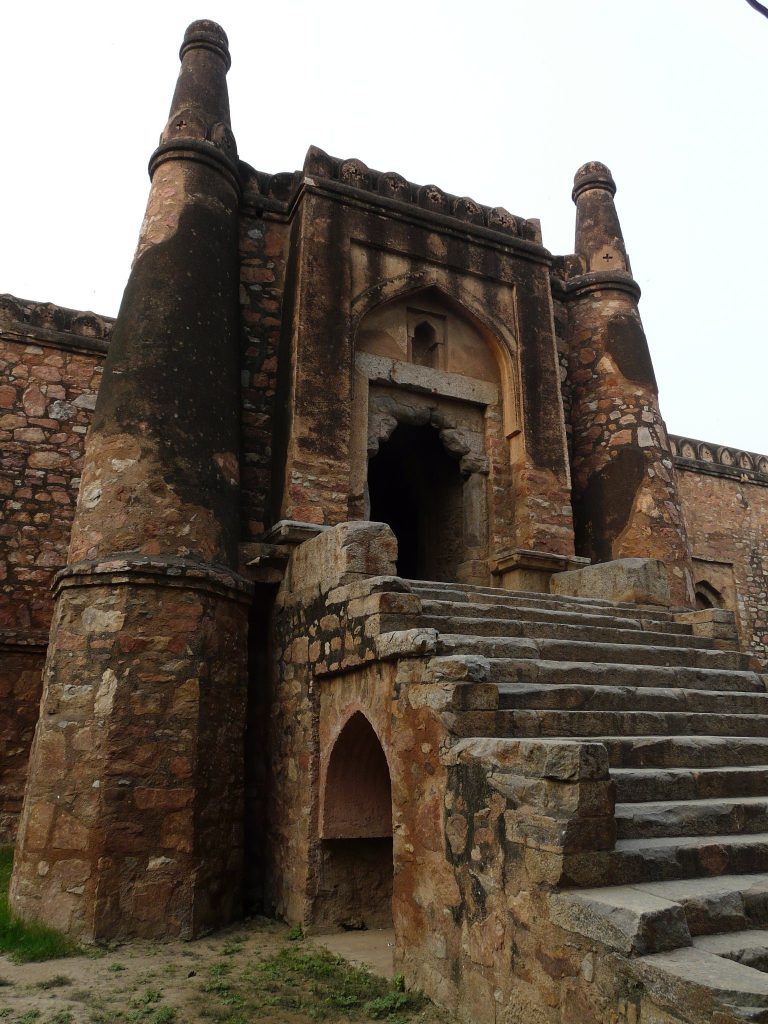
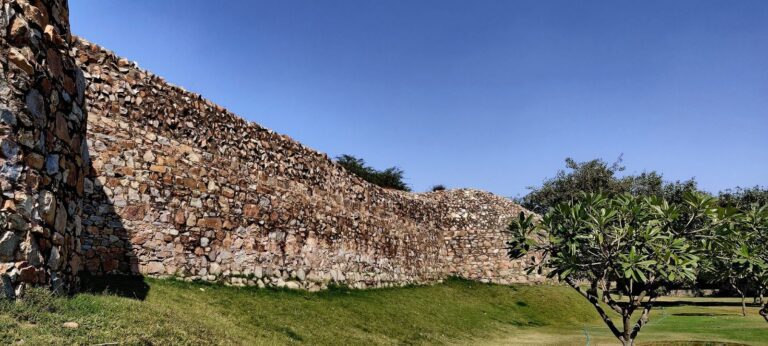
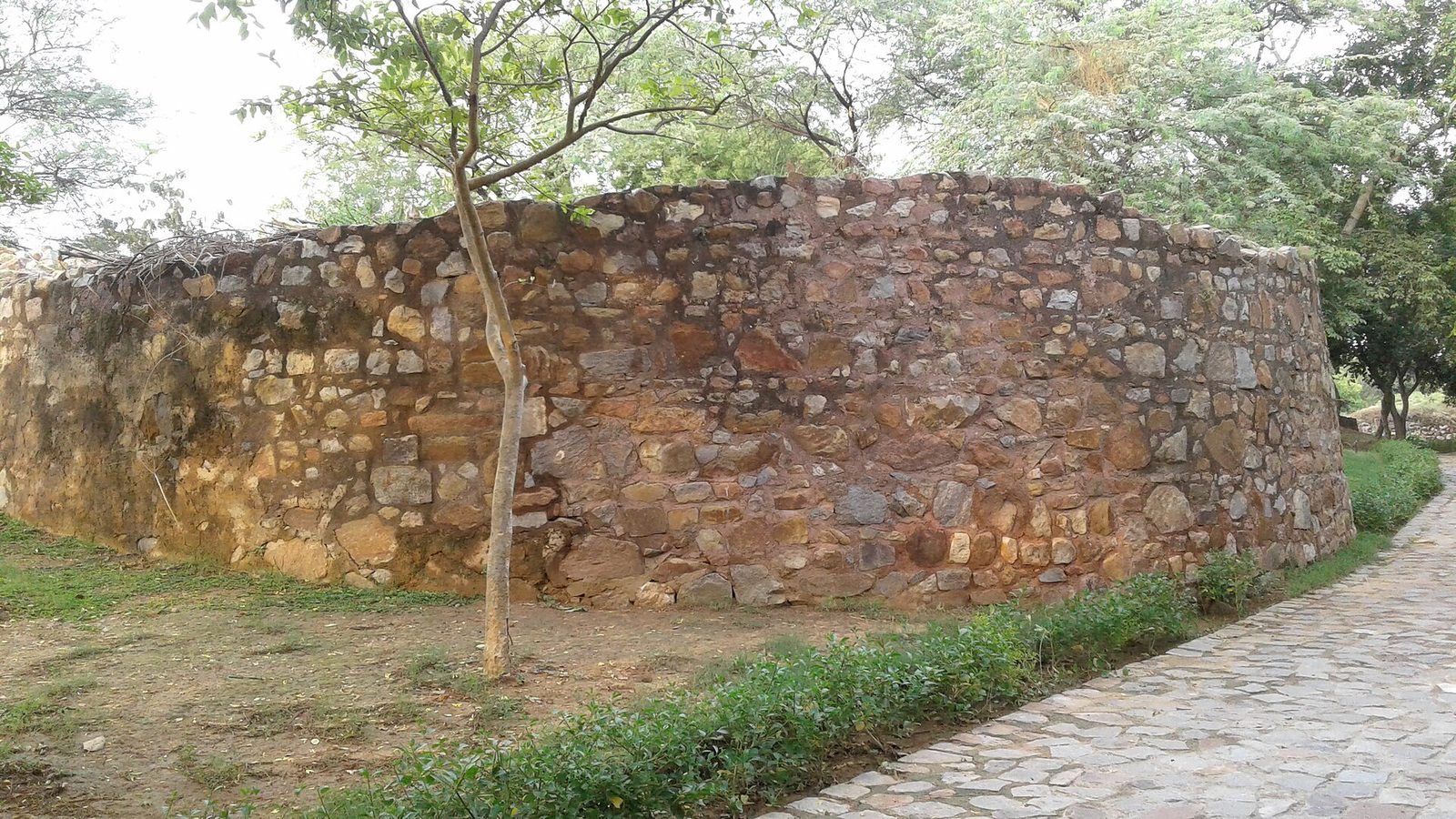
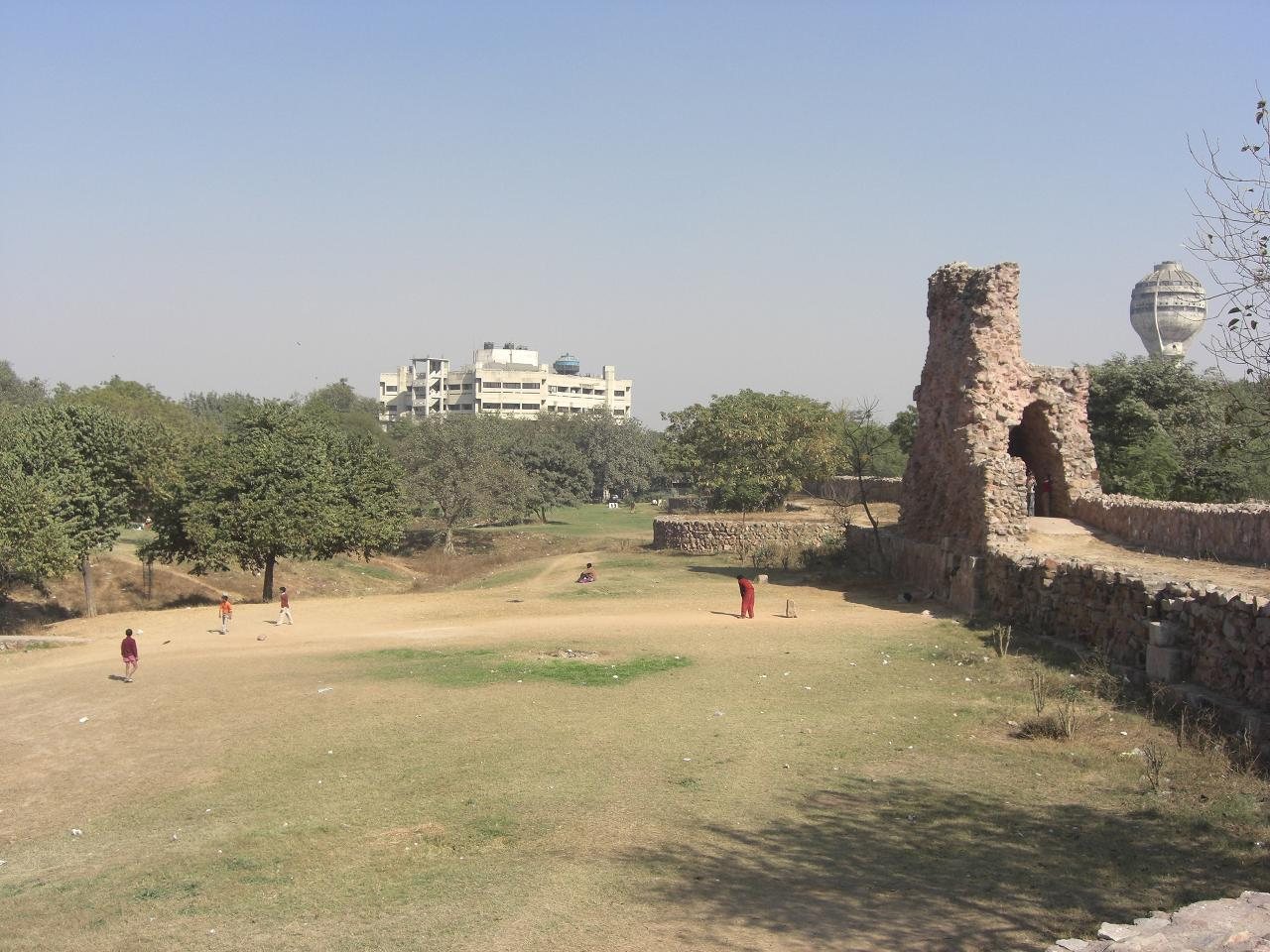
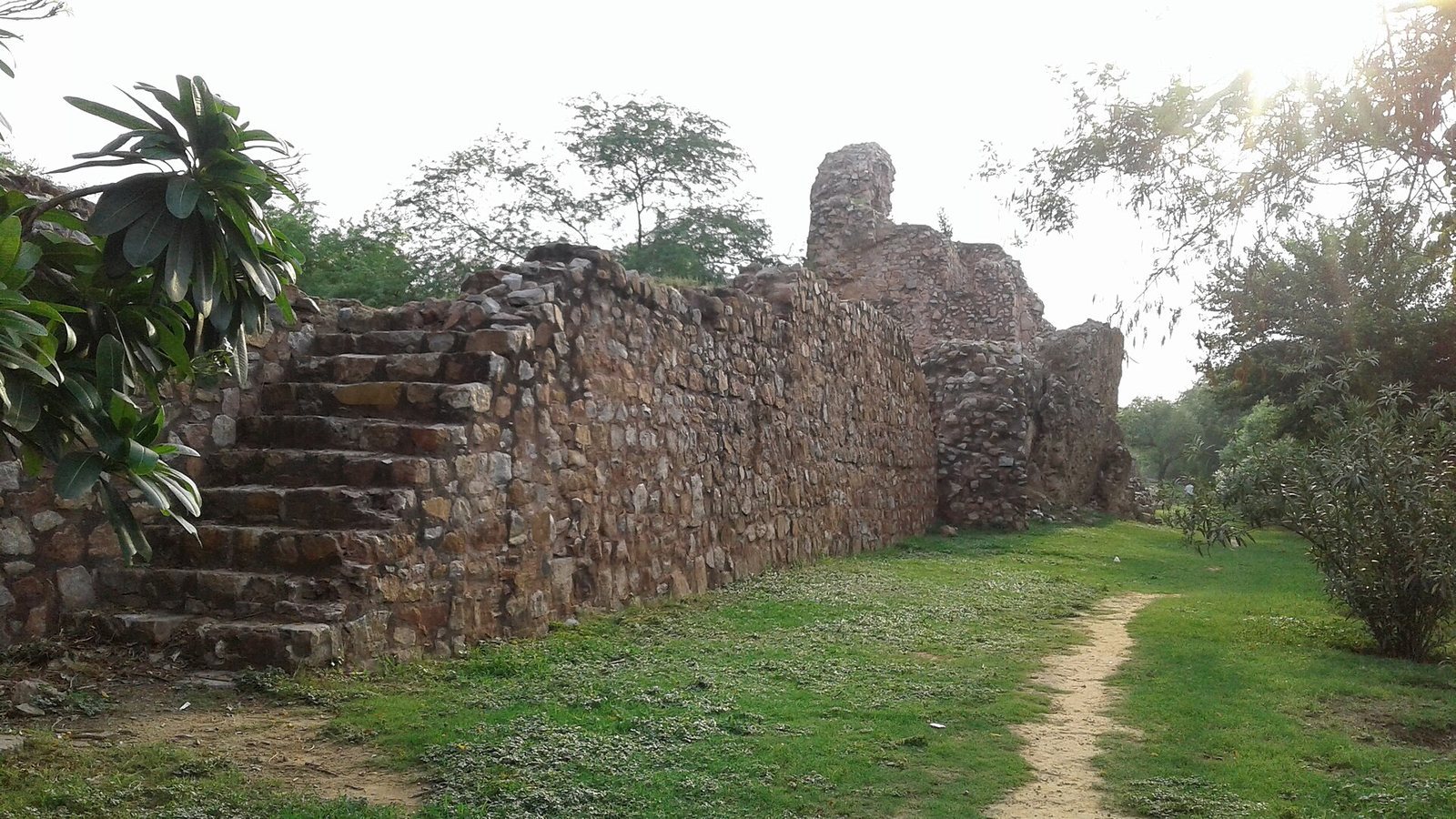
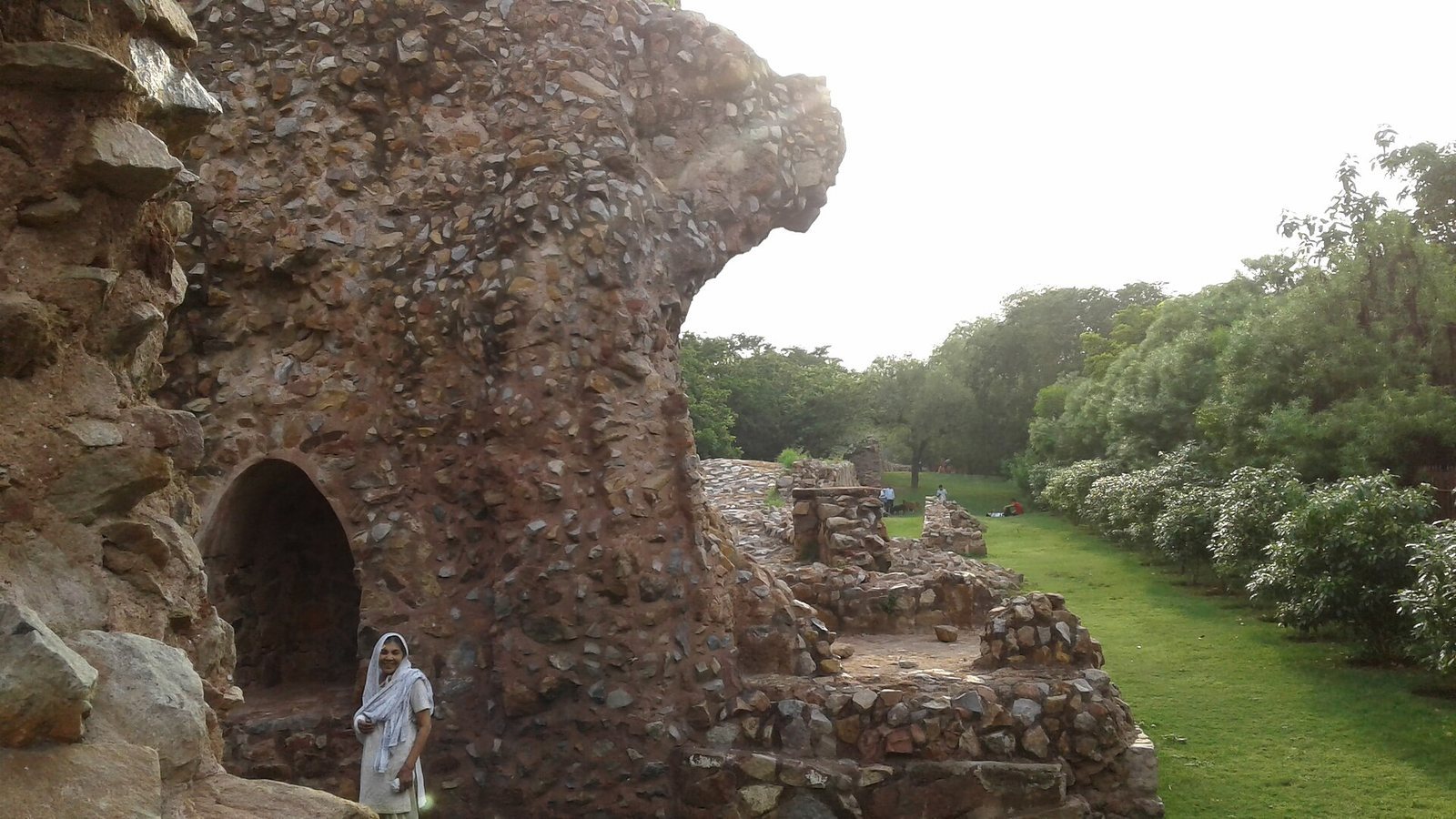
The walls followed the form of large Turkish fortifications and were classified as Afghan-Seljuk in style. Their outer faces sloped upward from broad bases, with a sheltered passage within. Eastern sections retain flame-shaped battlements, narrow openings for firing weapons, and projecting defensive platforms. A stone-and-cement defensive wall extended from Siri toward Old Delhi. The surviving wall remains are limited, with poorer construction than that of earlier Indian forts given as one reason. Of the city’s original gates, only the southeastern one remains.
Associated buildings and waterworks
Hazar Sutan Palace
The Hazar Sutan, meaning Thousand Pillars, was a palace outside Siri’s fortified boundary. It had marble floors and other stone decoration, and its doorway was richly ornamented.
Hauz Khas reservoir
Alauddin’s water-supply system for Siri included a reservoir at Hauz Khas, in the present-day Hauz Khas locality.
Tohfewala Gumbad Masjid
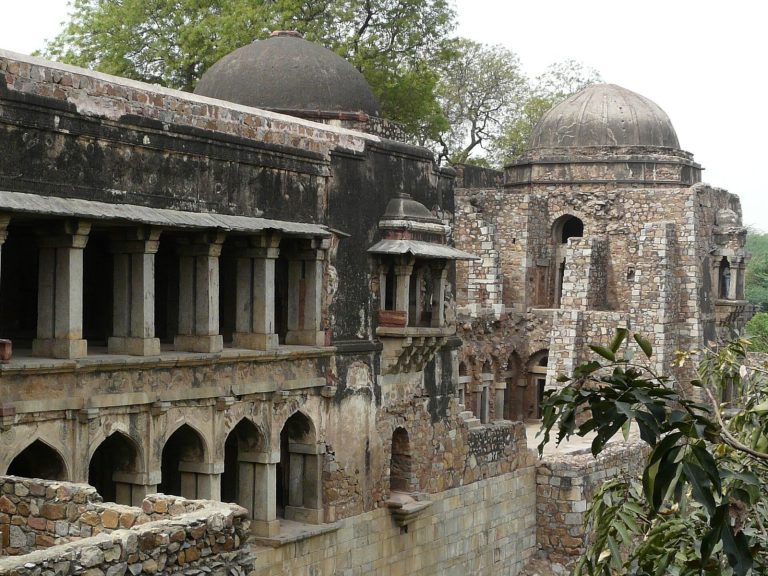
This ruined mosque in nearby Shahpur Jat belongs to the period of Khalji rule. Its remains include a domed central chamber and sloping walls characteristic of Khalji architecture.
Muhammad-Wali Mosque
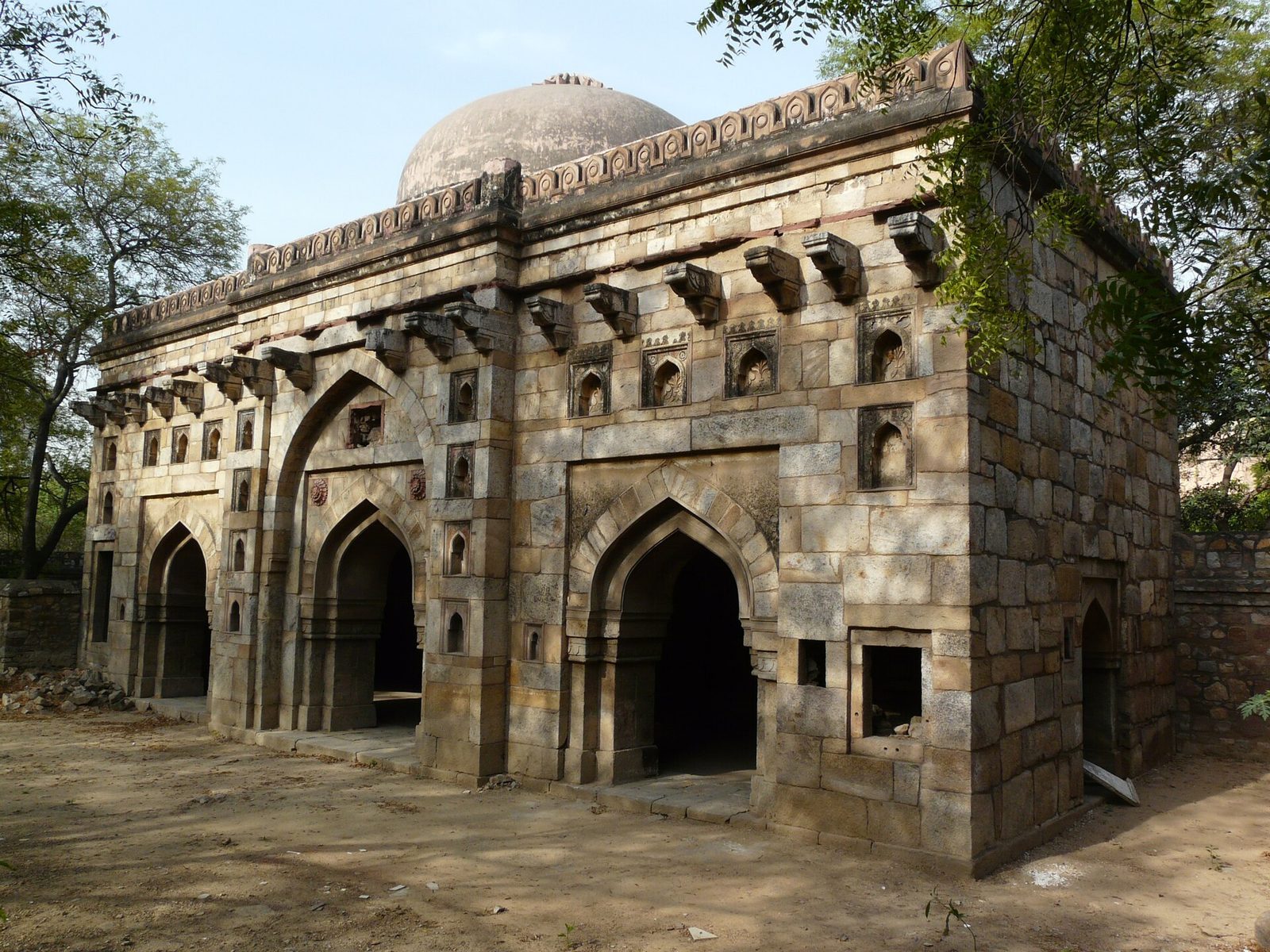
The Muhammad-Wali Mosque is better preserved or restored than the ruined Tohfewala Gumbad Masjid. Its precisely cut stones vary in size, and the structure is largely plain in appearance. The three-portal facade projects at its center and includes small wall niches with beveled panels carved in plant motifs, topped by pointed and keel-shaped arches. Eighteen projecting supports of uncertain purpose sit above them, while a battlement-like band crowns the facade. Intersecting ribs support the central dome, which rests on an octagonal zone of shallow niches without openings. Curved supports bridge the dome to this base and carry tiered, niche-like ornament.