Badefols Castle: A Medieval Stronghold in Dordogne
Site at a Glance
- Popularity
- Medium
- Country
- France
- Primary era
- Medieval
- Eras represented
- Medieval, Early Modern
- Civilizations
- French
- Site type
- Military
- Remains
- Castle
On this page7 sections
History
Badefols Castle is a medieval stronghold in Badefols-d’Ans, in the Dordogne region of southwestern France. The Badefol family built it in the 13th century on a site occupied since the Gallo-Roman period. From the foundation of the Viscounty of Limoges in 876, the land belonged to that territory, governed by a viscount or viscountess. From the 12th century, Badefols formed part of the lordship centered on Ans Castle, held from the Bishop of Angoulême.
The Viscounty and the Hundred Years’ War
An exchange deed of 1292 refers to the stronghold as Badefou. In 1355, Edward, Prince of Wales, occupied much of Limousin. After the Battle of Poitiers and the Treaty of Brétigny, the Viscounty of Limoges passed into the lands of Guyenne and became part of the Duchy of Aquitaine granted to Edward during the Hundred Years’ War, the long conflict between the English and French crowns.
The Treaty of Guérande in 1365 ended the first War of Breton Succession, a struggle over the rule of Brittany, and recognized Jeanne de Penthièvre as viscountess of Limoges. English forces nonetheless continued to occupy the viscounty. Jeanne’s husband, Charles de Blois, had been captured in 1347 and released in 1356 after a ransom. The conflict and the ransom left Jeanne heavily indebted. In 1366 she borrowed 60,000 and 10,200 gold florins, coins used in medieval Europe, from the Bruges merchant Jean Goldbetre. When repayment was demanded two years later, she had to sell lordships in the viscounty. Sales of castles and castle-centered territories began on 5 December 1368, while Limoges Castle and its territory were excepted. Oliver de Clisson guaranteed an obligation for the full 70,200 florins to the Paris merchant Bartolomé Epiphane de Lucques.
Bertran II de Born and changing rule
In 1368, the Prince of Wales gave Badefols Castle to Bertran II de Born, a knight and lord of Hautefort and Thenon who had fought the English under the French kings John II, Charles V, and Charles VI. In a letter of 1375, Jeanne called Bertran her cousin and acknowledged that he had used income from her lands to defend the castles of Moruscle, Badefoul, and Chasens. He died in 1383 or 1384.
In 1369, Jeanne transferred the viscounty to Charles V, who reunited it with the French Crown. The Dukes of Berry and Bourbon and Bertrand du Guesclin entered Limoges; after they departed, the Prince of Wales retook and sacked the city. Charles V later restored the viscounty to Jeanne, who held it until her death. After Bertran’s death, his only surviving child, Marthe de Born, married Hélie de Gontaud. Hélie adopted the name Hautefort and was styled squire of Badefol and lord of Hautefort and Thenon. The viscounty later passed to Jeanne’s son Jean I de Châtillon, then to Guillaume de Châtillon-Blois. Guillaume’s daughter Françoise married Alain d’Albret.
Later owners and the castle’s destruction
In 1548, Jeanne d’Albret gave the lordship of Badefols to her husband, Antoine de Bourbon, when they married. Gauthier de Badefols later bought rights of high justice over his lands and some neighboring territories from Henry II. On 8 August 1600, Guy de Badefols purchased high, middle, and low justice over the lordships of Badefols, Saint-Lazare, and Saint-Nicolas for 5,275 écus, historical French coins. The purchase, made with the consent of his sister Catherine de Bourbon, covered lands dependent on the lordship of Ans.
Louis de Badefols was the last castle owner from the Badefols family. In his will of 23 June 1627, he named François-Charles de Ferrières de Sauveboeuf as his heir, with François de Royère as substitute if Ferrières did not marry one of Louis’s nieces. Ferrières died unmarried two years later, and the inheritance passed to Royère, burdened by substantial legacies. Long lawsuits with the d’Aubusson family, descendants of Françoise de Badefols, sister of Marguerite, continued until 1726. François de Royère had been killed in a duel in 1641.
In 1726, Dominique de Royère transferred the lands and lordships of Badefol and Châtres to Jean de Bertin by a settlement. Jean sold them in 1753 to François de Bonneguise, who joined them to his inherited lands of Artigeas and La Chapelle. The lands held by François were raised to a marquisate by Louis XV, possibly in 1752 or 1762. In January 1766, François settled Badefol on his nephew Charles-Gratien de Bonneguise as a dowry when Charles-Gratien married Marie-Élisabeth-Charlotte Lemaire-Dessource. François died at Badefol in 1784. At the turn of the 19th century, the widowed Charles-Gratien sold the Bonneguise estate to Jean-Baptiste Daubrée for 94,000 francs. The Lestrade de Conty family acquired the castle late in the 19th century.
On 1 April 1944, German troops of the Brehmer Division came to arrest Count Jehan de Lestrade de Conty and his son Louis, members of the Civil and Military Organization resistance group associated with the Combat network. The troops looted and burned the castle. Both men were deported to Buchenwald, a Nazi concentration camp in Germany, where Jehan died. After the Liberation, the castle was restored using compensation for war damage. It was listed as a French historic monument on 11 September 2007 and remains privately owned.
Remains
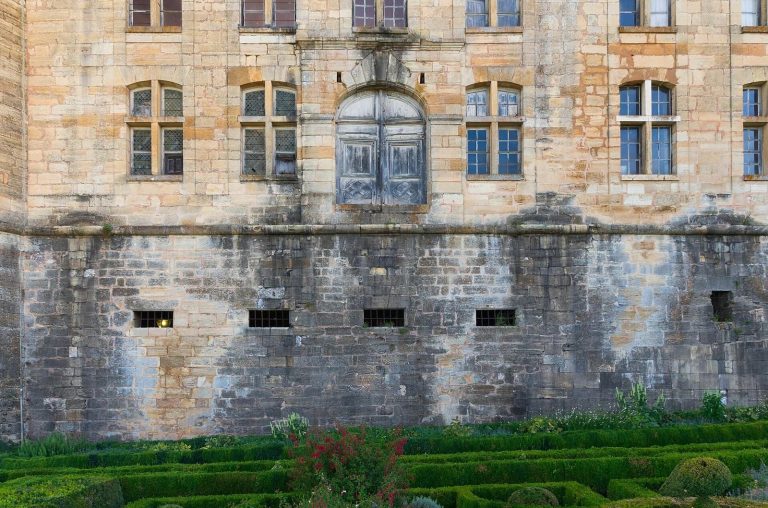
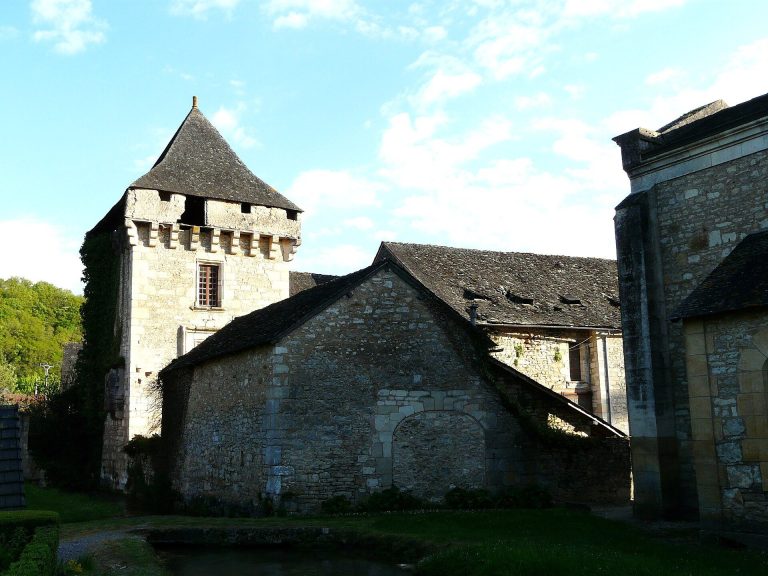
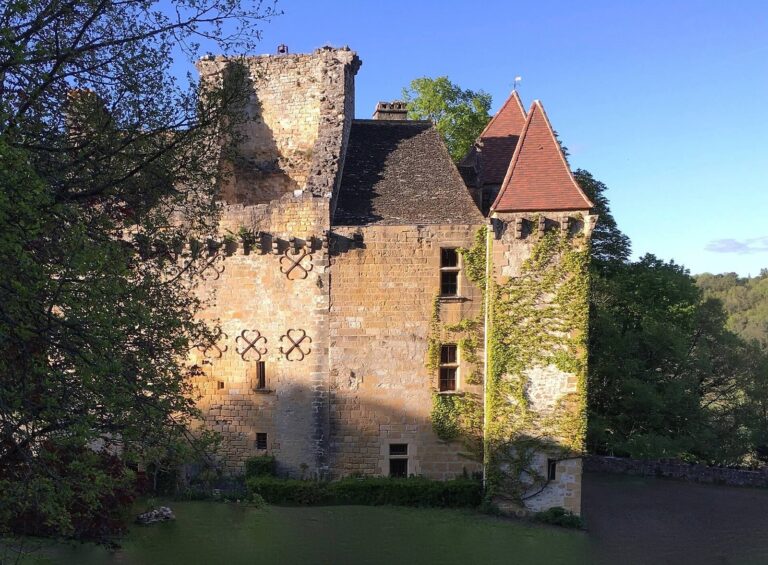
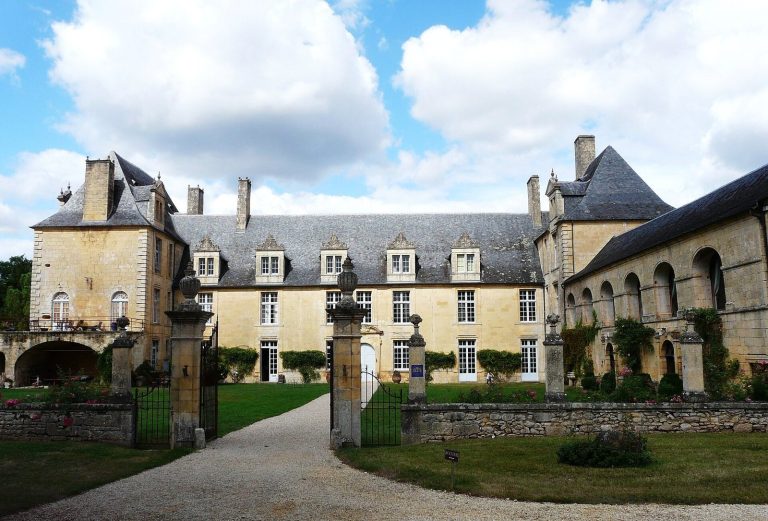
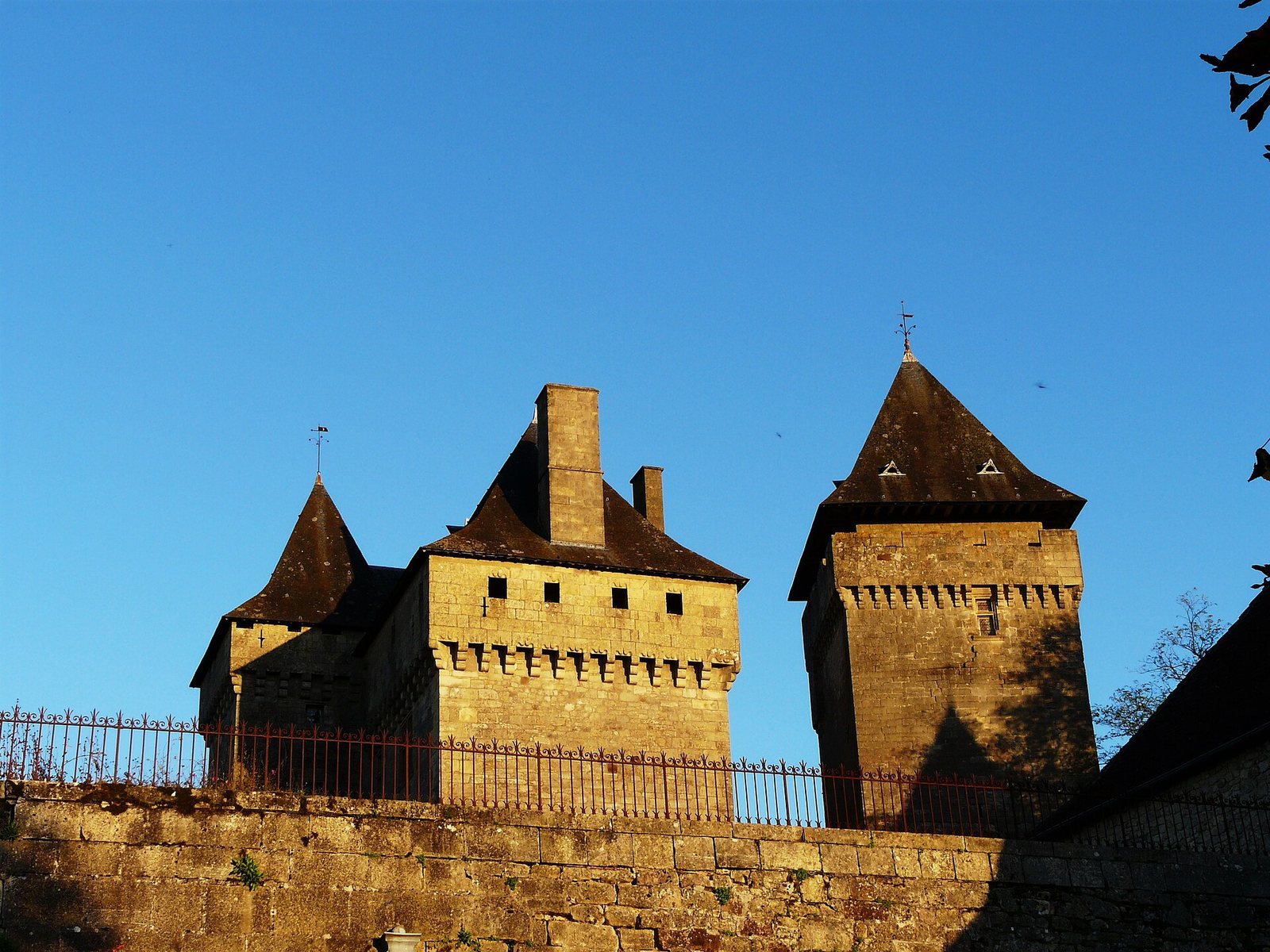
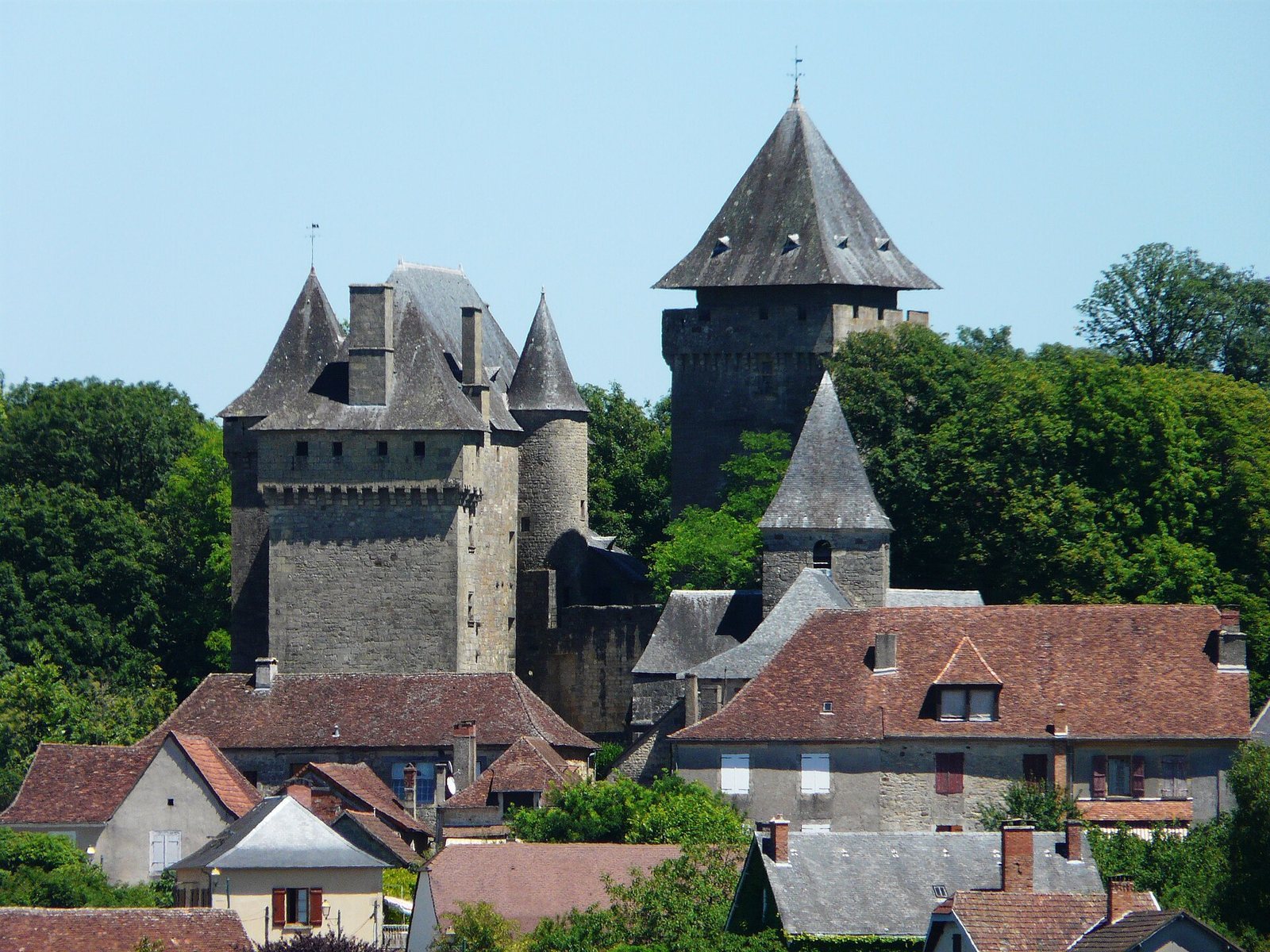
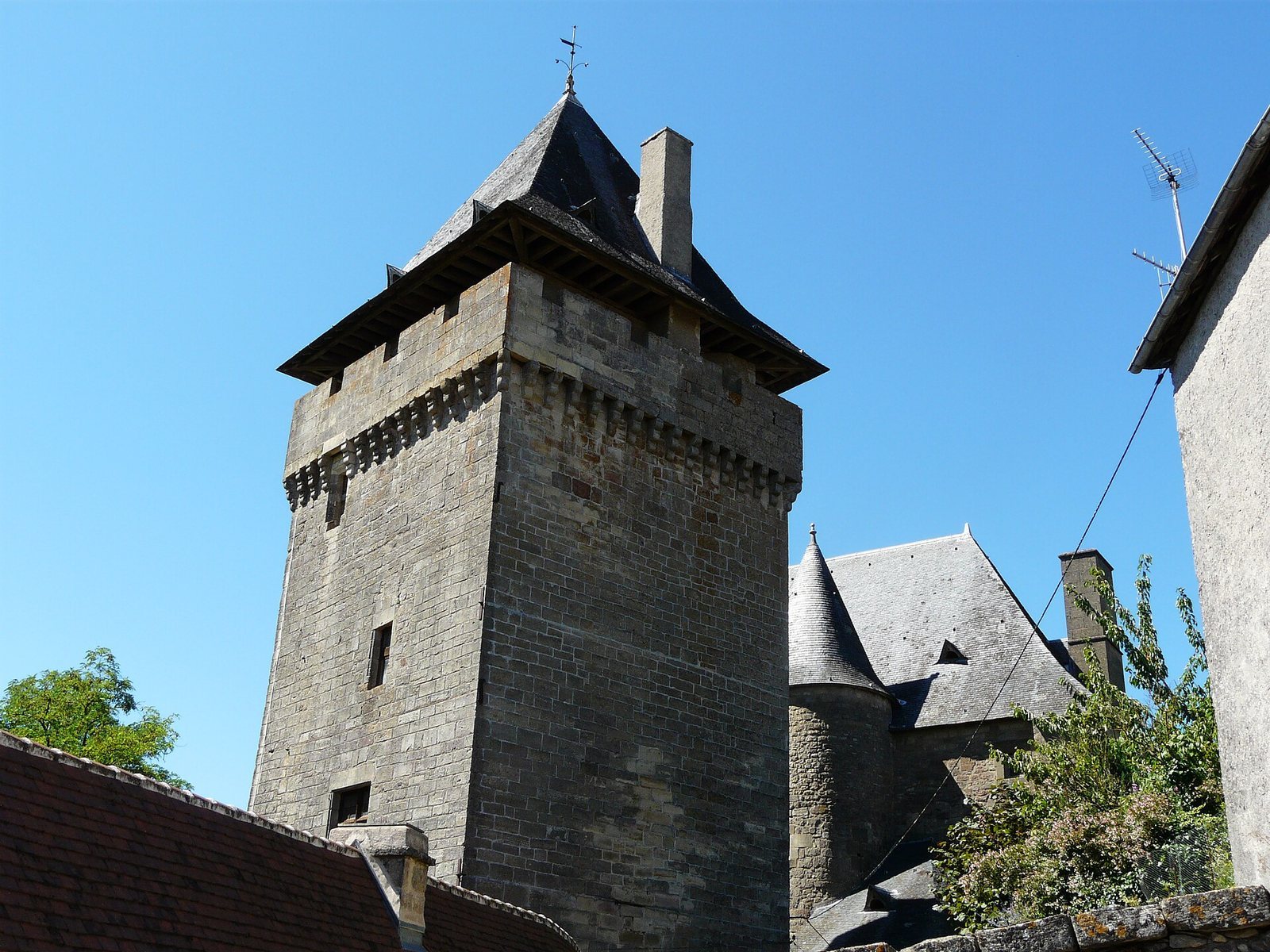
The castle stands above the rooftops of Badefols-d’Ans, in the Périgord Noir of southeastern Dordogne. Its described architectural features reflect alterations made in the 15th century and the addition of a building in the 18th century.
Fifteenth-century alterations
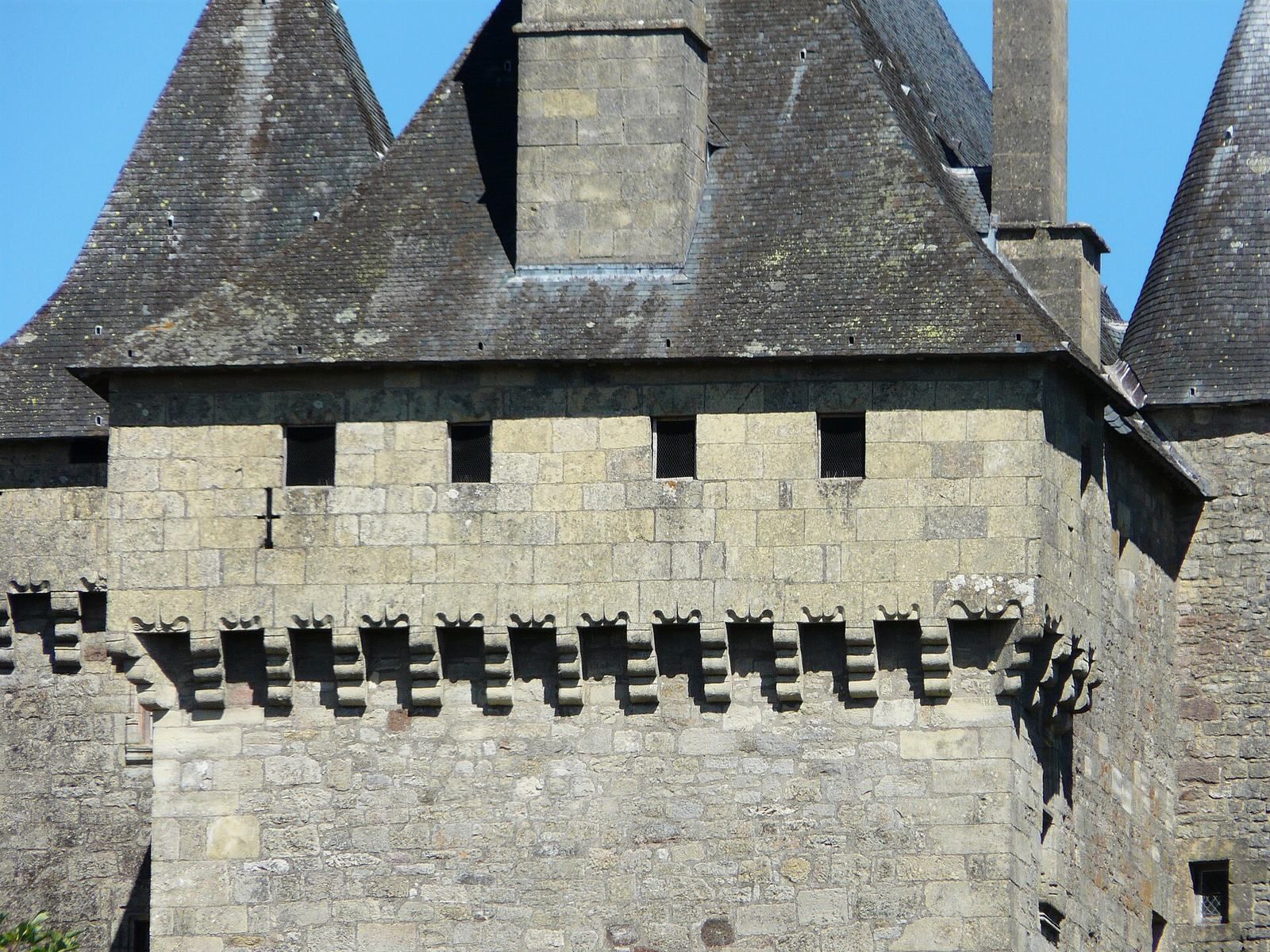
In the 15th century, builders opened mullioned windows, whose frames divide each opening into sections, and constructed a wall-walk, a passage along the top of a defensive wall.
Eighteenth-century building
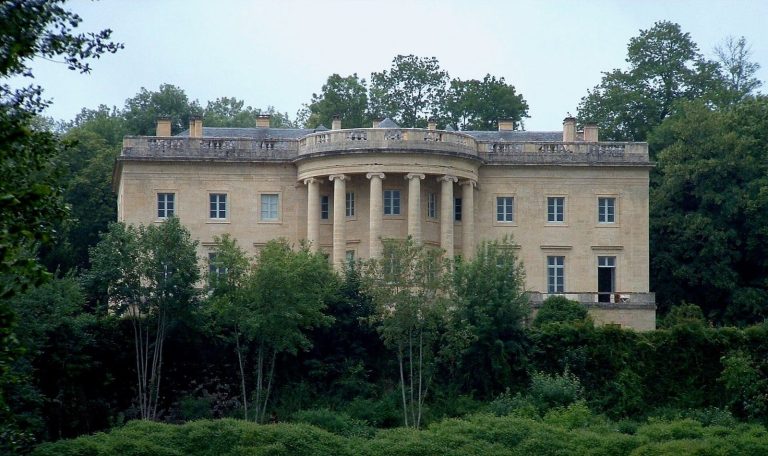
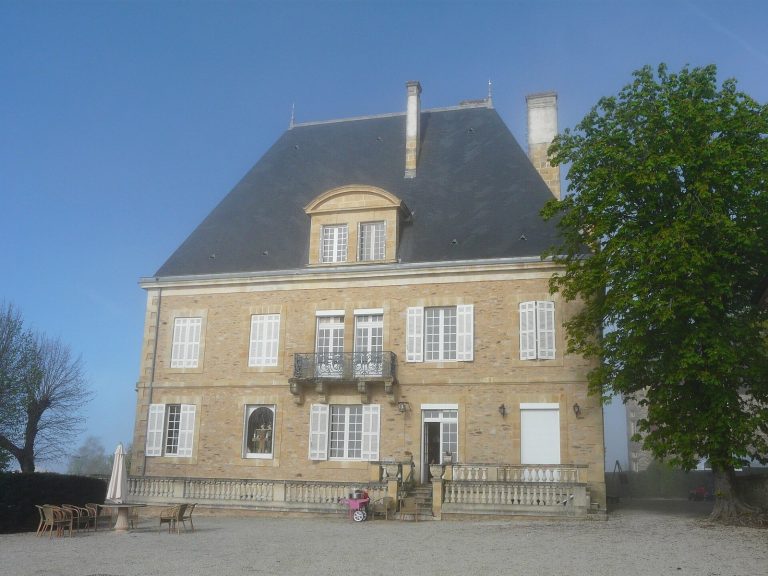
The Royère de Pons family added a building in the 18th century with a Mansard roof, which has a steep lower slope.