Riom Castle: A Medieval Hill Castle and Episcopal Seat
Site at a Glance
- Popularity
- Medium
- Country
- Switzerland
- Primary era
- Medieval
- Eras represented
- Medieval, Modern
- Civilizations
- Holy Roman Empire, Swiss
- Site type
- Military
- Remains
- Castle
On this page10 sections
History
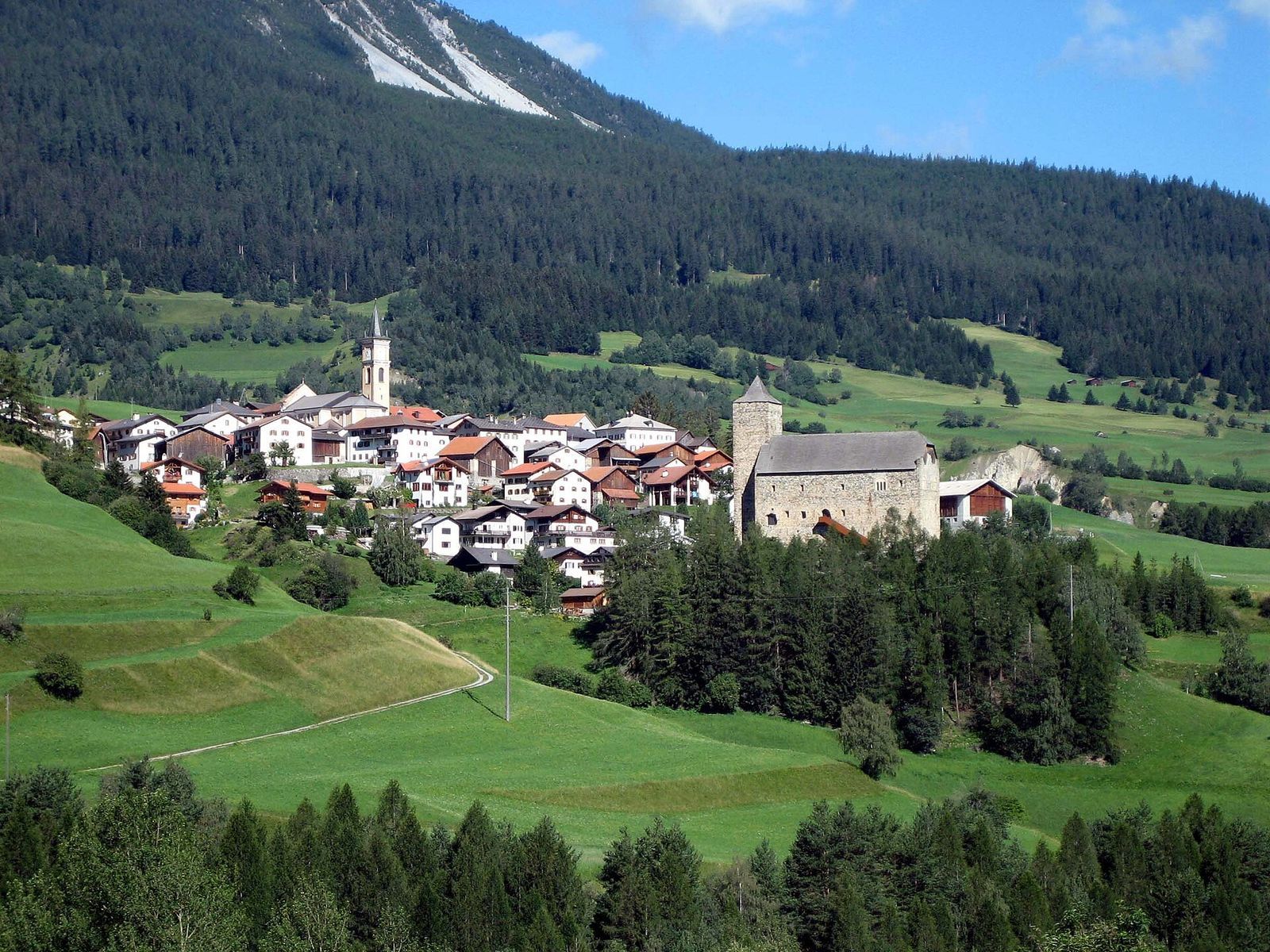
Riom Castle is a medieval hill castle on a spur below and east of Riom village in Switzerland, built by the Wangen-Burgeis family in the early thirteenth century. Its history reflects the importance of the Julier Pass route and the changing balance of power between the Bishop of Chur and local communities.
Roman and early medieval settlement
Riom was inhabited from the first to the fourth centuries CE, when it served as a roadside station for travelers and official traffic crossing the Julier Pass. Farmers and herders continued to live in the area during the Early Middle Ages, the period conventionally dated from the fifth through the tenth centuries.
By the mid-ninth century, Riom had a royal estate, a local administrative role, and a major church. Emperor Arnulf of Carinthia granted property there to his vassal Ruotpert, who exchanged it with Lorsch Abbey in 904.
Castle and episcopal administration
In the early thirteenth century, the Wangen-Burgeis family acquired Riom and surrounding lands, built the castle, and established an independent lordship. The Bishop of Chur opposed this change because it threatened to cut him off from the Julier Pass route and his possessions in the Engadine.
In 1258, Berall von Wangen-Burgeis sold the castle and its estates to his cousin, the Bishop of Chur, for 300 silver marks. The bishop borrowed money from Baron von Vaz using the castle as security, then redeemed the pledge in 1275. Riom became the center of the Oberhalbstein bailiwick, an administrative district where the bishop’s bailiffs exercised high judicial authority. Tolls and taxes from traffic over the Julier and Septimer passes provided income.
From the early fourteenth century, the Marmels family held the bailiwick until 1426, with an obligation to keep the castle available to the bishop. Other noble families from Graubünden held the office during the fifteenth and sixteenth centuries.
Political conflict and the end of episcopal rule
In 1468, Bishop Ortlieb von Brandis angered the League of God’s House, a political association opposed to the bishop’s secular authority. Its forces attacked and occupied several episcopal estates, including Riom and Greifenstein. The bishop appealed to Zürich, a major city in the Old Swiss Confederacy, which negotiated the castles’ return to him.
In 1473, Rigett von Fontana received Riom as a grant from the bishop after paying Hans von Sal, who held the castle as security, the sum required to redeem it. In 1492, Bishop Heinrich granted it to Benedikt Fontana, a commander of Graubünden troops at the Battle of the Calven. The Ilanz Articles of 1526 restricted the bishop’s secular authority, though their effects in the valley unfolded gradually. In 1552, the communities of Surses bought their freedom from episcopal rule, ending the need for a castle bailiff and transferring control to the League of God’s House.
Later use and modern conservation
The castle was uninhabited from the sixteenth century but remained a meeting place for the Landsgemeinde, a local assembly for deliberation and decision-making, into the eighteenth century. The Surses high court also met there. People accused of witchcraft were held and tortured in the castle, which was occasionally used as a prison into the nineteenth century.
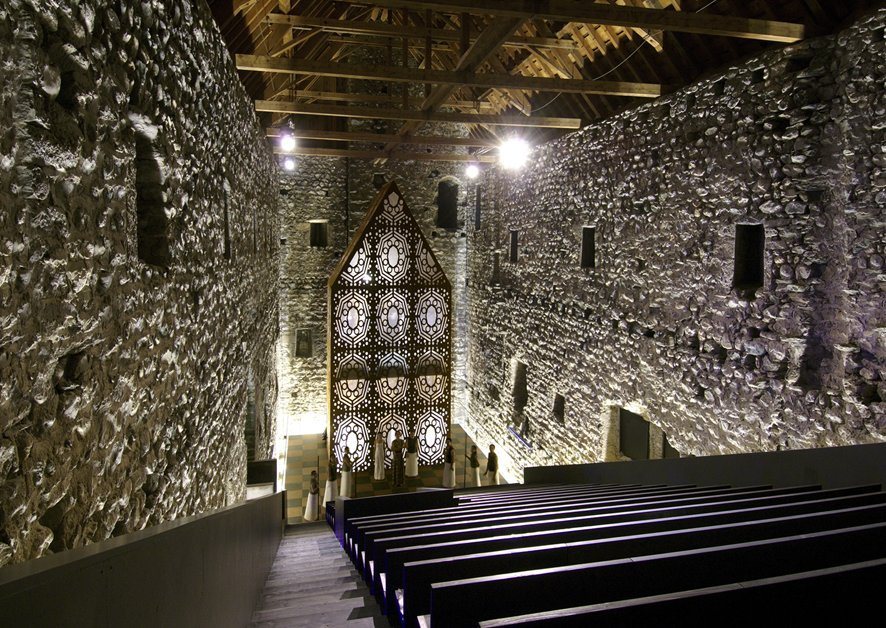
A fire destroyed much of Riom village in 1867, but the castle survived. Its roofs were stripped for timber to rebuild the village, and its floor structures were removed in 1868. Exposed to the weather, the building deteriorated rapidly. The Swiss Castle Association began conservation work in 1936 under Eugen Probst, and the roof was renewed in 1973. In 2006, the castle was adapted as a 220-seat theatre in a project designed to be reversible and to limit changes to the historic fabric, under the supervision of cantonal heritage and archaeological services. It has hosted the Origen Festival Cultural since that year. Riom is protected by the canton and the Swiss Confederation and is recognized as a heritage site of national significance.
Remains
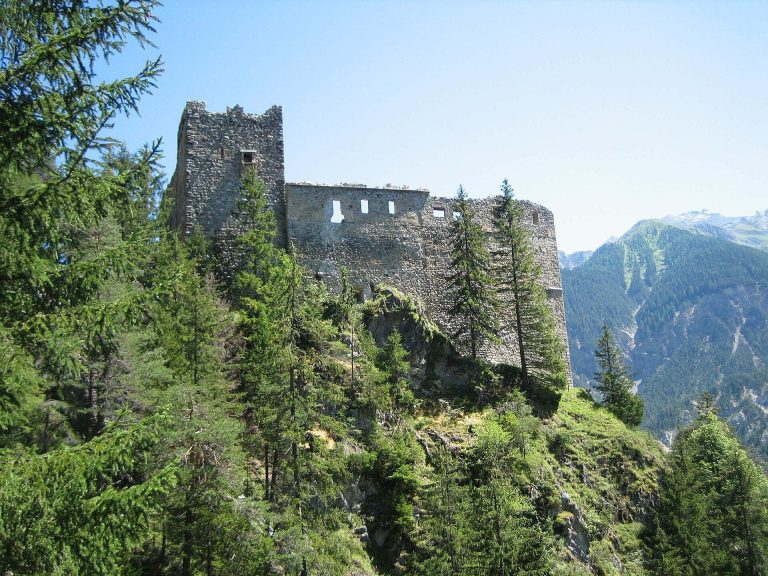
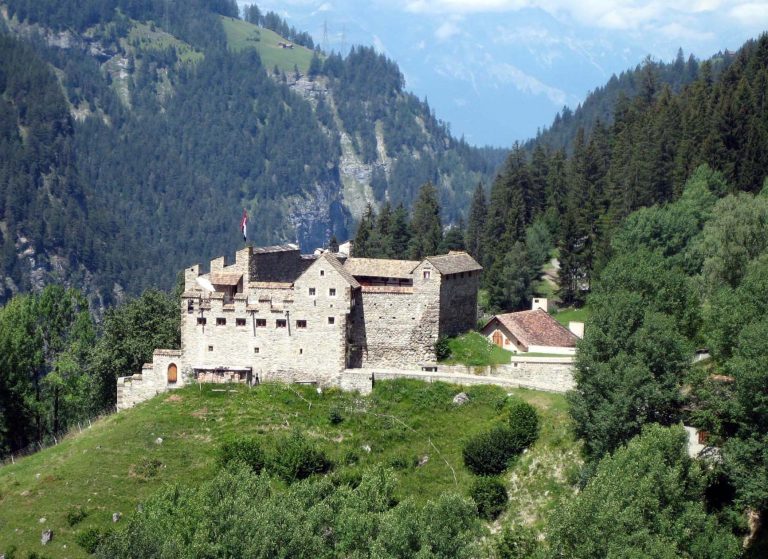
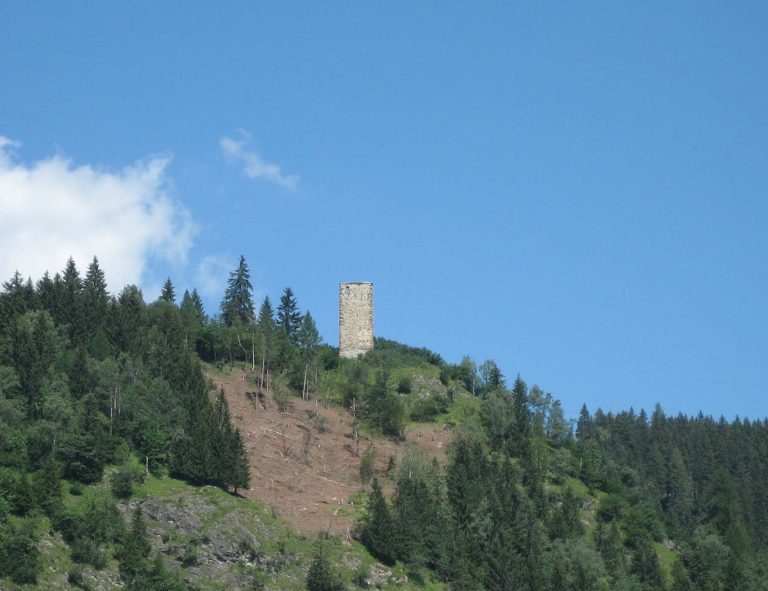
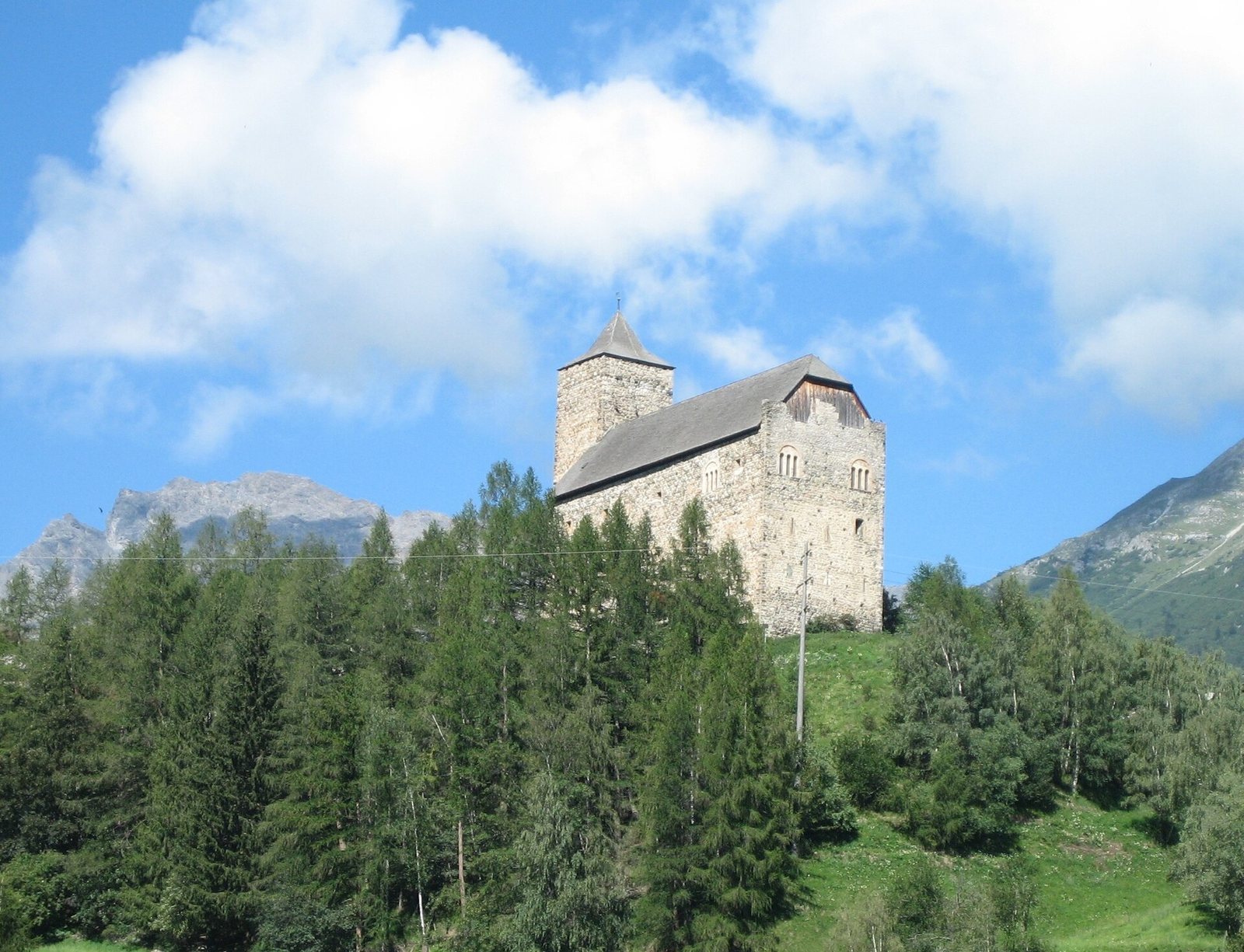
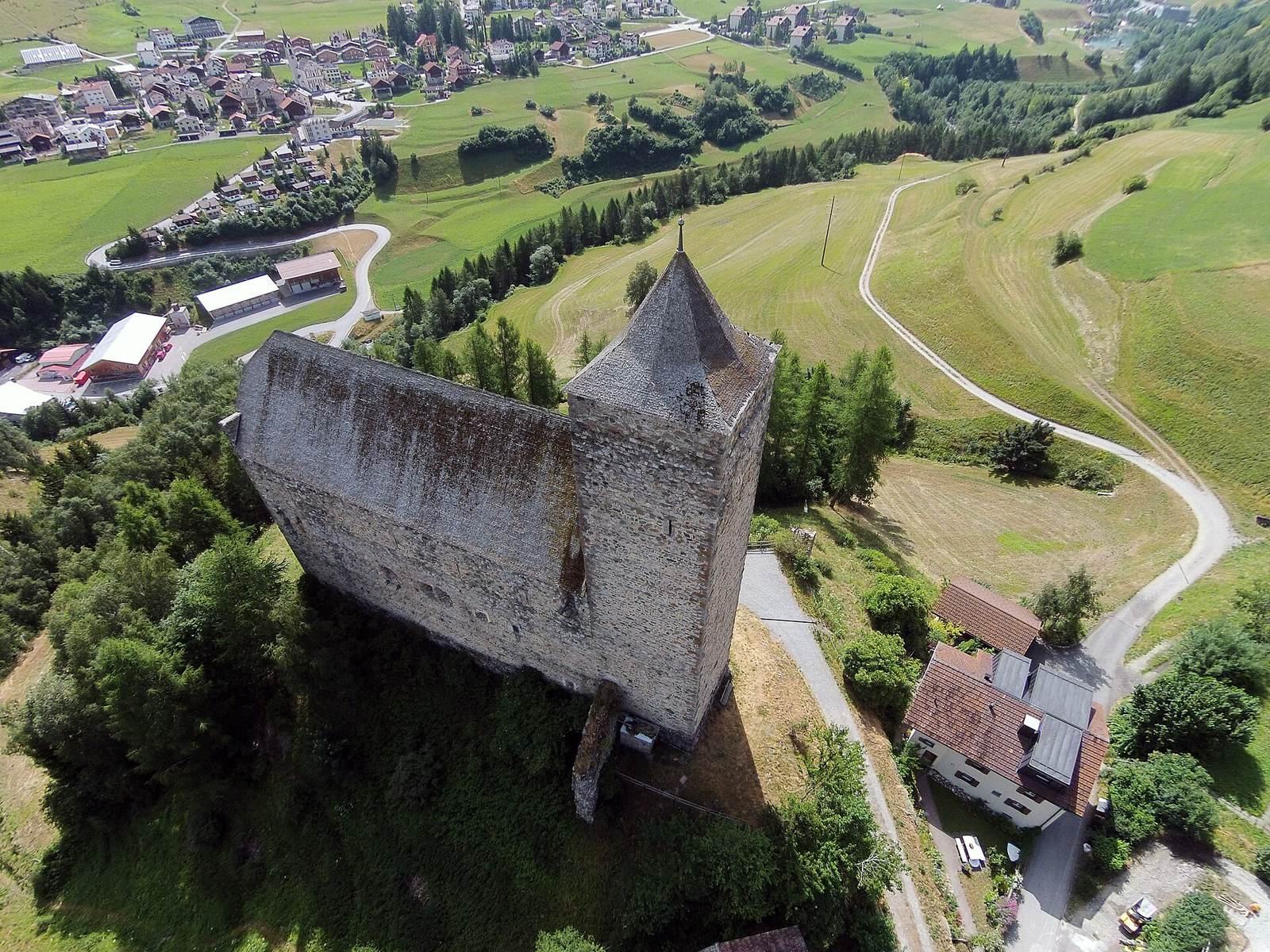
The castle occupies an elongated spur at an elevation of 1,227 metres. Its surviving arrangement includes a tall, slender tower, a long principal castle building, and sections of a surrounding wall. These structures occupy the spur below and east of Riom village.
Enclosure and internal layout
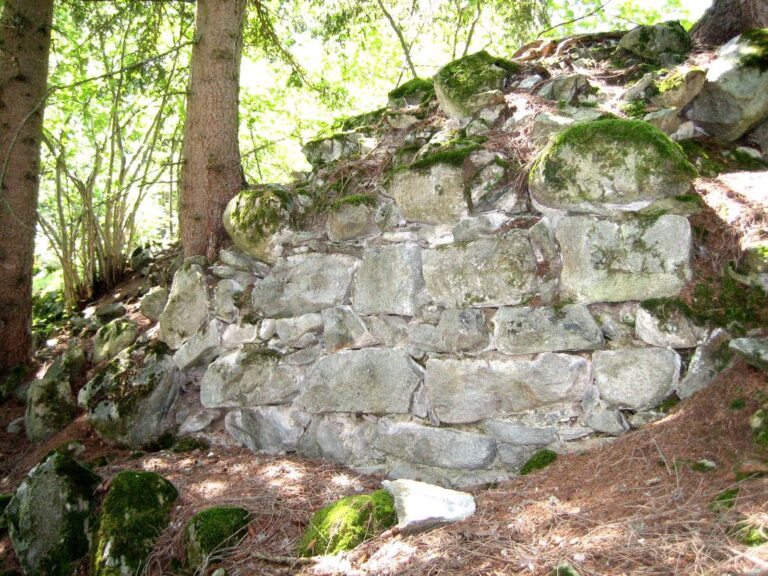
Sections of the surrounding wall remain on the south side, while the wall on the north has slipped away. Buildings, some multi-storeyed, were constructed against the wall’s inner face. Grey jackdaws nest within the castle walls, where their colony is among the largest in Switzerland.
Principal buildings
Principal castle building
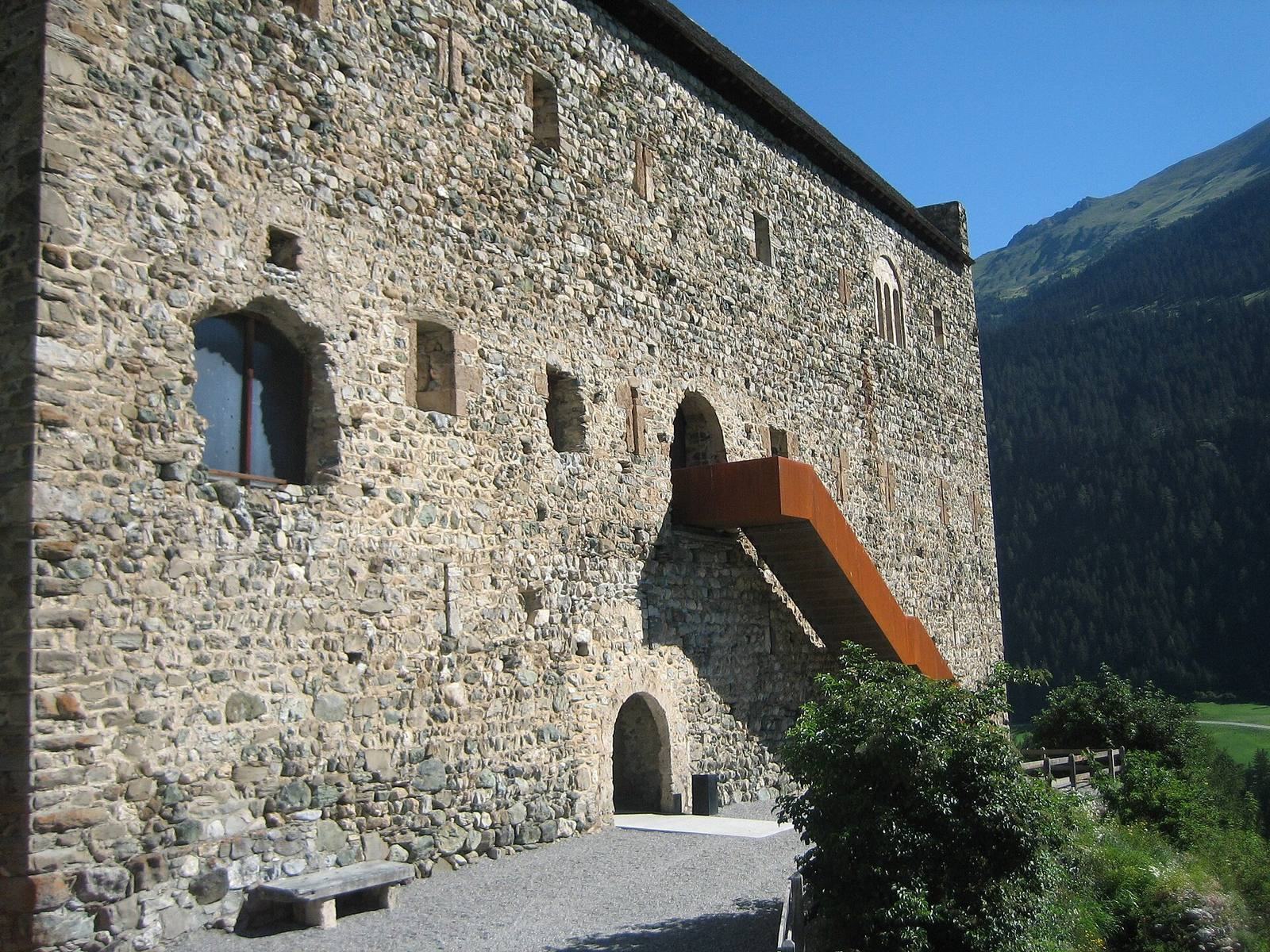
The principal castle building, known as a palas, measures about 12 by 34 metres and is the largest secular building of the late Middle Ages in Graubünden. It began with two storeys and was later raised by another. Battlements with solid raised sections above a low-pitched gabled roof originally crowned the building. Its present gable roof is a later construction modeled on an early modern design; the battlement blocks were removed when a protective roof was added in 1977.
The former entrance to the second storey is on the south side. A four-metre balcony and an outside stairway once led to it; a wooden stairway now provides access. An entrance at ground level was added in the 1930s. Inside are remains of two fireplaces, a bread oven, and two projecting latrine structures. The theatre installation occupies the building.
Tower
The tower is about 28 metres high, with six storeys and a square ground plan measuring seven metres on each side. It joins the principal castle building up to the third storey. Narrow firing slits bring light into its cramped interior, and traces of a stone-slab cornice survive about a metre below the top of the walls. The tower was not designed for permanent occupation; its role may have been defensive or representational. Its roof was replaced in 1936.