Hallburg Castle: A Medieval Hill Castle in Bavaria
Site at a Glance
- Popularity
- Medium
- Country
- Germany
- Primary era
- Medieval
- Eras represented
- Medieval, Early Modern
- Civilizations
- Holy Roman Empire
- Site type
- Military
- Remains
- Castle
On this page13 sections
History
Hallburg Castle is a medieval hill castle on Hallburger Schlossberg, in the Hallburg district of Volkach, Bavaria, Germany. It is thought to have originated in the 11th century and served the Counts of Castell as a toll castle on the Main. The counts held local jurisdiction and protective rights at Volkach and probably received Hallburg from the emperor as a fief, a grant held in return for obligations.
Origins and medieval ownership
Several early references concern Iringo, associated with Hallburg by the late 12th century. In 1177 he was named alongside his father Heinrich, a local administrative and judicial official, and his brother Heinrich I of Rothenburg, who later became an Imperial kitchen master, an official responsible for the emperor’s kitchen. In 1182 Iring was known as Iring of Kürnach and linked to the Püssensheim service nobles, who held positions and land under a ruler or church lord. By 1194 he was identified as Iringo de Heliburch.
On 18 January 1230, Count Rupert of Castell surrendered Hallburg to the Bishopric of Würzburg as compensation, then received it back from the bishopric as a fief. Castell’s service nobles connected with the castle included the brothers Berthold, named in 1241 and 1254, and Friedrich, named in 1244, as well as Albert in 1248.
Hallburg passed to Heinrich of Hohenlohe in 1314, during whose rule a toll was first collected on the Main. The Fuchsen of Schwanberg later acquired portions of the property and sold them in 1334. In 1365 the castle was transferred to Stephan Zollner of Hallburg, whose family retained it until the 17th century.
Zollner rule and conflict
Feuds and storms damaged Hallburg during the 15th century. In 1525, during the German Peasants’ War, a major uprising in Central Europe in 1524–25, farmers from Volkach and Fahr plundered the castle.
Swedish forces occupied Hallburg in 1631 and held Protestant services in its chapel. The Zollners’ poor management also contributed to the estate’s decline. By 1634 its grounds were no longer granted to the family.
Seventeenth-century changes
During the 17th century the estate passed to the Counts of Stadion. Because the counts seldom lived at Hallburg, a bailiff was placed in charge in 1634. In 1639 ownership passed to the Schenken von Stauffenberg, who retained it until the Final Recess of the Imperial Deputation, the 1803 settlement that redistributed territories and secularized many church states within the Holy Roman Empire.
Schönborn ownership and modern changes
After secularization in 1806, Hallburg passed to Franz Erwein von Schönborn. A junior branch of the Counts of Schönborn made the castle its residence in the 1840s, after which the complex was rented out frequently. English military personnel moved in during 1866, followed by the Russian Baron von Grothues in 1869.
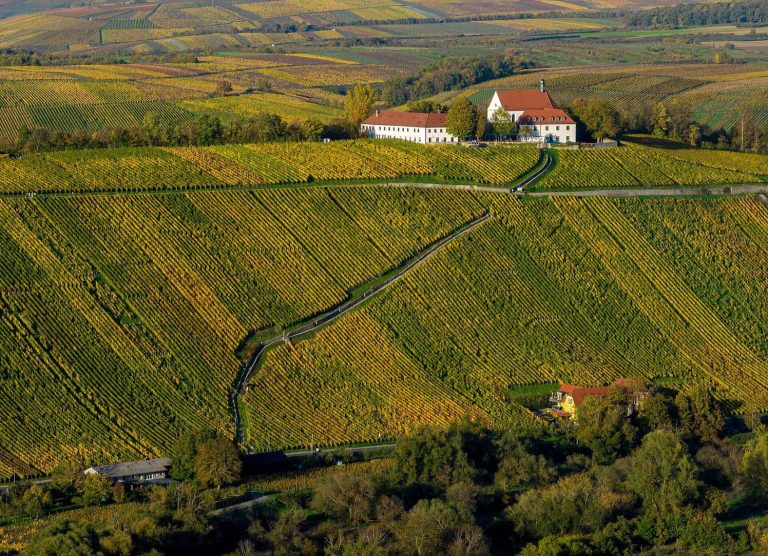
In 1955 the land-registration district containing the castle and estate became part of the city of Volkach. Completion of the Main Canal cut-through between Volkach and Gerlachshausen in 1957 made Hallburger Schlossberg part of a wine island, land enclosed by a river and canal. The grounds now include an agricultural estate and the Graf von Schönborn winery; the Schönborn estate administration in Wiesentheid manages the Schlossberg vineyard. An inn operated in the castle until a fire in its kitchen area on 16 May 2016.
Name and local legends
The name Hallburg is traced to the Old High German word halla, meaning “to hide,” and a word for “mountain.” Together, the elements have been interpreted as “hiding place on the mountain.”
One local tale tells of two Zollner brothers captured after a Christian defeat while on a medieval expedition to the Holy Land. Sentenced to death for refusing to renounce their faith, they received the sympathy of a jailer’s daughter, who asked them to pray for her. The brothers prayed to the Virgin Mary, called in the story Mary in the Vineyard, and they and the wife of one brother reportedly dreamed of Mary of Volkacher Kirchberg. The wife later found the brothers and the jailer’s daughter at the Kirchberg, where the daughter married the younger brother and was baptized.
The Schön-Elslein story concerns a castle warden’s daughter who loved the burgrave’s son. His father had her abducted to prevent the marriage, intending his son to wed a noblewoman. Taken to the Fichtelgebirge in northeastern Bavaria, she escaped years later but drowned in the Main while fleeing her pursuers. Her lover saw her in the river, leapt in, and drowned as well.
Another tale features Knight Harlachan and Roselinde, daughter of Frau Gute. Roselinde loved Bodo, an orphaned young nobleman who had left Hallburg. After years of captivity following an expedition to the Holy Land, Harlachan supposedly won the burgrave’s lands, castle, and daughter in a dice game. He treated Roselinde kindly and delayed taking over the property, but when Bodo returned, Harlachan drove him away. Roselinde tried to escape with Bodo by climbing down the castle wall on knotted bed linens. Harlachan killed the pair and then himself; his ghost is said to haunt Hallburg.
The headless-rider story portrays Stoffel Zollner, described in the tale as one of Hallburg’s last lords, as a gambler and drinker who damaged farmers’ fields through hunting and extorted merchant ships that stopped below the castle. The Prince-Bishop of Würzburg, both a church leader and a territorial ruler, sent horsemen to arrest him. In the story, Stoffel was beheaded in Würzburg for breaking the peace, and his ghost rides at midnight. The tale is thought to echo the 1624 execution in Würzburg of Christoph Zollner for highway robbery.
Remains
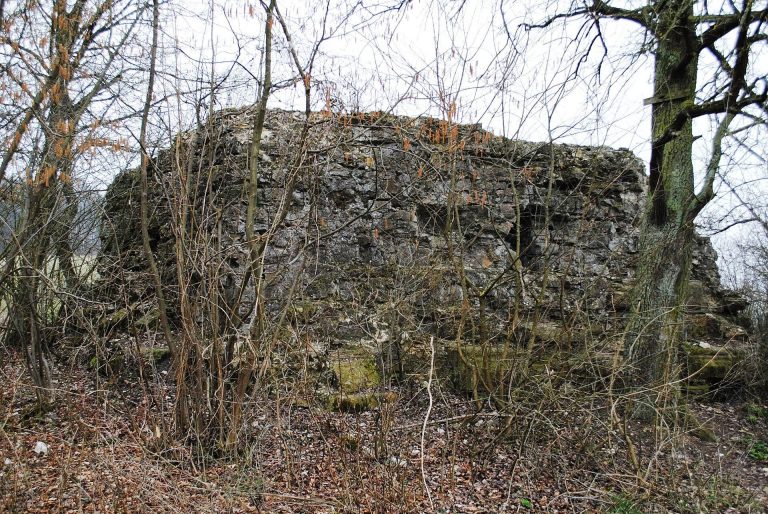
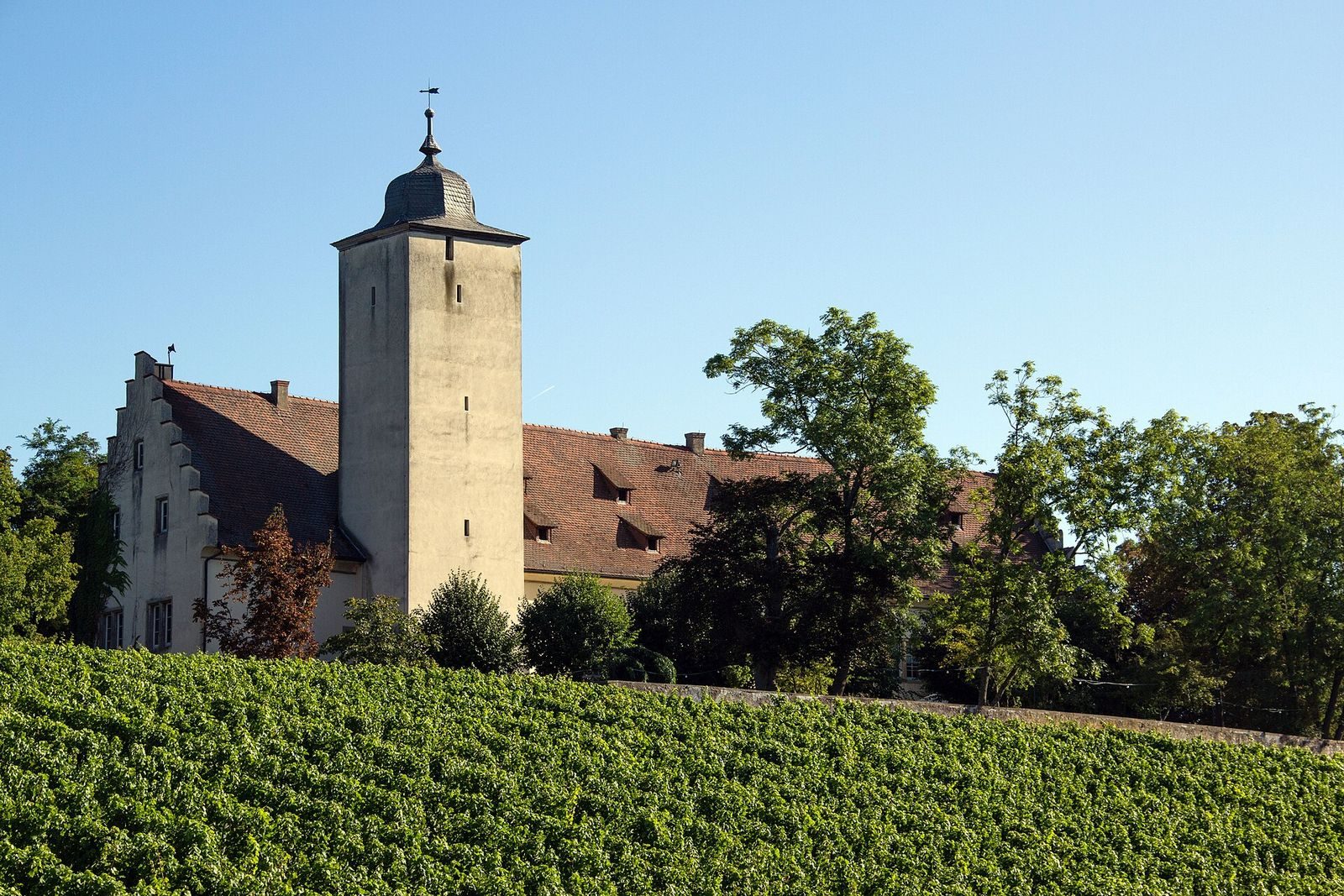
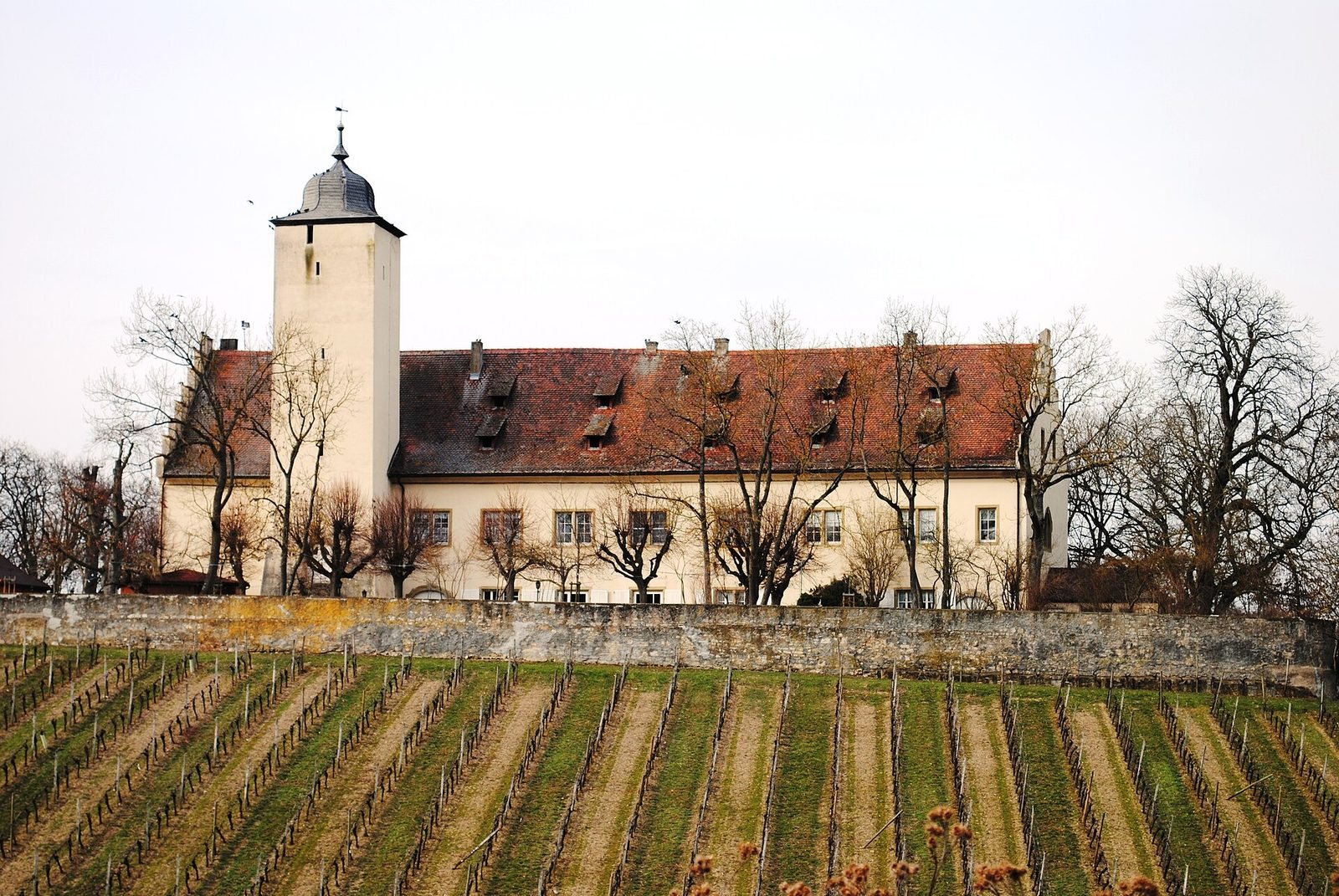
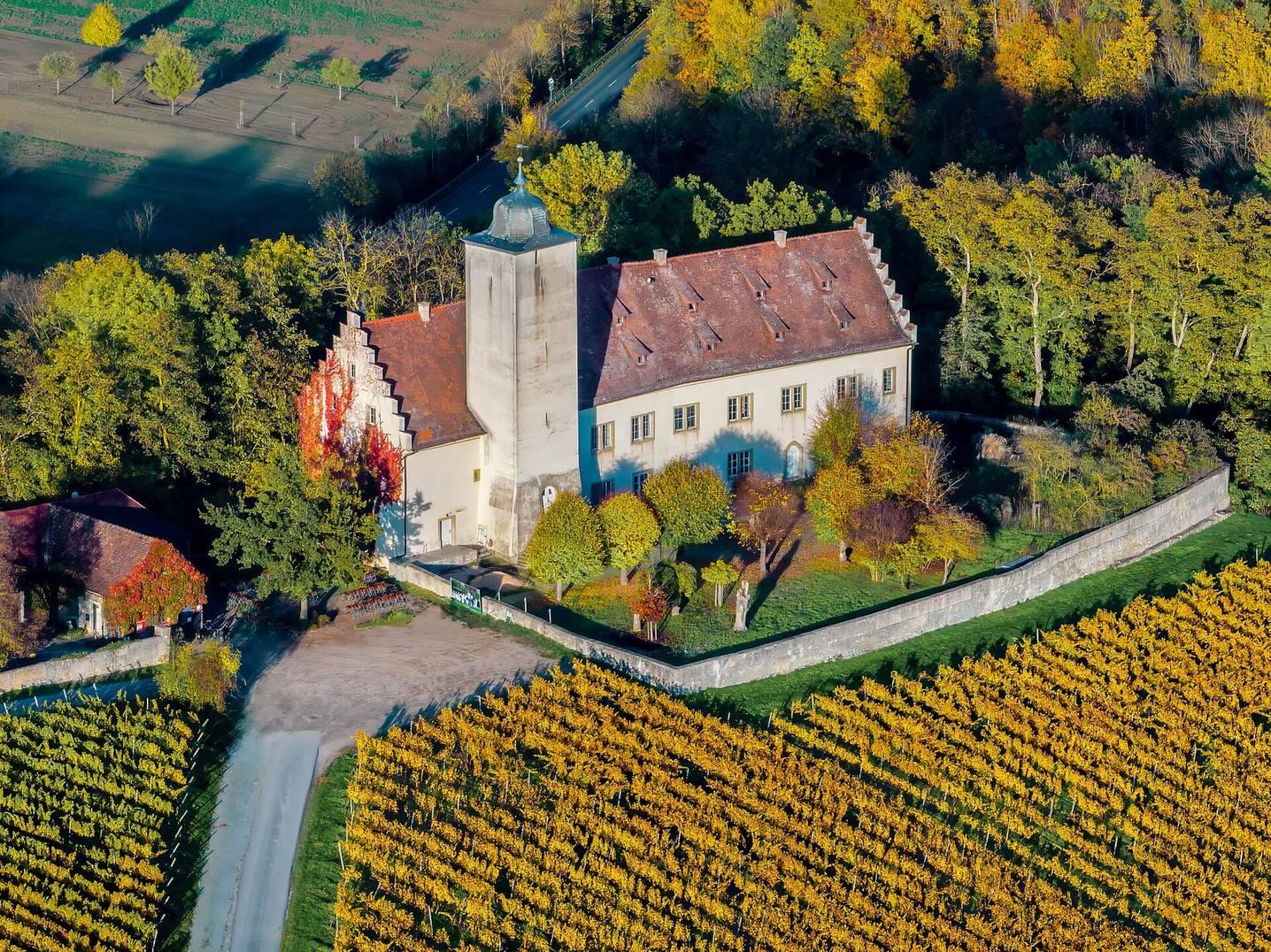
The castle stands at 230 metres above sea level on a projecting ridge of Hallburger Schlossberg, overlooking the Volkacher Main loop. Its surviving footprint lies within an oval perimeter wall, of which sections remain. After repeated destruction and rebuilding, the built-up area contracted and was probably once about twice its present size.
Defensive works and towers
Outer defenses
A bridge within the grounds was present by 1454. An enlargement in 1492 added an initial wall, a moat, and an outer defensive enclosure. Remains of the castle’s original outer court lie on the western side of the complex.
Towers
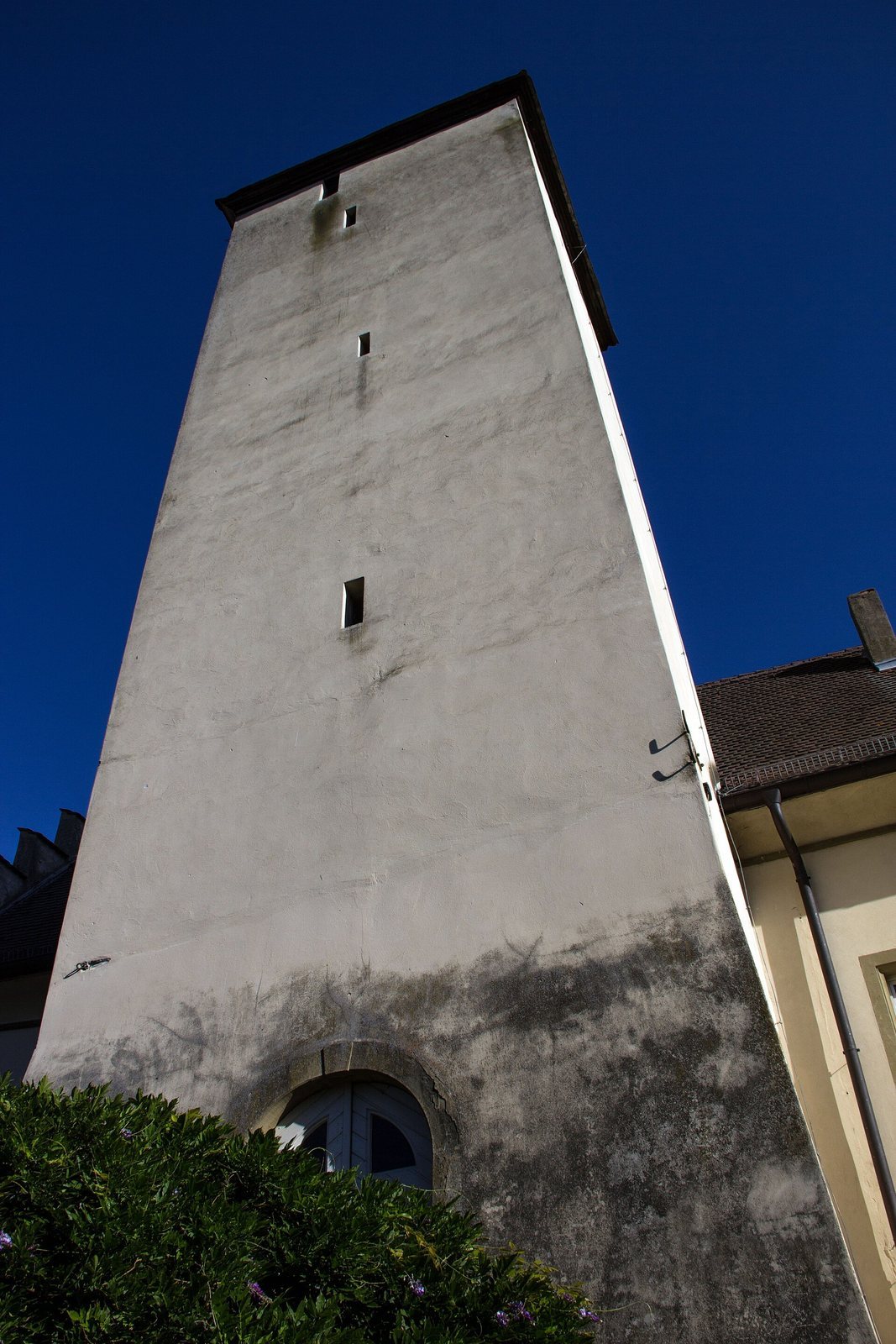
Remains of a round tower dating to the 13th century survive. The four-storey principal defensive tower, also from the 13th century, stands roughly midway along the enclosure’s longer side and has a Renaissance-style roof cap. A later expansion added a spiral-stair turret beside it. The complex was then described as having upper and lower sections, and the principal tower received a roof structure.
Residential and religious buildings
Residential range
The long residential range dates to the 16th century. Its plan is slightly angled, and its walls end in stepped gables. The pitched roof has two rows of shed dormers, roofed window projections set into the slope. Some natural-stone window surrounds have molded grooves, while portals on the south side have canopies with interrupted gable outlines.
Chapel of Saint Pancras
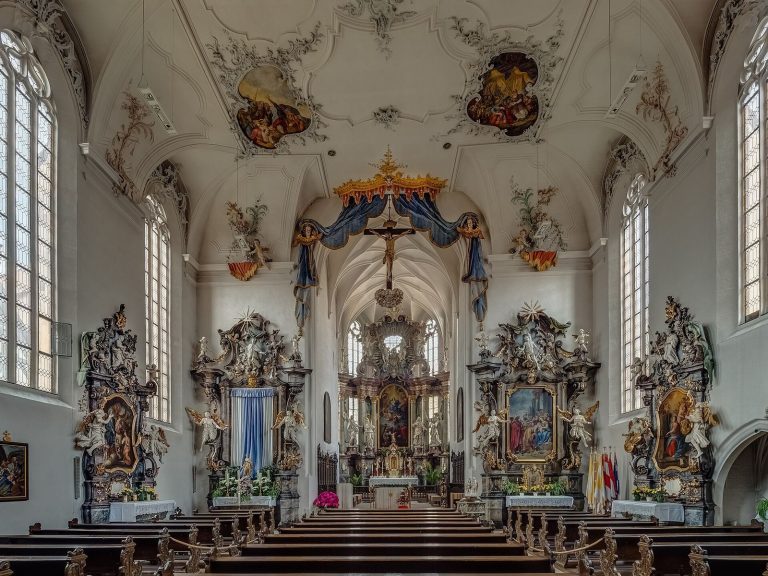
A chapel dedicated to Saint Pancras, revered in Christian tradition as an early martyr, occupies the ground floor of the principal tower and was present by about 1400. Its ceiling has intersecting ribs that support the vaulted surfaces.