Fort Monckton: A Coastal Defence Fort on Stokes Bay
Site at a Glance
- Popularity
- Very High
- Country
- United Kingdom
- Primary era
- Modern
- Eras represented
- Early Modern, Modern
- Civilizations
- British
- Site type
- Military
- Remains
- Fort
On this page11 sections
History
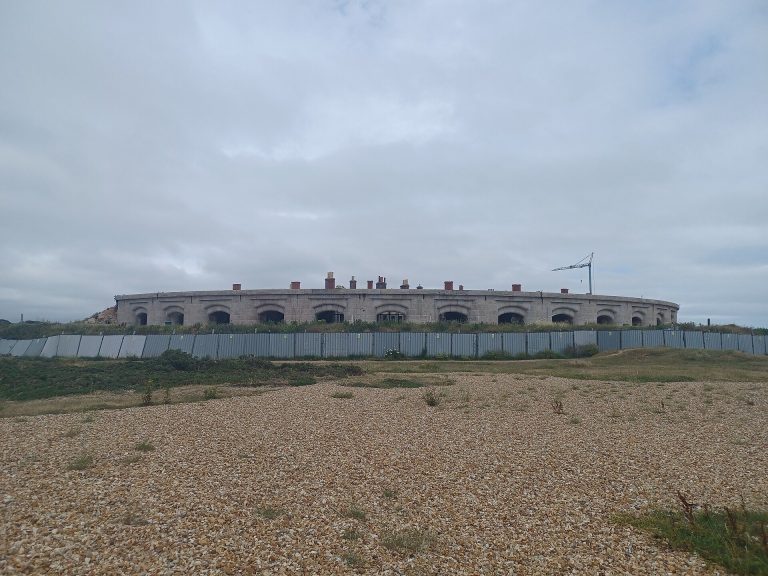
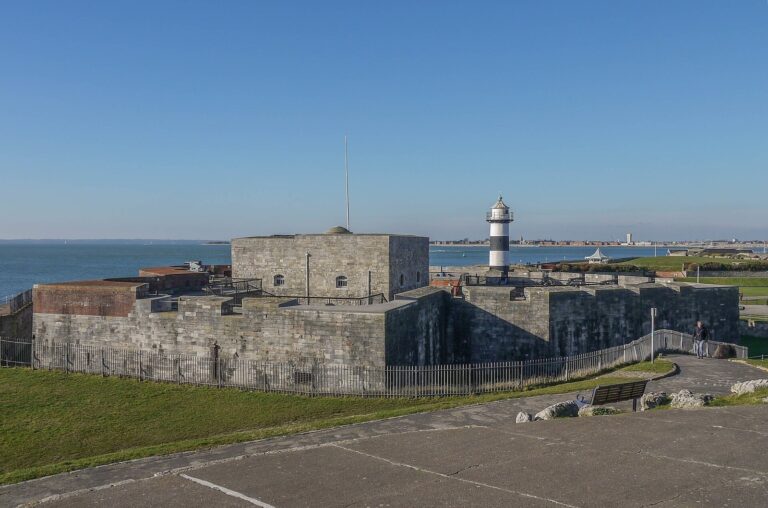
Fort Monckton is a coastal fortification on the eastern shore of Stokes Bay, on the Gosport peninsula in the United Kingdom. Permanent construction began in 1780, during the American War of Independence, the conflict in which Britain’s thirteen American colonies won independence. Work was completed in 1789 or 1790, and the fort was rebuilt in the 1880s as a Palmerston fort, a coastal fortification associated with Lord Palmerston’s mid-nineteenth-century defence programme. Its roles later included coastal defense, military training, and intelligence training.
Haselworth Castle
A lightly armed fortification called Haselworth Castle stood on the site by 1545, during the reign of Henry VIII. It was also known as Hasleworth or Haselford. The castle was abandoned in 1556 after a review by the Marquis of Winchester.
A map from 1587 described the castle as having been destroyed by King Philip. This may reflect a tradition that it was demolished in 1554 after failing to salute him. The location of Haselworth Castle is disputed, although the site of Fort Monckton is considered the most likely. The ruins continued to appear on maps until 1788.
Construction of Fort Monckton
During the American War of Independence, Portsmouth’s governor, Lieutenant General Sir Robert Monckton, asked his commanding engineer, Lieutenant Colonel John Archer, to plan defenses for Stokes Bay. The Gilkicker Sea Mark, a coastal navigational marker, was demolished in 1779 to make room for a temporary fort. Archer then proposed a permanent fort, approved in July 1780, and construction began that September.
Initially called the Fort at Gilkicker, the work was later named Fort Monckton after Robert Monckton’s death. The design and the choice of name prompted controversy. Construction moved slowly, using civilian workers and, at times, conscripted labour. After Charles Lennox, 3rd Duke of Richmond, became Master-General of the Ordnance in 1782, the senior official responsible for the Ordnance establishment, he criticized the design. Archer was removed in 1783, and engineer James Glenie took charge before being removed in 1784. The permanent fort was completed in 1789 or 1790.
Changing defenses and military use
The fort’s role changed as coastal defenses around Portsmouth were reconsidered. It served as a viewing point for fleet reviews in 1856 and 1858. In 1860, the Royal Commission on the Defence of the United Kingdom judged it too small and old to dominate the Spithead anchorage. The commission recommended that it take a minor defensive role and that a new Fort Gilkicker be built; Fort Monckton’s gun positions were subsequently altered for newer weapons.
Experiments at Stokes Bay in 1875 tested Wilde’s Electric Light on the fort’s southwest bastion, followed by trials of limelight and signalling lamps for communication between shore and ships. The fort became a supporting part of the Stokes Bay Lines, coastal defensive works around the bay. The Royal Engineers, the British Army’s military-engineering corps, arrived in 1878 to train with naval mines and later searchlights. A mock attack took place in 1879, followed by a naval-warfare demonstration nearby in 1880.
The 4th Company of Submarine Miners, specialists in underwater mine defenses, occupied the fort from 1880 until moving to Fort Blockhouse in 1884. The fort then accommodated Royal Engineers Militia during annual training. It was rebuilt in the 1880s as a Palmerston fort.
Twentieth century and intelligence training
Anti-aircraft searchlights were installed during the First World War. In the Second World War, an anti-aircraft artillery unit was quartered at the fort. After the war it was virtually abandoned, but the Ministry of Defence retained it. It remained armed until coastal artillery was abolished in 1956.
Since 1956, Fort Monckton has served as a British Army training establishment and has been occupied by the Ministry of Defence. It houses the Secret Intelligence Service (SIS) training section, where SIS officers, allied-service officers, and agents receive training. During the Cold War, some trainees were stay-behind agents, intended to remain in place and operate if an area came under enemy occupation. A former MI6 officer described the fort as a field-operations training centre, with basic and advanced training and liaison instruction involving the Special Air Service and Special Boat Service. Fort Monckton is the only fort in the Portsmouth area owned by the Army rather than the Royal Navy.
Remains
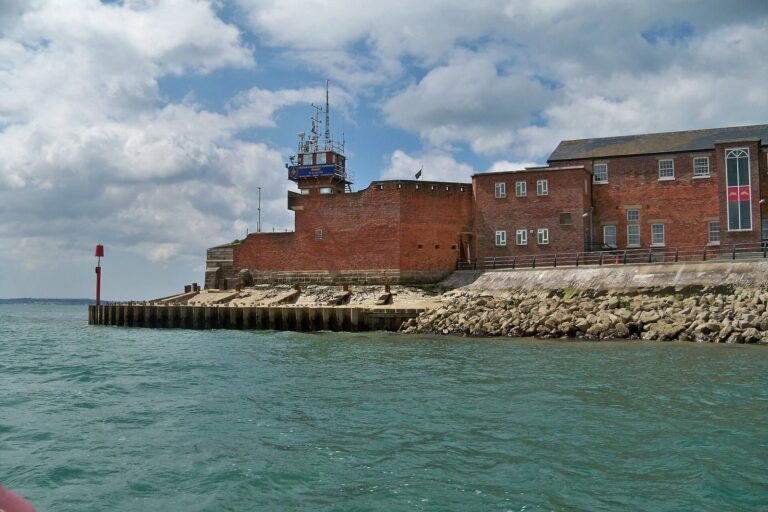
The fort stands on the southeast shore of the Gosport peninsula and survives as a substantially modified but complete complex. Its remains include defensive works, accommodation, and later additions. An artificial lake forms part of the site, although part of it was filled in during the 1970s.
Fort fabric and artillery
Early works and outer defenses
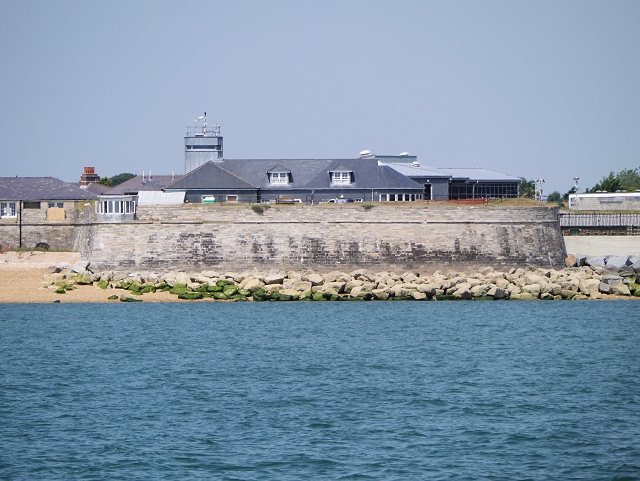
A depiction of Haselworth Castle on the Cowdray Print shows a circular keep surrounded by an outer wall. The temporary fort built in 1779 had an earth bank 6 feet (1.8 metres) thick, supported by fascines, bundles of brushwood used in fortification. The exposed position served as a sighting point for ships entering Portsmouth Harbour. Early nineteenth-century additions included a sea wall along the beach and a separate redoubt to the northeast.
Surviving fortifications
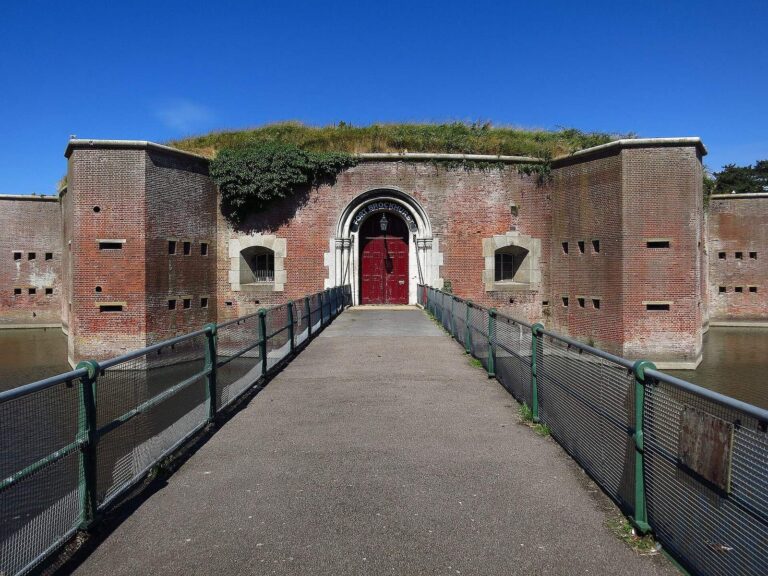
Original features that survive include bastions, projecting sections of a fort used for defensive fire, and sea-facing casemates, fortified chambers often used for guns. The complex also retains a guard room, one caponier, a defensive structure designed to fire along the fort’s ditch, as well as the ditch itself and a drawbridge.
Gun positions and accommodation
The 1872 armament comprised two 8-inch smoothbore guns, whose barrels lacked rifling; nine 32-pounders; two 24-pounders; six 18-pounders; two 12-pounders; and two 7-inch rifled breech-loaders, guns with grooved barrels loaded from the rear. A proposed replacement included five 7-inch and six 64-pounder rifled muzzle-loaders, which were loaded through the barrel’s front. The armament mounted in 1886 consisted of eleven 8-inch smoothbore guns, five 7-inch rifled breech-loaders, and six 64-pounder rifled muzzle-loaders. By 1891, the fort had six 64-pounder muzzle-loaders: two on ordinary sliding carriages and four on standing carriages, with two guns in each of Bastions 1, 2, and 5. Accommodation then provided for eight officers, 70 non-commissioned officers and men, and 15 married soldiers.
Later buildings and preserved quarters
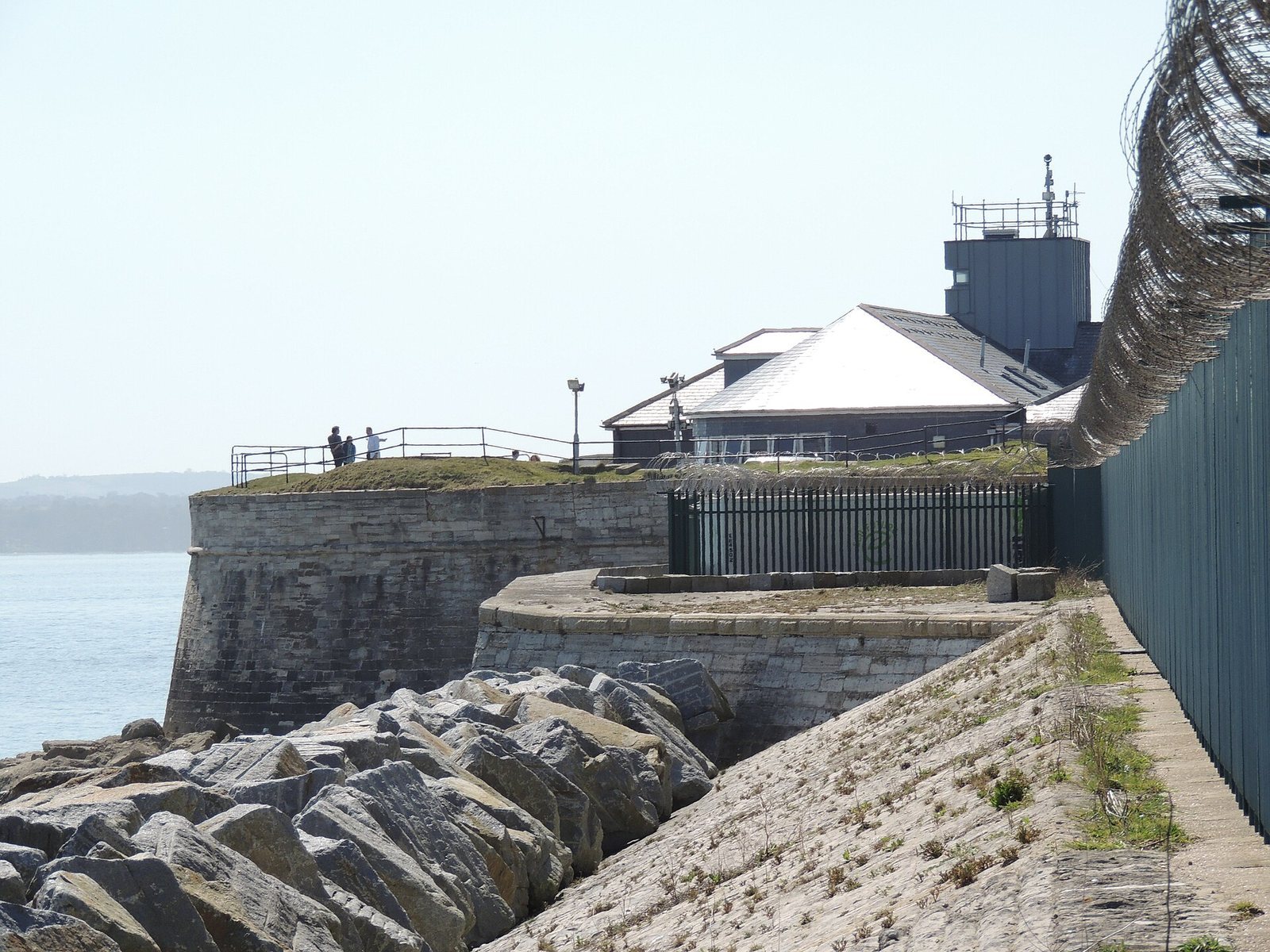
Modern offices and accommodation have been added on and around the fort. Its security measures include razor-wire fencing, CCTV cameras, and high-intensity lighting. Private quarters used by Sir Mansfield Smith-Cumming, an early head of the Secret Intelligence Service, have been preserved.