Siorac Castle: An Eighteenth-Century Noble Residence
Site at a Glance
- Popularity
- Medium
- Country
- France
- Primary era
- Early Modern
- Eras represented
- Medieval, Early Modern
- Civilizations
- French
- Site type
- Domestic
- Remains
- Elite Residence
On this page6 sections
History
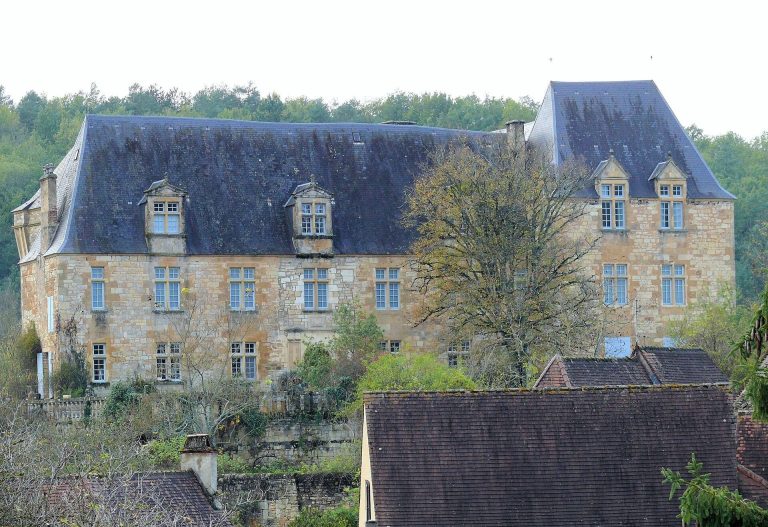
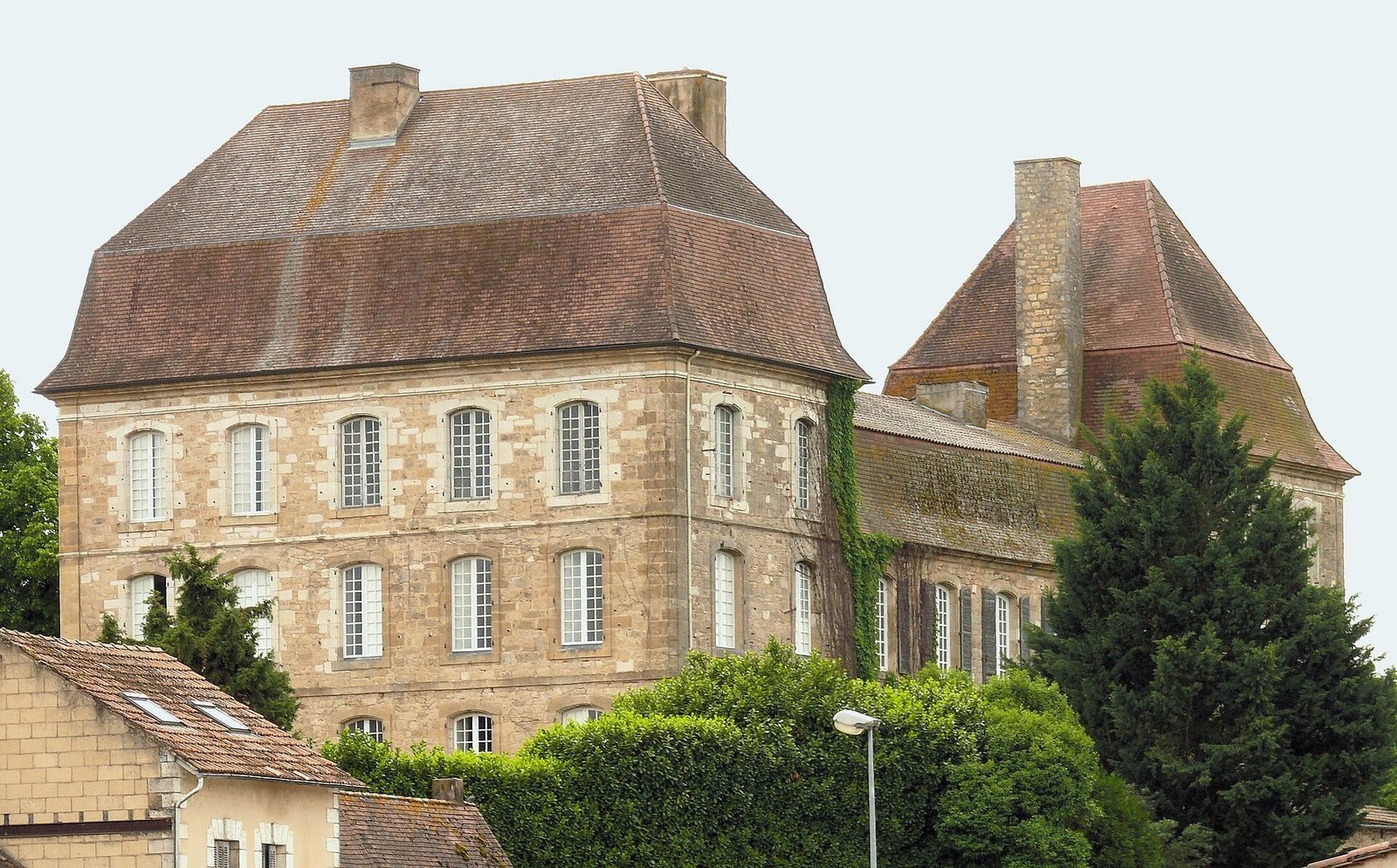
Siorac Castle is an eighteenth-century noble residence in the northern part of Siorac-en-Périgord, France. François-Antoine de Laverrie de Vivans had it built from about 1760, and construction was completed in 1777. It stands within a lordship whose ownership was divided among several families and whose medieval fortress changed hands during conflicts between England and France.
Medieval lordship and conflict
In the Middle Ages, several co-lords, each holding a share of the lordship, ruled Siorac. A papal bull, a formal document issued by a pope, from Eugene III in 1153 listed Ciourac among the parishes dependent on Sarlat Abbey. Before May 1288, the English founded a planned settlement called Castel-Réal, or a bastide. A dispute over its foundation was heard by the Parliament of Paris, a high court, with related procedural records dated 1268 and 1291.
During the Hundred Years’ War, the prolonged conflict between England and France in the fourteenth and fifteenth centuries, an English-held fortress stood at Siorac. In May 1373, Gilbert de Domme, Pons de Beynac, lord of Commarque, and forces from Sarlat attacked it. The English withdrew, but troops serving them later occupied Siorac again. During a plague in 1440, Sarlat’s consuls, its municipal officials, paid for peace with English garrisons at several locations, including Siorac. A later noble stronghold was built over the medieval fortress and burned during the Wars of Religion, the sixteenth-century conflicts between Catholics and Protestants in France.
The d’Abzac and Sireuil families
Jean d’Abzac, known as Pochi, was a co-lord of Siorac and the son of Bertrand d’Abzac. He married Hélène de Montferrand in 1460. Their son Jean II d’Abzac (1474–1546), also a co-lord, married Gabrielle Cothet in 1516. Their sons François held a share of Siorac, while Gaston founded the La Serre branch of the family.
François d’Abzac married Marie de Laurière de Lanmary in 1546. She died in late 1552 without children, and he married Marquèze d’Abzac de Bellegarde in 1554. As his widow and without male heirs, Marquèze sold the Montastruc family estate, including its Siorac holdings, to Jean de Sireuil in 1585 for 40,000 livres. Jean de Sireuil (1535–1608), a captain, was the son of François de Sireuil and Béatrix du Pech, who were not married. Royal letters of legitimization, formally recognizing his legal status, were issued in December 1583. He married Françoise d’Abzac de La Douze. Marie de Sireuil gave her cousin, Captain Jean, a quarter of the Siorac lordship.
Jean de Sireuil took part in the 1597 conspiracy to retake Amiens. Captured and exchanged for Spanish prisoners, he returned to Siorac after the Peace of Vervins, the 1598 treaty that ended the war between France and Spain. The king retained him as a paid captain in the Picardy Regiment, a royal infantry unit. In 1612, Louis XIII issued letters patent, formal royal documents, authorizing two annual fairs and a weekly Wednesday market at Siorac.
The du Lion and Laverrie succession
Marie de Sireuil married Pons du Lion in 1598. Their son Jean du Lion, baron of Belcastel, married Damaris de Vivans in 1657. Damaris was descended from Geoffroy de Vivans, a sixteenth-century French nobleman and military leader. Their daughter Judith-Louise du Lion married Barthélemy de Laverrie on 9 June 1697. In 1705, the Parliament of Bordeaux, a high court, awarded Jean du Lion’s properties to Barthélemy. He took possession on 17–18 May 1706 and became a co-lord of three portions of Siorac.
In 1720, Judith-Louise transferred to their son Paul de Laverrie (1700–1754) her rights to the properties and to the name and arms attached to the prescribed inheritance of the house of Vivans. Paul married Jeanne de Vincens in 1732. After a lengthy legal case, the Laverrie family received permission in 1745 to add Vivans to its name and adopted the title of count of Vivans. Paul’s son François-Antoine de Laverrie de Vivans (1742–1798), who married Jeanne de Bouilhac de Bourzac, commissioned the present castle.
The eighteenth-century residence and later history
A local account written in 1838 by parish priest Robert Laguionie described two castles at Siorac, one of them modern and 61 years old. He also related a tradition that the older castle had belonged to the family of Henri IV and had been granted to the Vivans for services rendered. The tradition was presented as a local claim, not as a confirmed account of the castle’s ownership.
After François-Antoine’s eldest son, Joseph de Laverrie de Vivans, emigrated in 1793, François-Antoine and two daughters were arrested and imprisoned at Belvès. They were released in 1794. The castle’s contents were inventoried in February and March that year; on 16 March, the Belvès district requisitioned its furniture.
Joseph returned to France in 1803 and received amnesty in 1804. He settled at the castle and married Marie-Émilie de Franihac in 1815. He and his siblings provisionally divided their property, completing the division in 1817. Joseph sold the western wing to Damaris de Constantin in 1818. In 1820, Barthélemy de Laverrie and Damaris de Constantin sold another portion to Marie-Madeleine and Marguerite-Joséphine de Vielcastel. The commune of Siorac requisitioned the western wing in 1825 for use as a presbytery, or parish priest’s residence. The Laverrie de Vivans family sold the whole castle during the nineteenth century.
Listed as a French historic monument on 23 May 2013, the castle has housed a museum of culinary arts and table culture. Siorac’s town hall occupies its western part.
Remains
The castle lies in northern Siorac-en-Périgord, within the Périgord Noir, a historic region in southeastern Dordogne. Its central residence has two storeys and is flanked by two asymmetrical pavilions, each three storeys high. The western pavilion is shorter than the eastern one, giving the ensemble an uneven outline.