Darnaway Castle: Seat of the Earls of Moray
Site at a Glance
- Popularity
- High
- Country
- United Kingdom
- Primary era
- Modern
- Eras represented
- Medieval, Modern
- Civilizations
- British, Kingdom of Scotland
- Site type
- Domestic
- Remains
- Elite Residence
On this page9 sections
History
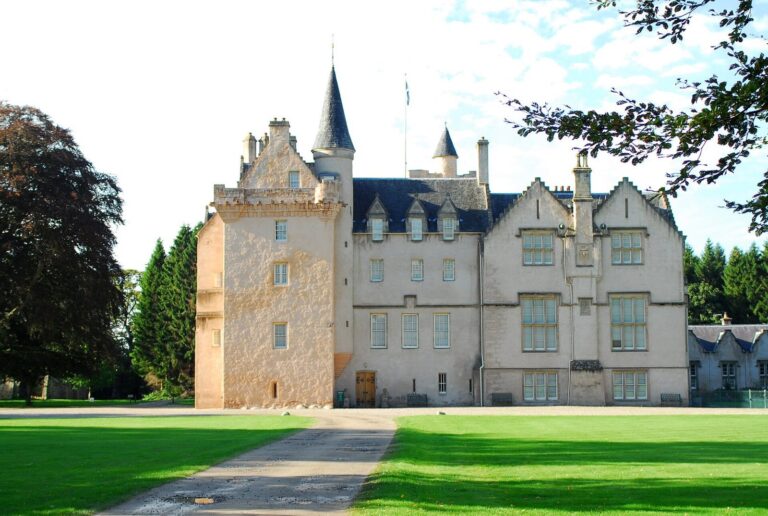
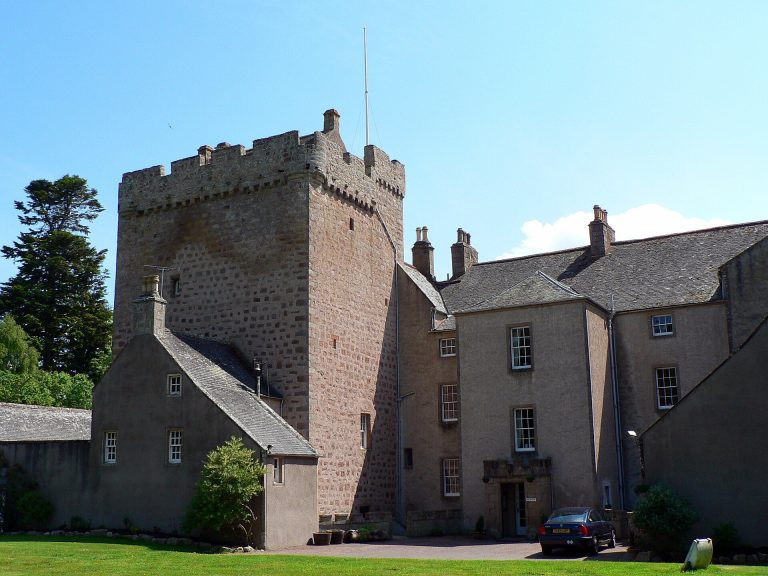
Darnaway Castle is a former castle and country house in Darnaway Forest, about five kilometres southwest of Forres in Moray, Scotland. It became the seat of the Earls of Moray after Sir Thomas Randolph probably built its first castle. The name Darnaway is an English form of the Gaelic, a Celtic language, Taranaich, which preserves the earlier Brittonic, another Celtic language, name Taranumagos. Its elements mean “thunder” and “plain,” like the Welsh taran-maes.
Origins and succession
Darnaway was held by the Comyns, a powerful Scottish family, until King Robert I granted the land to Thomas Randolph along with the Earldom of Moray. Randolph was a Scottish nobleman and military commander. His castle became the home of the earls, a hereditary Scottish title.
John Randolph, the third Earl of Moray, died at the Battle of Neville’s Cross in 1346 without a male heir. The title passed to Patrick Dunbar, who had married one of John’s daughters. When the Dunbar male line ended around 1430, the earldom passed to the Douglas family. Archibald Douglas, Earl of Moray, was killed on 1 May 1455 while fighting with his brothers against King James III, who was seeking to curb Douglas power. The title and estates were forfeited with other Douglas possessions, then passed to the Murrays and later the Stuarts. The estate remains with descendants of the Stuart family.
Royal timber and visits
Darnaway Forest supplied timber for royal use. In March 1497, a priest supervised carpenters felling large trees for the royal artillery. Timber was also cut there in 1508 and 1509 for the king’s ships. King James IV ordered work on the Great Hall’s roof in 1501. On 20 November that year, maidens from Forres sang for him at Darnaway.
James IV kept his mistress Janet Kennedy, their children and her companion at the castle. In 1502 he sent a lute player to entertain them. In October 1504, four Italian minstrels and an African drummer performed there; maidens from Forres danced for the king, followed the next day by maidens from Darnaway. On 13 October 1505, James played cards while fresh rushes were laid in his chamber. Three days later he watched dancing in the hall. He returned in September 1506, when maidens from Darnaway sang for him.
Political events in the sixteenth century
Mary, Queen of Scots, visited Darnaway in 1562 and held a meeting of the Privy Council, a senior body that advised the monarch and helped govern the kingdom. She ordered John Gordon to surrender the castles of Findlater and Auchindoun. That year, Darnaway’s hall was described as handsome and large. On 24 June 1569, James Stewart, first Earl of Moray and Regent for James VI, was at the castle and gave 30 shillings to women who sang there. Colin Campbell, sixth Earl of Argyll and second husband of Agnes Keith, Countess of Moray, died at Darnaway on 10 September 1584. James VI stayed at the castle on 14 July 1589.
Feud and later estate
A feud between George Gordon, Earl of Huntly, and James Stewart, second Earl of Moray, began in 1590. The widow of Grant of Ballindalloch had married John Gordon, son of Thomas Gordon of Cluny. John Grant, a former estate administrator known as the Tutor of Ballindalloch, killed a servant of John Grant. Huntly went to Ballindalloch in November to arrest the Tutor. John Grant of Freuchie, head of Clan Grant, first promised to hand over the Tutor and his associates, who faced accusations of murder and other crimes. He then joined them and the Earl of Moray at Darnaway. The group fired pistols at Huntly’s officers and cannon from the castle, killing John Gordon, brother of the landholder of Cluny.
After the deaths of the second Earl of Moray and Countess Elizabeth Stuart, a list of Darnaway’s goods was made in 1591. The Earl of Atholl later removed the furnishings it recorded. Between 1767 and 1781, Francis Stuart, ninth Earl of Moray, planted more than eight million pine trees on the estate. The castle was rebuilt in 1810 and remains occupied. The castle and terraces received Category A listing, Scotland’s highest listed-building grade, in 1971. The stables, carriage house, garden walls and gates have the next-highest grade. The designed grounds entered Scotland’s Inventory of Gardens and Designed Landscapes in 1987.
Remains
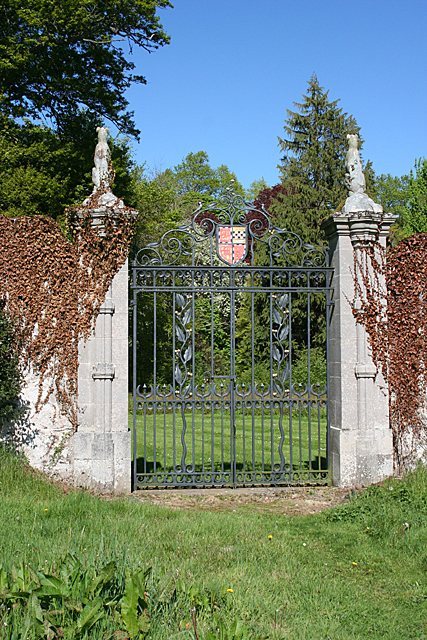
The castle’s associated features include the medieval Great Hall, terraces, service buildings and an eastern walled garden. Garden walls, gate piers and gates are also part of the estate’s physical layout.
The Great Hall
The Great Hall is the sole surviving part of the castle built by Archibald Douglas in 1450. Its original medieval hammerbeam roof uses projecting timber beams to support the roof structure, and it is one of only two medieval halls in Scotland to retain its original roof. The roof covering was renewed with wooden shingles shaped by a carpenter. The hall can accommodate 1,000 people.
The 1591 goods list gives a picture of the hall’s former furnishings and use. It notes tapestry in the Great Hall and the Earl’s bedchamber, as well as a separate small hall with a high table for dining. The Earl’s bed had red velvet and cloth-of-gold hangings, with red Spanish taffeta curtains trimmed in gold; it was valued at 1,000 Scots pounds. The list also includes a turned wooden mazer, a drinking bowl, bound with silver and valued at 20 Scots pounds, along with spears, halberds, muskets and an iron rod fitted with ten prisoner shackles.
Terraces, garden and service buildings
The estate’s associated grounds and buildings include terraces, stables and a carriage house. An eastern walled garden forms part of the grounds, alongside garden walls, gate piers and gates.
River Findhorn gorge
South of the castle, the River Findhorn passes through a gorge at Randolph’s Leap. The name is linked to a story in which Alastair Comyn of nearby Dunphail, the man Earl Randolph pursued, probably made the leap rather than Randolph himself.