Kozí Hrádek: A Gothic Castle in Czechia
Site at a Glance
- Popularity
- High
- Country
- Czechia
- Primary era
- Medieval
- Eras represented
- Medieval, Modern
- Civilizations
- Austria-Hungary, Habsburg, Holy Roman Empire, Kingdom of Bohemia
- Site type
- Military
- Remains
- Castle
On this page13 sections
History
Kozí Hrádek is a ruined Gothic castle near Sezimovo Ústí in Czechia, probably founded in the fourteenth century by Vlček of Kozí. Its first recorded mention, dated 21 January 1377, identifies Vlček as its holder. The same year, a burgrave named Albrecht of Kozí is mentioned; a burgrave was an official responsible for a castle or its administration.
Foundation and changing ownership
After Vlček, the castle passed to the Lords of Hradec, a Bohemian noble family. Jan of Hradec the Younger, known as the Count of Kozí, held it until 1387. On 4 June 1391, Hanuš of Hradec, probably Jan’s uncle, sold the castle and its estate to Jindřich I of Hradec for 2,000 Prague groschen. The estate comprised the Red Court, another court and four villages, including one with a farmstead.
In 1406, Kozí Hrádek passed to Vilém of Újezd, who died in 1408 and established the Kozí family. His sons Jan of Ústí and Ctibor of Kozí later sheltered Jan Hus at the castle.
Jan Hus and the Hussite Wars
From 1412 or 1413 until 1414, the brothers gave refuge to Hus, a preacher and theologian whose calls for church reform helped inspire the Hussite movement. Excommunicated and compelled to leave Prague, he continued preaching and writing at Kozí Hrádek. Works associated with this period include Exposition of the Faith, The Ten Commandments and the Lord’s Prayer, Mirror of the Sinner and The Postil, a collection of explanations or sermons on biblical readings, as well as the treatises On Simony, On the Church and On the Six Errors.
During the Hussite Wars, conflicts connected with the movement after Hus’s execution, the castle and nearby lands belonged to the Taborites, a Hussite religious community centered on Tábor. The castle was apparently already uninhabited when it burned in 1438. The fire was probably caused by forces of Albrecht of Habsburg, King of Bohemia, whose troops were in the area while besieging Tábor. Kozí Hrádek was not rebuilt. After the wars it passed to the town of Tábor and was listed as deserted in 1542.
Abandonment and later use
In 1573, a poet who owned the castle sold it to a buyer who built a farmstead and mill nearby. Tábor bought the site back in 1600. During the sixteenth and seventeenth centuries, residents, particularly people from Měšice near Tábor, took building stone from the ruins. By the nineteenth century, rubble covered the remains and trees and shrubs had grown over them.
Clearance, commemoration and conservation
In 1886, August Sedláček, a professor at the Tábor grammar school, organized the clearing of the residential tower’s ruins. An effort in 1893 to establish a Hus memorial at the castle was blocked by the Austro-Hungarian government. The money raised for the memorial was redirected to restoration, but the work was unsystematic and damaged archaeological remains.
Local teacher and amateur archaeologist Josef Švegl began clearing and restoring the site in 1899. His work cleared the castle and established the appearance of the ruins. More than 250 archaeological finds were recovered and are now held at the Tábor Museum. National pilgrimages honoring Hus began there in 1900. In 1925, Sokol Mound was erected east of the castle, and clearance was completed in 1929, followed by specialist study and conservation. The castle became a Czech National Cultural Monument, a protected heritage site, in 1962. Restoration in 1973 altered the original walls and ditches, making later archaeological research more difficult. Since 1991, the site has belonged to the town of Sezimovo Ústí.
Remains
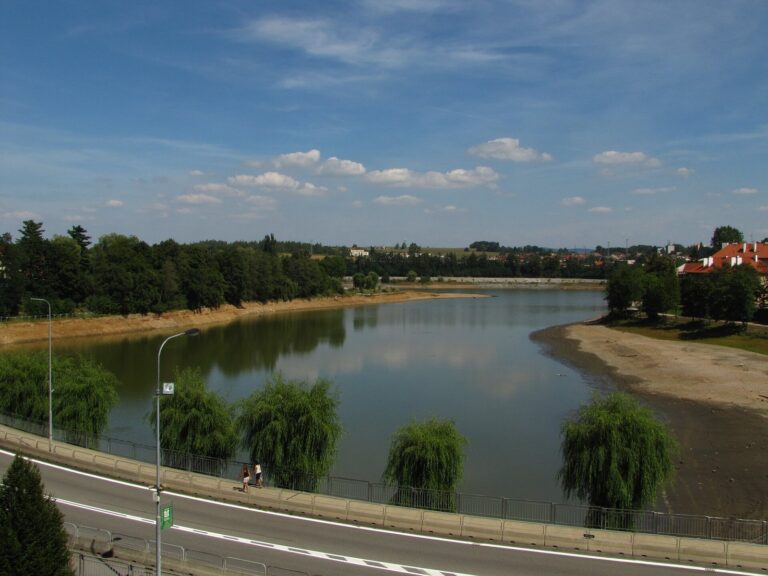
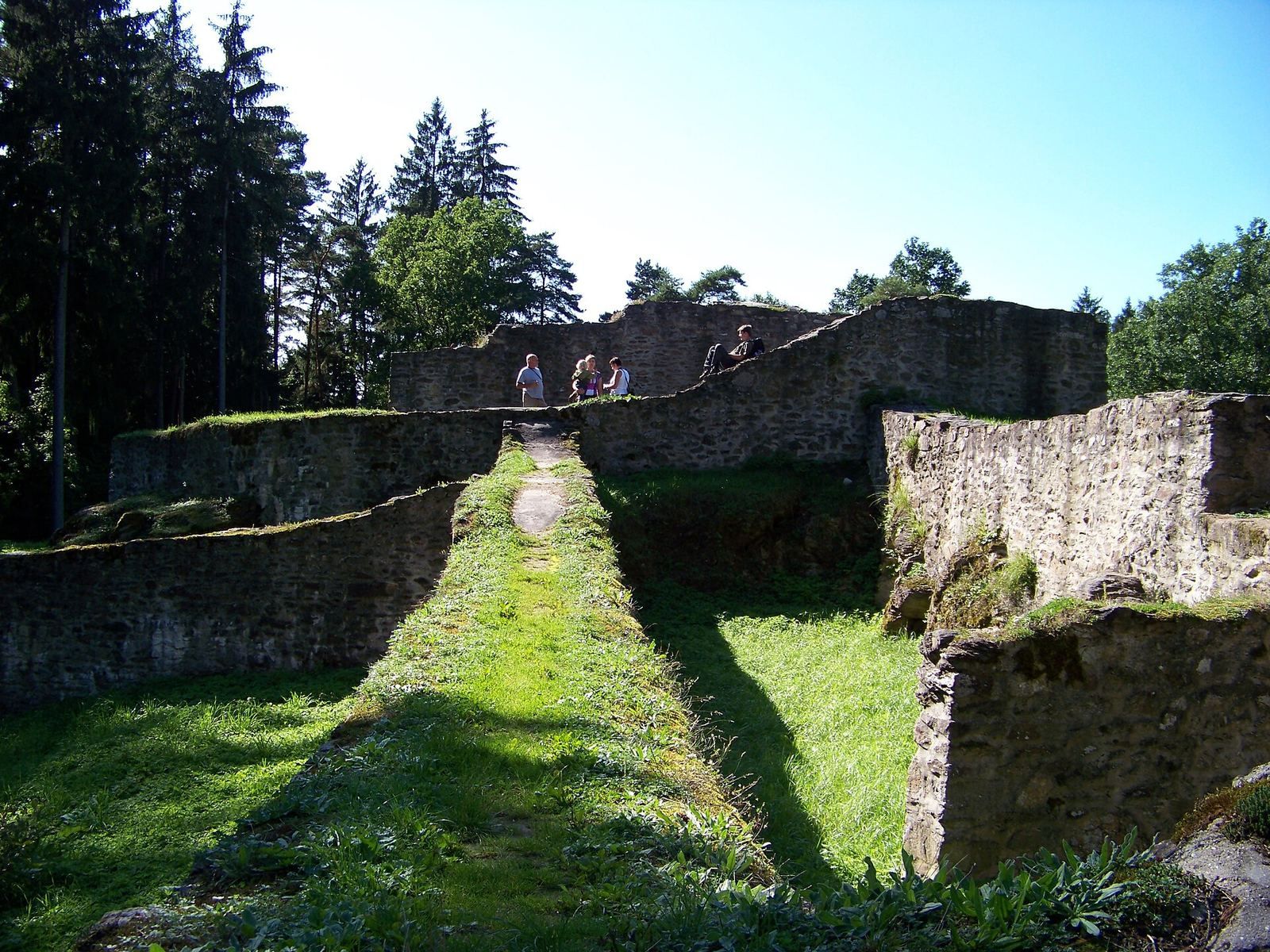
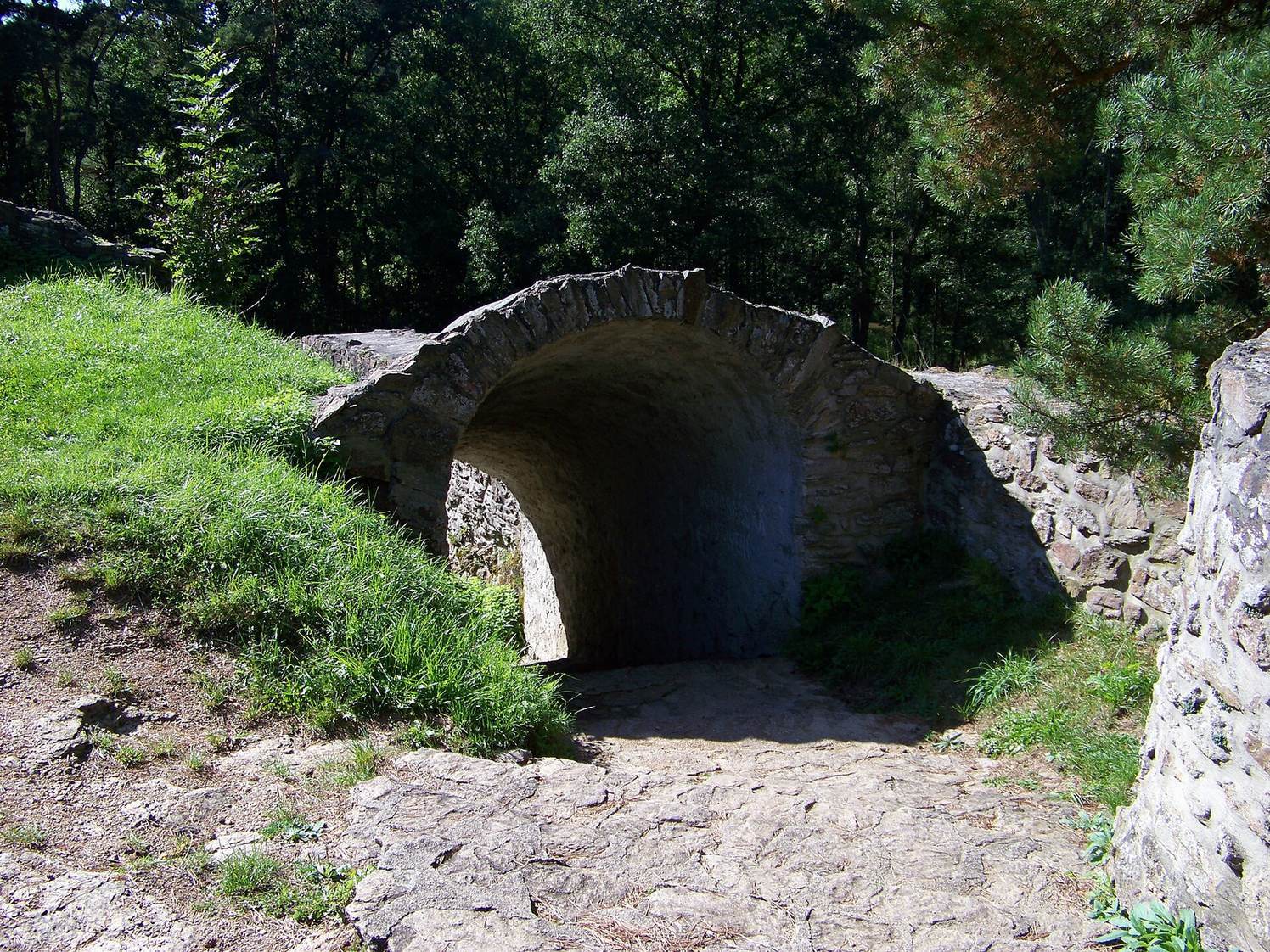
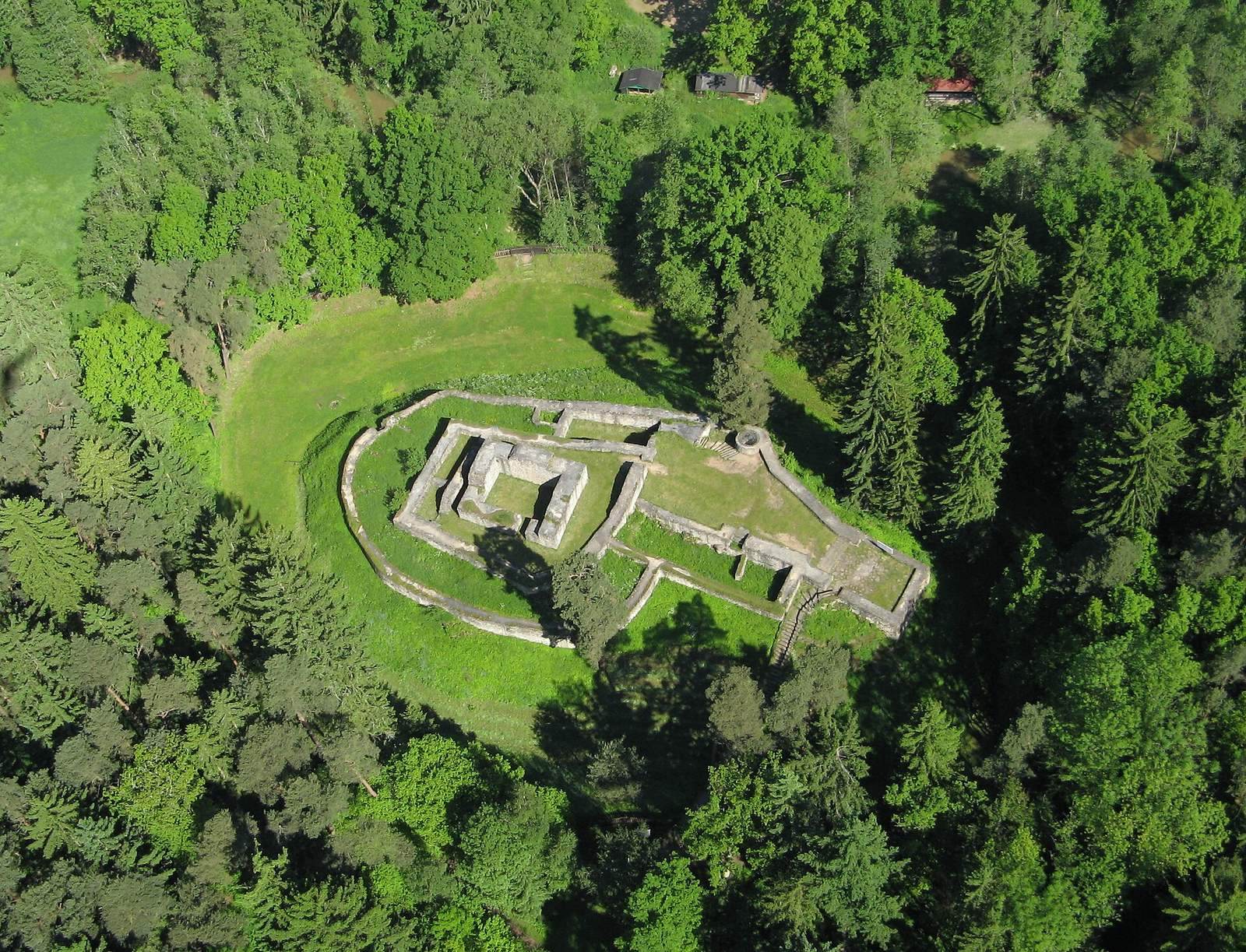
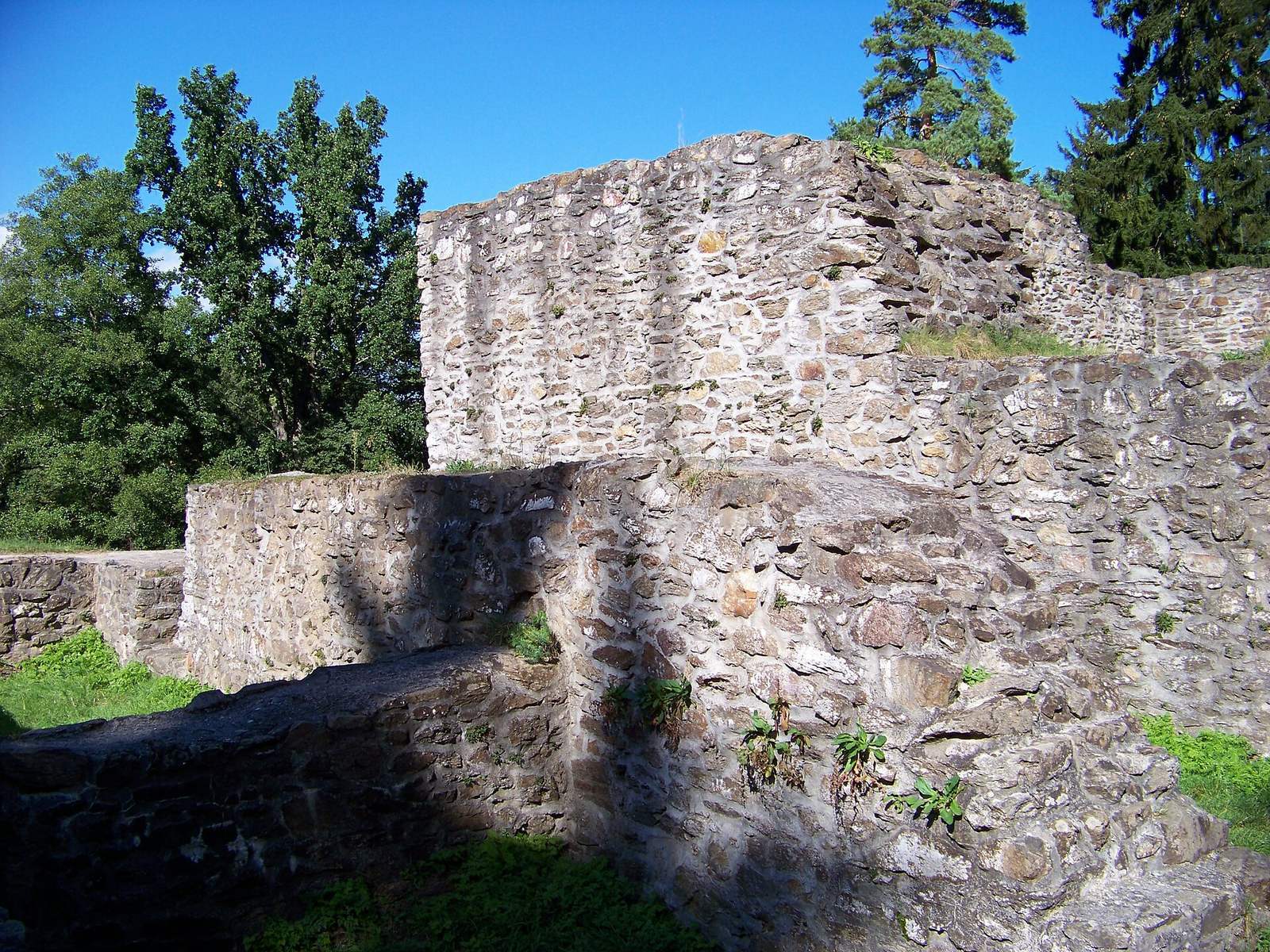
The castle occupies a narrow, irregularly oval rocky spur on the left bank of the Kozský Stream, near a pond. Its Gothic ruins include surviving walls of the residential palace. The layout centered on a tower within a sequence of courtyards, with defensive walls and a water-filled moat around the complex.
Courtyards and residential core
Eastern entrance and first courtyard
An eastern forecourt stood beside the road from Kozská Mill. From it, a wooden bridge crossed a deep ravine and continued as a drawbridge to the castle’s easternmost entrance, a rectangular gate tower opening into the first courtyard. Kitchen and guard rooms occupied the courtyard’s south side; on the north side, a well cut into the rock reaches 18.5 metres deep. A stairway beyond the well led to the defended space around the second courtyard. A gate in the first courtyard’s western wall connected the two courts.
Second courtyard and residential tower
An inner wall enclosed the second courtyard. At its center stood a four-sided stone residential tower, probably three storeys high, which served as the owners’ residence. Its position and function led castle specialist Tomáš Durdík to classify Kozí Hrádek as a donjon-type castle, one organized around a principal residential and defensive tower. A service building occupied the courtyard’s west side, separated from the tower by a narrow passage. It contained two rooms, the smaller used as a granary.
Outer defenses and forecourt
Walls, moat and palisade
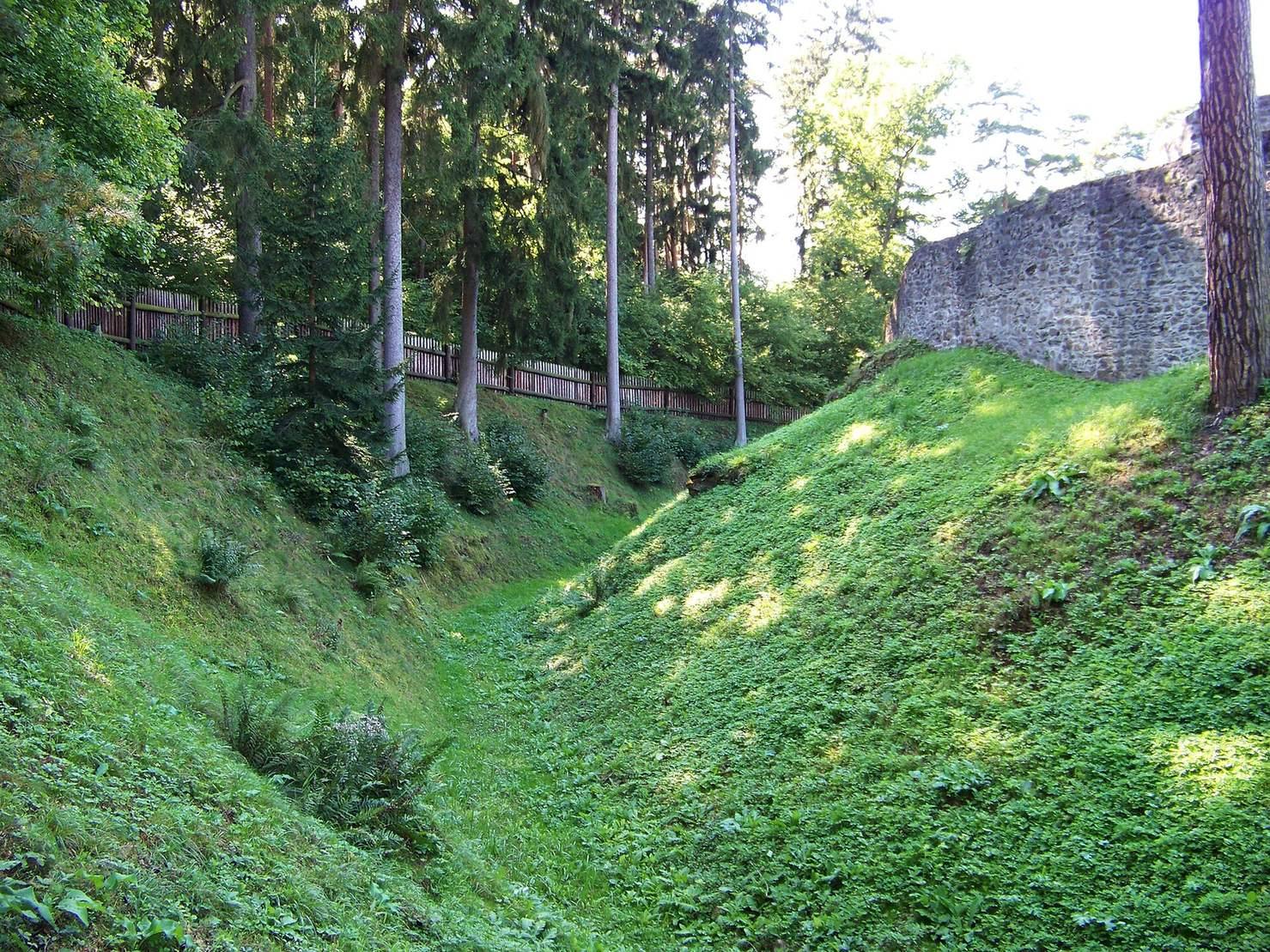
Beyond the inner fortification, an outer defensive wall ran along the south, west and north sides of the castle, leaving a broad space between the two walls. A water-filled moat surrounded the complex and reached a width of up to 20 metres near the forecourt. A small gate in the outer wall’s western section led to the moat. Outside it, a clay rampart supported a substantial wooden palisade, set approximately along the line followed by the wooden fence around the ruins today.
Forecourt buildings
A wooden brewery stood in the forecourt and was destroyed by fire. Excavation there revealed its foundation remains, part of a cauldron and charred malt. Two other buildings also occupied the forecourt, one probably a stable.
Plaques and memorial mound
A metal information plaque was attached to the cleared remains of the residential tower. Another plaque commemorates Tomáš Garrigue Masaryk’s speech at a Hus commemoration in 1910; it was installed in 1935. Sokol Mound stands east of the castle near the cellar of the former brewery. Erected for the 500th anniversary of Jan Žižka’s death, it honors the leading Hussite military commander.