Ravensworth Castle in Tyne and Wear: A Liddell Family Seat
Site at a Glance
- Popularity
- High
- Country
- United Kingdom
- Primary era
- Medieval
- Eras represented
- Medieval, Modern
- Civilizations
- British, English
- Site type
- Military
- Remains
- Castle
On this page6 sections
History
Ravensworth Castle in Tyne and Wear, at Lamesley in the United Kingdom, became the seat of the Liddell family, known as the Ravensworth barons. Ownership of the estate is traced to the 12th century, while the castle may have developed from an existing manor in the early 14th century.
Medieval origins
Earlier owners included the Fitz-Marmaduke, Lumley, and Gascoigne families. Around 1315, a tower associated with a solar, a private room often used by the lord or family, may have been added to the manor. Further towers appeared during the 14th century. Marmaduke Lumley has been tentatively proposed as the castle’s patron.
The Liddell family seat
Thomas Liddell, a wealthy merchant from Newcastle-upon-Tyne, bought the castle in 1607. The Liddells held the estate for about 300 years, and coal mining on their land, begun in the early 17th century, provided much of the family’s wealth.
Sir Henry Liddell built a substantial mansion inside the castle enclosure in 1724. In 1808, Sir Thomas Liddell demolished it and replaced it with a large house designed by John Nash. The Duke of Wellington was entertained at the house in October 1827. In 1831, Georgiana, Lady Bloomfield, Sir Thomas’s daughter, wrote about visiting the castle as a child.
Decline and demolition
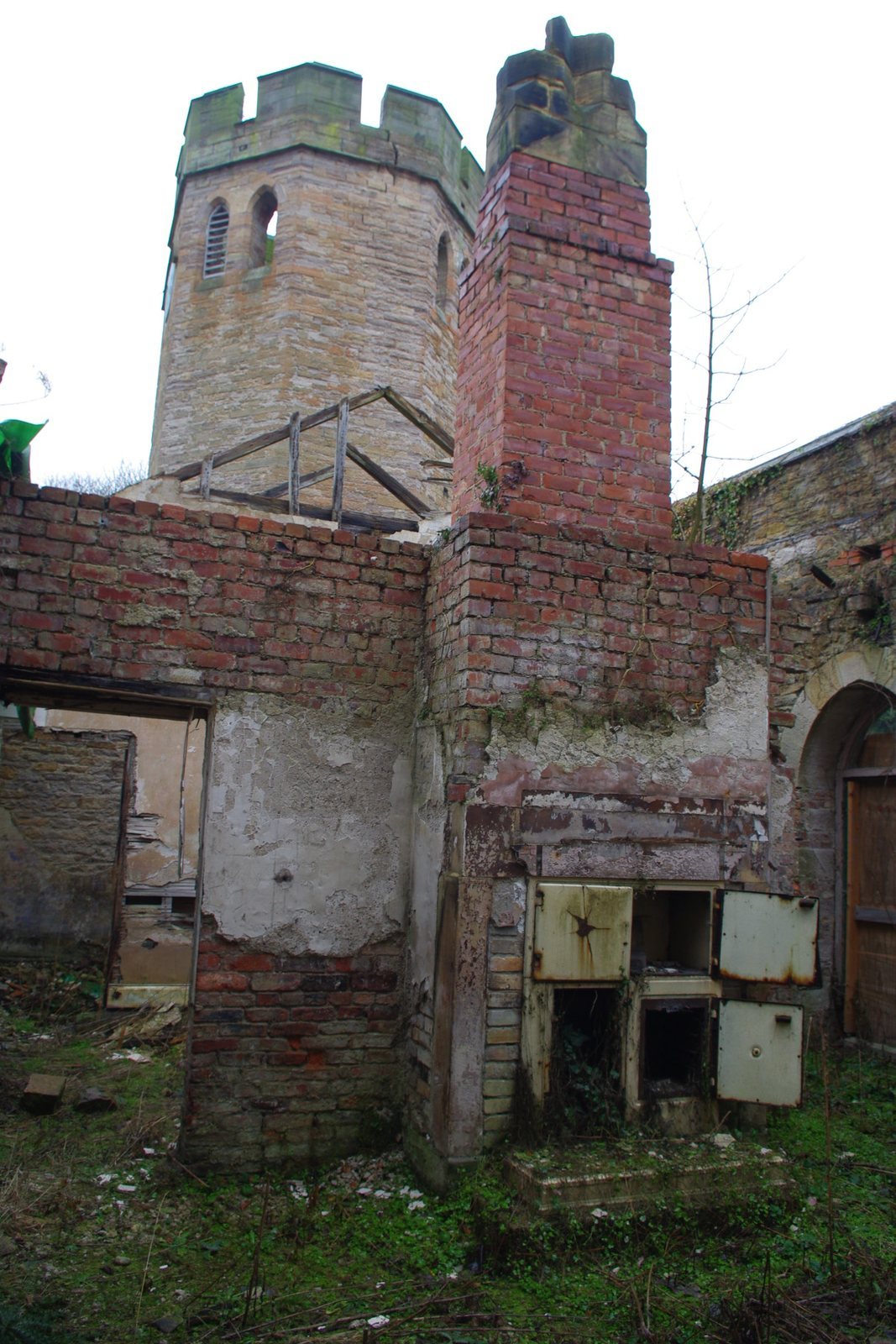
The Liddells gave up the castle as their seat around 1910. After a brief lease to a girls’ school, it was used as a school in the 1920s and then fell into decline. Around 1935, coal mining began directly beneath the house, and demolition started at about the same time. Mining-related subsidence destroyed large parts of the site around 1952; most of the house had been demolished by 1953.
Material from the demolition was intended for a model village, but the interruption of the Second World War meant that only three houses were built. Ravensworth Castle is a scheduled monument, a legally protected archaeological site or monument, and a Grade II* listed building, a category for buildings of particular importance and more than special interest. Its Grade II* listing dates to 1967, and the ruins were added to English Heritage’s Register of Buildings at Risk in 2002.
Remains
Castle and later residence
The castle had a quadrangular plan arranged around a roughly rectangular courtyard. Its surviving fabric is ruinous. The later house within the enclosure was a large building in the Gothic Revival style, which revived forms and details associated with medieval Gothic architecture. Some stone from the demolished fabric was reused to extend Hindley Hall.