Fort de Charenton: A Defensive Fort in Paris’s Outer Defenses
Site at a Glance
- Popularity
- Medium
- Country
- France
- Primary era
- Modern
- Eras represented
- Modern
- Civilizations
- French, German
- Site type
- Military
- Remains
- Fort
On this page10 sections
History
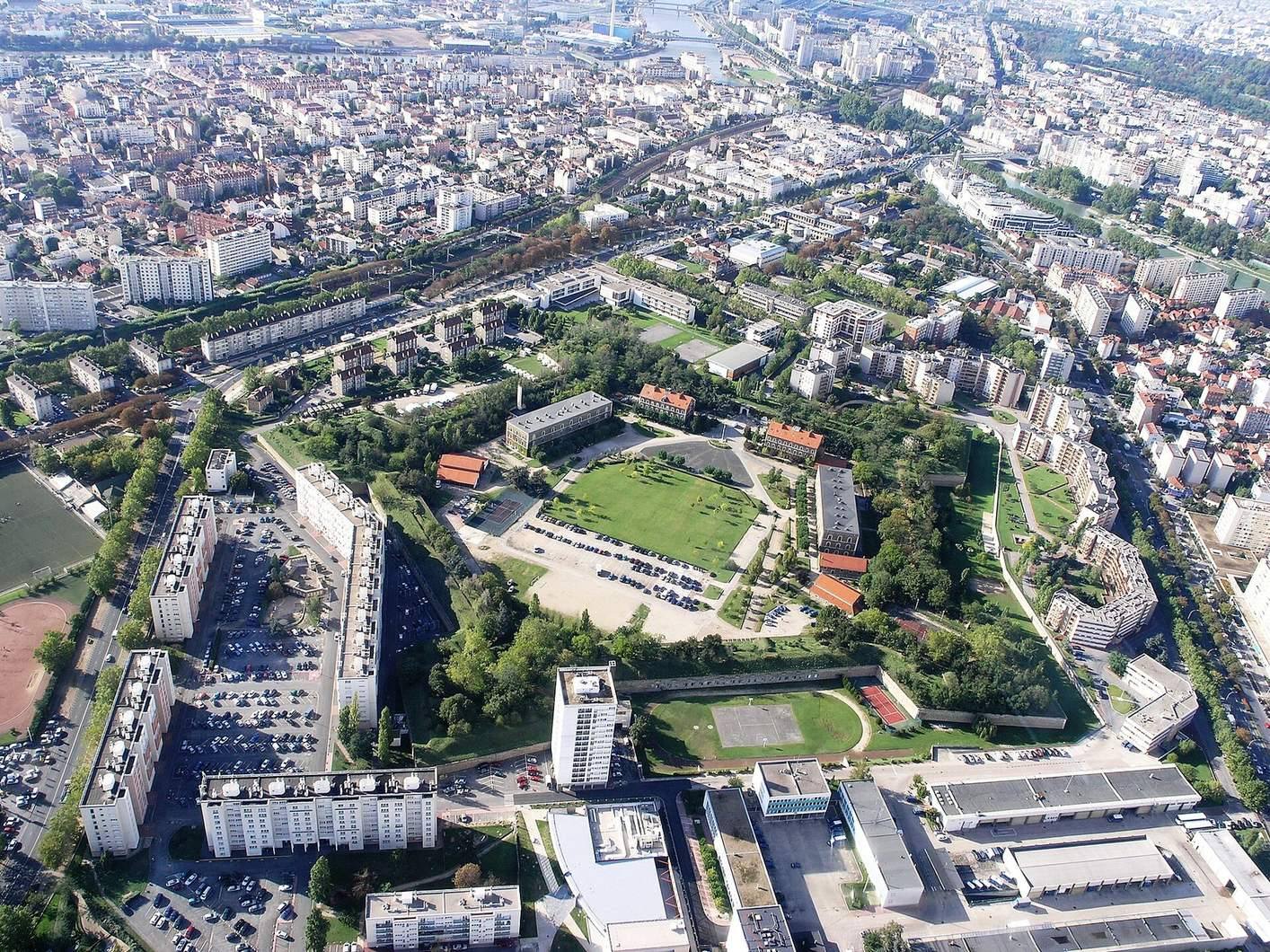
Fort de Charenton is a nineteenth-century defensive fort in Maisons-Alfort, France, built as part of the outer defenses planned for Paris. Designed according to the Vauban system, a style of fortification organized around projecting defensive works, it formed one of sixteen detached forts intended to protect the capital.
Planning and construction
The occupations of Paris in 1814 and the defeat of Napoleon I at Waterloo in 1815 led to plans for stronger defenses around the city. The fort’s location was chosen in part because the bridges at Charenton and Saint-Maur crossed the Marne at strategically important points. During the 1814 Battle of Paris, troops commanded by the Prince of Württemberg seized the Charenton bridges, which were defended by veterinary students and regular soldiers, as well as the bridges at Saint-Maur.
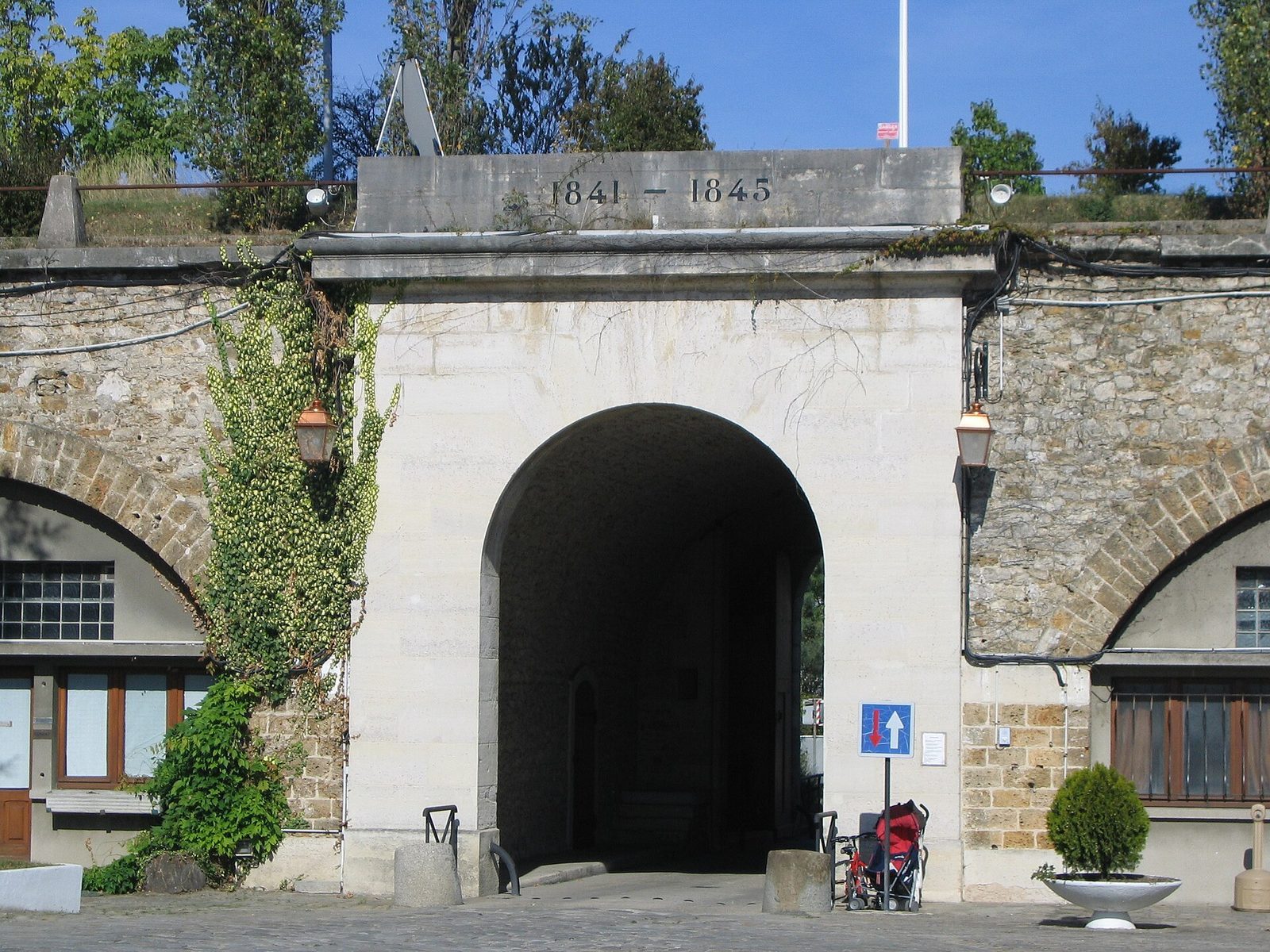
Marshal Soult presented an initial plan for fortifications in 1833. Opponents on the political left feared that forts might be used against Parisians during an uprising. Adolphe Thiers later promoted legislation authorizing the defensive system, passed on 3 April 1841. King Louis-Philippe laid the fort’s first stone on 19 April that year. The fortified enclosure was completed in 1842, while work and fitting-out continued until the fort itself was finished in 1845. First associated with its host commune, Maisons-Alfort, it took the name of Charenton-le-Pont, the town it was intended to defend.
Nineteenth-century military use
After the 1848 revolution that ended Louis-Philippe’s rule, the fort was used as a prison. In 1859, during Napoleon III’s reign, it received rifled artillery, guns whose grooved barrels spun projectiles and gave them a range of up to 3,000 metres.
During the Franco-Prussian War of 1870–71, the conflict between France and Prussia and its allies, the fort helped defend Paris. Its guns supported French troops at Moulin-Saquet, Gare-aux-Bœufs and Mont-Mesly, and partly destroyed Choisy-le-Roi while Prussian forces held the town. Prussian artillery did not return fire, and neither the fort nor the village was hit. After Prussia’s victory, occupation troops took control of the fort in February 1871 and left on 30 September. The fort was also a distant witness to the Paris Commune, the revolutionary government and uprising in Paris in 1871.
World wars and German occupation
The 59th Artillery Regiment’s first group was stationed in the barracks in 1910. During the First World War, part of the 3rd Colonial Artillery Regiment replaced it. The 32nd Divisional Artillery Regiment occupied the fort in 1914. At the start of the Second World War, the regiment went to the front and was nearly destroyed in the German attack of May 1940.
From 1940, German forces used the fort as an ammunition depot and radio station. As Allied forces advanced on Paris, they abandoned it on 25 August 1944 after rigging hundreds of tonnes of explosives with an acid-triggered firing system. Bomb-disposal expert François disabled the device, preventing the fort’s destruction and potentially extensive damage to the town.
National Gendarmerie use
From 1944, gendarmerie units used the fort, which also served as a center for political detainees and juvenile offenders. It was formally assigned to the National Gendarmerie, France’s military-status police force, in 1950. During decolonization, it became a staging center for relief detachments bound for the Far East, including Indochina; more than 6,000 gendarmes passed through.
The Gendarmerie’s training command was based at the fort from 1959 until the early 2000s. The National Gendarmerie Intervention Group, or GIGN, a specialist intervention unit, was established there in 1974 and moved to Satory in 1983. The National Center for Operational Intelligence Training operated at the fort from 1 September 2009 until 20 February 2012, when it moved to Fort de Rosny-sous-Bois. The Ministry of the Interior’s Center for Higher Studies arrived in 2010, and the Île-de-France regional gendarmerie command followed in 2012. Other services moved to Issy-les-Moulineaux in spring 2012. The fort remains in use by the National Gendarmerie.
Remains
Setting and overall plan
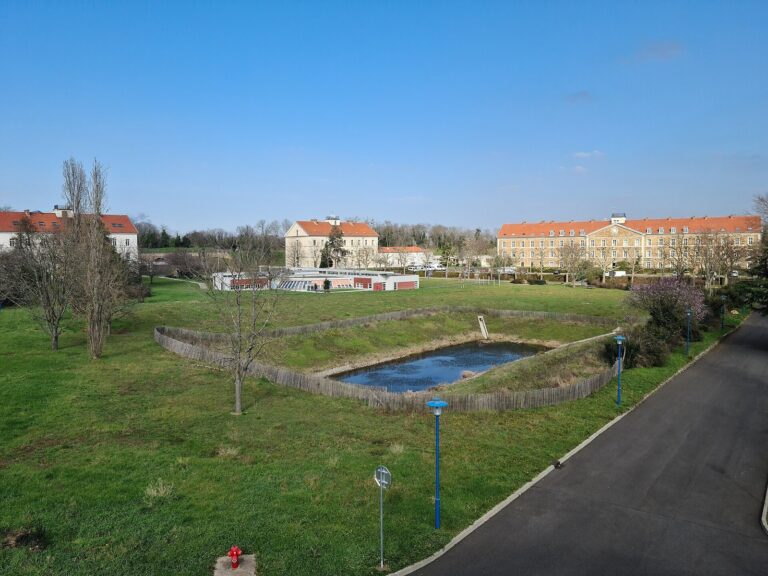
Built on the Butte de Gramont, then open countryside, Fort de Charenton occupies about 10 hectares within a site of roughly 26 hectares acquired for its construction. Its perimeter measures about 1,500 metres. The position provided clear lines of fire except to the northwest, where the National Veterinary School of Alfort obstructed them. The fort lies between the routes now designated RN6, toward Geneva, and RN19, toward Belfort. Its design followed the Vauban system of fortified places.
Barracks design
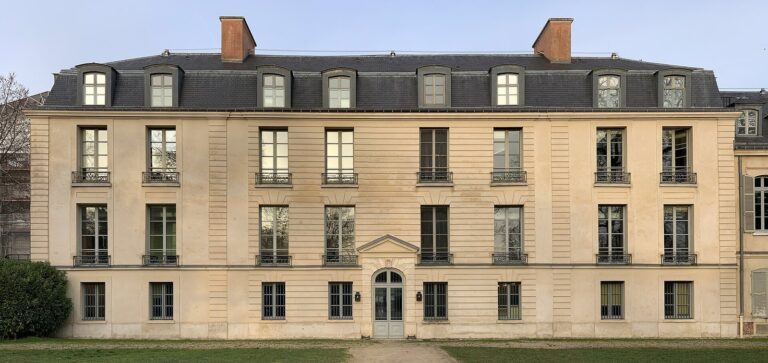
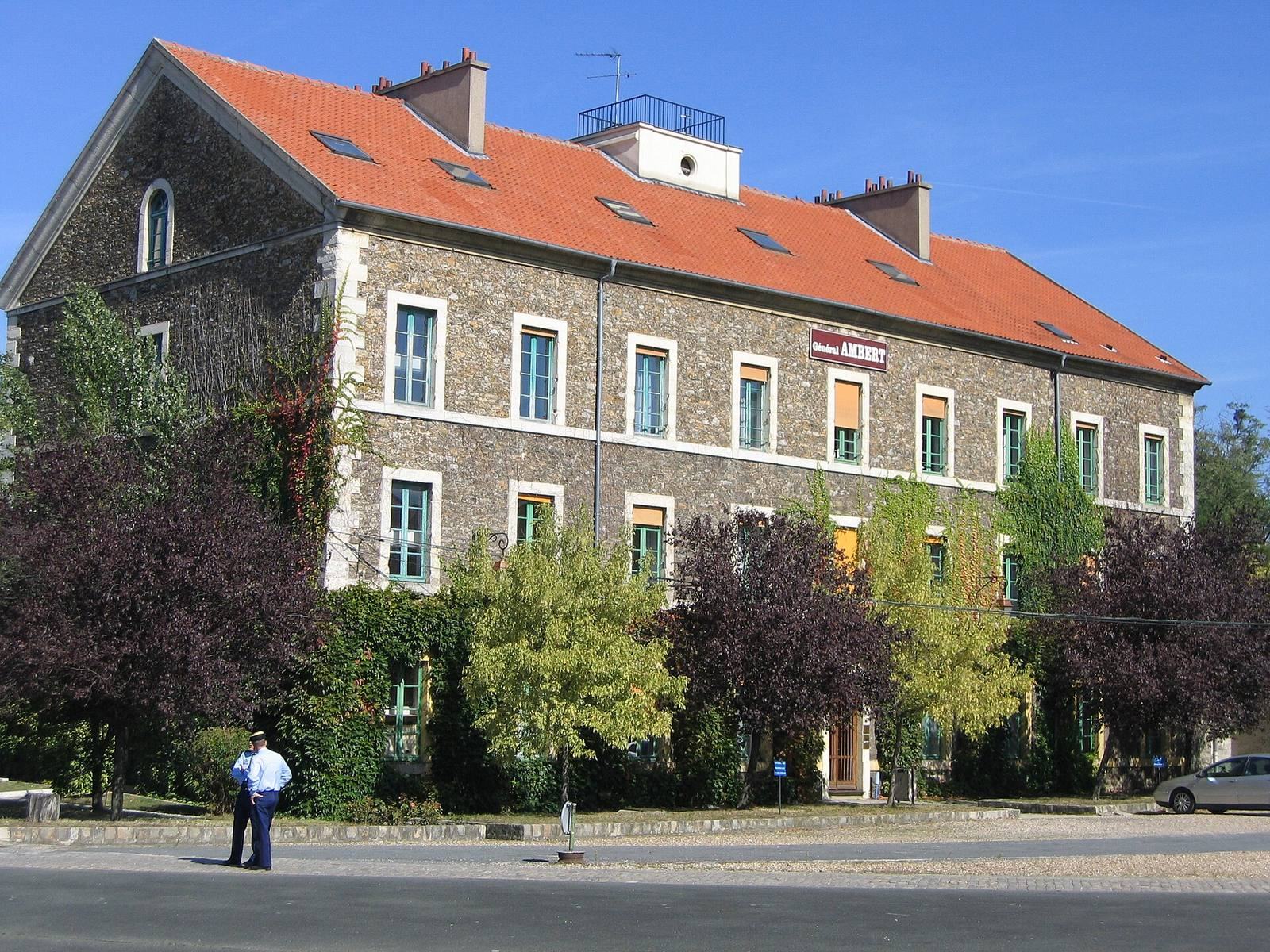
A 1843 program planned barracks for four companies of about 110 men each, along with their non-commissioned officers and a small staff. The proposed block had two storeys, with rooms designed to hold 24 beds. Staircases were planned for every two bays, and the troop rooms were to connect through doors in the dividing walls. The design specified a zinc-covered, double-pitched roof. Masonry supports above the cross-walls would carry its main roof timbers, while offset chimney flues would join into stacks at the ridge. The program also placed some supporting rooms in casemates, fortified vaulted spaces, or on the ground floor of an officers’ pavilion.
Buildings outside the fort
About ten buildings erected outside the fort in 1930 to accommodate the 3rd Mounted Group of the 1st Legion of the Mobile Republican Guard remain along Avenue du Général-de-Gaulle.
Wartime additions and commemoration
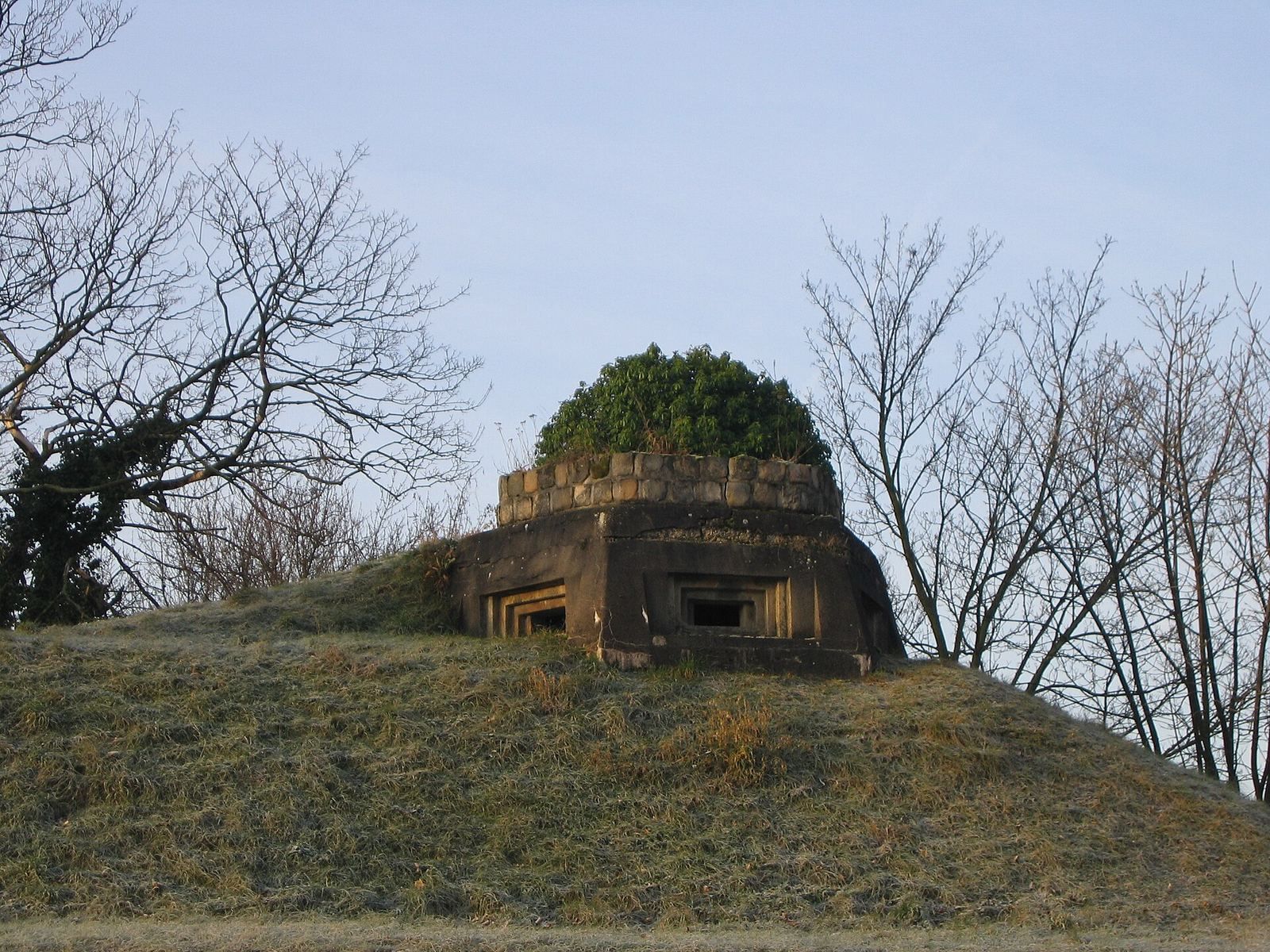
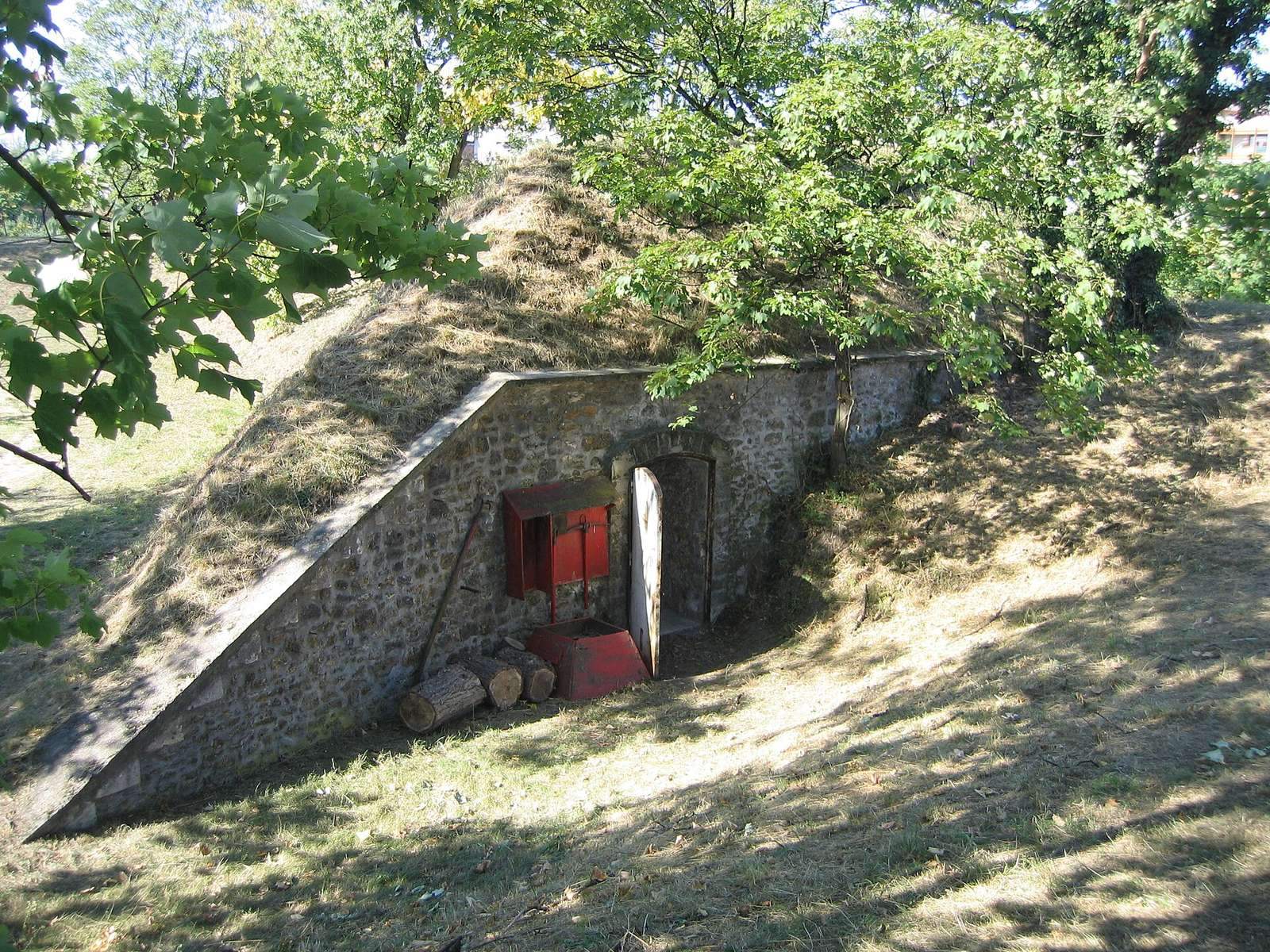
During the German occupation, small machine-gun pillboxes were built at the tips of the fort’s bastions, projecting sections of its defenses. A plaque at the fort commemorates the action that prevented the explosives from detonating in August 1944.