Berny Castle: A French Classical Pleasure House
Site at a Glance
- Popularity
- Medium
- Country
- France
- Primary era
- Early Modern
- Eras represented
- Early Modern, Modern
- Civilizations
- French
- Site type
- Domestic
- Remains
- Elite Residence
On this page9 sections
History
Berny Castle was a Classical-style pleasure house in Fresnes, France, transformed by the architect François Mansart in the seventeenth century. Its estate passed through the hands of magistrates, diplomats, and church officials before becoming known for its theatrical entertainments under Louis de Bourbon-Condé, Count of Clermont.
From fief to Mansart’s transformation
The fief of Berny, land held within the feudal system and subject to obligations to a superior, was first recorded in 1422, when it passed to Jehan Sac, a bourgeois of Paris. By 1520, the Brûlart family owned it. Pierre III Brûlart was lord of Berny, while his wife, Marie Cauchon, held the title Lady of Sillery. Their son Nicolas Brûlart de Sillery, later chancellor of France, inherited the estate. He made modest changes to the château, some under the direction of architect Clément Métezeau.
In 1623, Nicolas’s son Pierre IV Brûlart de Sillery commissioned Mansart to transform the house. The construction chronology places work in 1623–25, while the major undertaking is described as complete around 1635. The result drew praise from the poet Isaac de Benserade.
Magistrates, diplomats, and an abbey residence
The estate later passed to Pomponne II de Bellièvre, a senior magistrate and first president of the Parlement of Paris, the French monarchy’s high court. During the Fronde, a series of rebellions and civil conflicts in France, he secretly received conspirators at Berny in 1648–49. Hugues de Lionne acquired the château in 1653. A diplomat who became minister of state in 1659, he was the first to hold the titles Baron of Fresnes and Marquis of Berny. He gave lavish festivities at the estate until his death in 1671.
Hugues’s son Louis inherited Berny. On 12 August 1675, he sold seventy orange trees from the estate to King Louis XIV for 4,500 livres. In the mid-1680s, at the request of his brother Artus, a missionary, Louis hosted ambassadors from Siam for several days as they awaited their formal entry into Paris. Their stay reportedly caused extensive damage to the château and gardens, and the property was offered for sale around this time.
Saint-Germain-des-Prés Abbey purchased Berny in 1685 as a country and summer residence for its commendatory abbots, who held an abbey’s title and income without necessarily living as part of its monastic community. The first to stay there was Cardinal de Fürstenberg. He had the château redecorated and the park laid out, but much of the ornament was later removed as improper.
Clermont’s residence and theatrical life
In 1737, the estate passed into the use of Louis de Bourbon-Condé, Count of Clermont, who became abbot of Saint-Germain-des-Prés that year, aged 28. From the age of nine he had received income from several abbeys, and, with the pope’s permission, he also pursued a military career. He lived at Berny with the Paris Opera dancer Marie-Anne de Camargo, known as La Camargo. She grew bored with life there and eventually left. Between 1737 and 1741, Clermont had the estate restored by architect Jacques Hardouin-Mansart de Sagonne, and a theater was established.
In 1741, the Opera dancer Élisabeth Leduc moved into the château. Clermont later housed her at the Château de Tourvoie and visited her there for about thirty years. He arranged splendid entertainments for her at Berny in 1748, organized by Pierre Laujon and Charles Collé and compared with festivities at the nearby Château de Sceaux. During a jealous quarrel, Clermont struck Leduc on the forehead with a small knife, then later gave her the title Marquise of Tourvoie. He probably married her secretly in 1765. She had a son in 1766 and a daughter in 1768, and devoted herself to charitable work. Clermont died in 1771; his successor as head of the abbey showed no interest in Berny.
The theater’s program ranged from French opera and comic opera to vaudeville, which incorporated popular songs or verses, and short comic stage pieces. Marivaux’s comedy La Provinciale was performed in 1750. Le Rossignol ou le mariage secret, a one-act prose comedy with vaudevilles by Collé and music by Jean-Benjamin de La Borde, was given on 18 and 22 November 1751. Collé wrote the libretto for Le Jaloux corrigé, a one-act comic opera with music by Michel Blavet, first performed at Berny on 18 November 1752 and dedicated to Clermont. Blavet described it as a work made on Clermont’s orders and in his presence. Another piece, Antoine-Alexandre-Henri Poinsinet’s burlesque Gilles, garçon peintre z’amoureux et rival, with music by La Borde, was based on a work by Egidio Duni and Louis Anseaume. It was revived at the Foire Saint-Germain theater on 2 March 1758.
Demolition and later use of the estate
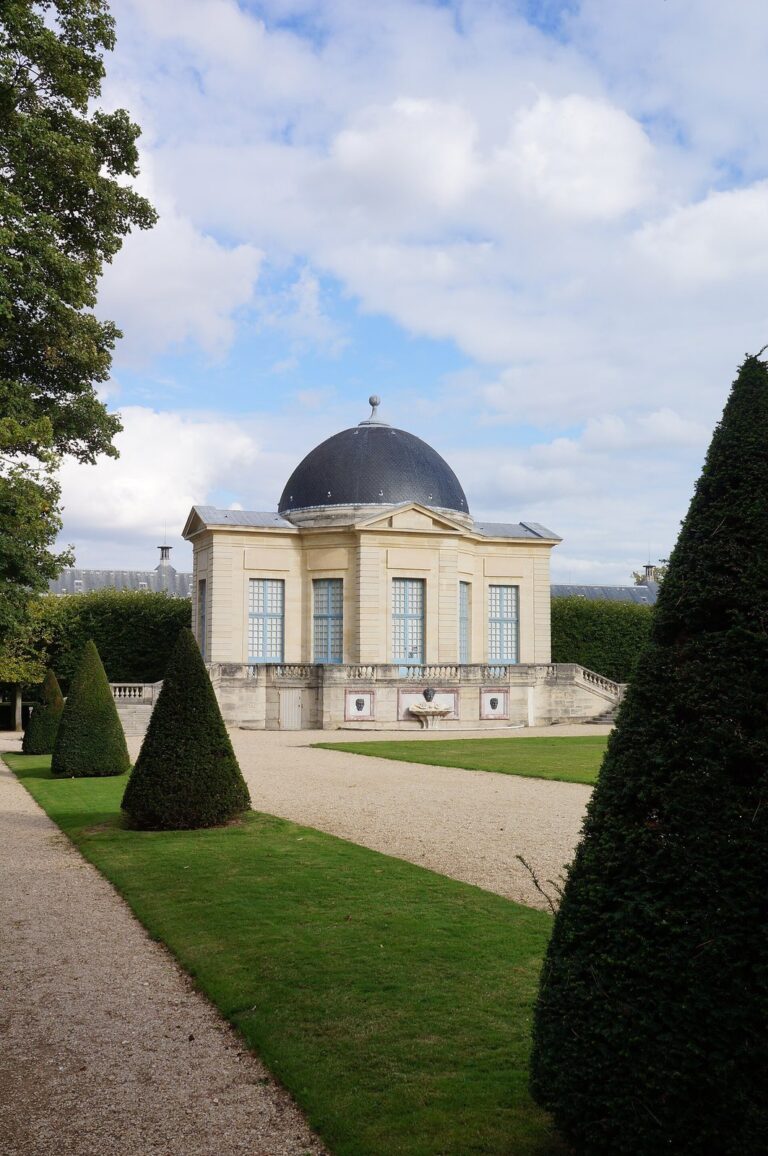
Berny was sold as ecclesiastical property during the French Revolution, and the château was gradually demolished from 1808. The park remained intact until it was divided into parcels in 1905. Most of it was occupied by the Berny stud farm, where steeplechases were popular from 1834 to 1893. William Thackeray referred to races at Croix de Berny in The Book of Snobs. The surviving seventeenth-century pavilion was listed as a protected historic monument on 10 April 1929.
Remains
The surviving north wing
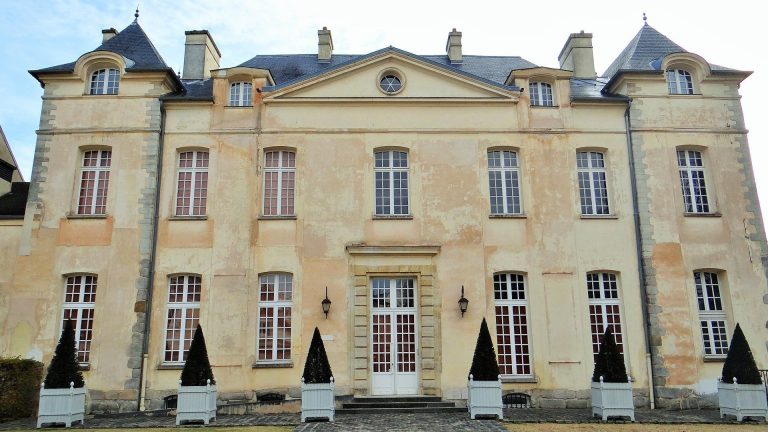
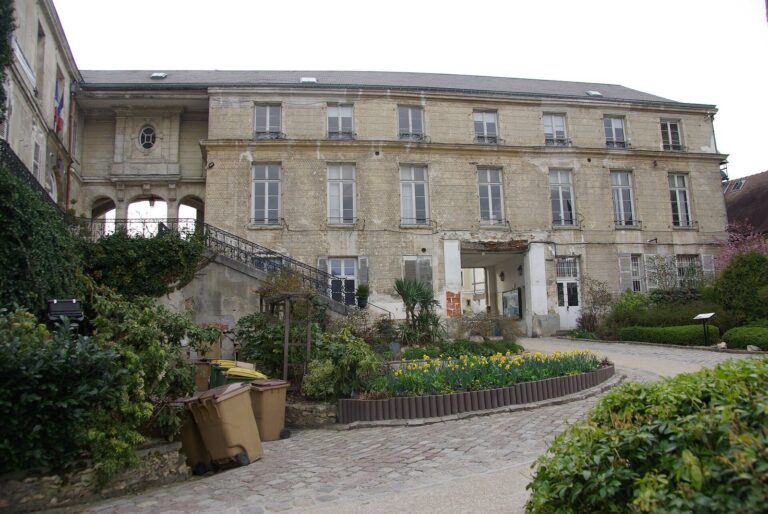
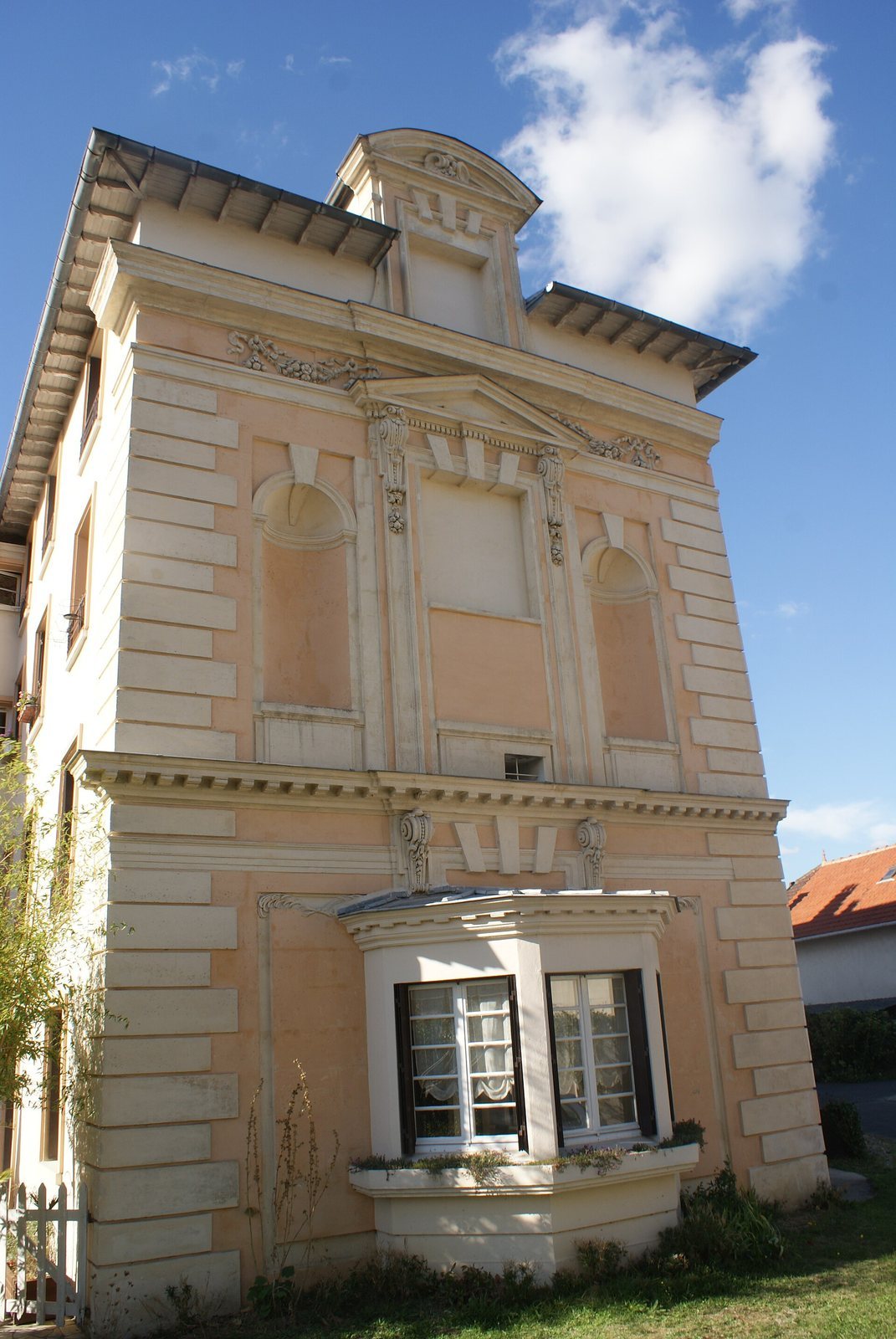
Part of the château’s north wing survives, including a fragment of façade attached to a residential building on the former site in Fresnes. The remnant preserves features of Mansart’s design, including high roofs, circular colonnades facing the courtyard, and boundary walls decorated with pediments. A mill was installed in the north wing beside the Bièvre in the nineteenth century. The mill buildings later housed the Lair furniture factory and were eventually converted into residential use.
Gardens and waterways
The Bièvre ran through the gardens as a canal, a course also shown on a garden plan. Water features were arranged around an island in a sunken lawn at the end of a reflecting pool. The grounds also included a flower theater with two rows of seating, each set out in three tiers, as well as swings, ring games, and facilities for archery. The flower theater was compared with one at the Château de Saint-Cloud. During the restoration of 1737–41, the embroidered garden beds were removed and balcony supports on one side were replaced with consoles decorated in the asymmetrical, shell-like forms of the Rococo style. Engravings by Claude de Chastillon, Matthäus Merian, and Israël Silvestre preserve views of the château and its grounds, including canals, fountains, ornament, and rare fruits grown in the gardens.
The theater
Clermont’s theater was built in the form of a chapel, allowing performances to take place while preserving outward appearances. It served as a venue for the varied stage works presented at Berny during his residence.