Cascina Linterno: A Medieval Enclosed-Court Farmstead in Milan
Site at a Glance
- Popularity
- High
- Country
- Italy
- Primary era
- Medieval
- Eras represented
- Medieval
- Civilizations
- Duchy of Milan, Holy Roman Empire
- Site type
- Domestic
- Remains
- House
On this page10 sections
History
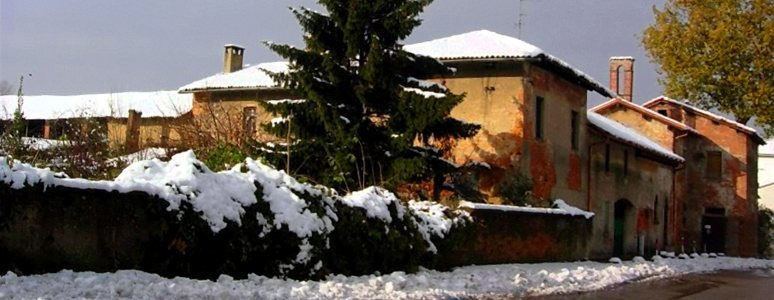
Cascina Linterno is a Lombard enclosed-court farmstead in western Milan, Italy, whose origins as a rural religious estate are placed in the twelfth century. The community that maintained it may have belonged to the Hospitallers or the Templars, medieval religious military orders, but its identity is uncertain. The date when the present complex was built is also unknown.
Origins and changing names
A notarial deed of 1154 records Infernum and its territory as land held by the de Marliano family, who followed Lombard law, a medieval legal tradition applied to people of Lombard legal status. Related records concern the area around Baggio, where the powerful, Lombard-origin da Baggio family lived near the de Marliano.
The place was called Infernum, or ad Infernum, until the end of the sixteenth century. It was then known as cassina de Infernum, before the name Linterno came into use. One proposed explanation connects Infernum with the Lombard words In-Fern, meaning “distant land.” Another, put forward by Antonio Marsand and repeated by Ambrogio Levati in 1820, treats Linterno as a reshaping of Infernum in honor of Scipio Africanus, the Roman general buried at Liternum.
The Petrarch tradition
A longstanding tradition places Francesco Petrarch, the fourteenth-century poet and scholar, at Linterno during his Milanese years from 1353 to 1361. The association connects the farm with Petrarch’s letter mentioning Infernum and with its position at the fourth mile from Milan. A similarly named farm, Cascina Invernum, lies about thirty kilometres away in the Lodi area. Other proposed locations for Petrarch’s Milan residence include a house near Sant’Ambrogio and one near the Carthusian charterhouse at Garegnano; whether he lived at the latter remains uncertain.
The Linterno identification circulated in printed books dated 1473, 1474 and 1484, and appeared in later writings by figures including Pietro Verri, Giovan Battista Baldelli, Ugo Foscolo, Giacomo Leopardi and Carlo Cattaneo. Petrarch’s handwritten letter to his friend Moggio di Parma names Infernum and is dated either 20 June 1360 or 1369. The letter is now held in the Laurentian Library in Florence.
Urban change and protection
The village of Infernum, later Linterno, was once part of the municipality of Sella Nuova. As Milan expanded westward, it became incorporated into the city. Urban growth and gradual deterioration later put the historic complex at risk. In 1994, a proposed conversion to residential use was narrowly averted after the founders of the Friends of Cascina Linterno appealed for support, which intellectuals then offered.
A ministerial decree placed the site under monument protection in 1999, and it also has landscape protection. Its b2 planning designation safeguards adjoining agricultural land. Cascina Linterno is owned by the City of Milan and is in public use.
Remains
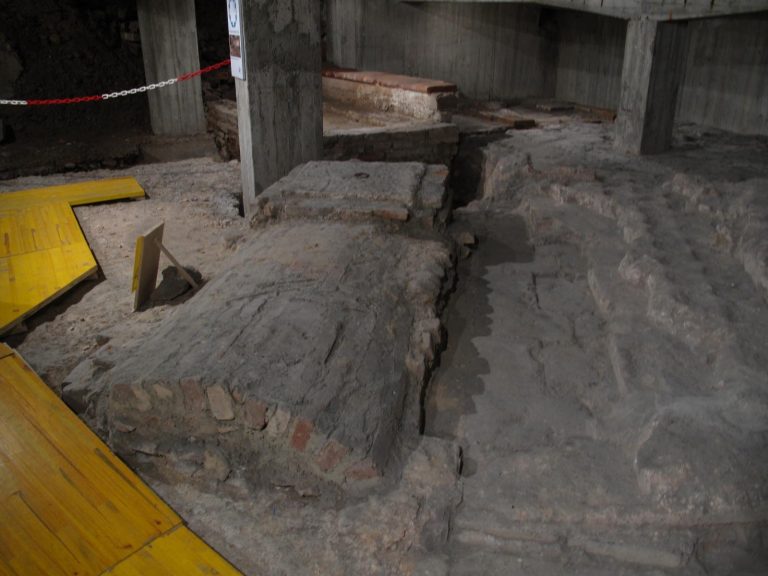
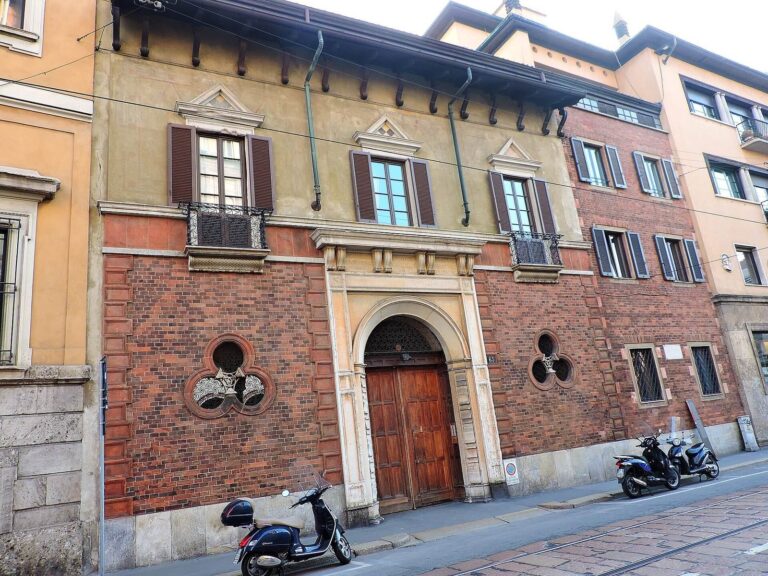
Farmstead and setting
The two-storey farmstead is arranged around an enclosed court. A small settlement developed around the court and is now part of western Milan’s urban fabric, while retaining its historic form. Nearby landscape features include Parco delle Cave, within the larger Parco Agricolo Sud Milano, as well as spring-fed channels and water-meadow fields. The site also borders fields belonging to a large sports centre.
Medieval fabric
Casa Petrarca
A 2014 examination of the walls identified rooms in the complex’s oldest section, known as Casa Petrarca, as part of a finely built rural dwelling. The rooms are dated to the early fifteenth century, although an origin in the mid-fourteenth century remains possible. This dating has been seen as support for the tradition connecting the site with Petrarch.
Painted heraldic devices
A whitewashed wall bears heraldic devices associated with the Visconti, Milan’s ruling family. They include a radiant sun, a rising sun and a dove. Other medieval paintings survive in the oldest part of the farm, made by applying pigment to plaster that had begun to dry. Petrarch’s biographer Pier Candido Decembrio relates the dove emblem to Gian Galeazzo Visconti’s marriage to Isabella of Valois. In Decembrio’s account, Petrarch devised it as a good-luck sign for the young Gian Galeazzo; its motto, À bon droit, was associated with his mildness and the hope of a peaceful future.
Historic depictions
An 1819 edition of Petrarch’s Rime, held in Milan’s Biblioteca Trivulziana, includes a detailed engraving of Linterno by Giovanni Migliara. In 1837, the cultural journal Cosmorama Pittorico featured Villa Linterno in an etching by Gaetano Fiorentini.