Ottagono Poveglia: A Venetian Lagoon Artillery Fort
Site at a Glance
- Popularity
- Medium
- Country
- Italy
- Primary era
- Medieval
- Eras represented
- Medieval
- Civilizations
- Venetian
- Site type
- Military
- Remains
- Fort
On this page4 sections
History
Foundation and lagoon defenses
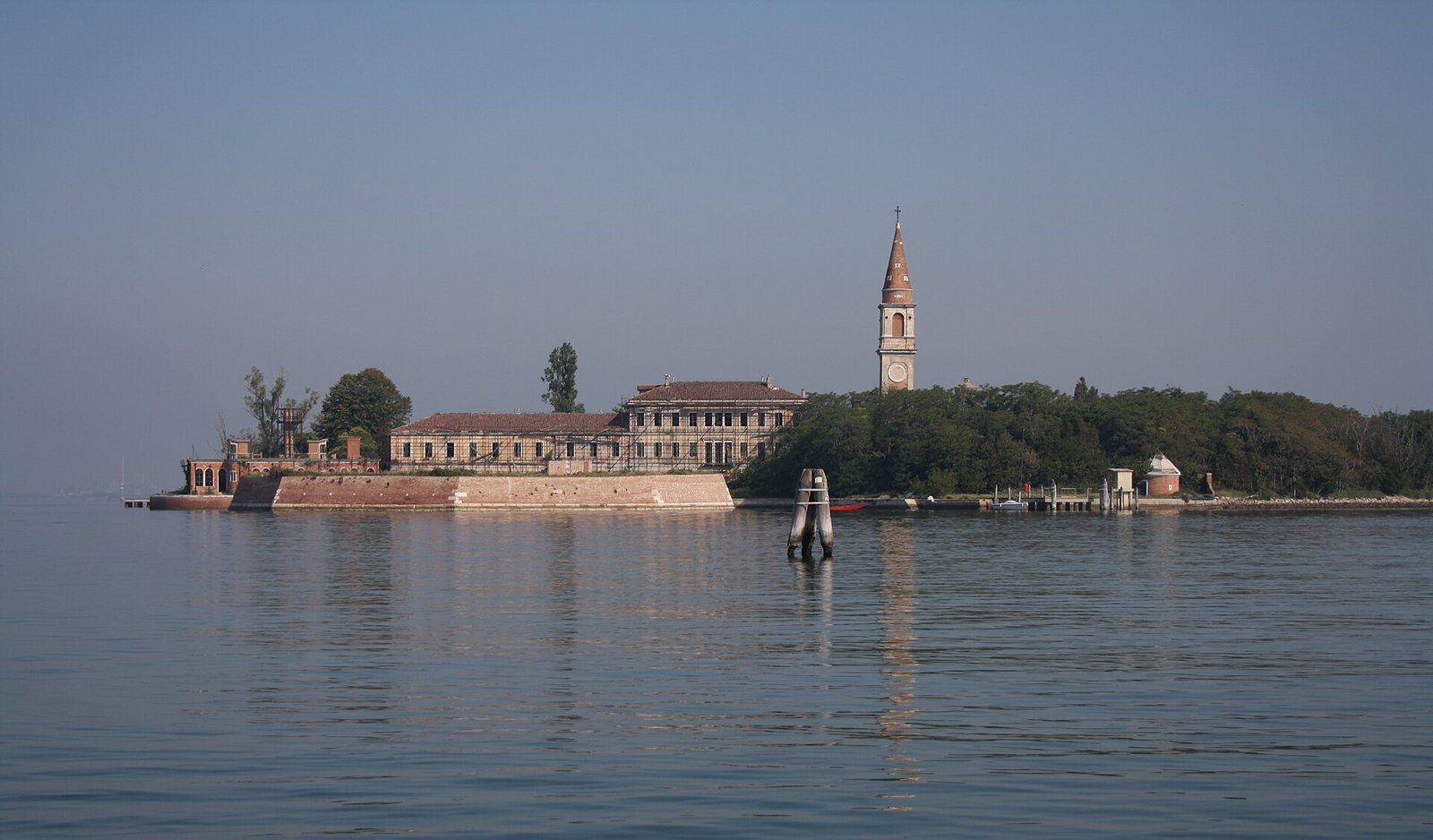
Ottagono Poveglia is a small artificial fortified islet in the Venetian Lagoon, Italy. The Republic of Venice built it around 1380 as an artillery post during the War of Chioggia, a late-fourteenth-century conflict between Venice and Genoa. The fortification is in the Venetian Renaissance style and was intended to help defend the lagoon.
During the war, a Genoese fleet threatened the waterway from Chioggia toward the San Marco basin, in front of Venice’s historic centre. Venice ordered Poveglia’s village evacuated before building the post across from the island, where a castle already stood.
Later conflicts with the Ottoman Empire led the Venetian Senate to secure the lagoon entrances with a series of octagonal forts. The Battle of Lepanto in 1571, a major naval battle between Ottoman forces and a Christian alliance, marked the culmination of those conflicts. Poveglia’s guns were intended to stop attackers who had passed through the fortified entrance at Malamocco, the lagoon’s southern entrance. From the sixteenth to the nineteenth century, they also guarded ships entering there and sailing north. The fort served as a model for other sixteenth-century octagons, and the series was nearly complete by 1574.
Reinforcement and later military use
After the Siege of Candia, a Venetian-Ottoman siege on Crete that lasted from 1646 to 1669, the fortifications were strengthened. Poveglia formed part of a group of five octagonal forts that later fell into neglect. Modernization began in 1726.
The fort served successive military regimes, including the Republic of Venice, the Archduchy of Austria, the Kingdom of Lombardy-Venetia, the Kingdom of Italy, and the Italian Republic. In 1900, the island had four artillery pieces, two mortars, which launch shells on a high arc, and a garrison of 30 men.
During the First World War, the fort stored gun cotton, a cotton-based explosive, and ballistite, a smokeless propellant, for the Italian Royal Navy. Its fortifications were abandoned during the 1960s and 1970s after they ceased to meet political and military needs. The island is state-owned and no longer serves a function.
Remains
The artificial islet lies about 16 metres south of Poveglia. Its regular octagonal plan has sides measuring 20 metres, and it covers approximately 2,800 square metres. A wall fortifies the shoreline, and the fort is built of stone, brick, and earthwork.
A temporary bridge once connected the islet to Poveglia.