Ramnagar Fort: Residence of the Rulers of Benares
Site at a Glance
- Popularity
- Very High
- Country
- India
- Primary era
- Early Modern
- Eras represented
- Early Modern
- Civilizations
- Unclassified
- Site type
- Domestic
- Remains
- Palace
On this page12 sections
History
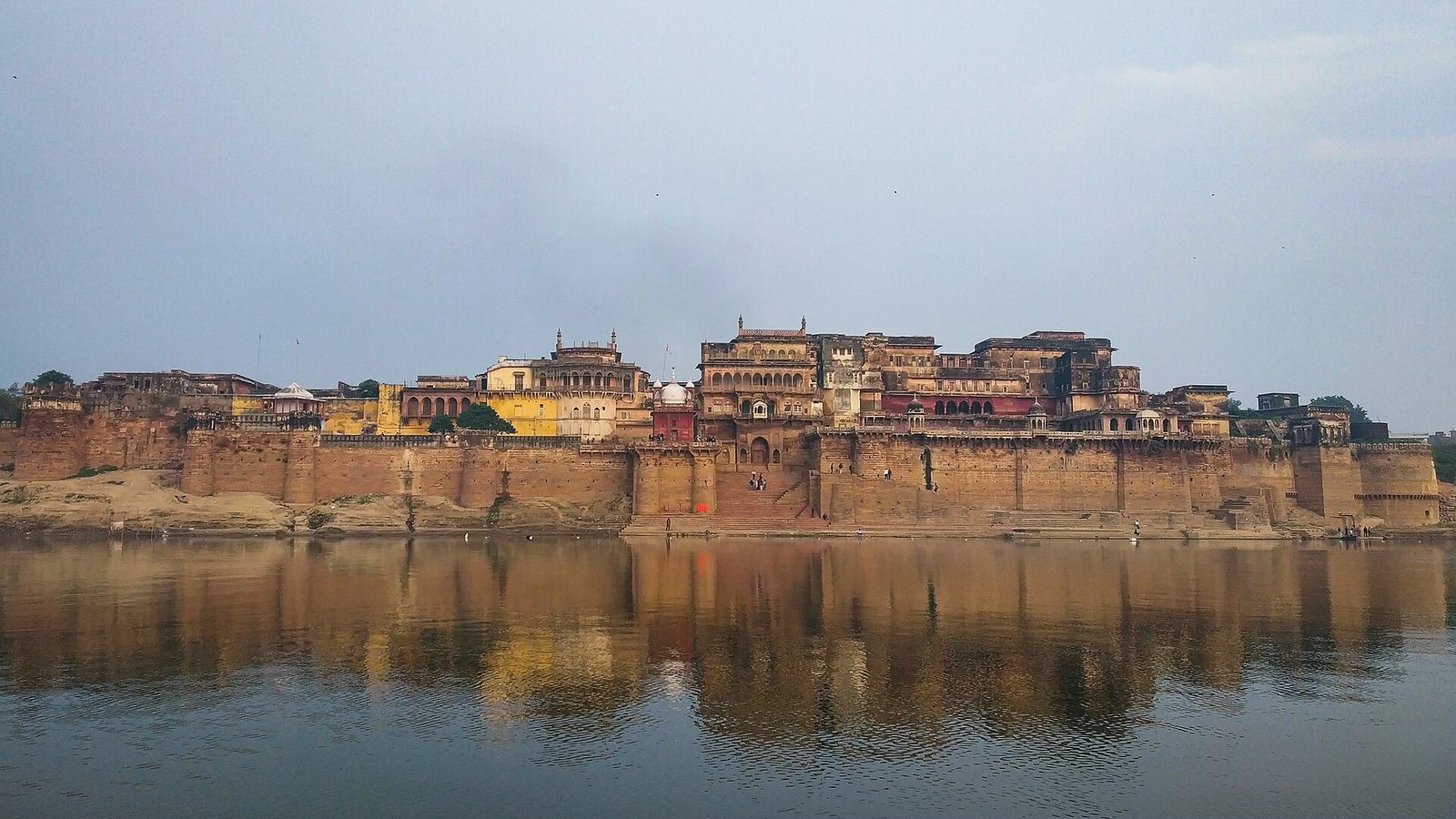
Ramnagar Fort is an eighteenth-century palace-fort on the eastern bank of the Ganges in India, opposite Varanasi. Balwant Singh, ruler of Benares State and a Kashi Naresh, a title for the rulers of Benares, built it in 1750 as a royal residence in the architectural tradition of the Mughal era. Construction began under Babu Azayab Singh, a relative by marriage of Balwant Singh and the son of Babu Bariyar Singh, a zamindar, or landed proprietor and revenue-holder, of Pindara in Banaras.
Mughal authority and Benares
Varanasi was an important province of the Mughal Empire. As imperial authority weakened during the eighteenth century, Balwant Singh, the son of a major landholder, asserted regional power. He recognized the Nawab of Awadh, a regional ruler, as his overlord. The Nawab was nominally subject to the Mughal emperor Muhammad Shah in Delhi. The rulers of Benares continued to seek greater authority until 1775, when Nawab Asaf-ud-Daula was compelled to transfer Varanasi to the British East India Company, a trading enterprise that had expanded into political rule in India.
Benares State and the royal household
Benares became an independent state in 1910, with Ramnagar as its capital, and joined the Indian Union in 1947. Anant Narayan Singh resides in the fort and is known as Maharaja of Benares, although the royal title was abolished in 1971.
Religious traditions and festivals
A Hindu tradition associated with the Veda Vyasa Temple says that the sage Vyasa lived at the site after the deity Shiva expelled him from Varanasi. The annual month-long Ram Lila, dramatic performances of episodes from the Hindu epic Ramayana, remains central to local celebrations. During Dussehra in October, a procession displays royal possessions, and effigies of Ravana, the epic’s antagonist, and his associates are burned to represent the victory of good over evil. The Maharaja continues a family custom of leading the procession on a decorated elephant through streets behind the fort. In earlier times, native regiments performed the drama, while the Ramayana was read throughout the festival month.
Festivals in Magh, a month in the Hindu calendar, take place before the Veda Vyasa Temple and draw pilgrims to Ramnagar. Raj Mangal, held in the calendar month of Phagun, features a boat procession with singing and dancing. It begins at Asi Ghat and travels along the river in front of the fort.
Remains
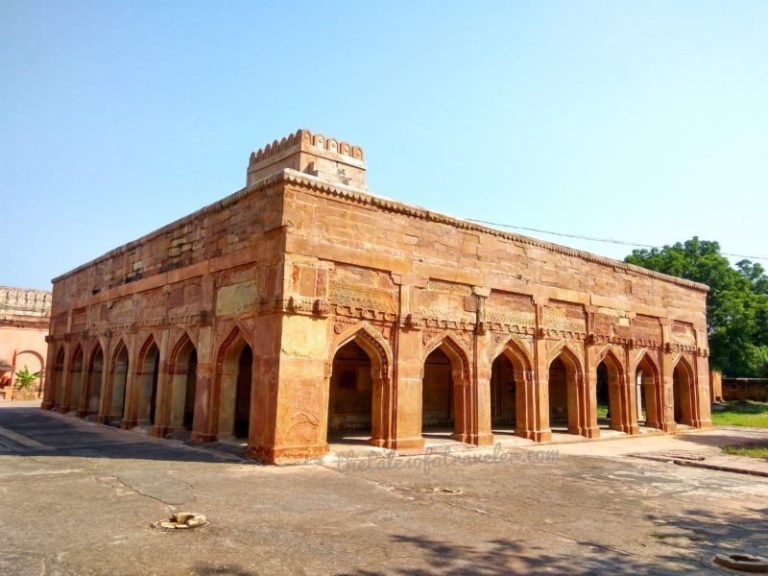
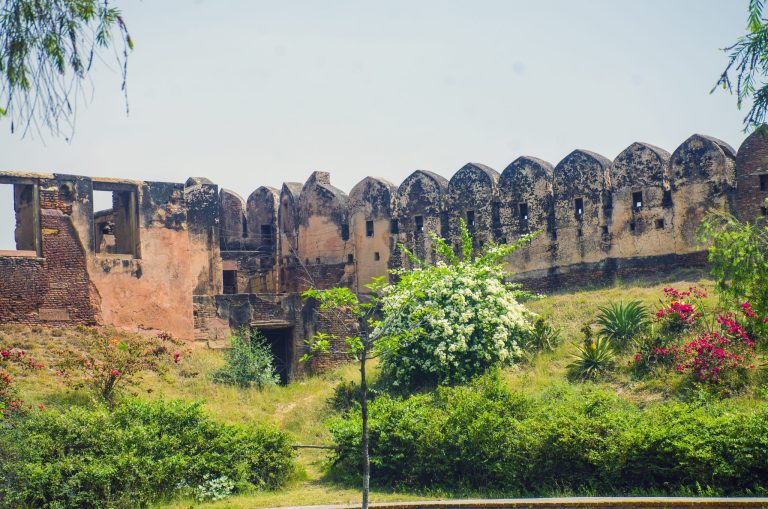
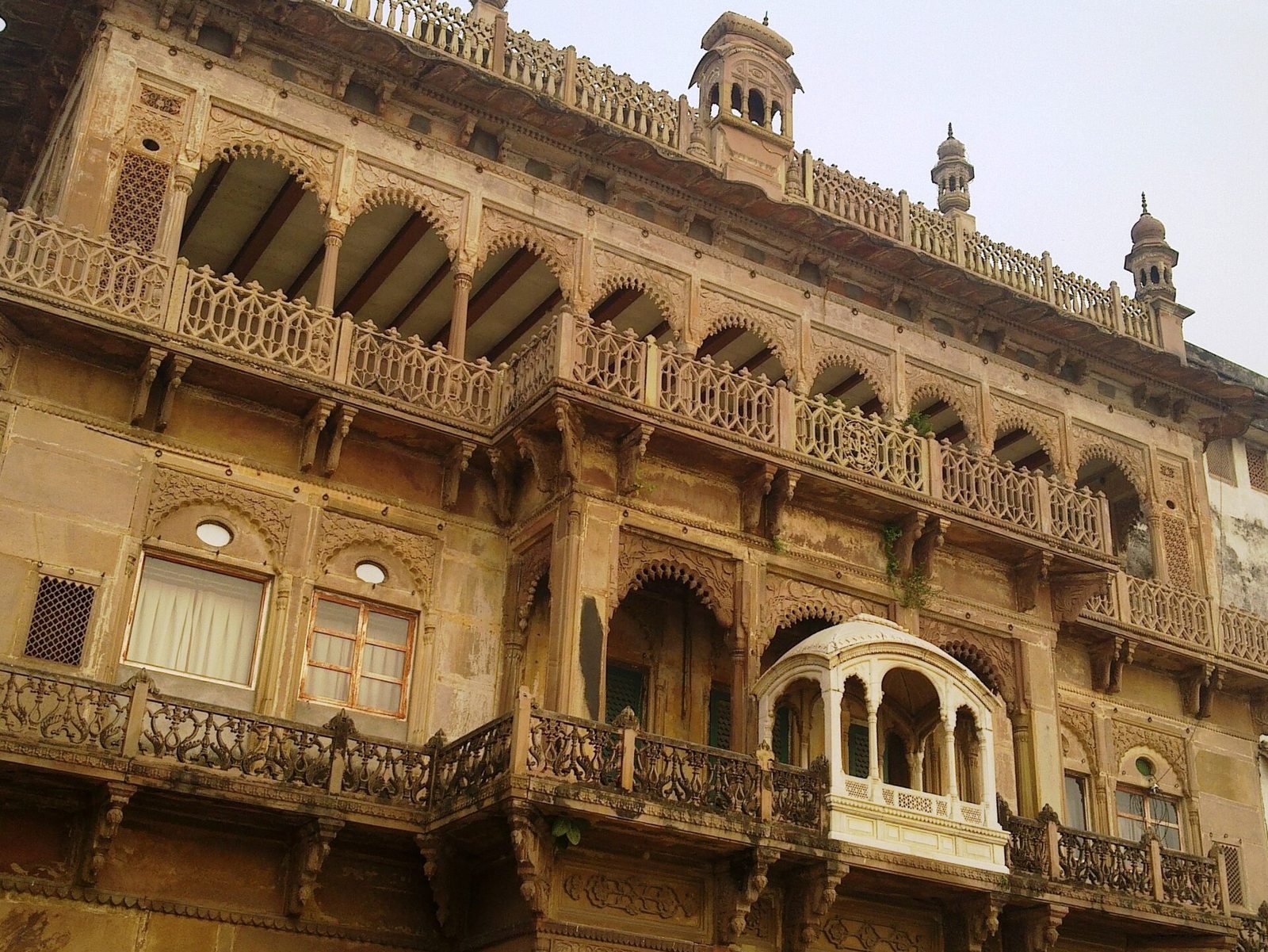
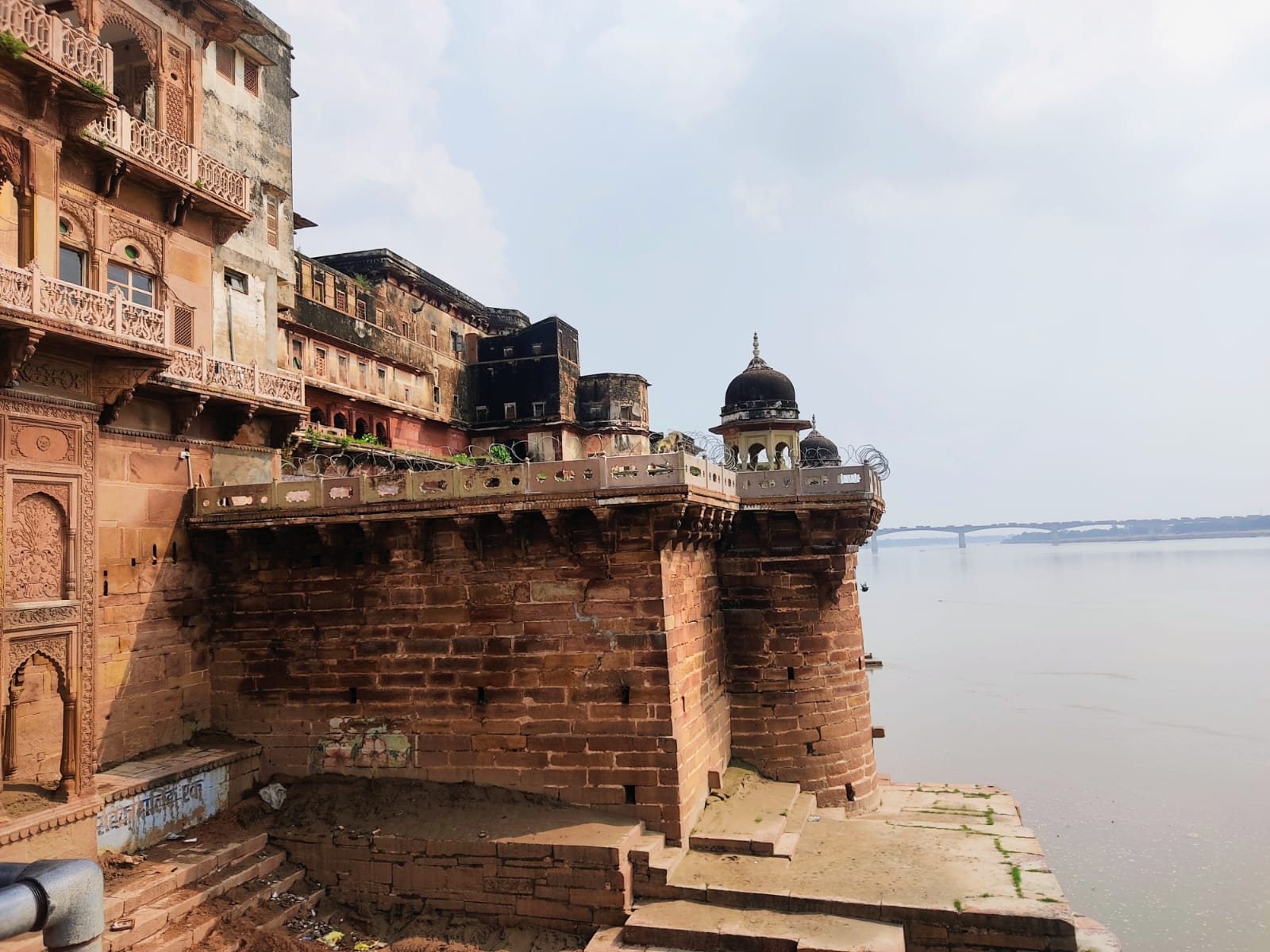
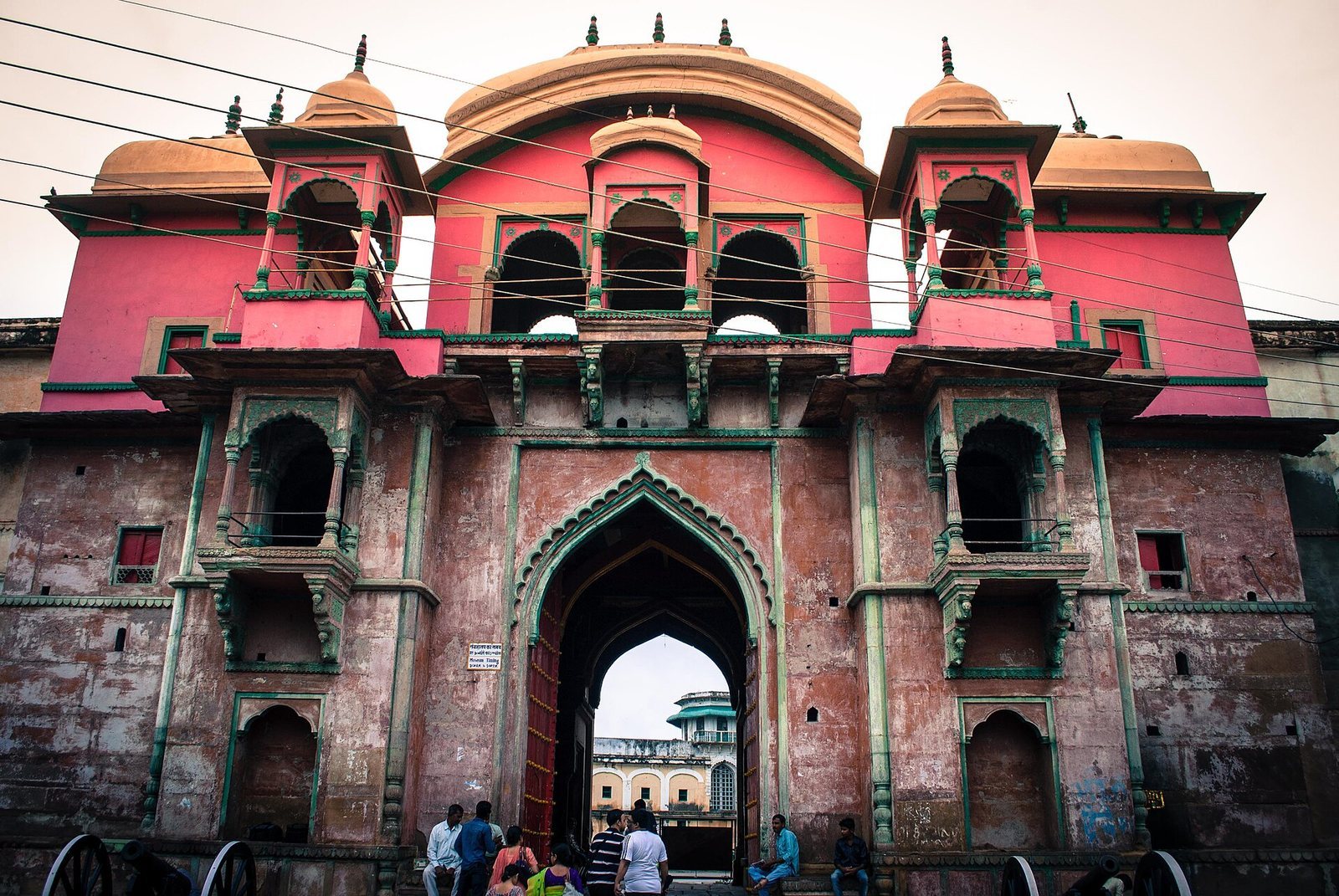
The fort stands on raised ground above flood level, across the Ganges from Tulsi Ghat and the Varanasi ghats. Its pale sandstone is associated with Chunar, and its buildings follow Mughal architectural traditions. Carved balconies, open courtyards, and pavilions form part of the complex. Inscriptions are present on the outer ramparts.
Palace and grounds
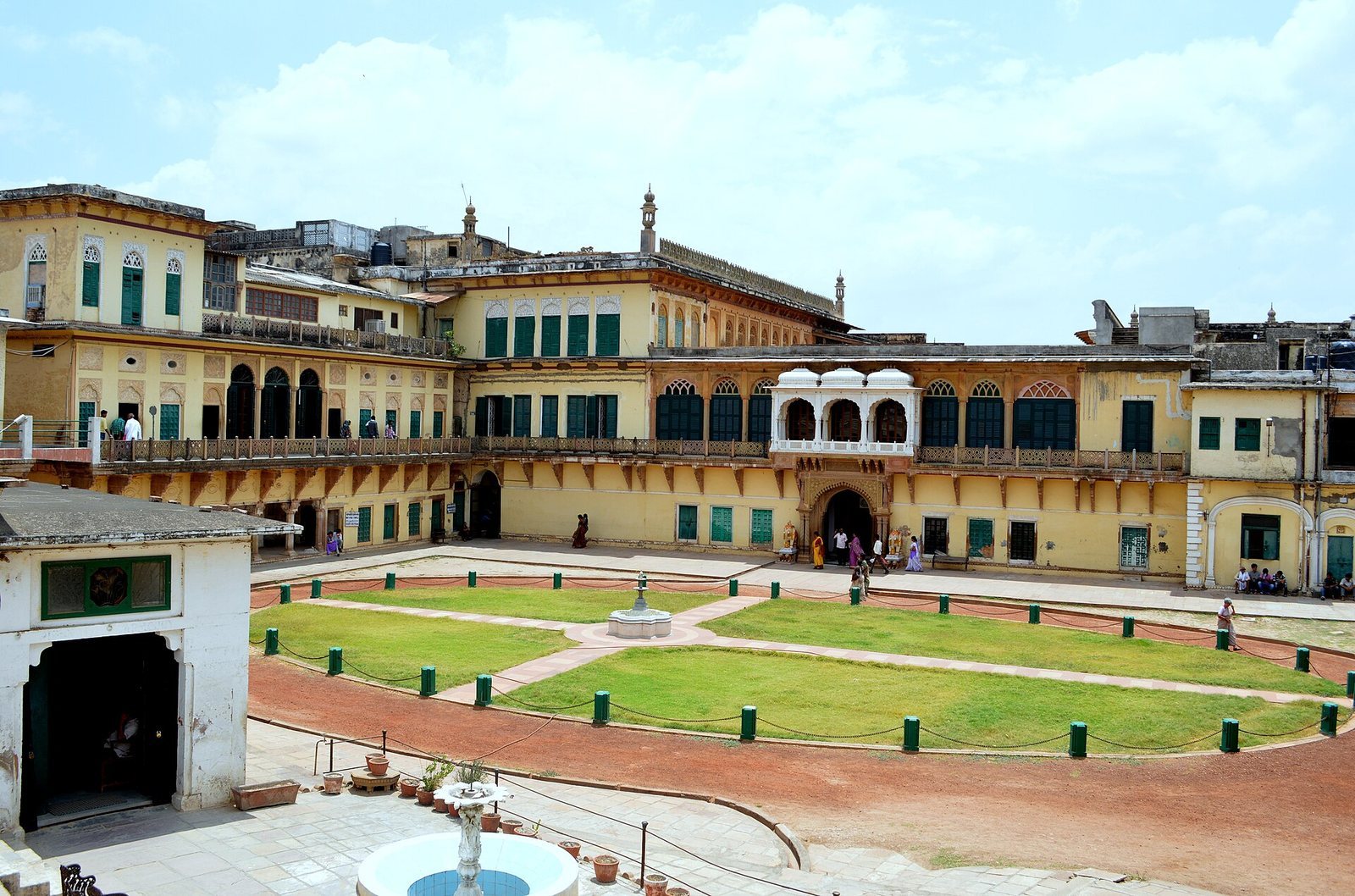
A laid-out garden forms the approach to the palace. Two white towers are reached by a flight of steps; an archway beyond the steps leads through courtyards toward a white tower. The Maharaja’s private residence is on one side, while the public audience hall and reception rooms are on the other. A wall inscription describes the complex as the ruler’s fortified residence and refers to his state boat. A painted barge bearing paired horse emblems was associated with the landing stage.
Temples
The fort contains the Veda Vyasa Temple and a south-facing temple dedicated to Hanuman, a Hindu deity.
The museum
Saraswati Bhawan
The fort’s museum, Saraswati Bhawan, occupies the former Durbar Hall, or public audience hall.
Royal and court collections
The collections include American vintage cars, jeweled sedan chairs, ivory work, and medieval costumes. Royal conveyances include palanquins, covered seats carried by bearers, decorated with gold and silver brocade and shaped like lotus flowers. Other objects include elephant saddles with silver carving, jewelry, silk costumes, swords, daggers, ornate hookahs, and portraits of the Maharajas. The arms collection includes old firearms from Africa, Burma, and Japan, as well as matchlocks, firearms ignited by a burning match.
Clock and musical instruments
The museum holds musical instruments whose black surfaces have turned white through lack of maintenance. It also contains an astronomical clock made in 1852 by an astronomer at the royal court of Varanasi. The clock displays the time, year, month, week, and day, together with astronomical details concerning the Sun, Moon, and other planets.
Manuscripts and illustrated books
Religious manuscripts form part of the museum holdings. Among its illustrated books are works in the Mughal miniature tradition, a form of small-scale painting associated with Mughal art. One book contains 535 illustrations expressing Islamic ethos. Each illustration has a decorative border with floral designs or a cartouche, an ornamental framed panel.