Cornod Castle: A Gothic Revival Residence in France
Site at a Glance
- Popularity
- Medium
- Country
- France
- Primary era
- Modern
- Eras represented
- Modern
- Civilizations
- French
- Site type
- Domestic
- Remains
- Castle
On this page4 sections
History
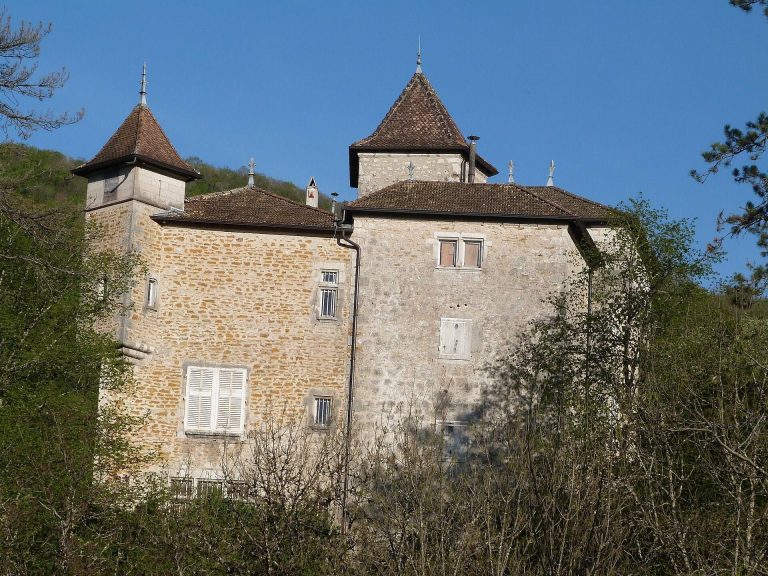
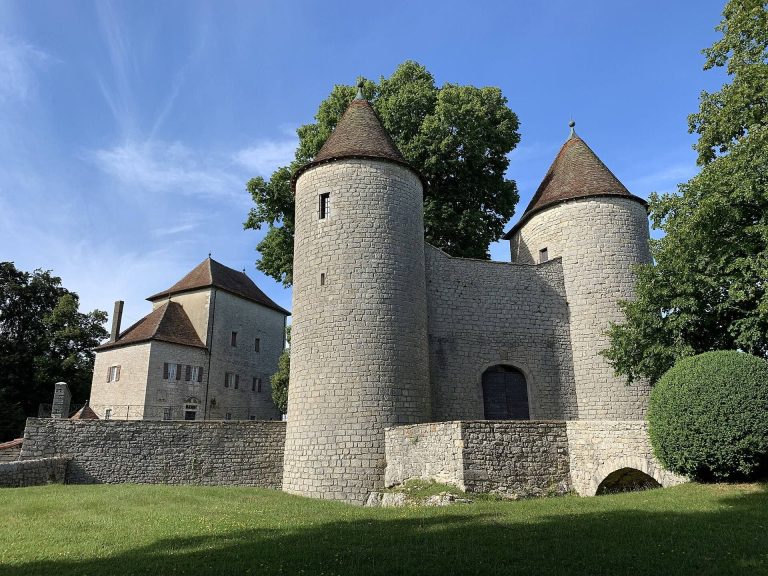
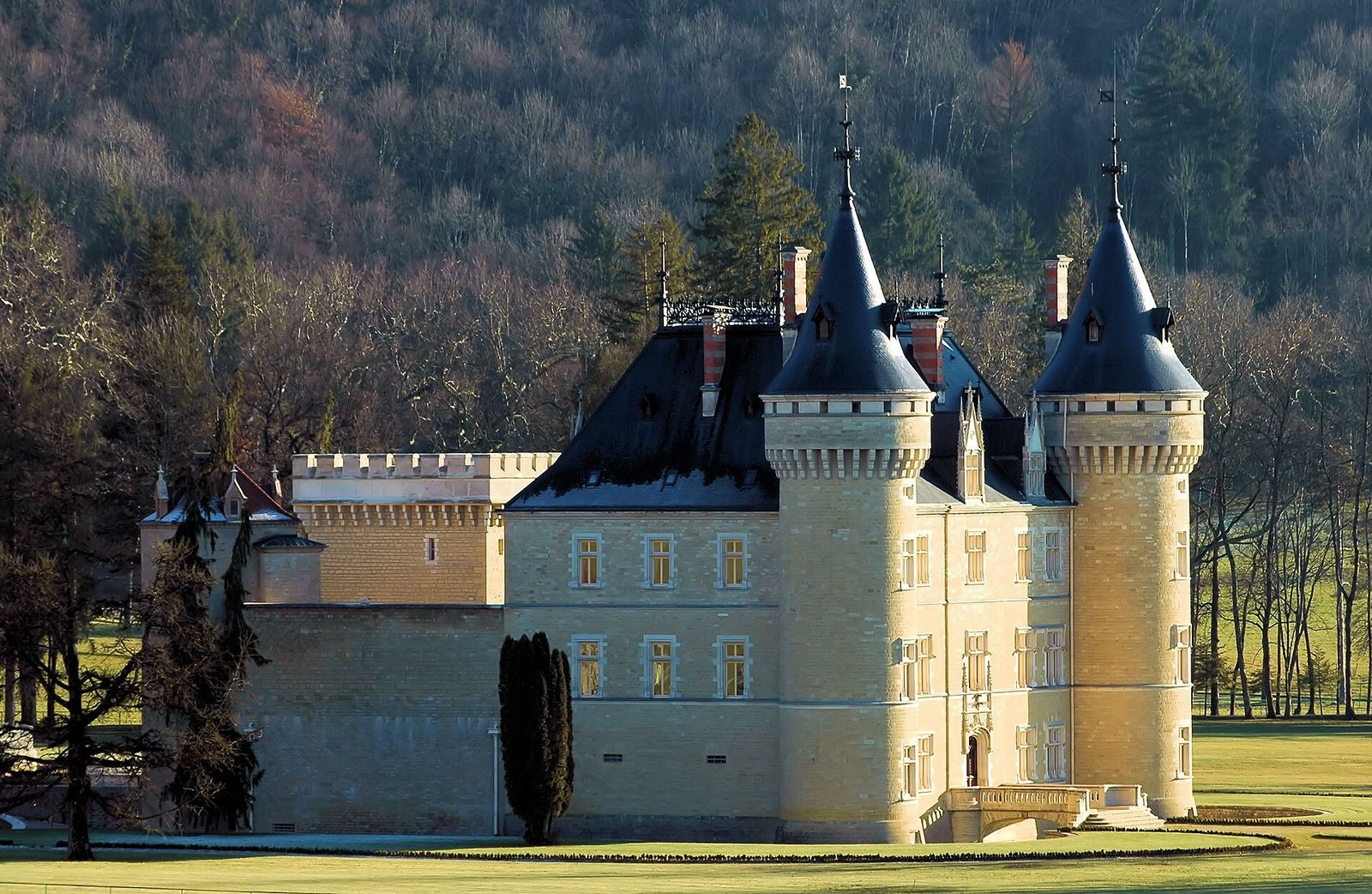
Cornod Castle is a residence in the commune of Cornod, France, erected in 1876 on the site of a medieval château. Its present design is Gothic Revival, a nineteenth-century return to forms associated with medieval Gothic architecture. The estate’s history is closely tied to the Barony of Cornod, a feudal lordship and the lands held under a baronial title.
Barony, succession, and conflict
The barony is recorded from the fourteenth century, when French and Spanish feudal lords frequently fought over the region. By 1350, its first recorded owner held the title of baron. In 1358, he transferred the lands to his sister as a marriage dowry. She left Cornod to a son from her first marriage in 1398. In 1414, that son, who had no children, bequeathed it to his sister. Her son, who became a baron of Cornod, died unmarried.
In 1439, a son of the sister’s husband from an earlier marriage received permission from Louis I, ruler of the duchy of Savoy, to own the château and hold the baronial title. His descendants retained the estate. During the latter sixteenth century, a later baron gained influence through the patronage of Charles Emmanuel I, Duke of Savoy. He acquired another baronial title in 1582 and held several offices, including state councillor, chamberlain, senior military administrator, governor of the fortress at Bourg, and ambassador in Rome.
In 1600, the baron’s eldest son died without an heir during the siege of Bourg, and the barony passed to his brother. In 1635, this brother was chosen to lead the nobility of Bresse, a historic region in eastern France, in a conflict between the king and the counties. He was killed by a fragment of cannon shot during the siege of Dole in 1636. Since he also died without an heir, a dispute among his relatives ended with another family member taking ownership of Cornod.
On 13 March 1637, a force of 1,500 infantry and 600 cavalry, supported by artillery and led by a count opposed to the king, attacked Cornod. A royalist force commanded by a baron won the fighting. A nobleman bought the barony in 1686, but on 25 February 1696 a member of the former baronial family recovered the ancestral estate. He later left it to his grandson.
Revolution and later ownership
In 1790, the newly created department of Jura included the Barony of Cornod. An heir of the former baronial family, a noble deputy representing Ain, lost his title. In early 1791, he and his son left the château seeking refuge in Switzerland and Freiburg, then joined the royalist émigré army of the Prince of Condé, a French royal prince whose forces opposed the Revolution. Revolutionary authorities declared the barony national property, divided it into several hundred plots, and sold them to private buyers. Two communes formed from the area between 1790 and 1794.
In 1826, after Napoleon’s rule had ended and Bourbon rule had returned to France, a former colonel of Napoleon’s Imperial Guard, an elite military corps, bought the barony. His son sold the estate in 1876 to a wealthy industrialist from Lyon. A major rebuilding of the château and restoration of its park followed. The property has been listed as a French historic monument, a state heritage designation, since 2007, and it remains privately owned.
Remains
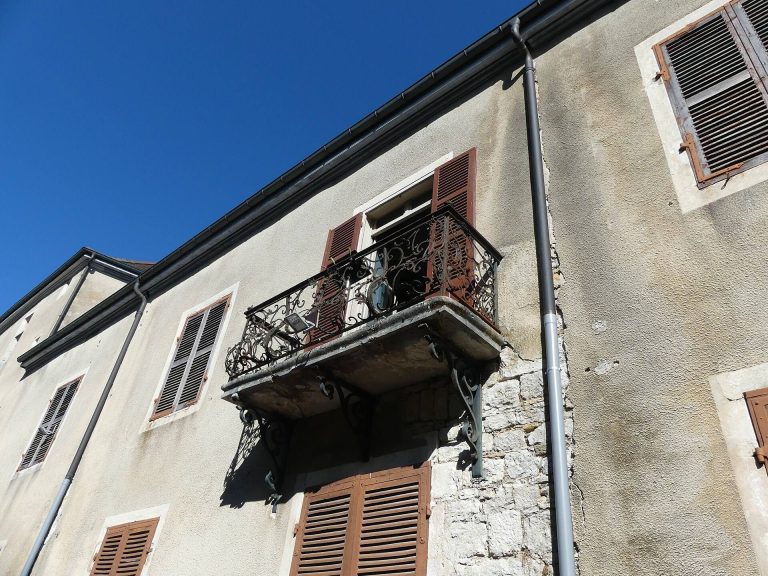
A large park surrounds the château, and the estate includes several service and guest buildings. The château has been restored inside and out. Its architectural associations also include Renaissance architecture, which drew on classical forms.