Gut Seekamp: A Former Aristocratic Estate near Kiel
Site at a Glance
- Popularity
- Medium
- Country
- Germany
- Primary era
- Modern
- Eras represented
- Modern
- Civilizations
- German, Kingdom of Prussia
- Site type
- Domestic
- Remains
- Manor House
On this page10 sections
History
Gut Seekamp is a former aristocratic estate north of Kiel, Germany, with a history reaching back to at least 1350. It first belonged to Gut Knoop and, with that estate, to the von der Wisch family.
Rantzau ownership and the estate district
The Rantzau family took control of the farms in 1450 and held them until 1632. Around 1570, Christopher Rantzau separated the Seekamp area into a distinct estate district to provide for his three heirs. After his death in 1571, they agreed on the boundaries between the three estates in 1575.
In 1615, two women, Engelke Krabbenhöft and Abelke Kohberg, were accused of witchcraft at Seekamp and executed. In 1626, Cai von Ahlefeldt of Mehlbeck acquired the estates of Bülk, Knoop, and Seekamp. He sold all three to Christian IV in 1632. King of Denmark and Norway from 1588 to 1648, Christian had a nearby fortress built at Friedrichsort, then called Christianspries, and assigned the estates to supply it. After the fortress was demolished, Claus von Buchwald of Sierhagen reacquired the estates and left them to his son Wulf, who became insolvent.
Changes in ownership and use
Serfdom, a dependent status that restricted the freedom of people bound to an estate, was abolished in 1792. Seekamp was divided into parcels and reduced to a farm without estate privileges. Count Schack von Schackenburg was its last noble lord, and the seat of the Seekamp estate district, an administrative area organized around an estate, moved to Stift. In 1801, Johann Erich von Berger, a professor of philosophy and astronomy in Kiel, bought the farm. He also commanded the coastal militia in the Friedrichsort fortress area.
Auguste Olde, born Wriedt and mother of the painter Hans Olde (1855-1917), came from Seekamp. Her father managed the estate and bought it in 1878. Hans trained as a farmer and inherited the estate in 1904, but devoted greater attention to painting. His son, the painter Hans Olde the Younger (1895-1987), sold most of the estate to the city of Kiel in 1925.
Municipal change and the Children’s Republic
In 1927, Andreas Gayk, then an editor at the Schleswig-Holsteinische Volkszeitung and later Lord Mayor of Kiel, proclaimed Germany’s first free Children’s Republic at Seekamp. A Children’s Republic was a youth camp organized around the idea of a community run by children. From 16 July to 12 August, the camp brought together 2,300 working-class children from Germany, Denmark, Austria, and Czechoslovakia.
Holtenau, Pries, and Schilksee all predated the estate. The villages had been incorporated into estate districts during the colonization of the Danish Wohld, a peninsula in Schleswig-Holstein north of Kiel, by Holstein’s nobility. When Prussia dissolved estate districts in 1928, the three villages became rural municipalities. Seekamp was assigned to Schilksee, which became a district of Kiel in 1959.
Remains
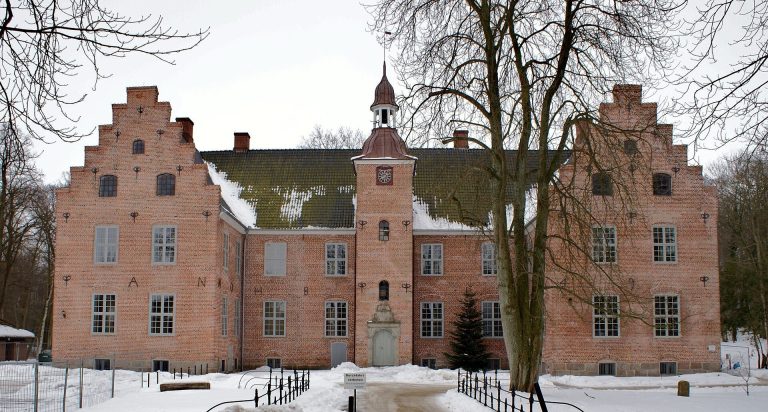
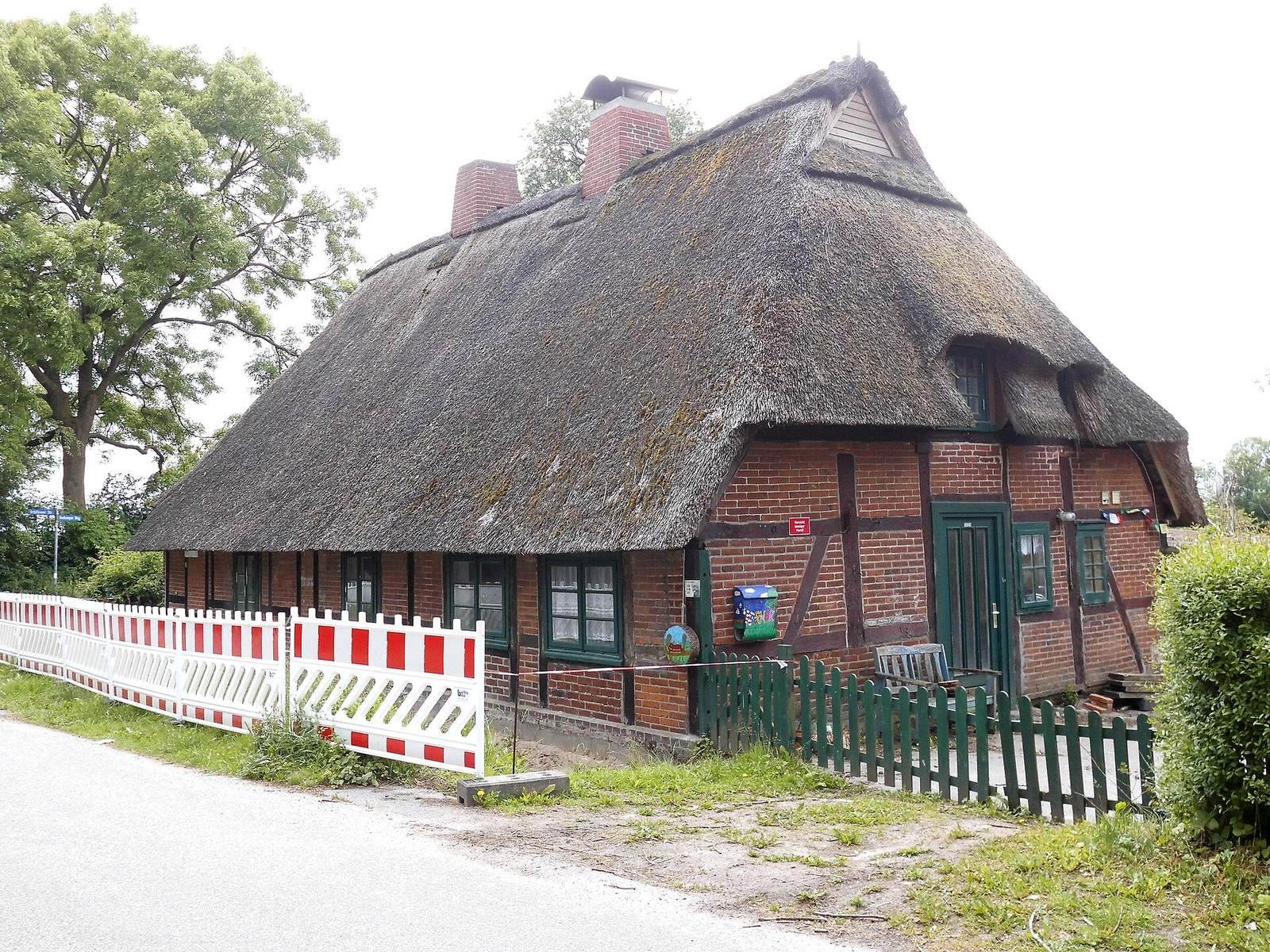
The former estate grounds contain the manor house, a thatched horse stable, a nearby former studio house, and a sculpture park. The buildings and park occupy different parts of the former estate area, with the studio house near the estate.
Estate buildings and grounds
Early farm complex
The first farm complex was probably begun in 1575 by Hieronymus Rantzau and resembled a two-storey moated castle. It had a windowless cellar, foundation walls nine feet thick, and a lookout structure. The foundation remains were removed in the nineteenth century.
Manor house and horse stable
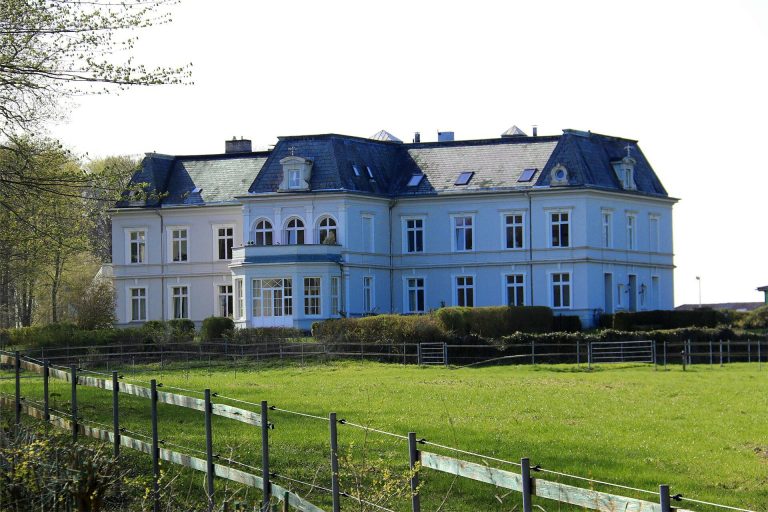
The estate manor house was built in 1876. The Hans-Kock-Stiftung uses it for events and exhibitions, along with a thatched horse stable dating to the nineteenth century.
Hans Olde the Younger’s studio house
Near the estate is the privately owned former studio house of Hans Olde the Younger. Around 1938, he remodelled the building into its present form.
Sculpture park
Since 1986, the former estate grounds have contained a sculpture park by the German sculptor Hans Kock. The wider complex is also known as Kulturpark Seekamp.