Gut Eckhof: A Historic Manor Estate in Schleswig-Holstein, Germany
Site at a Glance
- Popularity
- Medium
- Country
- Germany
- Primary era
- Early Modern
- Eras represented
- Early Modern
- Civilizations
- Danish
- Site type
- Domestic
- Remains
- Manor House
On this page11 sections
History
Gut Eckhof is a historic manor estate in Strande, Schleswig-Holstein, Germany. Established in 1708 as a Meierhof, or farm attached to a larger manor, it belonged to Gut Bülk before becoming an independent noble estate in 1774.
Early occupation
Eckhof may have been a substantial fortified site around AD 900, when Haithabu, also called Hedeby, a major Viking Age trading settlement in present-day northern Germany, was flourishing. The proposed fortification had at least two outworks, defensive structures beyond a main enclosure, though the identification is uncertain. A settlement also occupied the site during the Middle Ages.
From farm to independent estate
On 1 May 1738, Claus Christoph von Thienen, Gut Bülk’s first owner, sold Eckhof to Baron Andreas Liliencron. Liliencron transferred it to Johann Ludwig Krantz on 21 January 1746 for 28,000 Reichstaler, a currency used in German-speaking lands. Krantz sold it to Detlef Hilmers on 1 May 1753.
Friedrich Wilhelm Conrad Holck bought the estate from Hilmers in 1770 for 60,000 Reichstaler. In 1774, Eckhof became an independent noble estate comprising 10 ploughlands, a historical measure of agricultural land. Holck abolished serfdom there in 1786. The Holck family’s friend, German poet Friedrich Gottlieb Klopstock, frequently visited between 1770 and 1794.
Neergard family and later succession
Holck transferred Eckhof to Jens Peter Bruun Neergard around 1789–1792. Neergard made it an entailed estate, legally bound to family succession. In 1791, Fuhlensee became part of the estate. After Neergard’s bankruptcy in 1828, his wife, Henriette Caroline Elisabeth Baudissin, bought Eckhof at a forced sale and continued to manage it until her death on 19 December 1864. Neergard himself died in 1848.
The couple’s eldest son had already died. Their second son, Ernst Friedrich Ludvig Carl Bruun Neergard, lived in America and was unmarried, although he had children; the estate passed to their third son, Lucius Carl Joseph Andreas Bruun Neergard. Lucius’s eldest son, Richard Jens Ernst von Bruun-Neergaard, died before his father, so the estate went to Lucius’s second son, Carl Erik Johan Bruun Neergaard. Carl Erik’s son Theodor Magnus Sophus Gunni Bruun Neergaard succeeded him, followed by Theodor’s only son, Carl Joseph Heltmuth Kurt Bruun Neergaard.
Because of Carl Joseph’s poor health, his family moved with him to Davos, Switzerland, and the estate was leased. After his death, his wife, Mathilde Helene Heim, inherited Eckhof; they had no children. In 1972, the estate passed by inheritance to a Reventlow count at Gut Wulfshagen. Nicolaus Franz Friedrich Reventlow and Caroline Reventlow became its owners in 2009.
Territorial administration
The Eckhof estate district was reduced in 1876, when part of its territory was used to form the municipality of Dänischenhagen. The district was dissolved in 1928 and incorporated into Schilksee; in 1934, its former territory became part of Strande.
From 1889 to 1930, the Amt Eckhof, an administrative district, changed in scope. Until 1928 it comprised the municipalities of Dänischenhagen and Schilksee and the estate districts of Eckhof and Uhlenhorst. From 1928 to 1930 it covered the larger municipality of Schilksee, formed from those and other municipalities and estate districts.
Remains
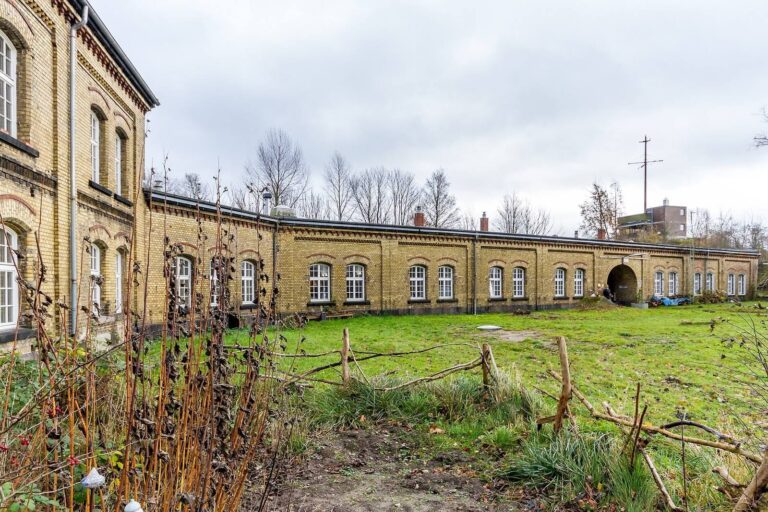
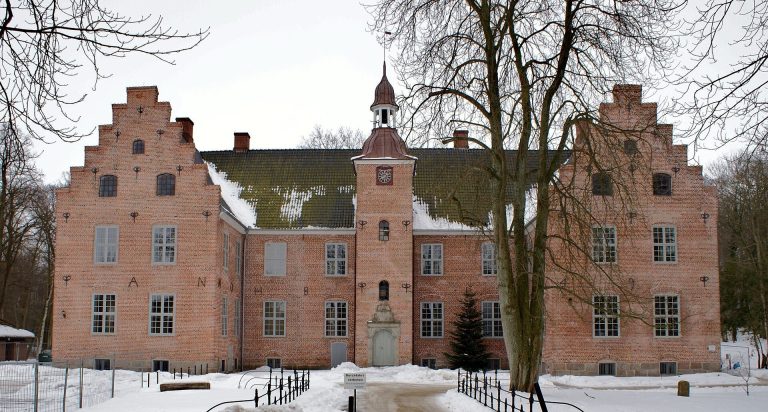
The estate’s built features include a brick manor house and its cowhouse, while the woodland near the house and a named oak are associated with the grounds’ past. European fly honeysuckle also grows abundantly on the estate.
Manor and farm buildings
Manor house
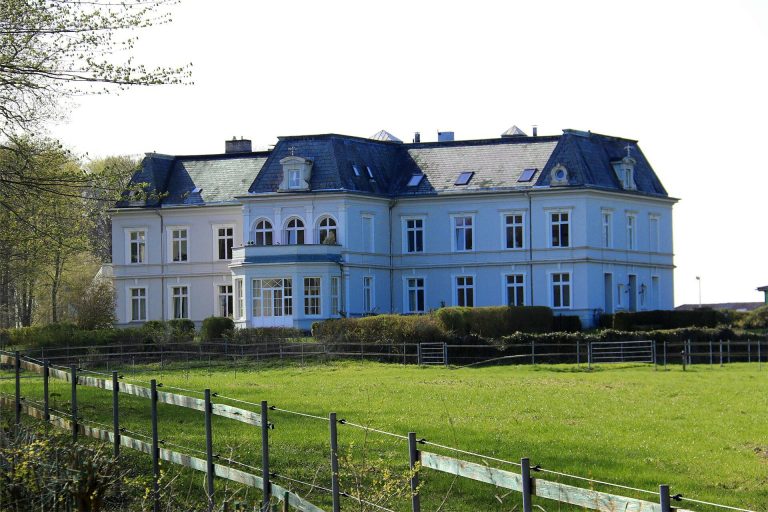
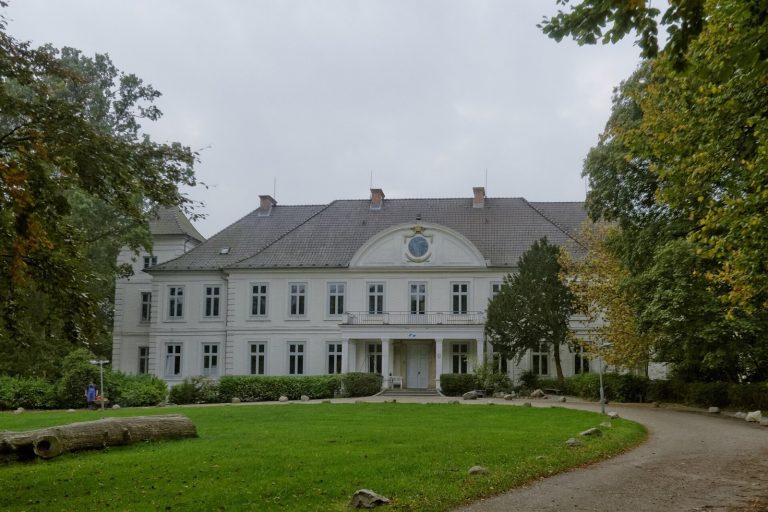
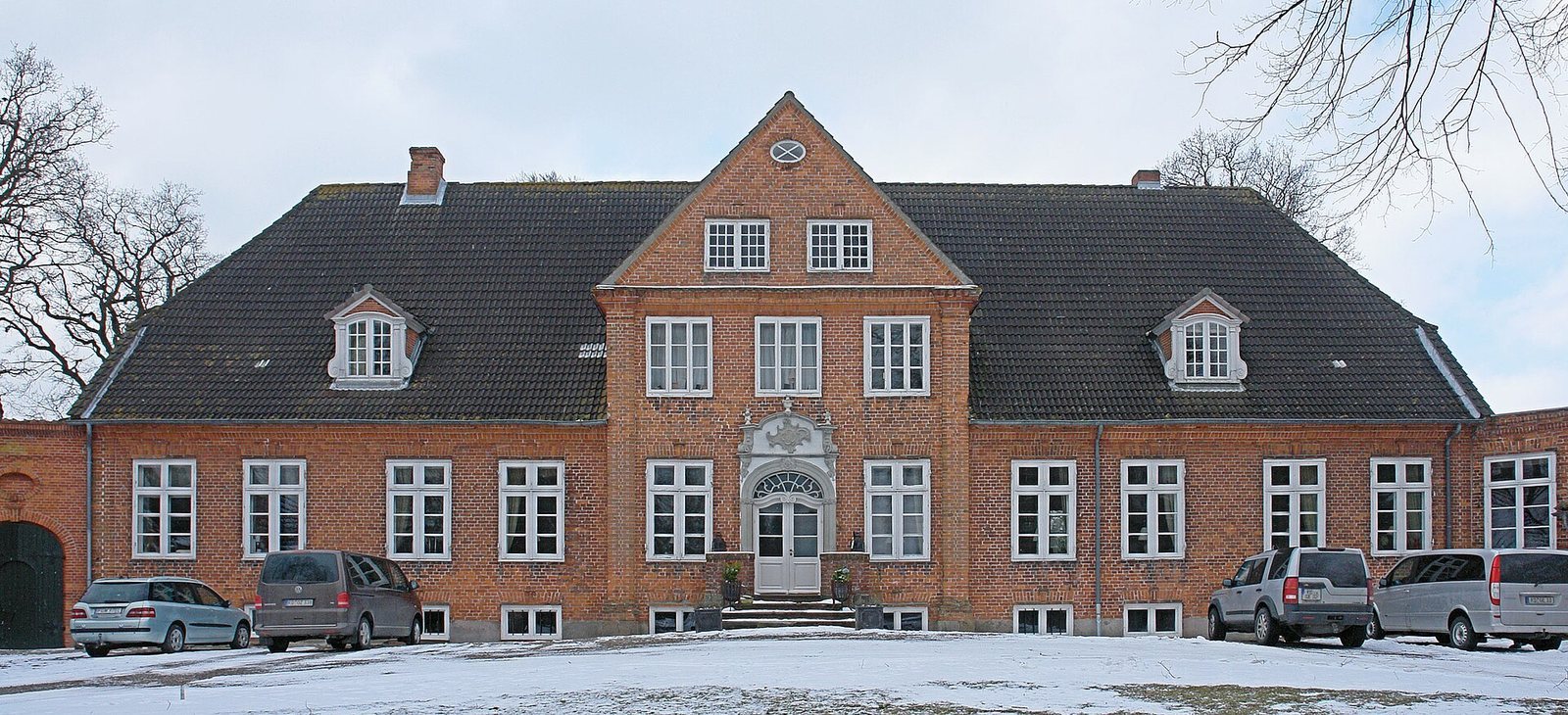
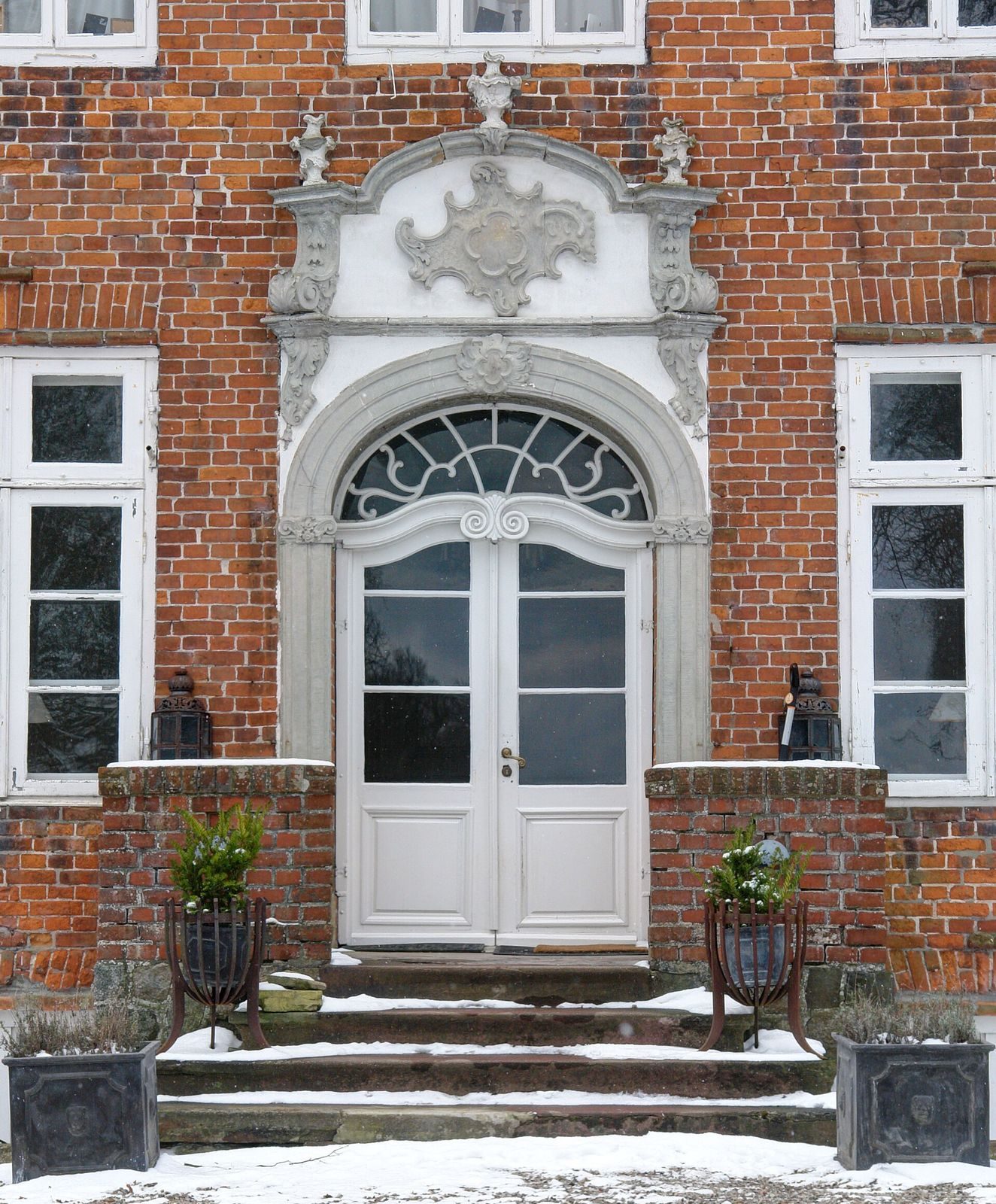
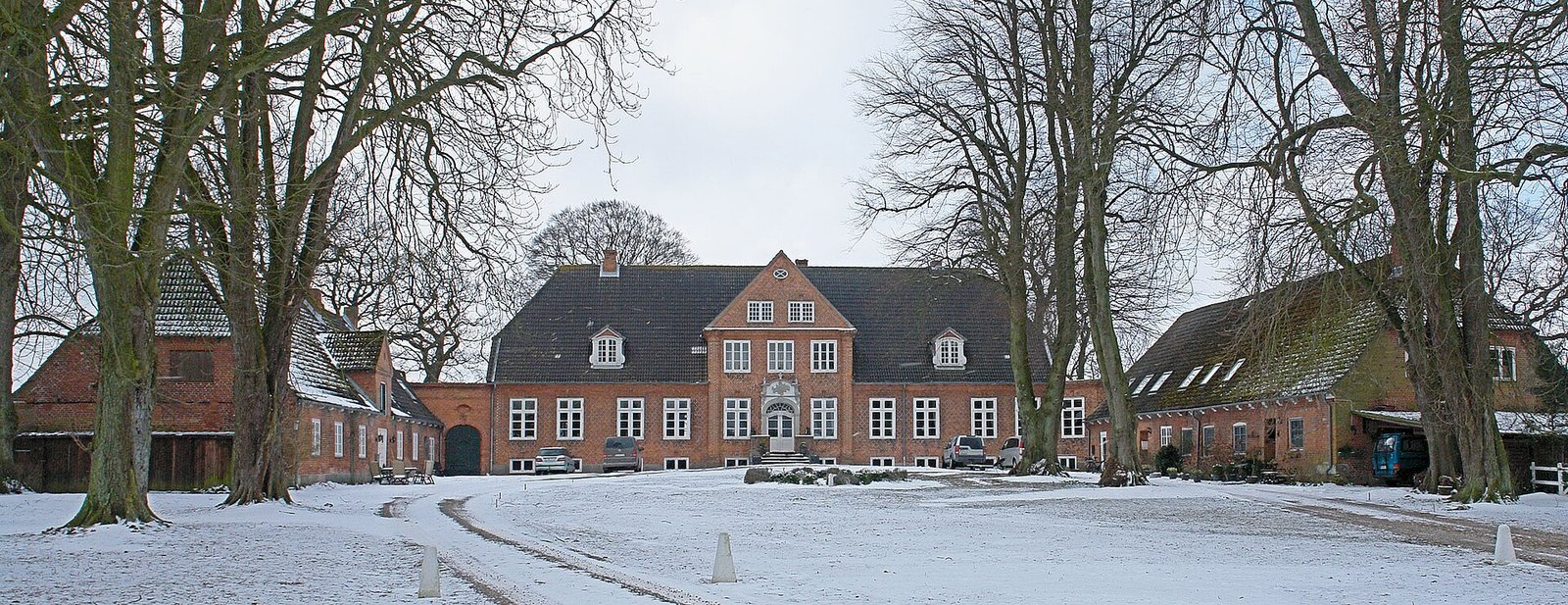
Holck’s manor house is a single-storey brick building beneath a half-hipped roof, whose sloping ends stop short of the eaves. Its two-storey central projection spans three bays, or structural divisions, and is framed by pilasters, shallow, flattened representations of columns. A sandstone entrance portal in the ornate Rococo style of the 18th century is topped by a triangular pediment.
Cowhouse beam
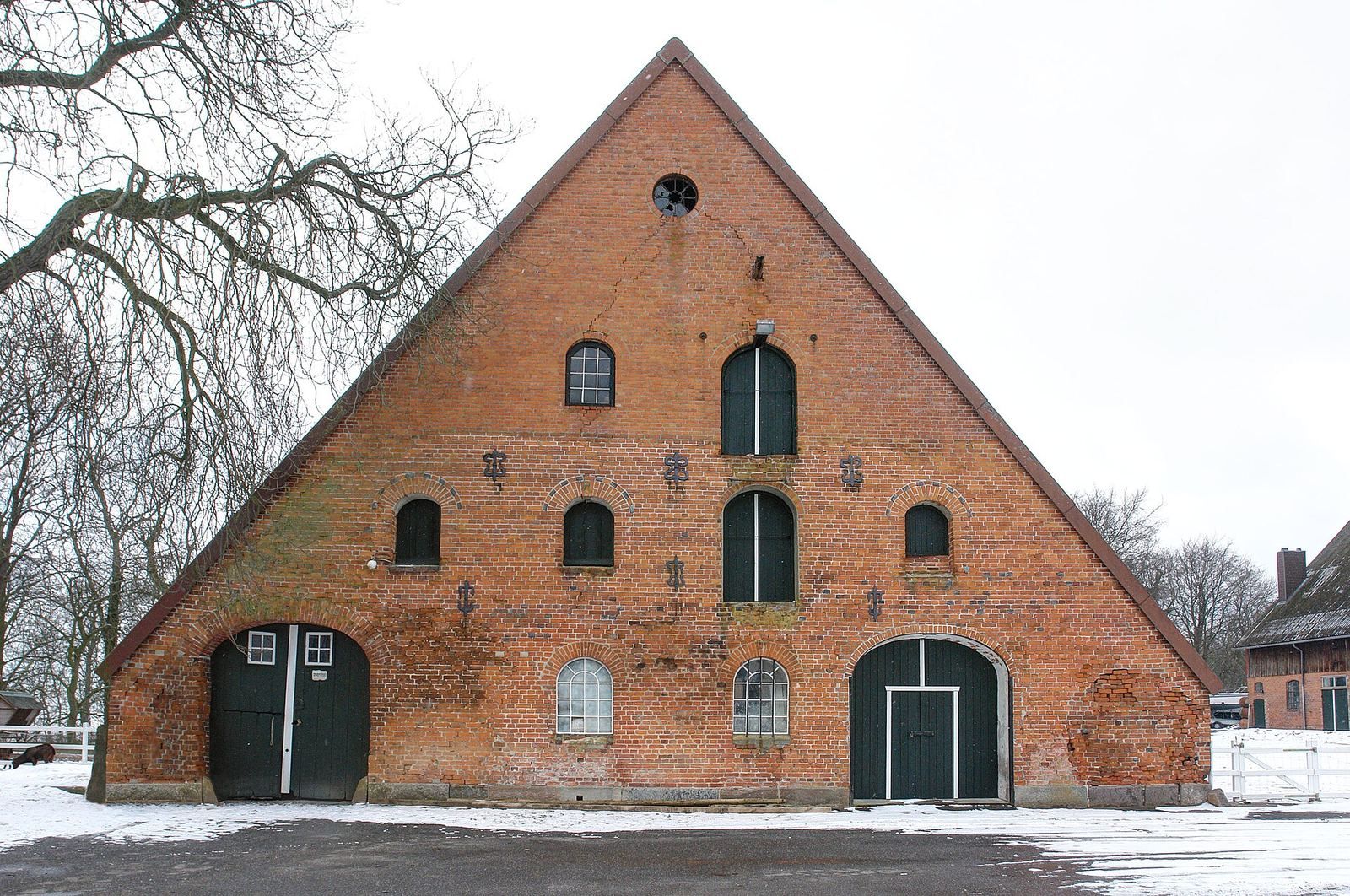
A timber beam on the cowhouse’s north wall carries the name Detlef Hilmers and the date 1755, cut into the wood.
Woodland and former landscaped grounds
The woodland near the manor house was once called Klopstock Grove and contained landscaped grounds, a pleasure house, and monuments dedicated to Klopstock and Johann von Bernstorff, a Danish state minister. An island on the estate was said to have been called Klopstock Island.
Estate trees and plants
A pedunculate oak on the estate is known as the Klopstock Oak. European fly honeysuckle (Lonicera xylosteum) grows abundantly there.