Fortress of São João in Rio de Janeiro: A Coastal Defense of Guanabara Bay
Site at a Glance
- Popularity
- High
- Country
- Brazil
- Primary era
- Early Modern
- Eras represented
- Early Modern, Modern
- Civilizations
- Portuguese
- Site type
- Military
- Remains
- Fort
On this page15 sections
History
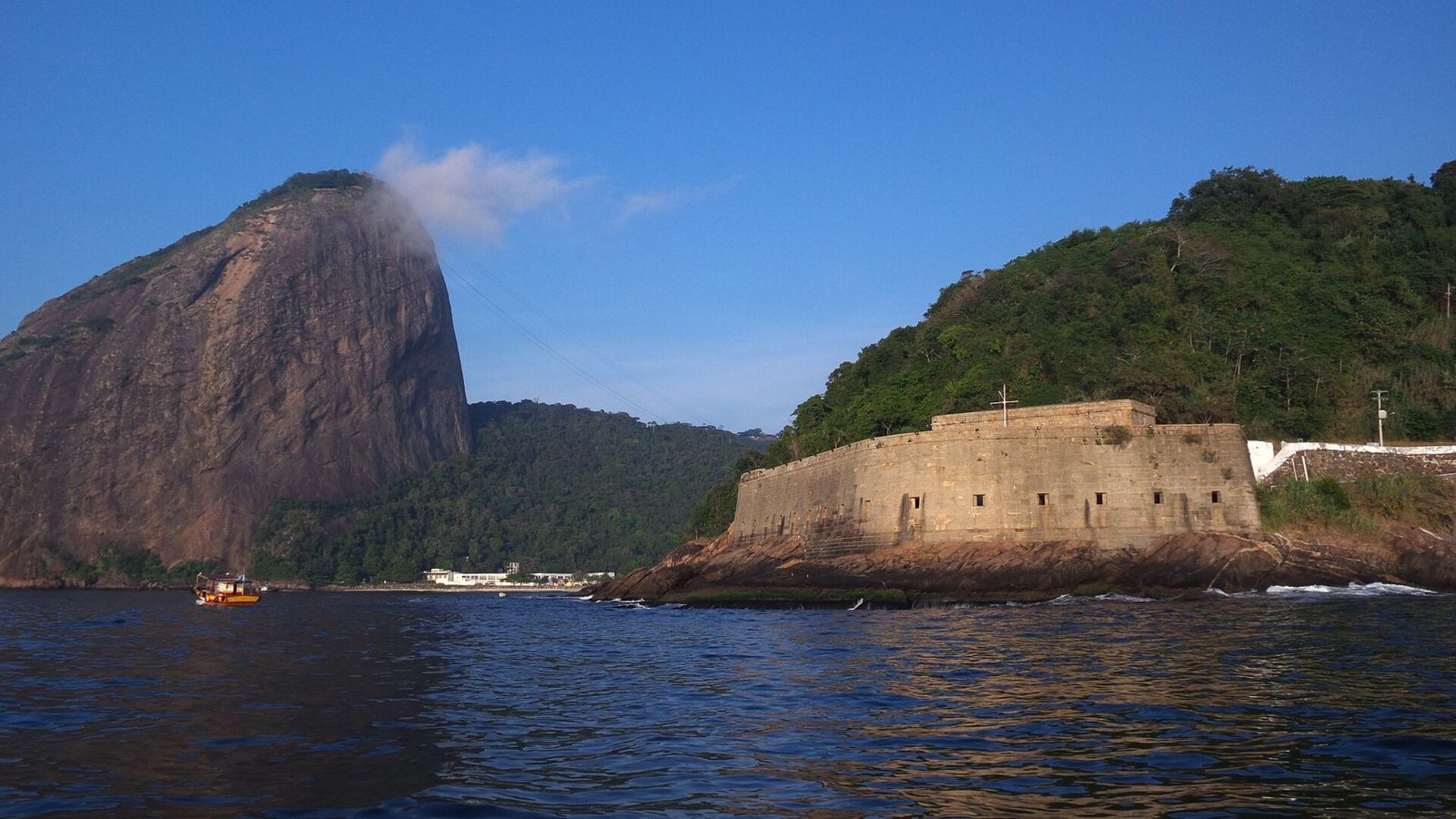
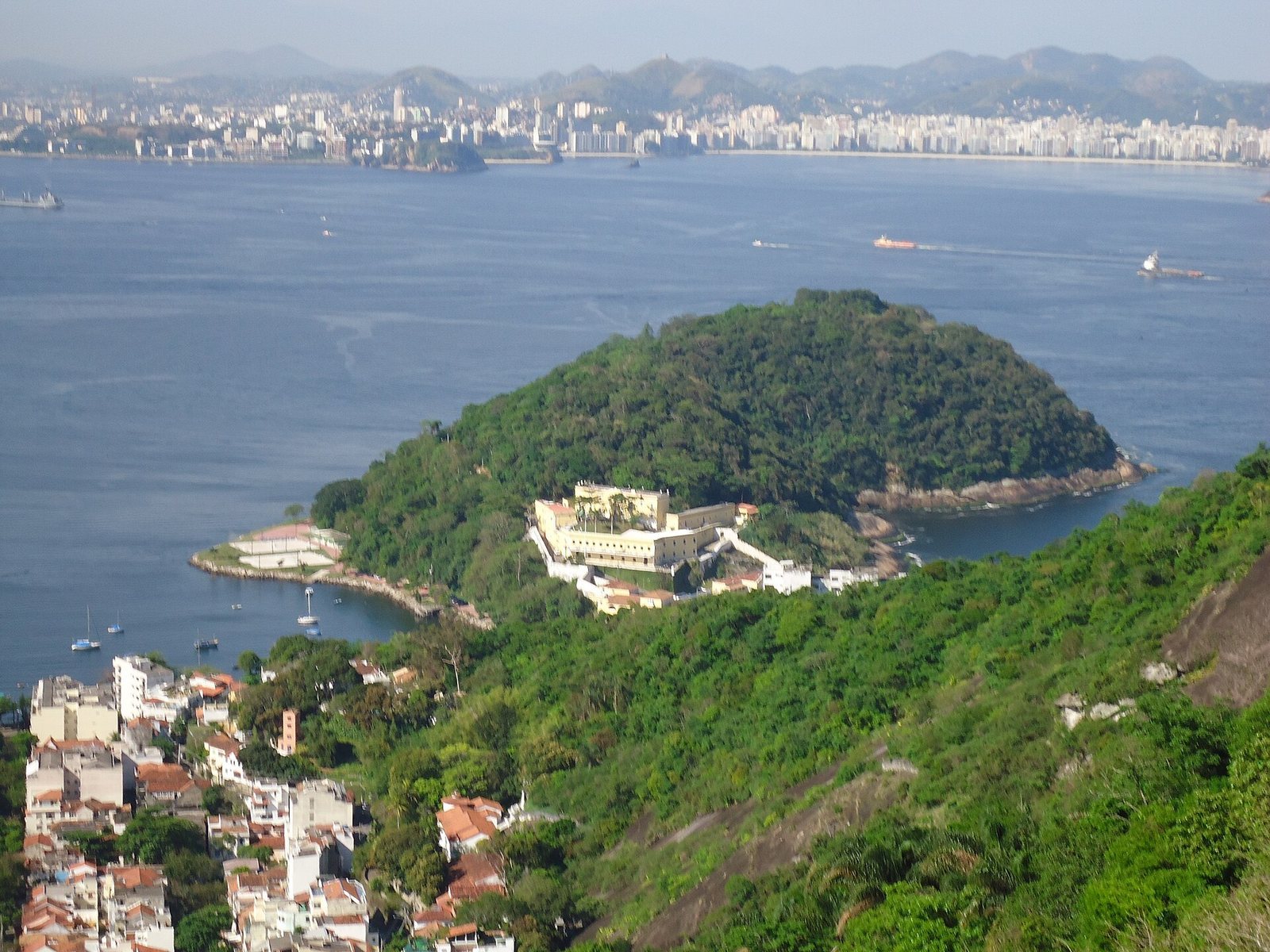
The Fortress of São João in Rio de Janeiro, Brazil, occupies the western shore of Guanabara Bay. Portuguese forces began fortifying the site in 1565 to protect the bay and drive out French forces occupying it. Its later defenses took the form of a star fort, with angled walls and projecting points designed to expose attackers to intersecting fire.
Foundation and colonial defenses
On 1 March 1565, Portuguese commander Estácio de Sá landed about 300 men from five ships on the plain between Morro Cara de Cão and Sugarloaf Mountain. There he founded the city of São Sebastião do Rio de Janeiro. The fort was built under King Sebastian of Portugal as part of the effort to secure the bay. An early fortification, believed to have been the São Martinho Redoubt, guarded the landward approach. It withstood land and naval fighting involving Indigenous forces on 1 June 1565. After the Portuguese defeated the French, the city moved to Morro do Castelo in 1567, while defenses continued to protect the coast.
During Governor Salvador Correia de Sá’s administration, an artillery position called the São Teodósio Battery was added in 1572. São José Redoubt followed in 1578, during his second term. Completion of São Diogo Redoubt on 24 June 1618 brought the defenses into formal service as the Fortress of São João da Barra do Rio de Janeiro. Its guns were arranged to provide overlapping fire with Santa Cruz da Barra Fortress and Laje Fort. The complex had 30 artillery pieces of different calibers during Governor Duarte Correia Vasqueanes’s term, from 1645 to 1648.
Attacks and eighteenth-century defenses
Governor Sebastião de Castro Caldas strengthened the defenses during his administration from 1695 to 1697. On 6 August 1710, São João and Santa Cruz repelled the squadron of French privateer Jean-François Duclerc, a privately led wartime raider authorized by a government. After that victory, Governor Francisco de Castro Morais ordered the fort disarmed. It proved poorly placed to resist the invasion led by another French privateer, René Duguay-Trouin, in September 1711. His force included 18 ships, 740 artillery pieces, 10 mortars, and 5,764 men.
During the eighteenth century, earthen defenses covered São João Hill. By the end of the century, the site was represented as two forts, and a bastion had been built in 1794 to close off São José’s beach, now Praia de Fora.
Imperial-era changes
During Brazil’s Regency, the period between Pedro I’s abdication and Pedro II’s assumption of personal rule, a decree of 24 December 1831 reduced the lower battery to seven guns and left it without a crew. By 1838, however, the fort had 55 guns and a garrison of 770 soldiers commanded by Teodoro de Macedo Sodré. The Army Application School opened there in 1855. After officials decided in 1857 to build a dedicated school at Praia Vermelha, São João served as an auxiliary facility, staffed by three or four retired soldiers living near the old São Diogo Battery.
During the Christie Question, a diplomatic dispute between Brazil and Britain in the 1860s, the Ministry of War classified São João as a first-class fortification on 7 April 1863. The defenses were strengthened and rearmed, including with 15 Whitworth guns of 127 mm. Barracks and water installations were remodeled in 1868, when the fort held 34 artillery pieces. In 1872, Emperor Pedro II ordered a complete renovation, and a 150 mm Krupp howitzer was installed. By 1885, the Artillery Apprentices Corps was stationed there, with 41 long-range guns, including a 280 mm Armstrong gun installed in 1874.
Republican service and present role
During the Navy Revolt, a naval uprising, the fort exchanged fire with the battleship Aquidabã and cruisers Javari and Trajano from 2 p.m. to 4 p.m. on 30 September 1893. Military School cadets from Praia Vermelha fired the 280 mm Armstrong gun, nicknamed “Vovô.” Repairs followed in 1895. Two concealed batteries were built during 1900–1901. The Mallet Battery, armed with Krupp C/15 L/40 guns, opened on 2 December 1901 and received two more guns in 1902. A second concealed position held three guns, and an iron bridge serving the fort opened in 1904.
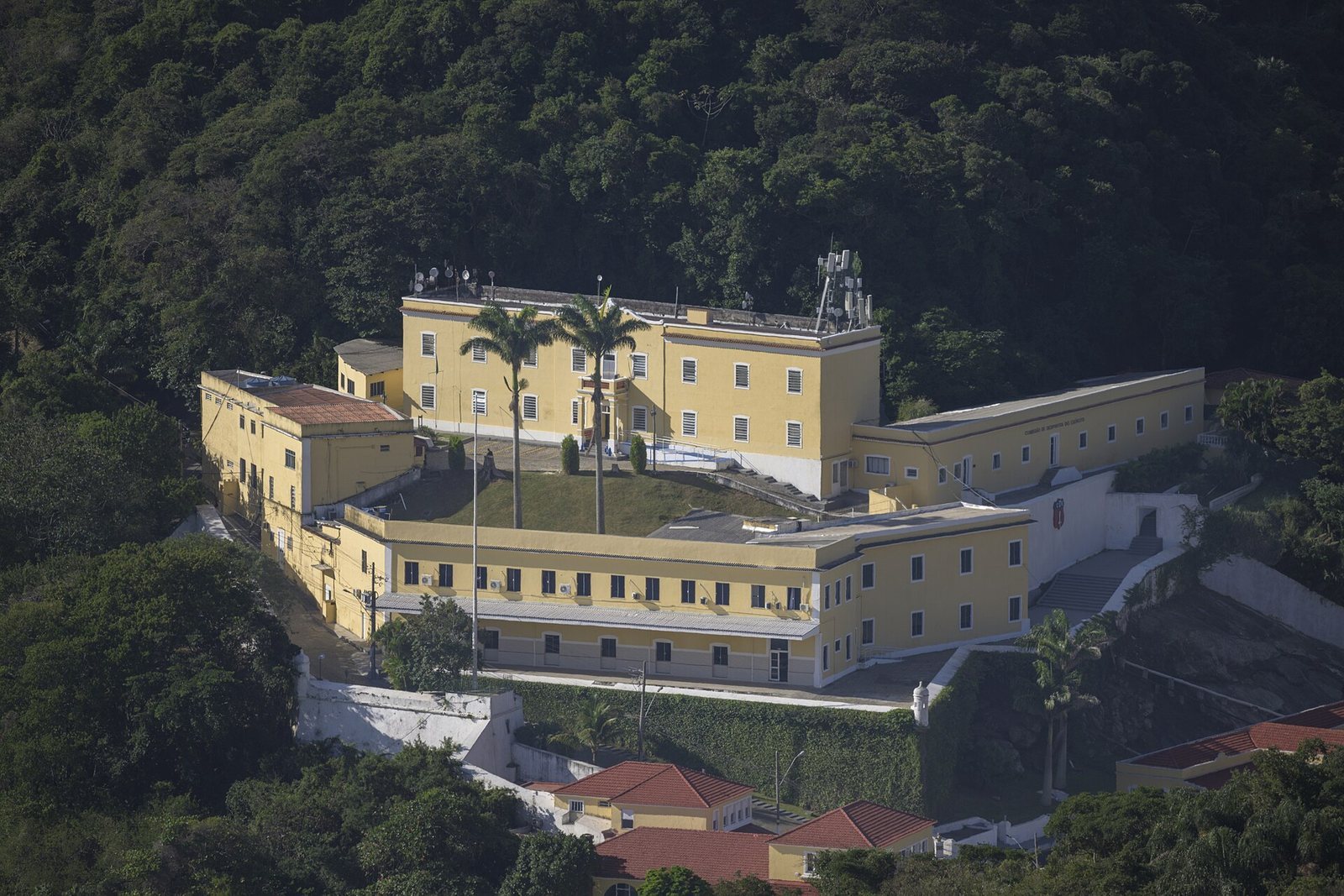
Artillery groups remained at São João from 1920 until January 1991, when the Second Coastal Artillery Group was disbanded and the Army Physical Training Center was established. The Army’s Military Center for Physical Education, founded in 1922, moved to the fort in 1930 and became the Army School of Physical Education in 1933. The school remains based there. Other institutions now at the complex include the Army Physical Training Research Institute, the Army Sports Museum, and the Superior War School, a center for advanced military education and defense studies. The Directorate of Personnel Research and Studies has also been based there since its creation in 2002. A 2012 decree made the fortress the headquarters of the Army Physical Training Center, under the Army Department of Education and Culture, which oversees the Army’s educational and cultural institutions.
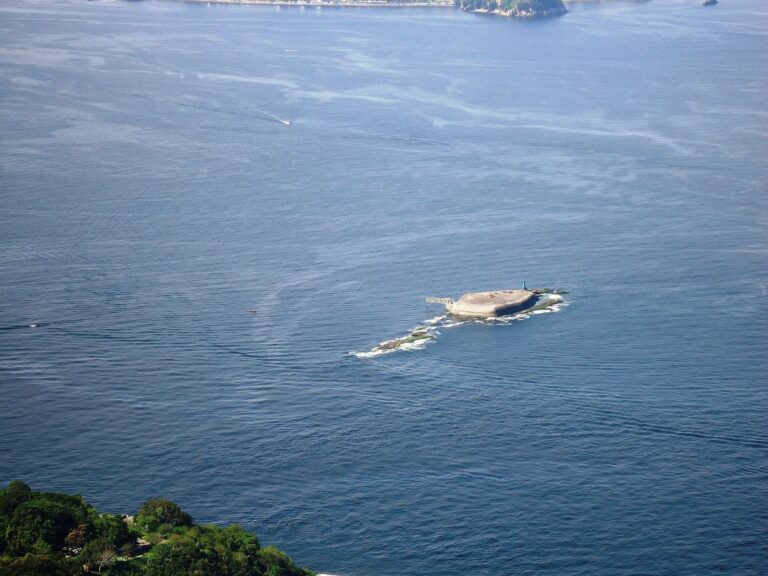
The complex is recognized as heritage reflecting Portuguese influence, and Brazil’s National Institute of Historic and Artistic Heritage has listed its Gate of Arms since 1938. Restoration work begun in 2002 included safety measures, repairs to floors that had allowed water to penetrate the ceilings and walls of São José Battery, and plasterwork restoration. The old mooring bridge served the fort and helped supply Laje Fort until land reclamation created the present Urca neighborhood in about the 1920s. A replacement bridge reopened on 15 March 2007 as the Admiral Benjamim Sodré Mooring Bridge.
Remains
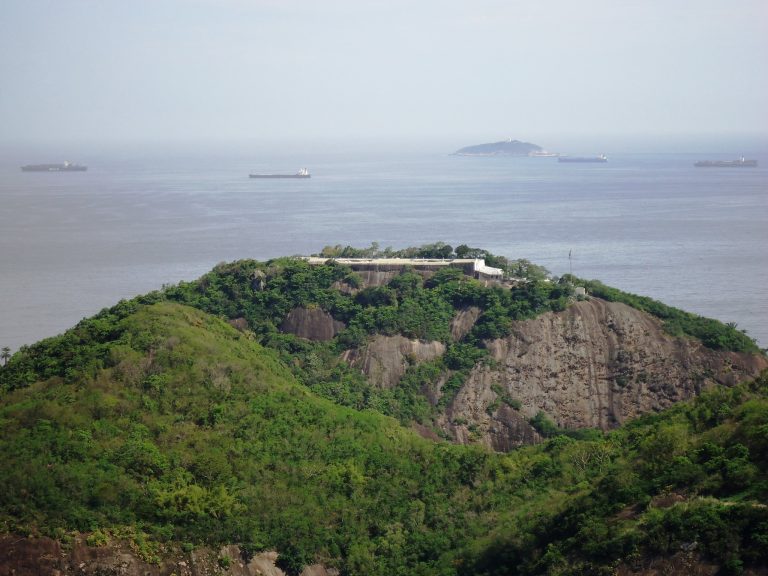
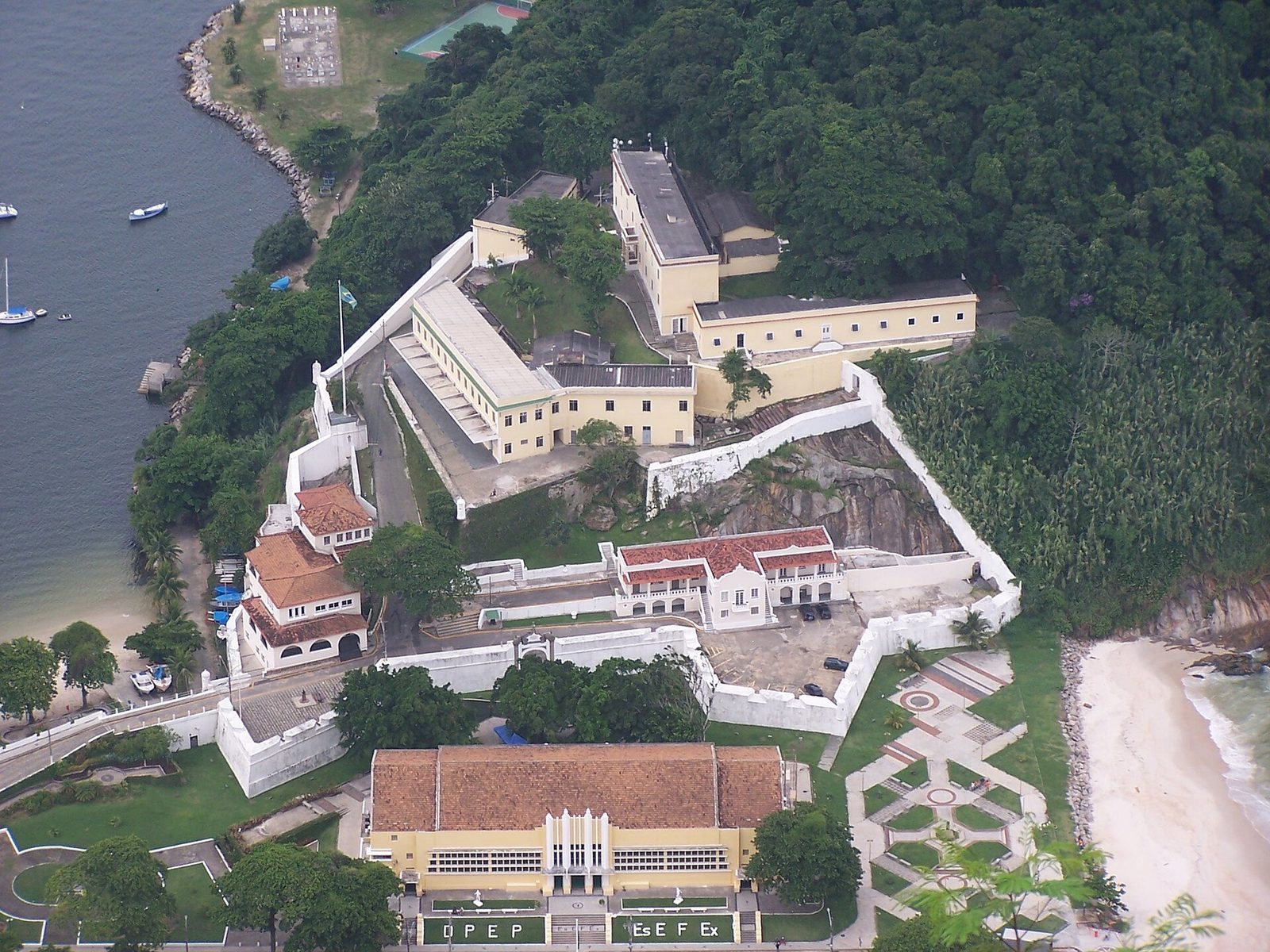
The fortress occupies the coastal plain between Morro Cara de Cão and Sugarloaf Mountain, with batteries and other buildings arranged along the hillside. The complex is described as intact. Its surviving entrance, hillside defenses, commemorative features, and shore bridge reflect its military and later institutional use.
Hillside artillery defenses
Hilltop and São Teodósio Battery
A plan from 1863 places the Gunpowder House on the hilltop, at the location identified as the present Elevated Battery. The plan shows São Teodósio Battery on two levels. Added in 1572, it formed part of the hillside system of artillery positions.
São José batteries and beach bastion
The same plan depicts two São José batteries. A building beside one may have served as a Gunpowder House. It also marks the remains of a bastion, a projecting part of a fortification designed to defend its approaches. Built in 1794, this bastion closed off São José’s beach, now Praia de Fora.
Casemates and upper battery
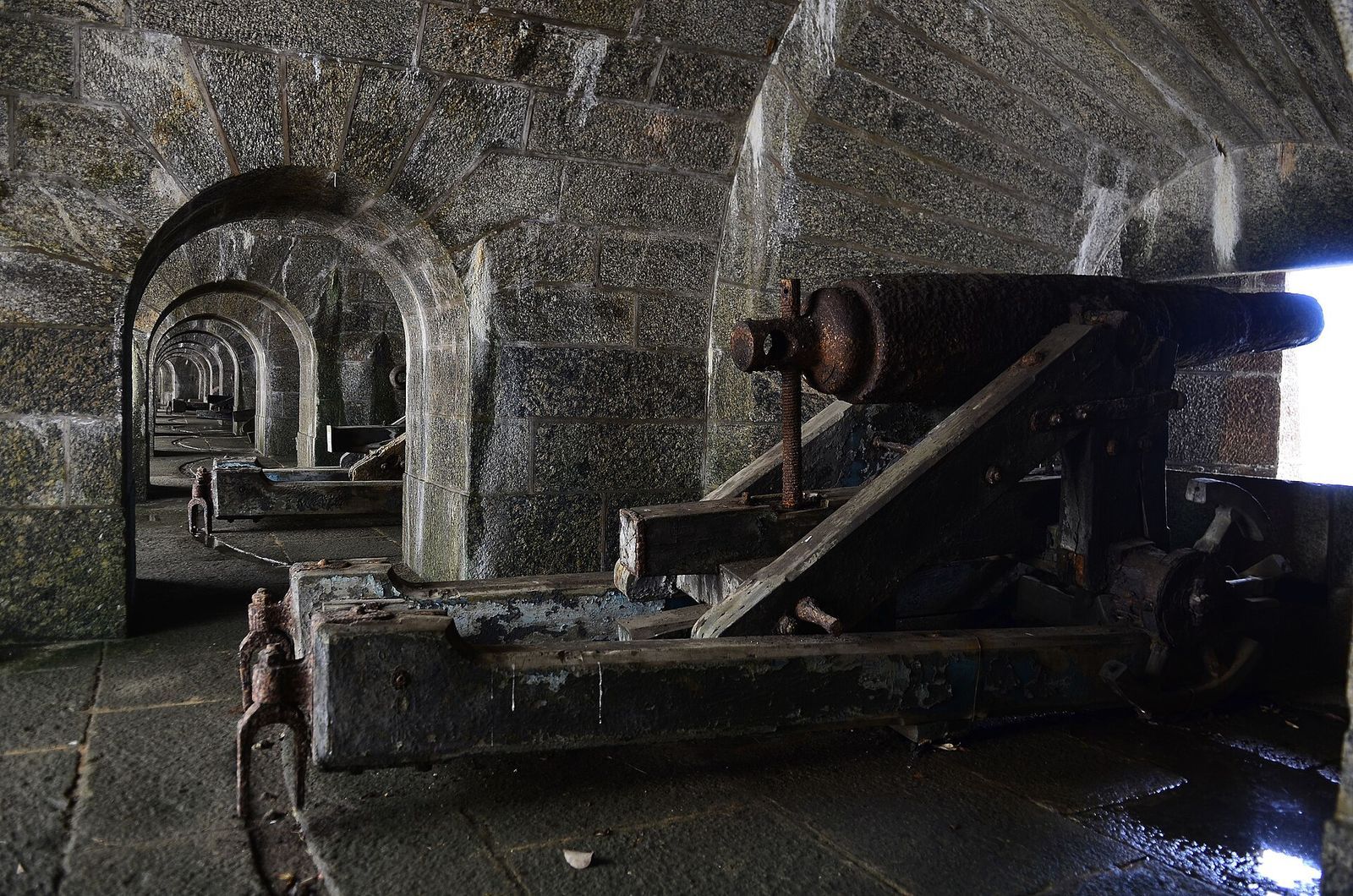
Seventeen Haxo-style casemates, enclosed positions for artillery, were built over the former São José fortification, with another battery above them. The design is associated with French military engineer François Nicolas Benoît Haxo. The complex also included an ammunition magazine.
Entrance, commemorative features, and shore bridge
Gate of Arms
The Gate of Arms, the fort’s principal fortified entrance, survives as a physical feature of the complex.
Cell associated with Tiradentes
A cell within the fortress is traditionally identified as the place where Tiradentes was held in the late eighteenth century. Tiradentes was the nickname of Joaquim José da Silva Xavier, an eighteenth-century figure executed for his role in an anti-colonial movement.
Foundation marker
A marker commemorating the city’s foundation is laid out as a Maltese cross when viewed from above.
Mooring bridge
Only the pier and its base on the beach remain of the old mooring bridge. Its replacement is a steel footbridge with a span of 21 metres, designed by the Navy’s Directorate of Civil Works.