Rocca di Montauto: A Medieval Fortress in Italy
Site at a Glance
- Popularity
- Medium
- Country
- Italy
- Primary era
- Medieval
- Eras represented
- Medieval
- Civilizations
- Unclassified
- Site type
- Military
- Remains
- Castle
On this page8 sections
History
Rocca di Montauto, also known as Roccaccia, is a ruined fortification on a hill overlooking the Fiora Valley in the southern part of Manciano, Italy. The Aldobrandeschi began building it in the early 13th century as one of their regional defensive strongholds. Its history reflects the shifting control and conflict among noble families and political powers in the area.
Before the Fortress
The surrounding area was inhabited by Etruscans from the ninth to the first centuries BC. Rome took control in 280 BC, and regional development included the Via Aurelia.
In the early Middle Ages, Muslim forces, the papacy, and Frankish rulers contested the territory before the Carolingian dynasty, Charlemagne’s ruling house, established dominance. In 805, Charlemagne, the Frankish ruler crowned emperor in 800, granted the territory to Tre Fontane Abbey, a monastery of the Cistercian order. The abbey controlled it for more than 300 years.
Aldobrandeschi Rule and Regional Conflict
The Aldobrandeschi established control in the area during the 12th century and built a network of substantial defensive strongholds. Rocca di Montauto was begun in the early 13th century as their possession. At the end of the 13th century, it passed to the Orsini of Pitigliano and was disputed by the Baschi in connection with a possible submission to Orvieto.
Conflict among noble families and city-states, including Siena and Orvieto, as well as factional struggles and raids, contributed to the region’s extensive fortifications. Corsican pirates occupied the area in 1489.
Siena, the Medici, and Later Use
Sienese occupation in the early 15th century brought the fortress within the Republic of Siena, a city-state. The complex underwent a complete renovation in the second half of that century. In the late 15th century, Siena’s popular council approved a plan to establish a Greek settlement at Montauto for Jeanne of Savoy and 100 Greek families. The proposal was abandoned after the Medici-led Grand Duchy of Tuscany displaced the Republic of Siena.
The fortress was annexed to the Grand Duchy in the mid-16th century. The Medici later abandoned it because it was no longer considered strategically important, and the surrounding territory went on to serve as a regional granary.
In later centuries, the area passed between the Corsini and Guglielmi marquisates and experienced incursions by bandits. Domenico Tiburzi, a 19th-century bandit known as the King of the Maremma, took refuge there while opposing the powerful and was popular among local people. During the Second World War, old fortifications and forests in the area sheltered the Italian resistance.
Rocca di Montauto is privately owned and houses the Montauto Wildlife Foundation, a nonprofit organization devoted to conserving local wildlife and flora. The foundation established its 42-hectare reserve in 2020.
Remains
The Fortress
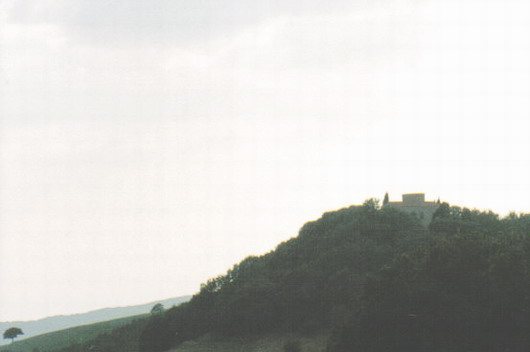
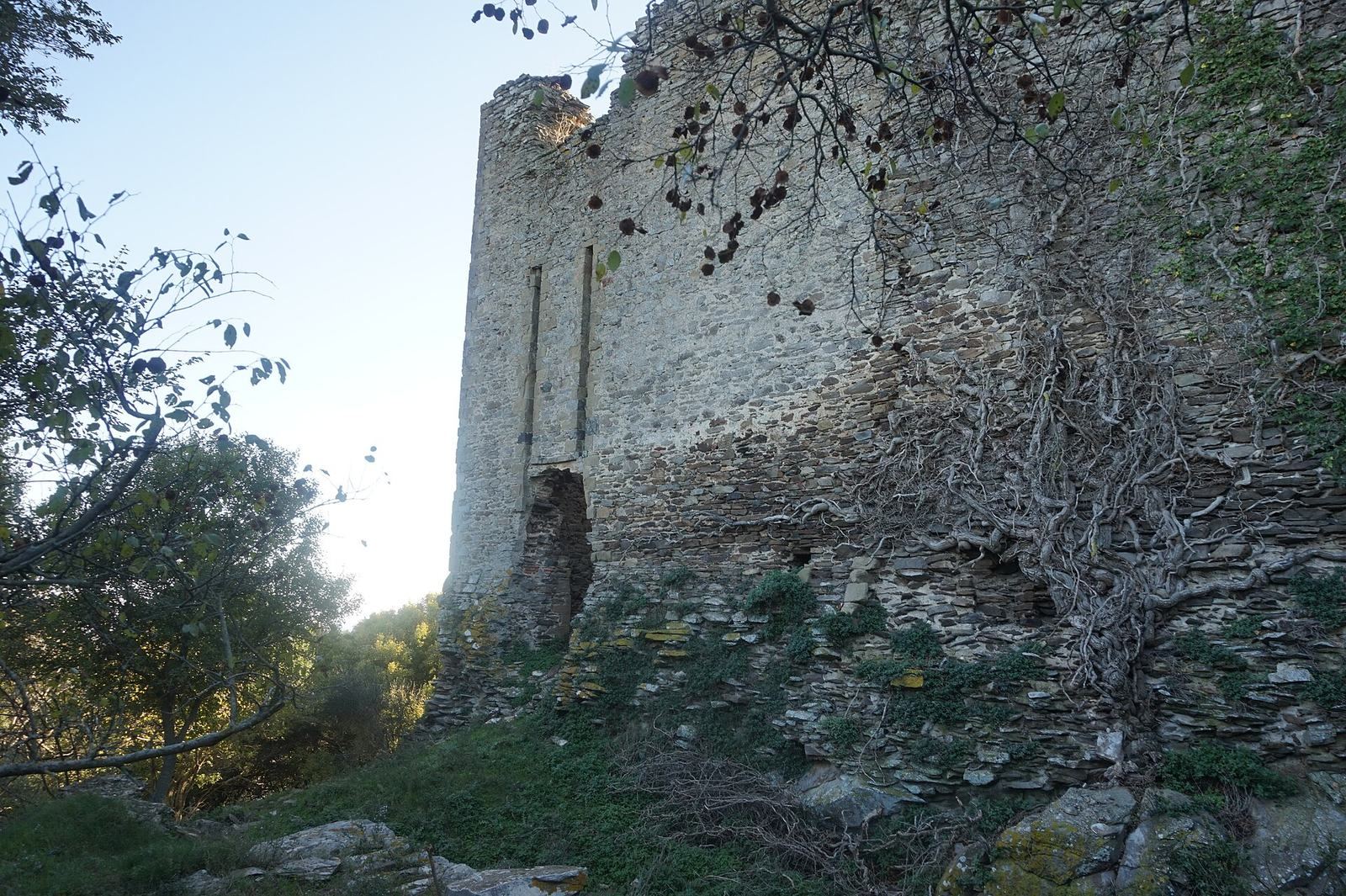
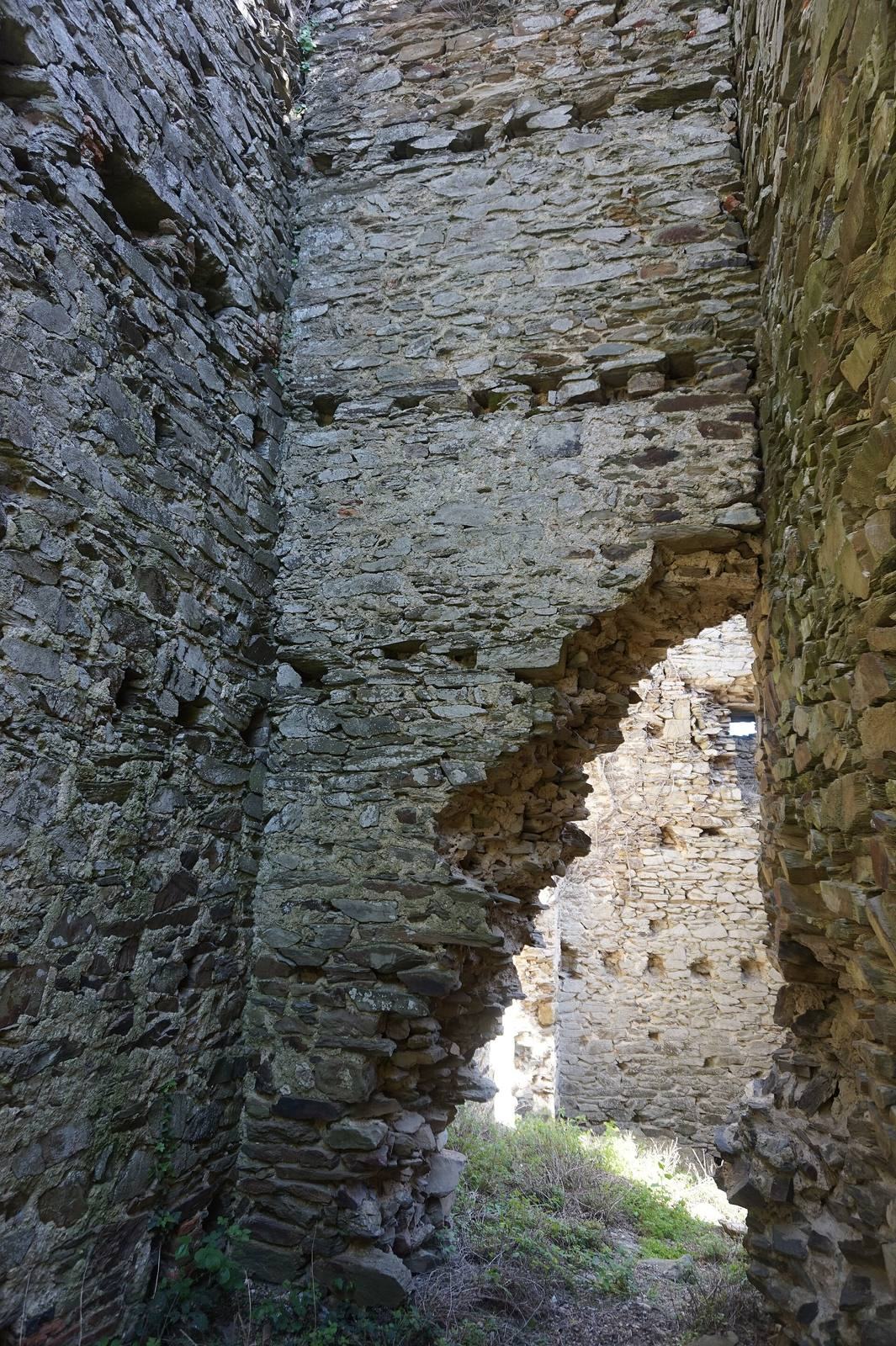
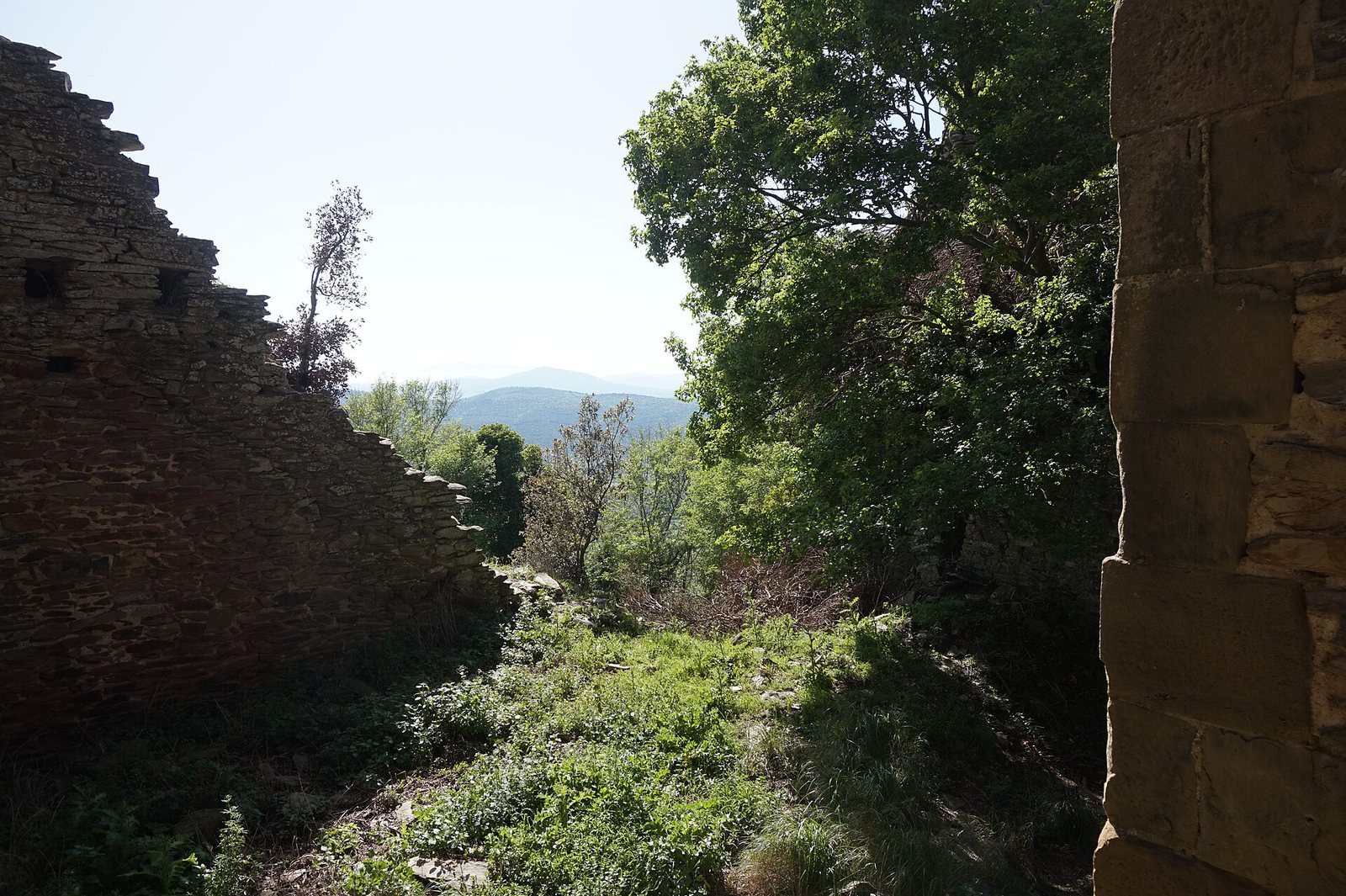
The ruined fortress stands within the Montauto Nature Reserve on a hill above the Fiora Valley. It was originally connected to a castle that has since disappeared. The surviving structure has a four-sided plan organized around a fortified courtyard. Its stone walls contain openings capped by shallow curved arches. Vegetation partly covers the masonry, and prolonged deterioration has stripped the upper walls of their crowning features.
Paleolithic Finds
A collection of 799 Paleolithic objects from Montauto includes flakes, stones, and other finds. The assemblage is now held at the Museum of Prehistory and Protohistory of the Fiora Valley in Manciano.
Conservation Landscape
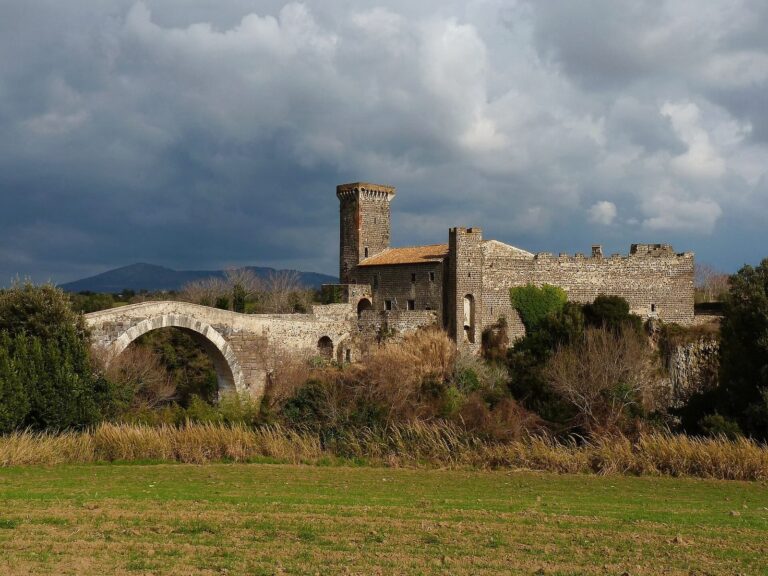
The foundation’s conservation area lies between the Montauto Nature Reserve and the Vulci Oasis. It is also associated with the Vulci Archaeological Park and a primeval forest covering more than 3,000 hectares.