Dar el Makhzen: The Sultan’s Palace and Seat of Government in Tangier, Morocco
Site at a Glance
- Popularity
- High
- Country
- Morocco
- Primary era
- Early Modern
- Eras represented
- Early Modern
- Civilizations
- Alaouite
- Site type
- Civic
- Remains
- Palace
On this page14 sections
History
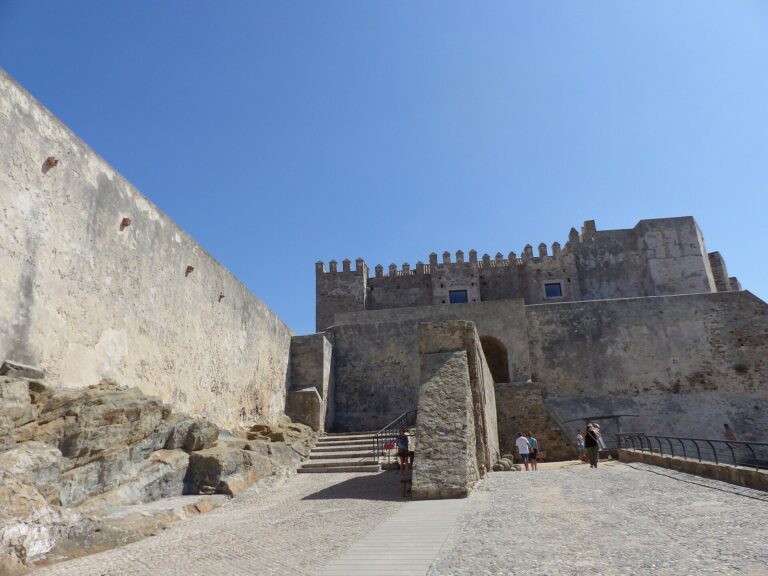
Dar el Makhzen is an early eighteenth-century palace in Tangier, Morocco, built for the city governor and for Moroccan sultans during their stays there. Also known as the Sultan’s Palace or Governor’s Palace, and formerly as the Sharifian Palace, it stands on a site that has long served as Tangier’s main seat of political authority.
Earlier political residences
Roman texts mention the site, while Arab chroniclers describe a Moorish palace in Tangier’s kasbah, the city’s fortified citadel quarter, in the twelfth century. These references precede the surviving palace and indicate the site’s earlier political associations.
A residence for the Portuguese governor occupied the site from 1471 to 1662. The English then built the Upper Castle, which stood there from 1662 to 1684. Dar el Makhzen was later constructed over the castle’s ruins.
The palace and the Alaouite sultans
The palace dates to the early eighteenth century. An inscription found in an annex assigns its construction to 1738 and names Pasha Ahmad ben Ali al-Rifi, Tangier’s semi-autonomous governor. A pasha was a senior governor or official; al-Rifi was also a military commander and a general of the Jaysh al-Rifi.
Morocco’s Alaouite sultans used Dar el Makhzen as a seat of government and a residence in Tangier, making changes and carrying out repairs over time. Major repair work is associated with Sultan Moulay Sulayman in the early nineteenth century and with Hassan I in 1889, when Hassan I also stayed at the palace.
Exile and museum use
After French authorities in Morocco forced Sultan Abd al-Hafiz to abdicate, he was exiled to the palace. He arrived with a household and retinue of 168 people, including his harem, enslaved people, and staff. He remained at Dar el Makhzen after his brother Moulay Yusuf took power following the Treaty of Fez.
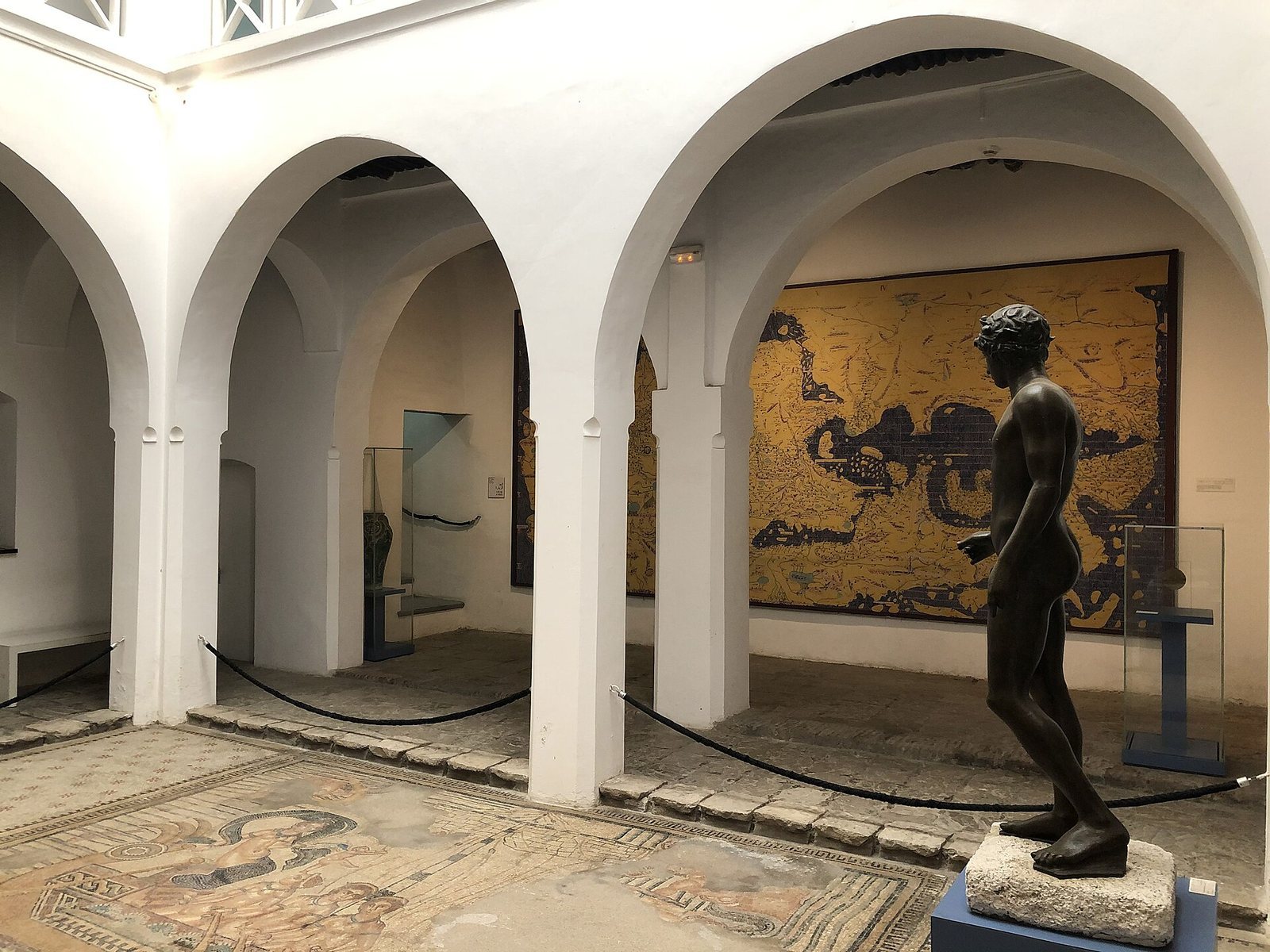
In 1922, French scholar Édouard Michaux-Bellaire began converting the palace into a museum. After a comprehensive renovation in the early 2010s, it reopened in 2016 as the Kasbah Museum of Mediterranean Cultures. Its displays follow the palace’s architectural plan and present the Tangier peninsula as a meeting point between Africa, Europe, and the wider Mediterranean. In late 2021, a Contemporary Art Space was added in the former prison, which had remained in use until the early 1970s.
Remains
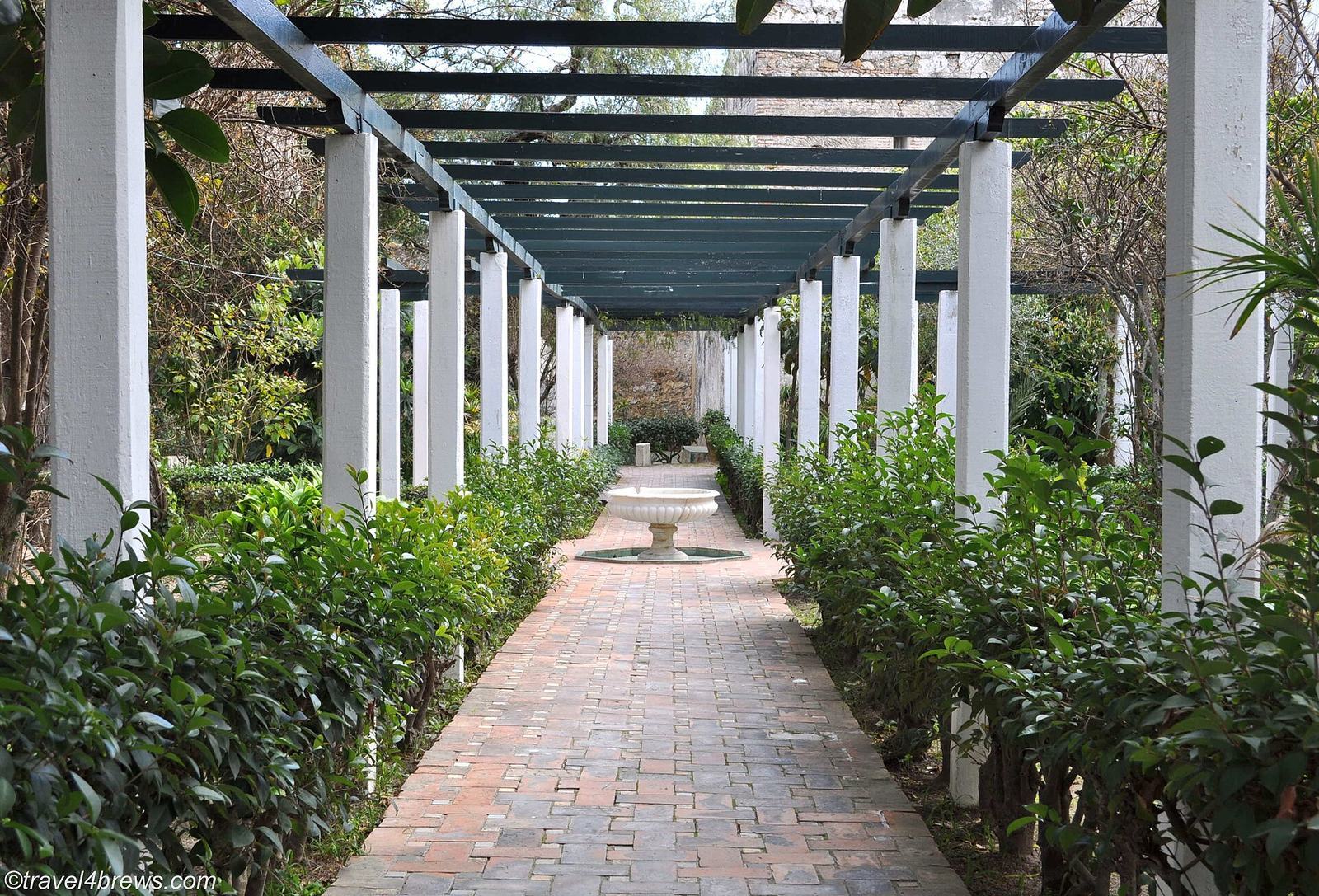
Dar el Makhzen stands in the eastern part of the Kasbah, on one of Tangier’s highest points, overlooking the medina, the city’s historic center, and the Strait of Gibraltar. Its layout brings together courtyards, halls, and gallery spaces, with marble, decorated wood, and mosaic tilework among its notable finishes.
Courtyards, hall, and gallery
Courtyards
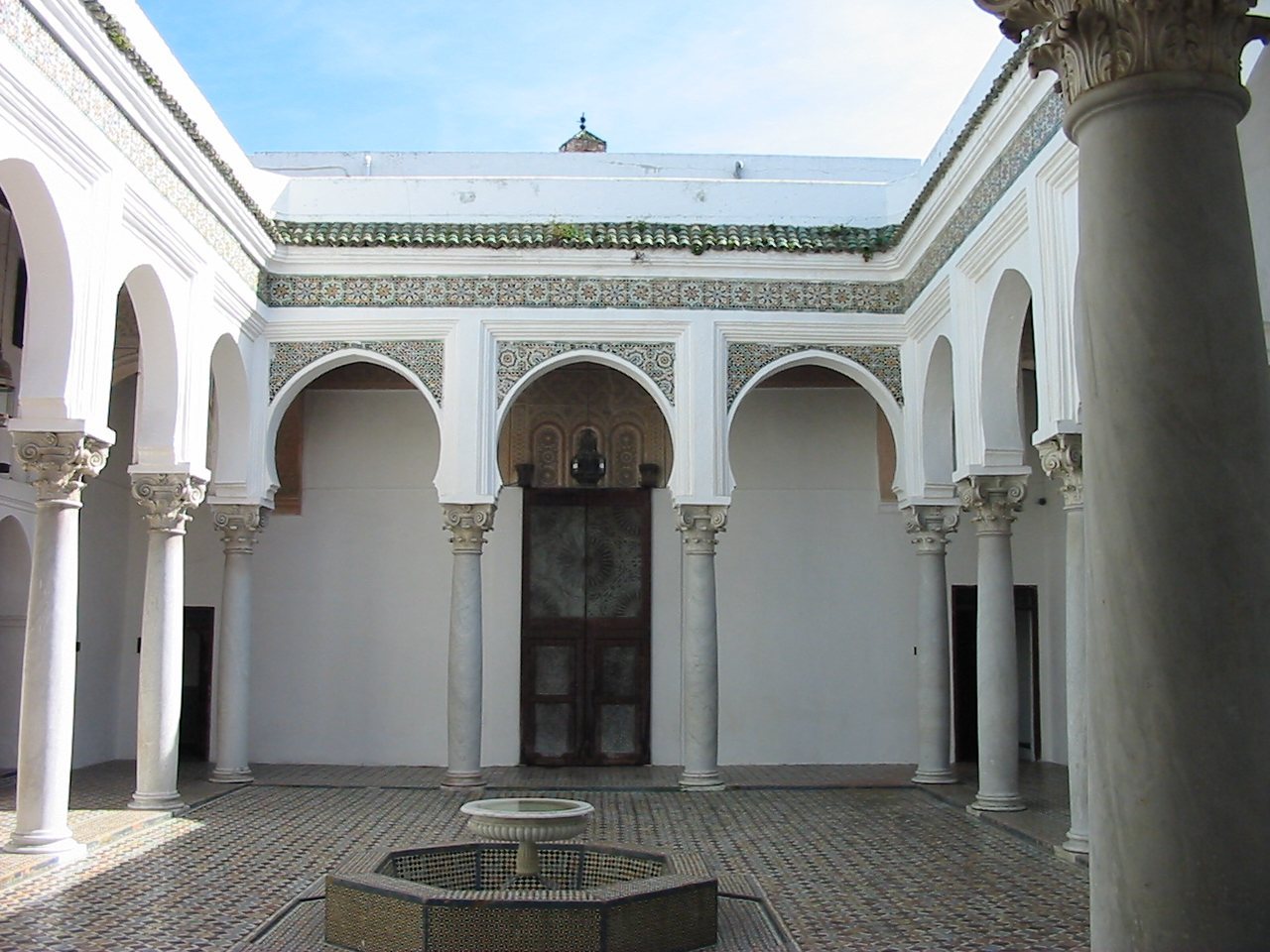
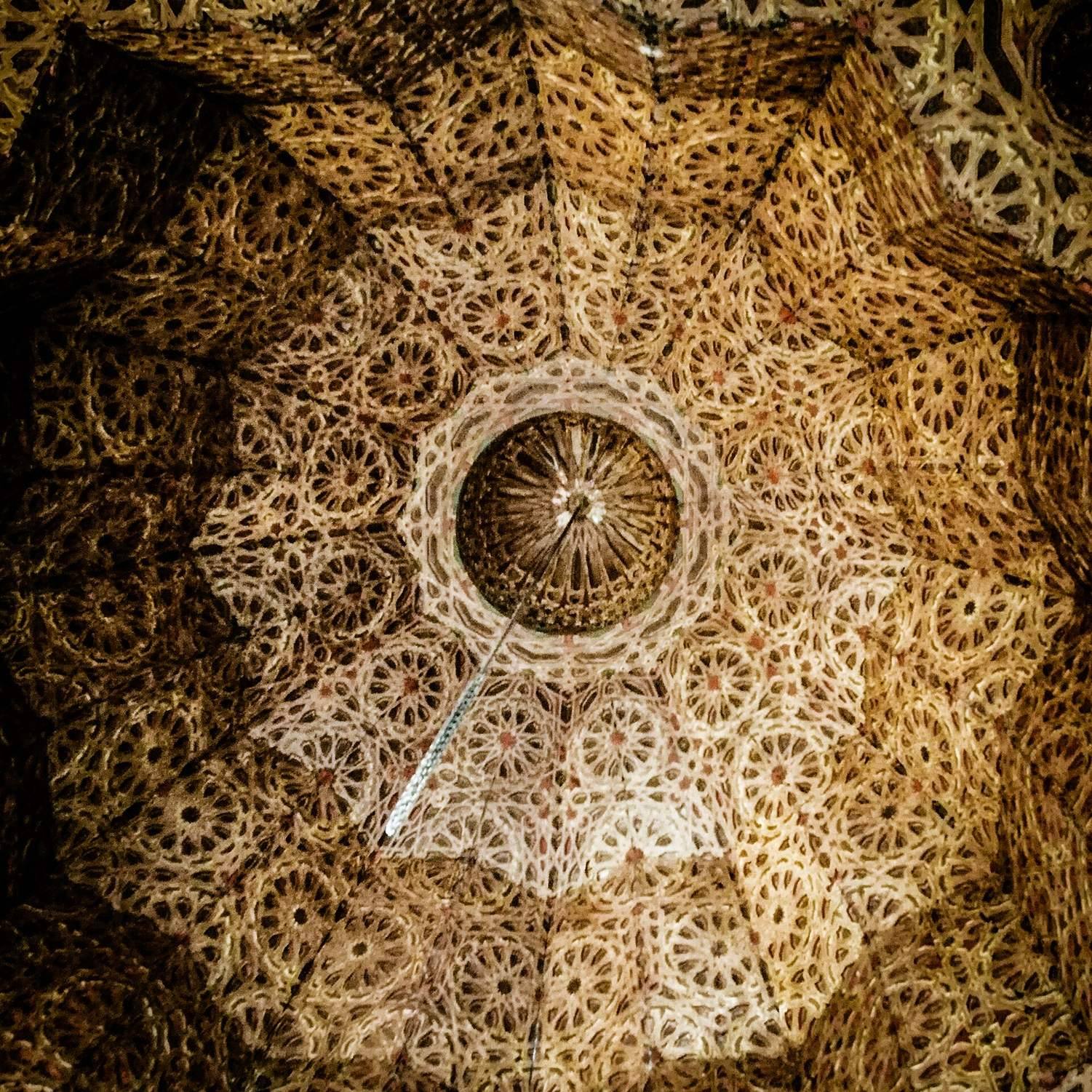
Two courtyards organize the palace. Their features include decorated wooden ceilings, marble fountains, and interlaced ornament. Marble columns stand in the main courtyard; their capitals were probably brought from Italy around the time the palace was built in the mid-eighteenth century. Some of the palace’s columns are of ancient Roman origin.
Hall and gallery
A broad hall is encircled by marble columns with composite capitals, a design combining Ionic scrolls and Corinthian leaves. A white-marble fountain stands at its center. Elsewhere, a gallery runs around a central courtyard paved with mosaic tilework and edged by white columns.
Buildings facing the Mechouar
Treasury
The former Bayt al-mal, or treasury, was established in the late eighteenth century. It has a painted cedar ceiling and eighteenth-century chests fitted with intricate locking systems.
Former prison
A former prison faces the Mechouar, a formal open space associated with a palace or citadel. The building is now used as the palace’s Contemporary Art Space.
Museum rooms and collections
Reception rooms and living quarters
The former reception rooms and living quarters display Moroccan art, including firearms decorated with inlay, carpets, Fez silks, and manuscripts.
Former kitchen and antiquities
The former kitchen houses the Museum of Antiquities, with finds from the Roman sites of Lixus, Cotta, and Volubilis, as well as material from the Tangier region spanning prehistory to the Middle Ages. The collection includes a life-size tomb associated with the Carthaginians, an ancient North African civilization centered on Carthage. A Roman mosaic from Volubilis titled Journey of Venus is displayed in a palace courtyard, alongside reproductions of several bronze works from the Rabat Archaeology Museum.