Montlaur Castle: A Medieval Fortress and Family Seat
Site at a Glance
- Popularity
- Medium
- Country
- France
- Primary era
- Medieval
- Eras represented
- Medieval
- Civilizations
- Unclassified
- Site type
- Military
- Remains
- Castle
On this page5 sections
History
Montlaur Castle is an 11th-century fortified castle in Montaud, in France’s Hérault department. Known from records by the 11th century, it became the ancestral seat of the Montlaur family, although its beginnings remain uncertain.
The Montlaur Lords
In 1095, Pons and Bernard de Montlaur, then lords of the castle, took the cross with Raymond IV, Count of Toulouse. They joined the effort to recover the Holy Land after the Council of Clermont, where Pope Urban II called for the First Crusade. Jean de Montlaur was born at the castle in 1120 and later became bishop of Maguelone, a medieval diocese in southern France.
The estate passed from father to son until Hector de Montlaur, who commanded Montpellier’s guard for the king in 1424. Hector’s son Antoine had no male heir. By a ruling dated 28 January 1494, the Parliament of Toulouse, the French monarchy’s high court, transferred Antoine’s holdings to his cousin Jean III de Montlaur, Baron of Murles.
Sieges and Transfer of the Estate
In 1573, during the Fourth War of Religion, a phase of the conflicts between Catholics and Protestants in France, Protestant forces descending from the Cévennes besieged the strategically placed castle but failed to capture it. In 1592, Marthe de Montlaur transferred the castle and barony to her close relative Jean de Bousquet-Verlhac. He had married a granddaughter of Jean V de Montlaur in 1590.
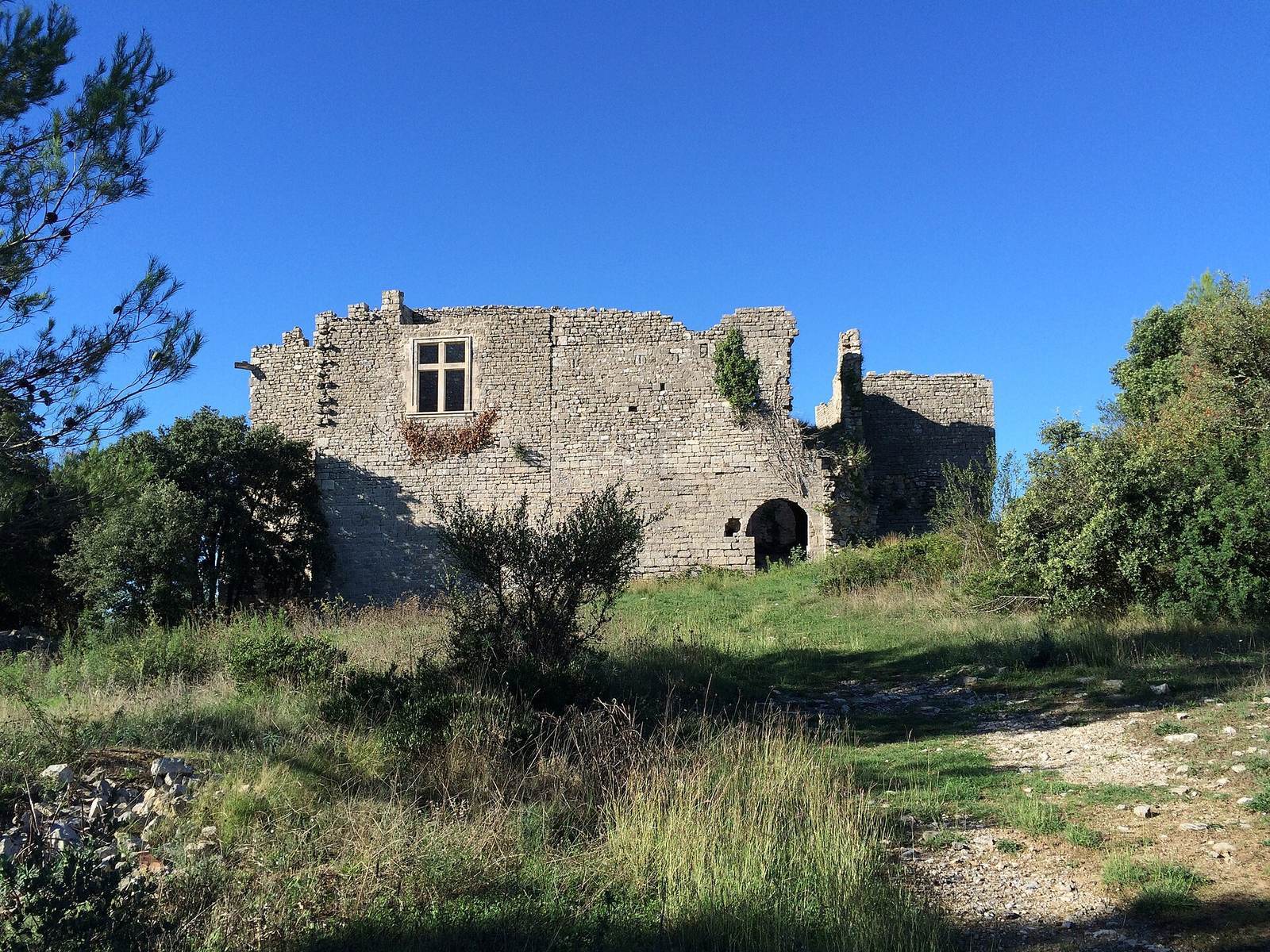
The castle was back in Catholic hands when Henri, Duke of Rohan, a leading Protestant nobleman and military commander, besieged it in 1622 during the first Huguenot rebellion, an uprising by French Protestants. It fell after a week, on Easter Monday, and its defenders were massacred. The victors held the Baron of Montlaur at the Protestant-controlled Château de Sommières until a substantial ransom was paid. The castle’s fortifications were demolished and the structure dismantled. Responsibility for the destruction is uncertain, with the action attributed either to Protestant forces or to Cardinal Richelieu, chief minister to Louis XIII.
The Marquisate and Later Family
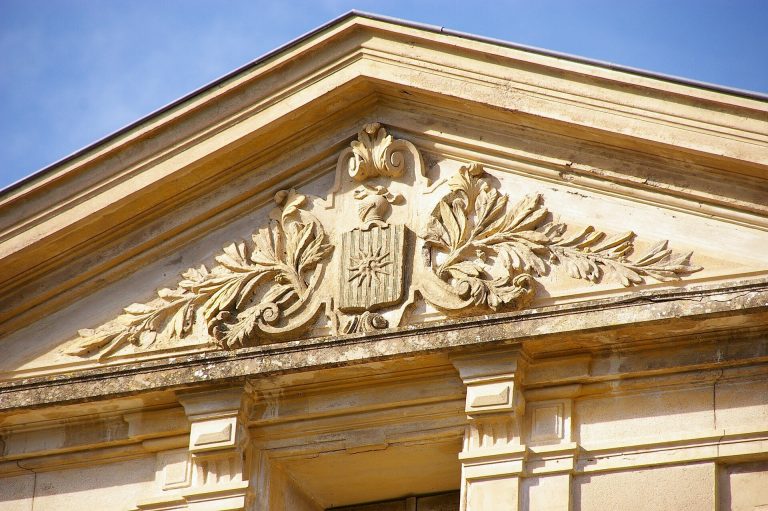
In 1664, Louis XIV rewarded the Bousquet family for the castle’s resistance in 1622 by allowing them to add a blue band bearing seven silver lily emblems to their coat of arms. In 1679, the king raised the barony to a marquisate, a noble title and its associated lands, for Étienne de Bousquet, a senior general officer. The grant was registered at Toulouse in 1680. Étienne had married Marie de Faur de Montéjer in 1662, and they had descendants.
Jacques-Josèphe-Toussaint-Hercule de Bousquet, the second Marquis of Montlaur, died without children in 1748. His inheritance passed to Jeanne de Crouzet, apparently his great-niece, the daughter of Pierre, president of Montpellier’s court of accounts, and Françoise de Bornier. Jeanne had married Henri-Joseph-Eugène de Villardi, Count of Quinson, in 1740; their marriage contract was dated 20 December. Henri rendered homage as Marquis of Montlaur in 1748.
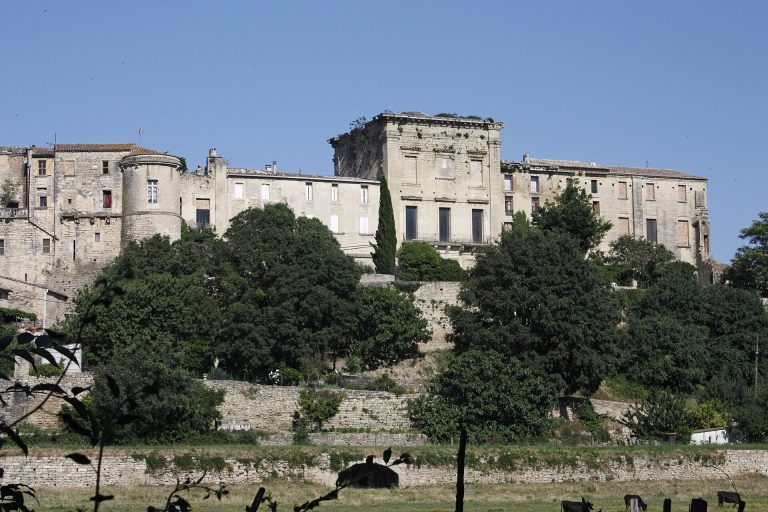
Their son Gabriel-Joseph-Raymond de Villardi, a baron of the Estates of Languedoc, the provincial assembly representing the region’s social orders, in 1784, adopted the Montlaur name and arms. Louis XVI confirmed the marquisate for him by royal grants in 1782 and October 1787. The later grant was registered by the Parliament of Toulouse on 14 November 1787. The castle has remained with the same family since this period. Its ruins were listed as a French historic monument in 1942.
Remains
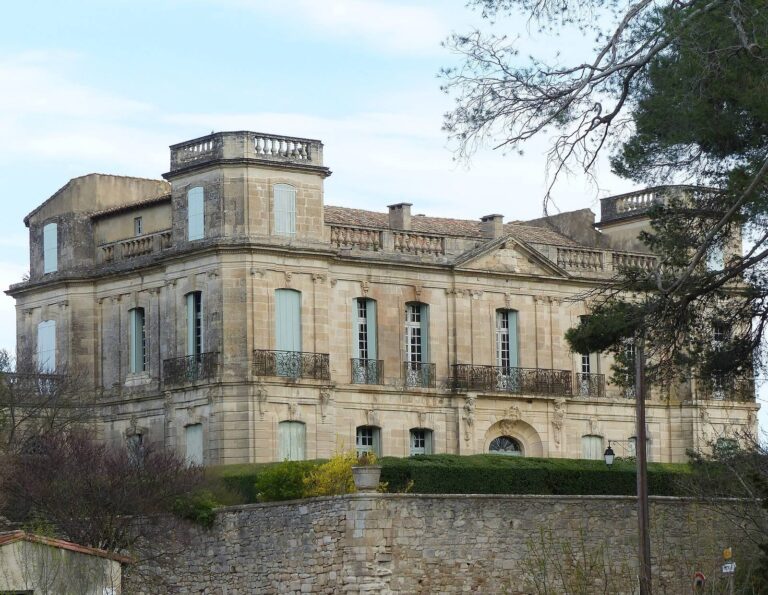
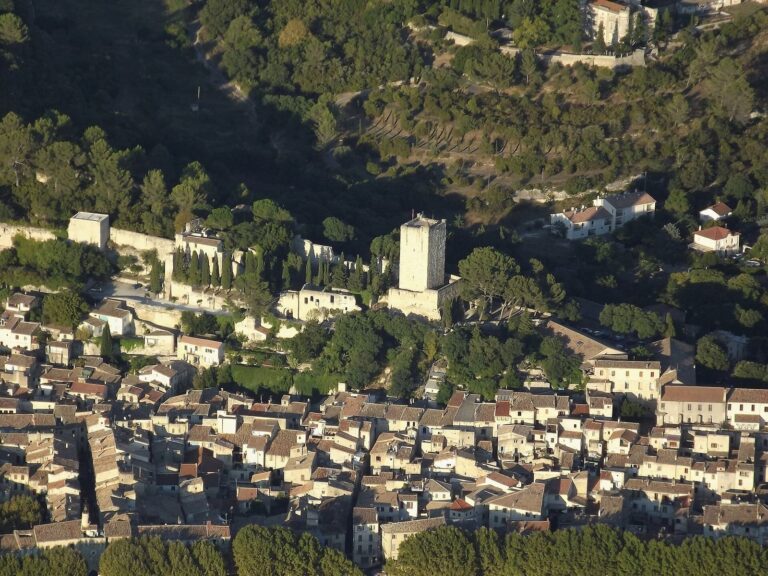
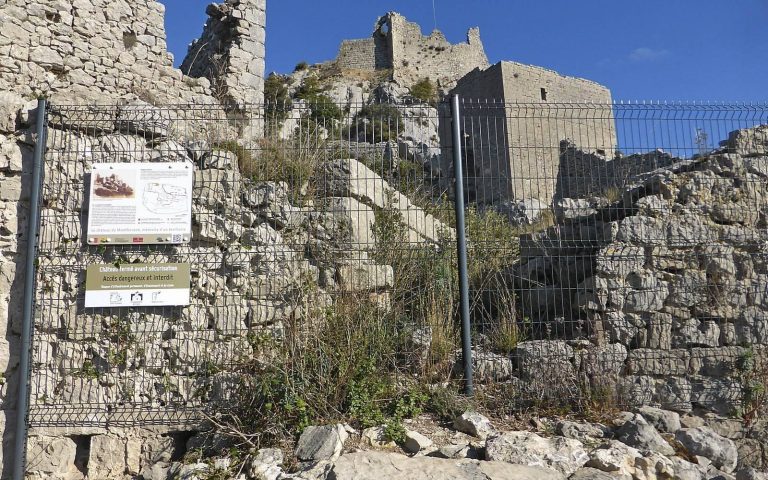
The surviving remains are the ruins of a fortified castle at Montaud, on the road leading to Montpellier, about 20 kilometres from the city.